AQA · A-Level · History
Course version: 7042 · Version from Sept 2017
The dream of westward expansion: the expectations of the colonists;…
Full specification wording
2G The Birth of the USA, 1760–1801 – Britain and the American Colonies, 1760–1763: The dream of westward expansion: the expectations of the colonists; exploiting the territories acquired from French Canada
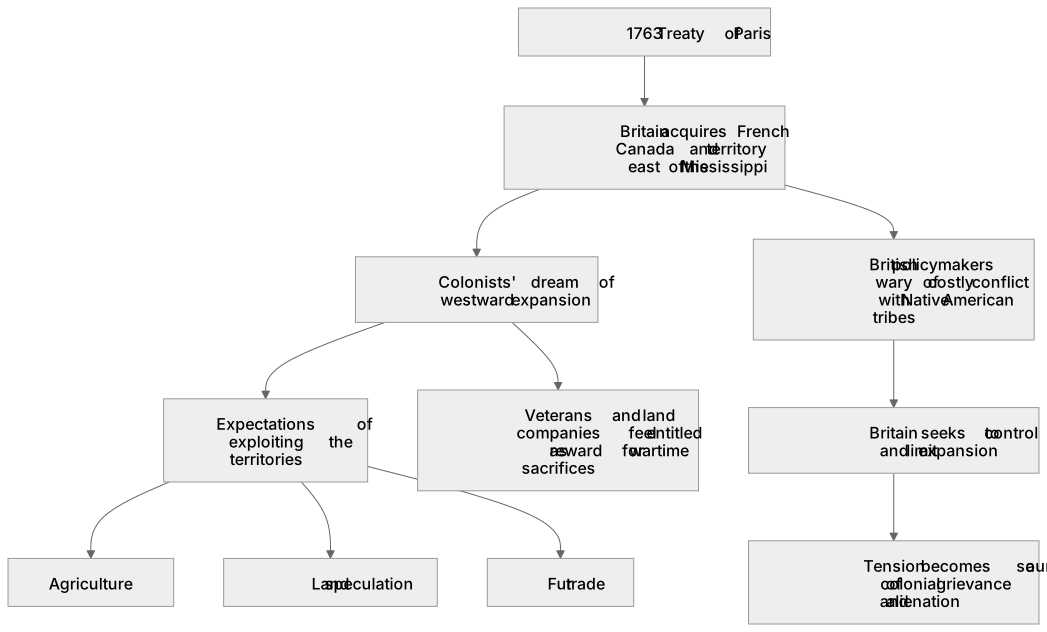
Following the 1763 Treaty of Paris, Britain acquired vast territories from French Canada and east of the Mississippi.
Checked against the AQA 7042 specification (opens in a new tab) on .
- Point 4 of 4
- 4 key terms
Study notes
From the checked teaching notes for this specification point.
The idea
Following the 1763 Treaty of Paris, Britain acquired vast territories from French Canada and east of the Mississippi. This ignited a powerful dream of westward expansion among colonists, who held high expectations of exploiting these lands for agriculture, speculation, and the fur trade. Colonial veterans and land companies felt entitled to this territory as a reward for their wartime sacrifices. However, British policymakers, wary of costly conflicts with Native American tribes (such as Pontiac's Rebellion), sought to control and limit this expansion. The tension between the colonists' desire to exploit the newly acquired territories and Britain's attempts to manage them became a major source of colonial grievance and alienation.
What earns the marks
- Identify the specific territories acquired by Britain from France in 1763 and explain their economic appeal to the colonists.
- Analyse the expectations of colonial land speculators, farmers, and veterans regarding their right to settle the newly acquired western lands.
- Evaluate the economic motivations for westward expansion, including the desire to dominate the fur trade and acquire fertile agricultural land.
- Assess how the colonists' expectations of exploiting former French territories conflicted with British strategic and financial priorities regarding Native American relations.
Common mistakes and how to put them right
Assuming the newly acquired territories were empty and ready for immediate, uncontested settlement.
Put it right: Acknowledge the presence and power of Native American tribes in these regions, which posed a significant barrier to colonial expansion.
Stating that Britain acquired all of North America from France.
Put it right: Specify that Britain acquired French Canada and territory east of the Mississippi River, while Spain held territory to the west.
Overlooking the role of elite land speculators in driving the push for westward expansion.
Put it right: Highlight that both ordinary farmers and wealthy colonial elites (such as those in the Ohio Company) had strong financial interests in exploiting the new territories.
Exam tips
- Connect the colonists' expectations of westward expansion directly to their perceived sacrifices during the French and Indian War.
- Use specific examples of economic exploitation, such as the fur trade or land speculation companies, to illustrate colonial motivations.
- Contrast the colonial view of the western territories as an economic opportunity with the British view of the region as a potential administrative and military burden.
Try the lesson
The start of the 2G The Birth of the USA, 1760–1801 – Britain and the American Colonies, 1760–1763: The dream of westward expansion: the expectations of the colonists; exploiting the territories acquired from French Canada lesson, made from checked teaching notes for this specification point.
Have a go first
Following the acquisition of French Canada in 1763, into which specific geographic region did American colonists most eagerly expect to expand?
Listen
Following the 1763 Treaty of Paris, Britain acquired vast territories from French Canada and east of the Mississippi. This ignited a powerful dream of westward expansion among colonists, who held high expectations of exploiting these lands for agriculture, speculation, and the fur trade. Colonial veterans and land companies felt entitled to this territory as a reward for their wartime sacrifices. However, British policymakers, wary of costly conflicts with Native American tribes (such as Pontiac's Rebellion), sought to control and limit this expansion. The tension between the colonists' desire to exploit the newly acquired territories and Britain's attempts to manage them became a major source of colonial grievance and alienation. A strong answer earns marks for these points. Identify the specific territories acquired by Britain from France in 1763 and explain their economic appeal to the colonists. Analyse the expectations of colonial land speculators, farmers, and veterans regarding their right to settle the newly acquired western lands. Evaluate the economic motivations for westward expansion, including the desire to dominate the fur trade and acquire fertile agricultural land. Assess how the colonists' expectations of exploiting former French territories conflicted with British strategic and financial priorities regarding Native American relations. A common slip: Assuming the newly acquired territories were empty and ready for immediate, uncontested settlement. Instead, Acknowledge the presence and power of Native American tribes in these regions, which posed a significant barrier to colonial expansion. Exam tip: Connect the colonists' expectations of westward expansion directly to their perceived sacrifices during the French and Indian War.
See it
Key words
Say what each word means before you turn the card.
Territorial expansion and land ownership
Try answering aloud or in your head before turning the card.
Economic opportunity and exploitation
Try answering aloud or in your head before turning the card.
Native American relations and frontier conflict
Try answering aloud or in your head before turning the card.
Diverging imperial and colonial interests
Try answering aloud or in your head before turning the card.
See every definition
- Territorial expansion and land ownership
- The dream of westward expansion into vast territories acquired from French Canada and east of the Mississippi, which colonists expected to exploit.
- Economic opportunity and exploitation
- The high expectations of exploiting newly acquired lands for agriculture, speculation, and the fur trade.
- Native American relations and frontier conflict
- British policymakers were wary of costly conflicts with Native American tribes, such as Pontiac's Rebellion, and sought to control and limit expansion.
- Diverging imperial and colonial interests
- Tension between the colonists' desire to exploit the newly acquired territories and Britain's attempts to manage them became a major source of colonial grievance and alienation.
Label the diagram
Some boxes have lost their names. Pick the right name for each number.
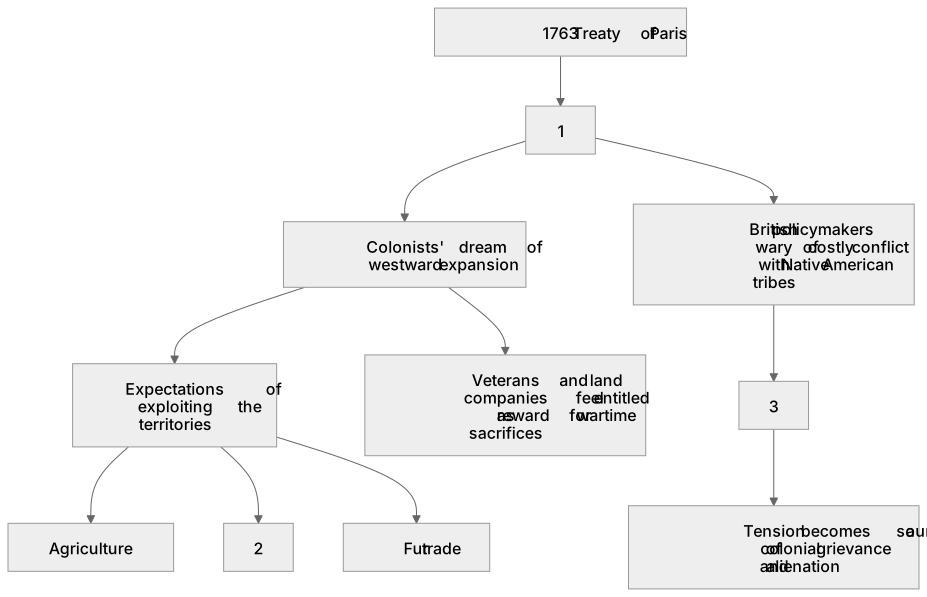
1Box 1
2Box 2
3Box 3
There is more to this lesson
The full lesson goes on to check your understanding and help you earn the marks. Create a free account to carry on, with your progress saved.
A week of Premium from your first lesson · Then the free plan continues · No card, no charge
Test your understanding of 2G The Birth of the USA, 1760–1801 – Britain and the American Colonies, 1760–1763: The dream of westward expansion: the expectations of the colonists; exploiting the territories acquired from French Canada
Active recall beats re-reading. Take an instant quiz now to test what you’ve learned and lock it into long-term memory.
A week of Premium from your first lesson · Then the free plan continues · No card, no charge