AQA · A-Level · History
Course version: 7042 · Version from Sept 2017
Conflict over Germany: developments within the sectors, including Bizonia…
Full specification wording
2R The Cold War, c1945–1991 – 1963 The Origins of the Cold War, c1945–1949: Conflict over Germany: developments within the sectors, including Bizonia and currency reform; the Berlin blockade; the creation of East and West Germany; formation of NATO
Post-war conflict over Germany escalated as the Allied powers pursued divergent policies within their occupation sectors.
Checked against the AQA 7042 specification (opens in a new tab) on .
- Point 4 of 4
Study notes
From the checked teaching notes for this specification point.
The idea
Post-war conflict over Germany escalated as the Allied powers pursued divergent policies within their occupation sectors. The US and Britain merged their zones into Bizonia in 1947 to streamline economic recovery, later introducing the Deutschmark in 1948. This currency reform, enacted without Soviet agreement, triggered Stalin to launch the Berlin blockade, cutting off land access to West Berlin. The West responded with a massive airlift, sustaining the city until the blockade was lifted in 1949. This crisis cemented the division of the country, leading directly to the creation of the Federal Republic of Germany (West) and the German Democratic Republic (East). Furthermore, the heightened security threat accelerated the formation of NATO in 1949, establishing a formal Western military alliance.
What earns the marks
- Analyse how divergent economic policies within the occupation sectors, particularly the creation of Bizonia, heightened tensions between the Western Allies and the Soviet Union.
- Explain the introduction of the new currency (Deutschmark) in the Western zones as the immediate catalyst for the Berlin blockade.
- Evaluate the logistical success and political significance of the Berlin airlift in defeating the Soviet blockade without triggering armed conflict.
- Assess how the resolution of the Berlin crisis formalised the division of Europe, resulting in the creation of East and West Germany and the formation of NATO.
Common mistakes and how to put them right
Stating that the Berlin Wall was built during the Berlin blockade.
Put it right: The blockade occurred in 1948 to 1949, whereas the Berlin Wall was not constructed until 1961.
Assuming NATO was formed solely in response to the creation of East Germany.
Put it right: NATO was a broader response to the Soviet threat highlighted by the Berlin blockade and the communist takeover in Czechoslovakia.
Confusing the sequence of events; students often place the creation of East and West Germany before the Berlin blockade, whereas the blockade actually accelerated their formal creation.
Exam tips
- Clearly distinguish between the long-term causes of the conflict over Germany, such as ideological differences, and the short-term triggers like the 1948 currency reform.
- Use the Berlin blockade as a prime example of brinkmanship and the limitations of Soviet power when confronted with Western logistical resolve.
- Connect the formation of NATO directly to the insecurity felt by Western European nations during the Berlin crisis, marking a definitive end to US peacetime isolationism.
Try the lesson
The start of the 2R The Cold War, c1945–1991 – 1963 The Origins of the Cold War, c1945–1949: Conflict over Germany: developments within the sectors, including Bizonia and currency reform; the Berlin blockade; the creation of East and West Germany; formation of NATO lesson, made from checked teaching notes for this specification point.
Have a go first
What was the immediate trigger for the Soviet Union's decision to impose the Berlin Blockade in June 1948?
Listen
Post-war conflict over Germany escalated as the Allied powers pursued divergent policies within their occupation sectors. The US and Britain merged their zones into Bizonia in 1947 to streamline economic recovery, later introducing the Deutschmark in 1948. This currency reform, enacted without Soviet agreement, triggered Stalin to launch the Berlin blockade, cutting off land access to West Berlin. The West responded with a massive airlift, sustaining the city until the blockade was lifted in 1949. This crisis cemented the division of the country, leading directly to the creation of the Federal Republic of Germany (West) and the German Democratic Republic (East). Furthermore, the heightened security threat accelerated the formation of NATO in 1949, establishing a formal Western military alliance. A strong answer earns marks for these points. Analyse how divergent economic policies within the occupation sectors, particularly the creation of Bizonia, heightened tensions between the Western Allies and the Soviet Union. Explain the introduction of the new currency (Deutschmark) in the Western zones as the immediate catalyst for the Berlin blockade. Evaluate the logistical success and political significance of the Berlin airlift in defeating the Soviet blockade without triggering armed conflict. Assess how the resolution of the Berlin crisis formalised the division of Europe, resulting in the creation of East and West Germany and the formation of NATO. Exam tip: Clearly distinguish between the long-term causes of the conflict over Germany, such as ideological differences, and the short-term triggers like the 1948 currency reform.
See it
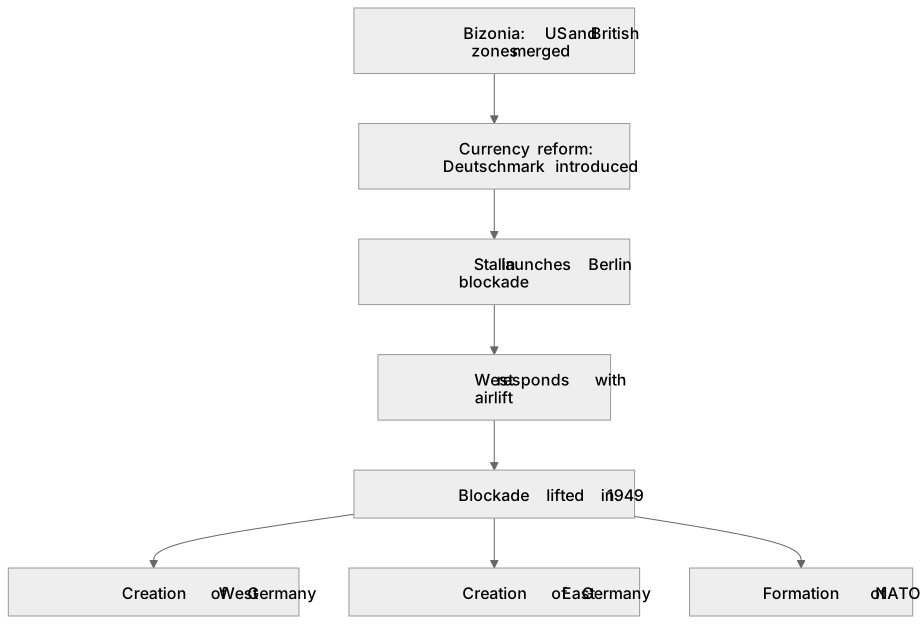
Label the diagram
Some boxes have lost their names. Pick the right name for each number.
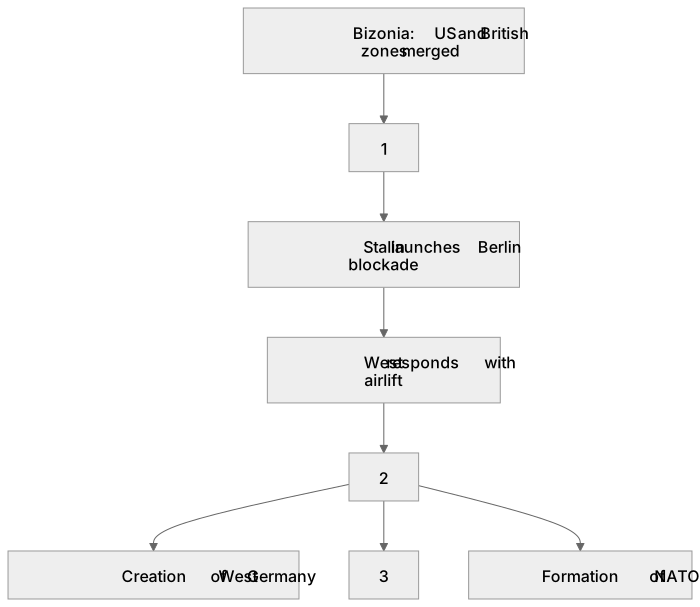
1Box 1
2Box 2
3Box 3
There is more to this lesson
The full lesson goes on to check your understanding and help you earn the marks. Create a free account to carry on, with your progress saved.
A week of Premium from your first lesson · Then the free plan continues · No card, no charge
Test your understanding of 2R The Cold War, c1945–1991 – 1963 The Origins of the Cold War, c1945–1949: Conflict over Germany: developments within the sectors, including Bizonia and currency reform; the Berlin blockade; the creation of East and West Germany; formation of NATO
Active recall beats re-reading. Take an instant quiz now to test what you’ve learned and lock it into long-term memory.
A week of Premium from your first lesson · Then the free plan continues · No card, no charge