Pearson Edexcel · A-Level · History
South Africa, 1948–94: from apartheid state to ‘rainbow nation’
This study examines the crucial period from 1968 to 1983 when internal and external resistance to the apartheid regime intensified significantly. You will explore how the Black Consciousness Movement, the Soweto Uprising, and the ANC in exile combined with international pressure to challenge the National Party's grip on power.
- 7 min read
- 3 worked examples
- 5 practice questions
- 6 key terms
Study Notes
Overview
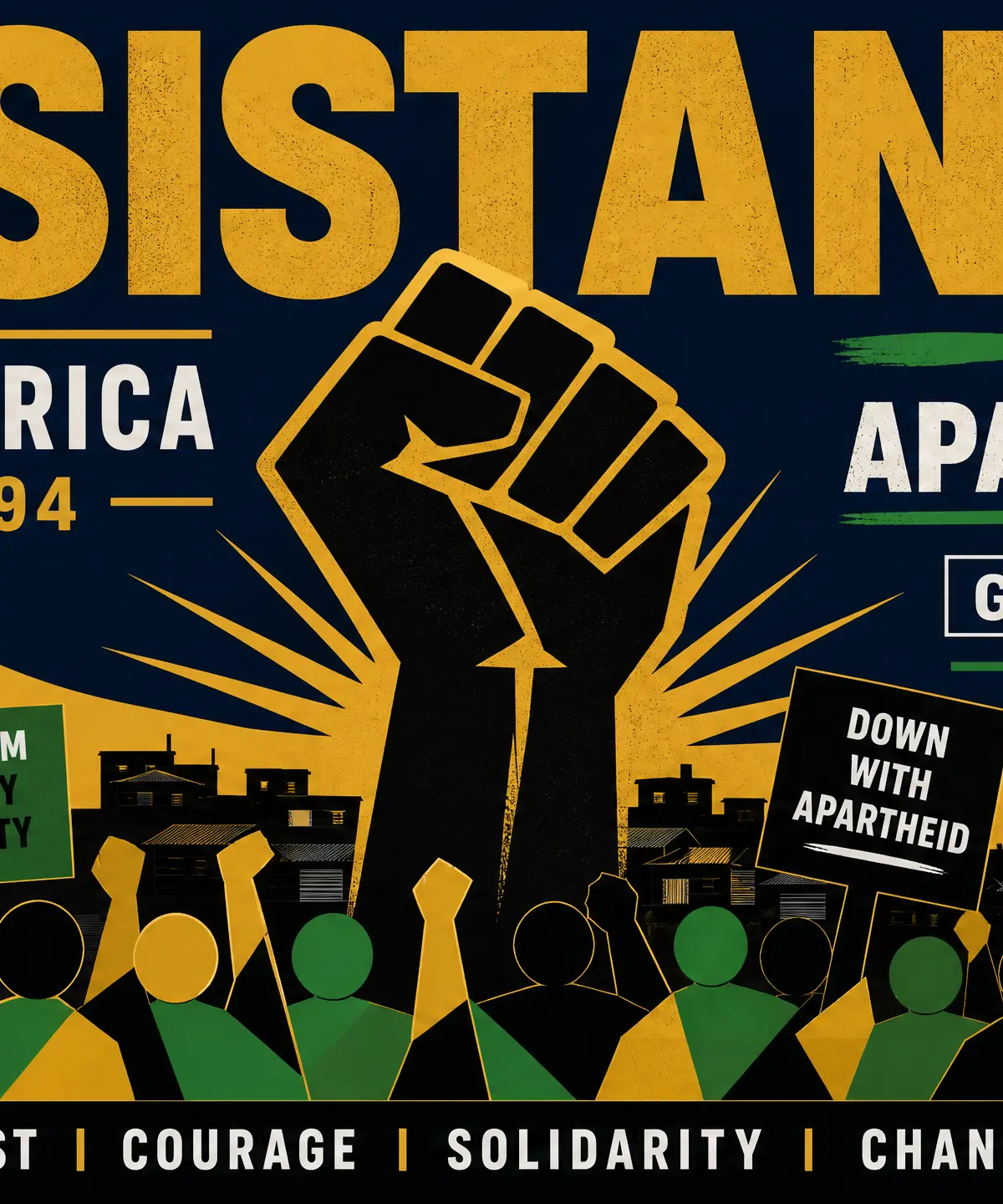
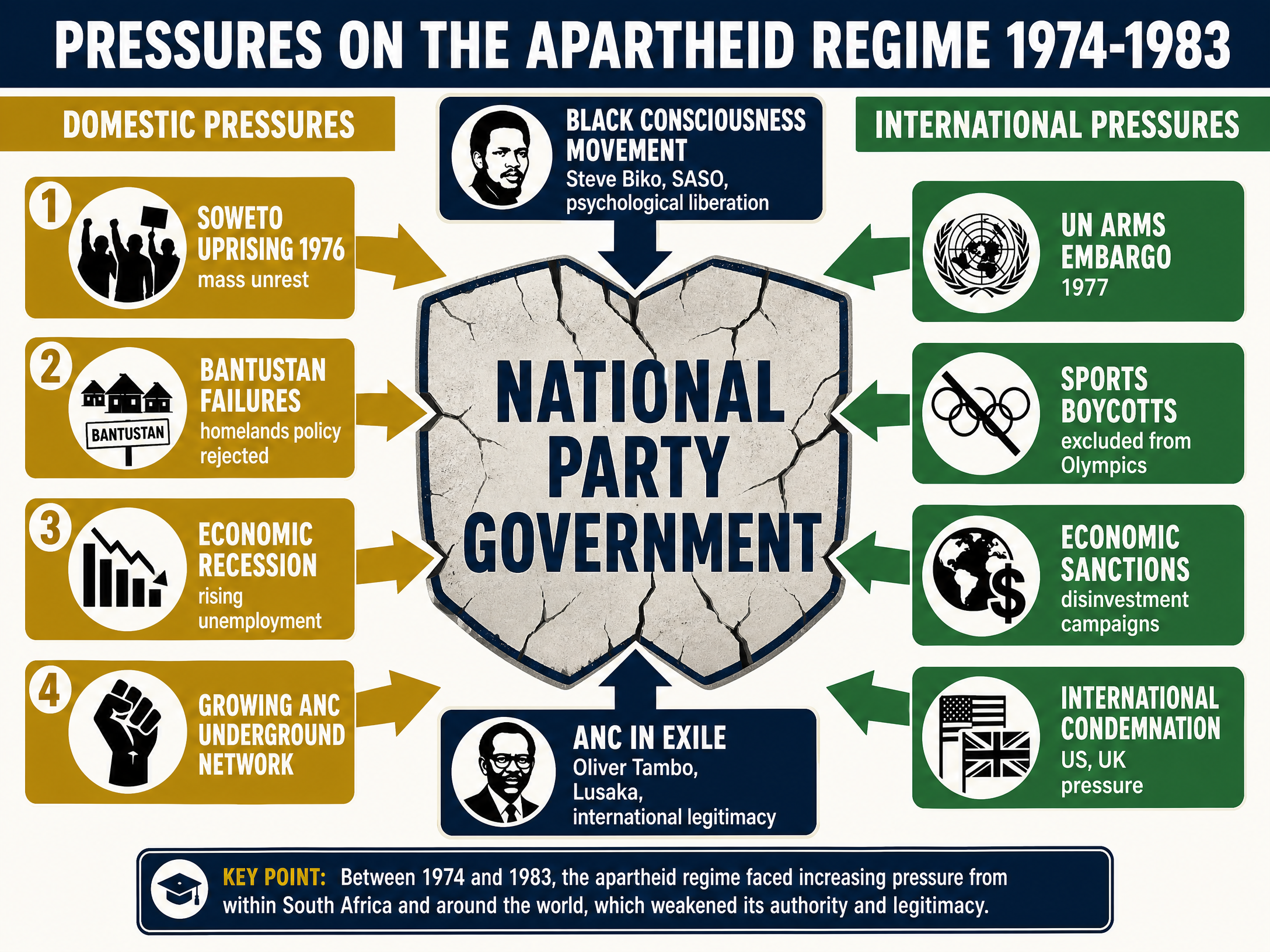
Between 1968 and 1983, the apartheid regime faced its most significant challenges since the National Party came to power in 1948. This period is defined by the emergence of new forms of resistance, most notably the Black Consciousness Movement led by Steve Biko, and the explosive student protests of the 1976 Soweto Uprising.
For your GCSE History exam, examiners expect you to understand not just what happened, but why these events were significant. You must be able to explain how domestic unrest combined with growing international condemnation (such as the 1977 UN arms embargo and sports boycotts) to weaken the apartheid state. You also need to evaluate the role of the ANC in exile under Oliver Tambo in maintaining pressure on the regime. Precision is key: use specific dates, names, and statistics to support your historical analysis.
Key Events & Developments
The Rise of the Black Consciousness Movement
Date(s): 1968 onwards
What happened: Steve Biko co-founded the South African Students' Organisation (SASO) in 1968. The movement promoted 'Black Consciousness' — the idea that Black South Africans must first liberate themselves from the psychological oppression of feeling inferior to whites before they could achieve political liberation.
Why it matters: It shifted resistance away from reliance on white liberals and empowered a new generation of Black youth to take direct action, laying the ideological groundwork for the Soweto Uprising.
Specific Knowledge: SASO founded in 1968; Biko's slogan "Black is Beautiful"; Black People's Convention (BPC) formed in 1972.
The Soweto Uprising
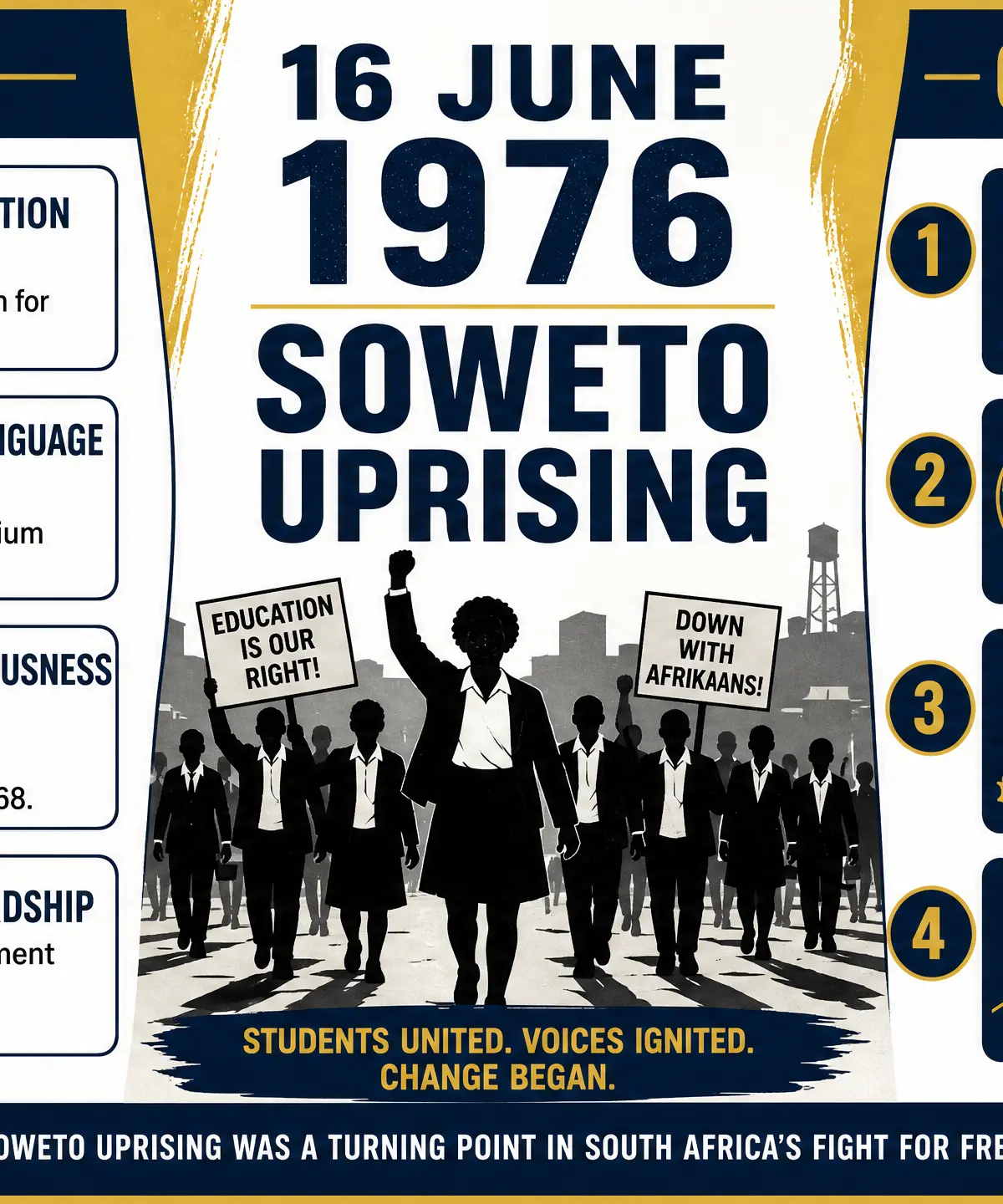
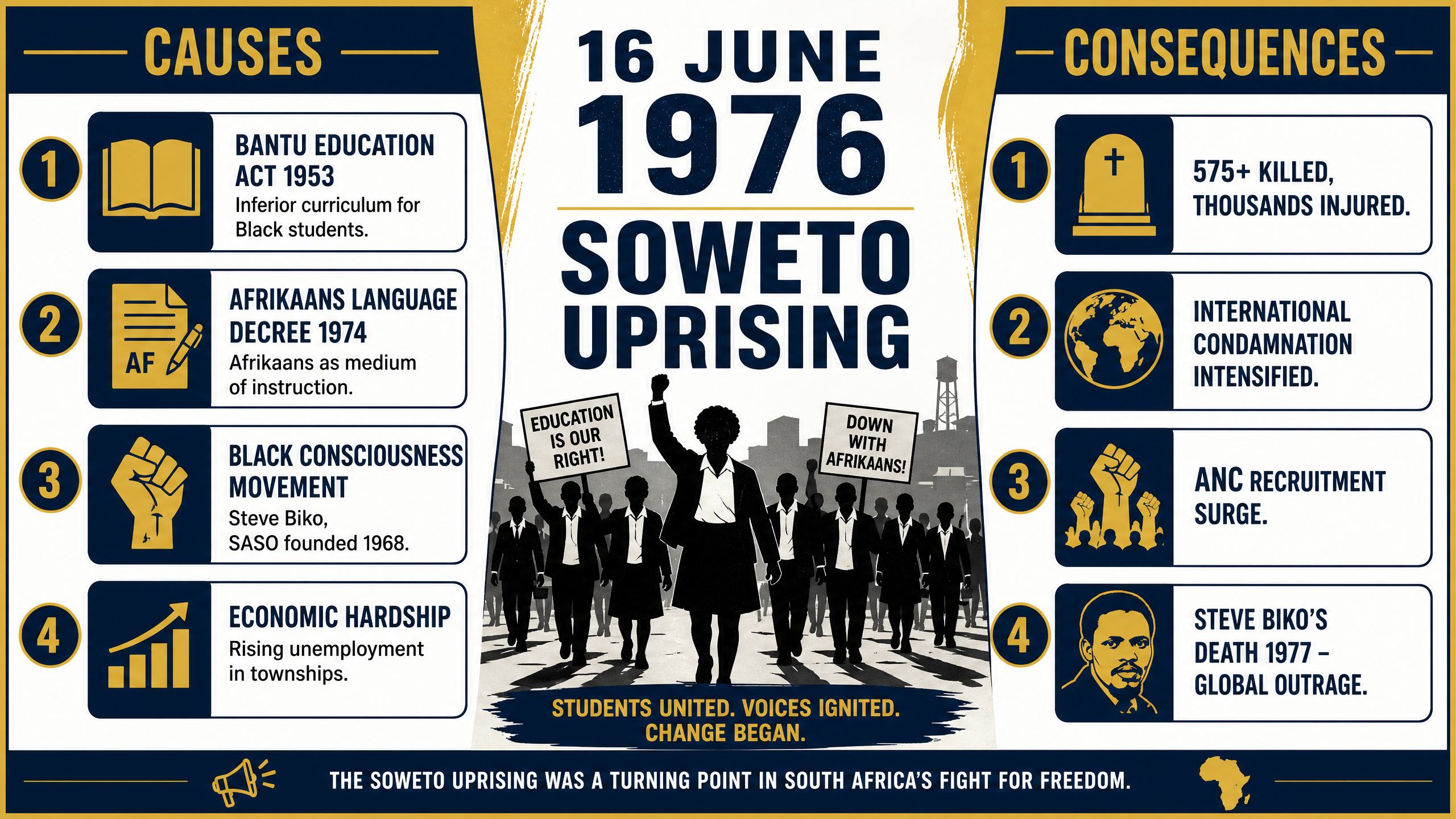
Date(s): 16 June 1976
What happened: Thousands of Black school children in Soweto protested against the Afrikaans Medium Decree (1974), which forced schools to teach half their subjects in Afrikaans. Police opened fire on the peaceful march, sparking nationwide riots.
Why it matters: It proved that the apartheid government could not maintain control solely through force. It destroyed the myth of a stable South Africa, leading to massive capital flight and a surge of young recruits fleeing the country to join the ANC's armed wing, MK.
Specific Knowledge: 16 June 1976; Afrikaans Medium Decree (1974); Hector Pieterson (13-year-old victim); official death toll 575 (though likely much higher).
The Death of Steve Biko
Date(s): 12 September 1977
What happened: Steve Biko died in police custody after suffering massive brain damage from beatings by security police. The government initially claimed he died from a hunger strike.
Why it matters: Biko became an international martyr. His death exposed the brutality of the regime to the world, directly leading to the UN imposing a mandatory arms embargo on South Africa.
Specific Knowledge: Arrested August 1977 under the Terrorism Act; died 12 September 1977; UN Resolution 418 (mandatory arms embargo) passed in November 1977.
The ANC in Exile and International Pressure
Date(s): 1974–1983
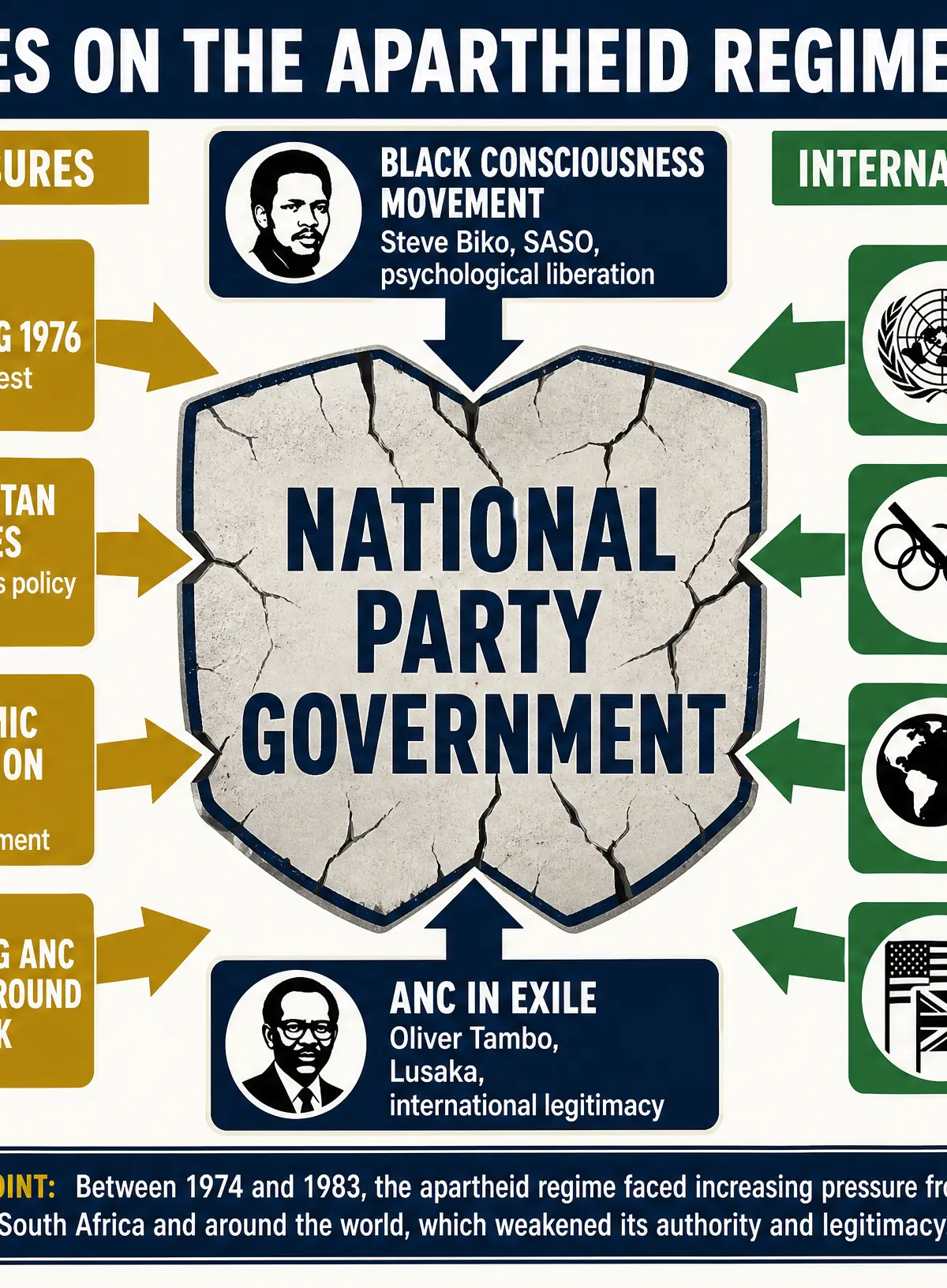
What happened: Under Oliver Tambo's leadership in Lusaka, the ANC built international legitimacy. Simultaneously, global pressure mounted through sporting boycotts (e.g., the Gleneagles Agreement) and growing economic disinvestment campaigns.
Why it matters: It meant the apartheid regime was fighting a war on two fronts: internal unrest and external isolation. The combination of economic sanctions and military pressure from MK (e.g., the 1980 SASOL bombing) stretched the state's resources.
Specific Knowledge: ANC headquarters in Lusaka, Zambia; 1977 Gleneagles Agreement (Commonwealth sports boycott); 1980 MK bombing of SASOL oil refinery.
Key Individuals
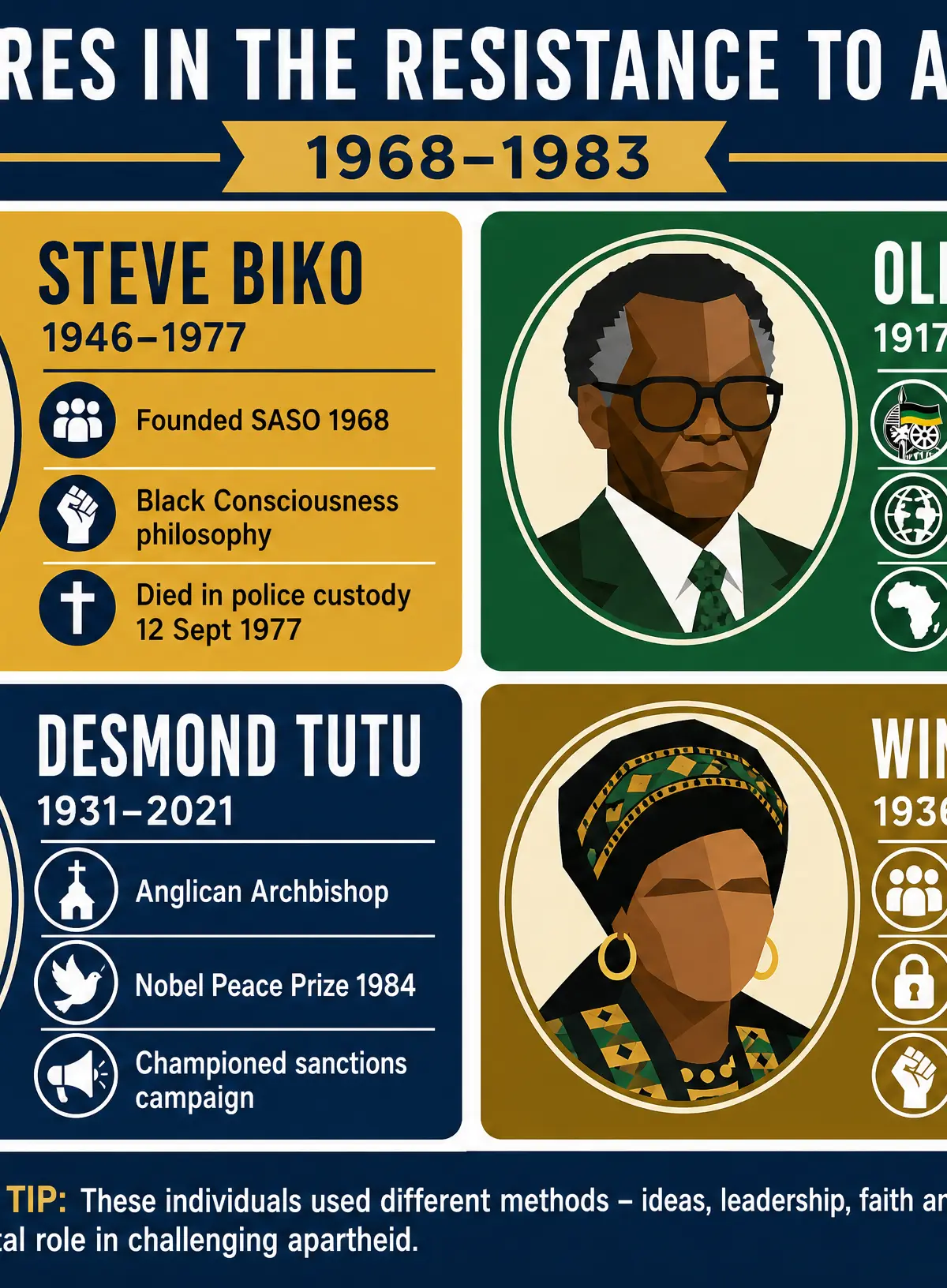
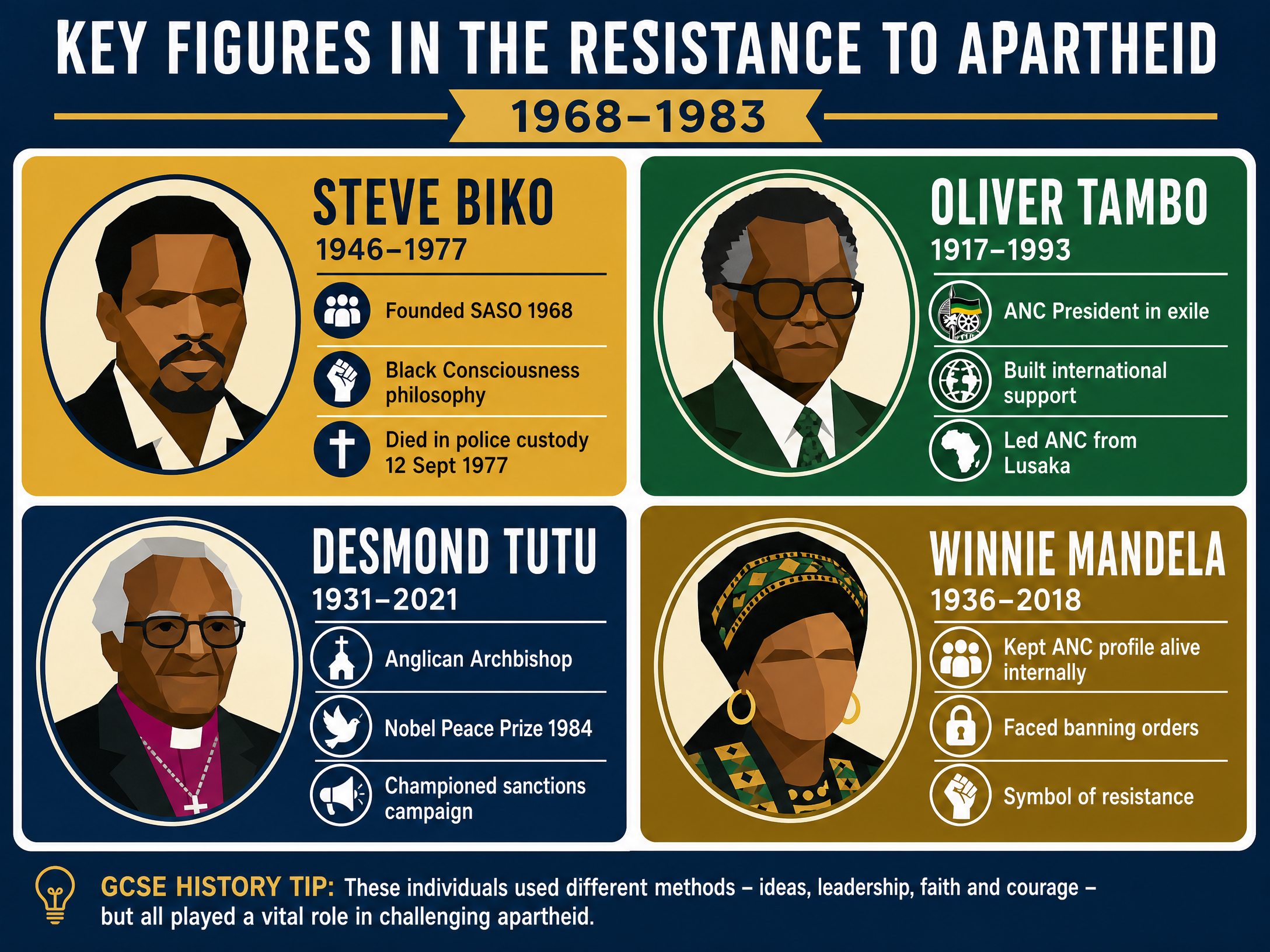
Steve Biko
Role: Leader and founder of the Black Consciousness Movement.
Key Actions: Founded SASO in 1968; articulated the philosophy of Black psychological liberation; refused to be intimidated by banning orders.
Impact: Inspired the generation of students who led the Soweto Uprising; his death in 1977 triggered unprecedented international sanctions.
Oliver Tambo
Role: Acting President of the ANC in exile.
Key Actions: Established ANC headquarters in Lusaka; built diplomatic ties with foreign governments and the UN; oversaw the integration of the 'Soweto Generation' into MK.
Impact: Ensured the ANC survived its banning and remained the internationally recognised voice of the South African liberation struggle.
Winnie Mandela
Role: Anti-apartheid activist and wife of Nelson Mandela.
Key Actions: Defied constant police harassment and banning orders; kept Nelson Mandela's name alive in the public consciousness; became a prominent figure in the Soweto uprisings.
Impact: Served as a vital symbol of internal resistance and defiance when the formal ANC leadership was either imprisoned or in exile.
Second-Order Concepts
Causation
The Soweto Uprising was triggered by the short-term cause of the 1974 Afrikaans Medium Decree. However, examiners expect you to link this to long-term causes: the systemic inequality of the 1953 Bantu Education Act, severe overcrowding in township schools, and the ideological catalyst provided by the Black Consciousness Movement.
Consequence
The events of 1976-1977 had profound consequences. Domestically, they radicalised a generation of youth. Internationally, the consequence was isolation: the 1977 UN arms embargo marked a shift from verbal condemnation to tangible action against the apartheid state.
Change & Continuity
While the methods of resistance changed (from the ANC's mass campaigns of the 1950s to the student-led Black Consciousness of the 1970s), the continuity was the National Party's reliance on state violence and repressive legislation (like the Terrorism Act) to maintain control.
Significance
This period is historically significant because it marks the point where apartheid became fundamentally unsustainable. The combination of internal ungovernability and external economic/diplomatic pressure laid the foundation for the eventual negotiated settlement in the 1990s.
Source Skills
When evaluating sources from this period, carefully consider provenance. A report by the South African police on the Soweto Uprising will likely downplay police violence and blame 'agitators' to justify their actions. Conversely, an ANC pamphlet from exile will emphasize the regime's brutality to drum up international support. Always cross-reference the source's content with your specific knowledge (e.g., the actual death toll in Soweto) to judge its utility.
Audio Revision
Listen to the revision podcast below to consolidate your knowledge of this topic:
Visual Resources
3 diagrams and illustrations
Interactive Diagrams
1 interactive diagram to visualise key concepts
Diagram could not be rendered
Timeline showing the rapid escalation of resistance and international response.
Worked Examples
3 worked examples — open one to explore the question and available guidance.
Practice Questions
Test your understanding — click to reveal model answers
Describe two features of the Black Consciousness Movement. (4 marks)
Hint: Identify a feature, then add a specific detail or fact to develop it.
Explain the significance of the Soweto Uprising (1976) for the apartheid regime. (8 marks)
Hint: Think about the impact on the ANC, the international community, and the South African economy.
In what ways were the pressures on the apartheid regime in 1983 different from those in 1968? Explain your answer. (8 marks)
Hint: Compare the situation in 1968 (regime in control, ANC crushed) with 1983 (international sanctions, armed attacks, domestic ungovernability).
Study Source C (A photograph of the Hector Pieterson memorial). How useful is this source to a historian studying the events of the Soweto Uprising? (8 marks)
Hint: Remember: Content + Provenance + Limitations = Utility.
‘International pressure was the main reason the apartheid regime weakened between 1974 and 1983.’ How far do you agree? (16 marks)
Hint: Argue for international pressure (UN, boycotts, sanctions) but counter with domestic pressure (Soweto, Black Consciousness, ANC).
Test your understanding of South Africa, 1948–94: from apartheid state to ‘rainbow nation’
Active recall beats re-reading. Take an instant quiz now to test what you’ve learned and lock it into long-term memory.
7 days Premium · Then free forever · No card, no charge