Pearson Edexcel · A-Level · History
The Golden Age of Spain, 1474–1598
This study covers the explosive growth of the Spanish Empire between 1474 and 1598, transforming a collection of Iberian kingdoms into the world's first truly global superpower. You will explore how military innovation, New World wealth, and strategic marriages created unprecedented dominance, while also examining the fatal financial and political flaws that ultimately undermined it.
- 8 min read
- 3 worked examples
- 5 practice questions
- 6 key terms
Study Notes
Overview
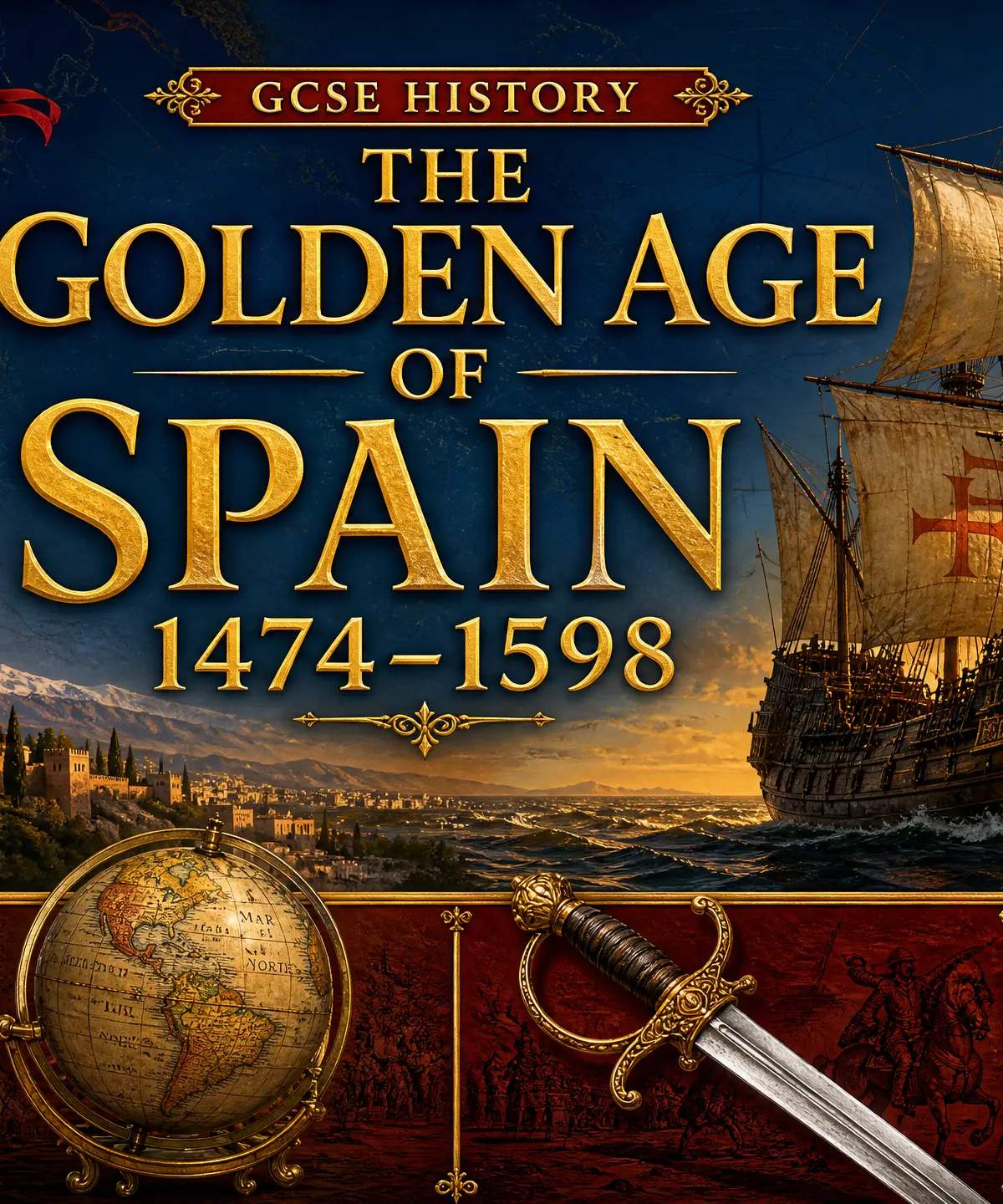
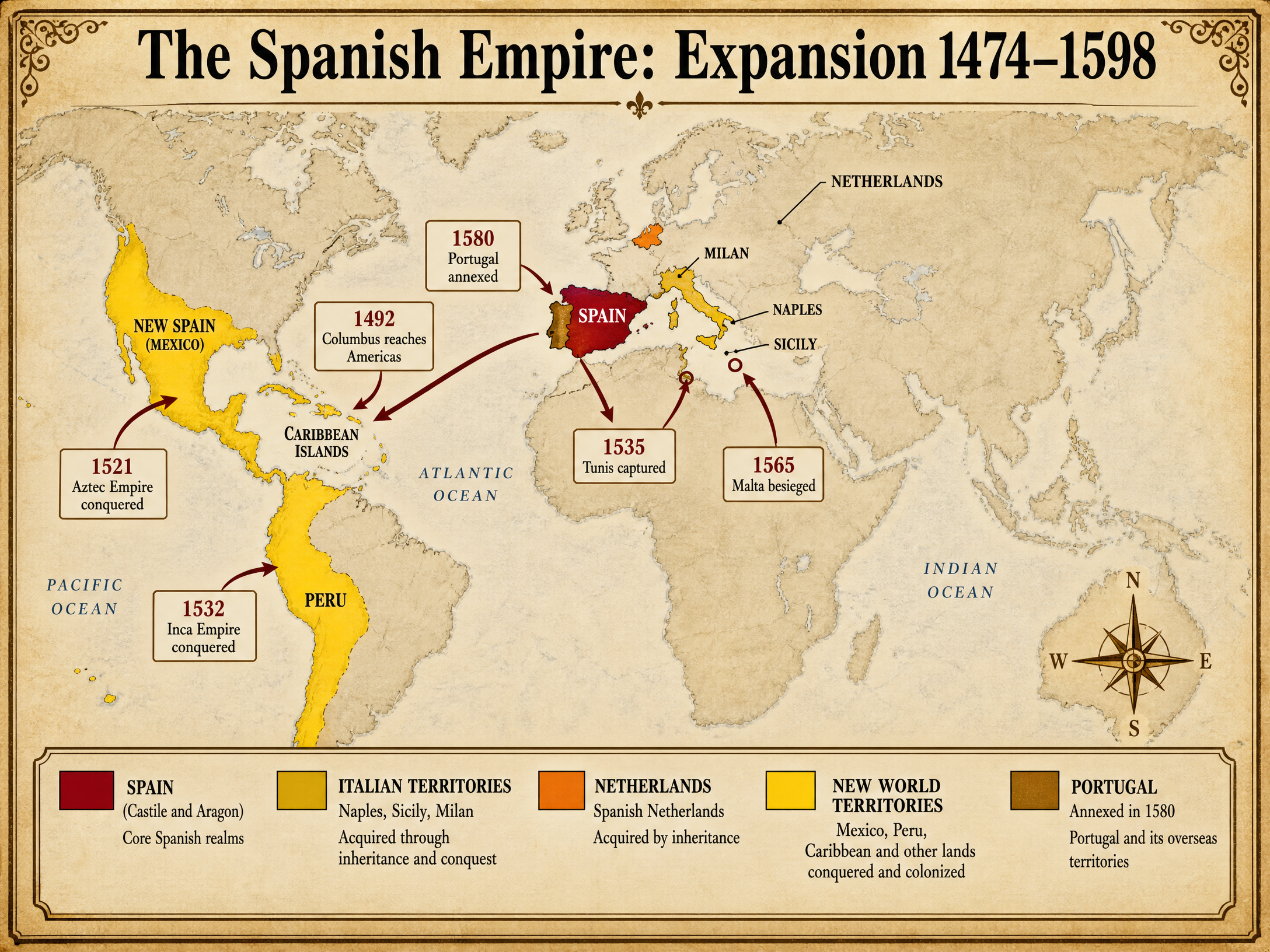
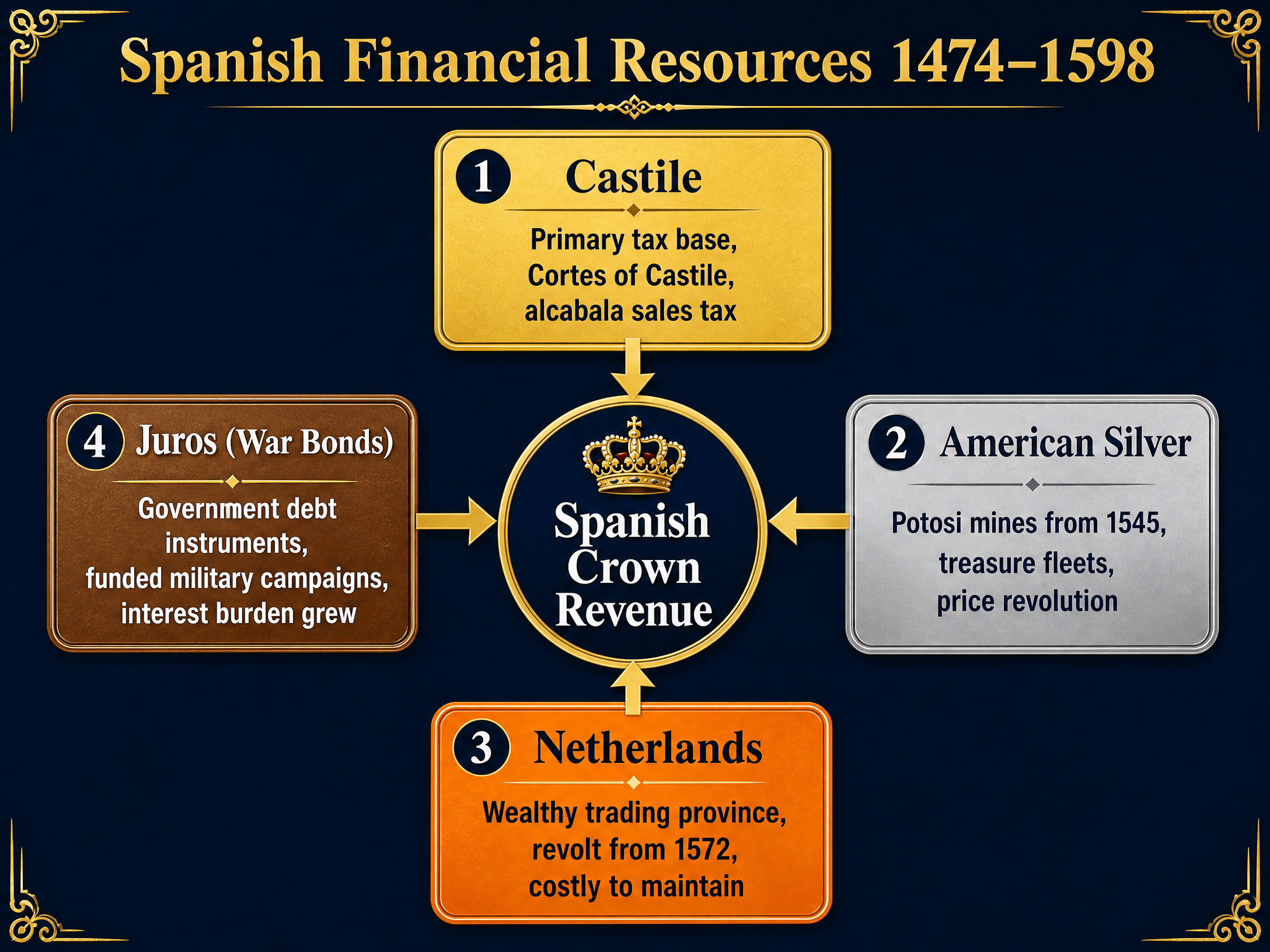
The Golden Age of Spain (1474–1598) represents a pivotal era in European history, marking the transition from medieval kingdoms to early modern empires. During this period, Spain expanded its influence across Italy, the Mediterranean, northern Europe, the Americas, and eventually Portugal. Examiners expect candidates to understand not just the narrative of this expansion, but the underlying mechanisms that made it possible: the revolutionary military tactics of the tercios, the complex and often precarious financial systems built on Castilian taxation and American silver, and the shifting strategic priorities from the Mediterranean to the Atlantic. Crucially, top-level answers will demonstrate an understanding of the paradox of Spanish power: how unprecedented wealth and military might were consistently undermined by massive debt, inflation, and over-extension.
Key Events & Developments
The Conquest of the Americas
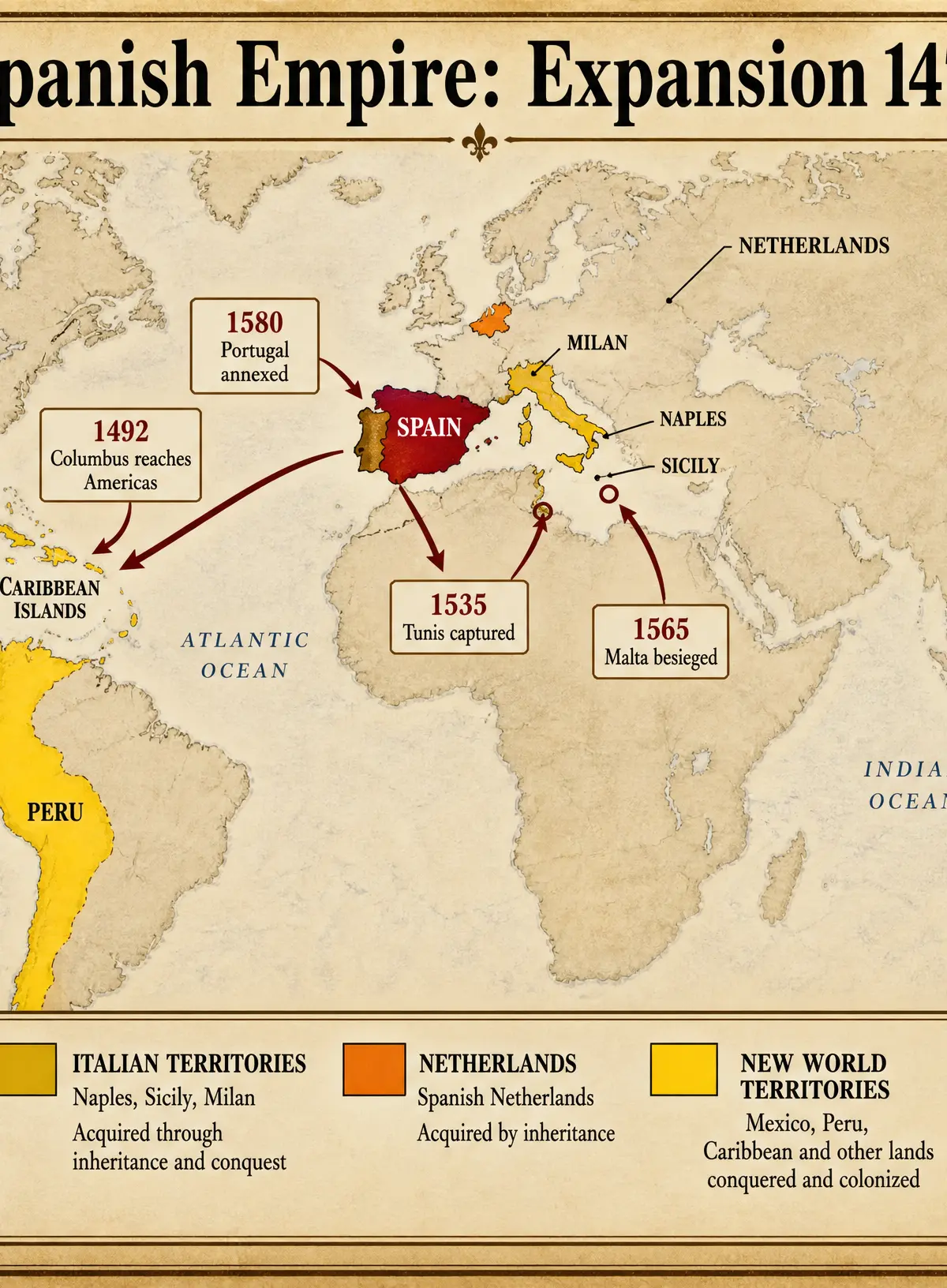
Date(s): 1492 (Columbus), 1521 (Aztecs), 1532 (Incas)
What happened: Following Columbus's initial voyage, Spanish conquistadors rapidly dismantled the major indigenous empires of the Americas. Hernán Cortés conquered the Aztec Empire, and Francisco Pizarro conquered the Inca Empire.
Why it matters: This provided Spain with vast new territories and, crucially, access to immense mineral wealth, particularly silver. This wealth funded European campaigns but also caused devastating inflation (the 'price revolution').
Specific Knowledge: Columbus sailed in 1492; Cortés conquered the Aztecs in 1521; Pizarro conquered the Incas in 1532 with fewer than 200 men; Potosí silver mines discovered in 1545.
The Struggle for Italy
Date(s): 1494–1559 (Italian Wars), notably Battle of Pavia (1525)
What happened: Spain and France fought a series of conflicts for control of the wealthy Italian peninsula. Spanish forces, utilizing new infantry tactics, consistently defeated the French.
Why it matters: Victory secured Spanish dominance over Naples, Sicily, and Milan, providing crucial tax revenues and strategic bases in the Mediterranean. It established the reputation of the Spanish army as invincible.
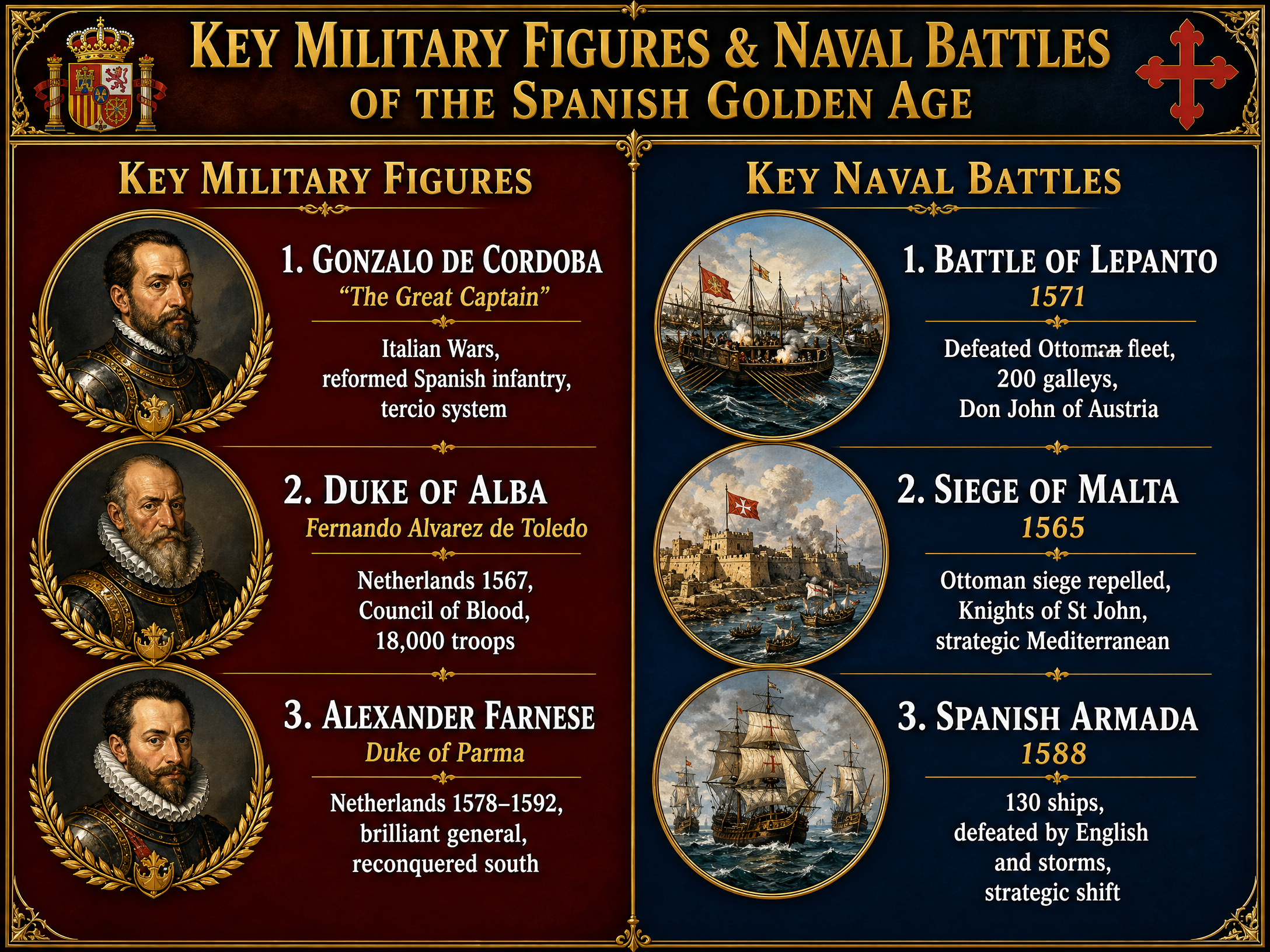
Specific Knowledge: Battle of Pavia in 1525 resulted in the capture of French King Francis I; Gonzalo de Córdoba reformed the army; the tercio formation was developed.
The Mediterranean Conflict with the Ottomans
Date(s): 1535 (Capture of Tunis), 1565 (Siege of Malta), 1571 (Battle of Lepanto)
What happened: Spain led Catholic Europe in a protracted naval struggle against the expanding Ottoman Empire. After mixed results, a decisive victory was won at Lepanto.
Why it matters: Lepanto halted Ottoman naval expansion in the western Mediterranean and demonstrated the effectiveness of Spanish-led naval coalitions, though it did not eliminate the Ottoman threat entirely.
Specific Knowledge: Capture of Tunis in 1535; Siege of Malta repelled in 1565; Battle of Lepanto in 1571 involved approx. 200 galleys led by Don John of Austria.
The Revolt of the Netherlands
Date(s): 1572 onwards
What happened: The Protestant northern provinces of the Spanish Netherlands revolted against the Catholic rule and heavy taxation of Philip II.
Why it matters: This became a massive, unending drain on Spanish financial and military resources (the 'Army of Flanders'). It forced Spain to fight a multi-front war and contributed significantly to state bankruptcies.
Specific Knowledge: Revolt began in earnest in 1572; Duke of Alba arrived in 1567 with 18,000 troops; Alexander Farnese (Duke of Parma) commanded from 1578-1592.
The Annexation of Portugal
Date(s): 1580
What happened: Following a succession crisis, Philip II claimed the Portuguese throne and backed his claim with military force.
Why it matters: This united the entire Iberian Peninsula and gave Spain control over Portugal's vast overseas empire in Brazil, Africa, and Asia, creating the first truly global empire.
Specific Knowledge: Annexed in 1580; added significant naval resources and the lucrative spice trade to the Spanish Crown.
The Spanish Armada
Date(s): 1588
What happened: Philip II sent a massive fleet to invade England, aiming to stop English support for Dutch rebels and restore Catholicism.
Why it matters: The defeat of the Armada was a major symbolic blow to Spanish prestige and marked a shift in naval power dynamics, though Spain rebuilt its fleet and remained powerful.
Specific Knowledge: 130 ships launched; defeated by English tactics (fireships at Gravelines) and severe storms.
Key Individuals
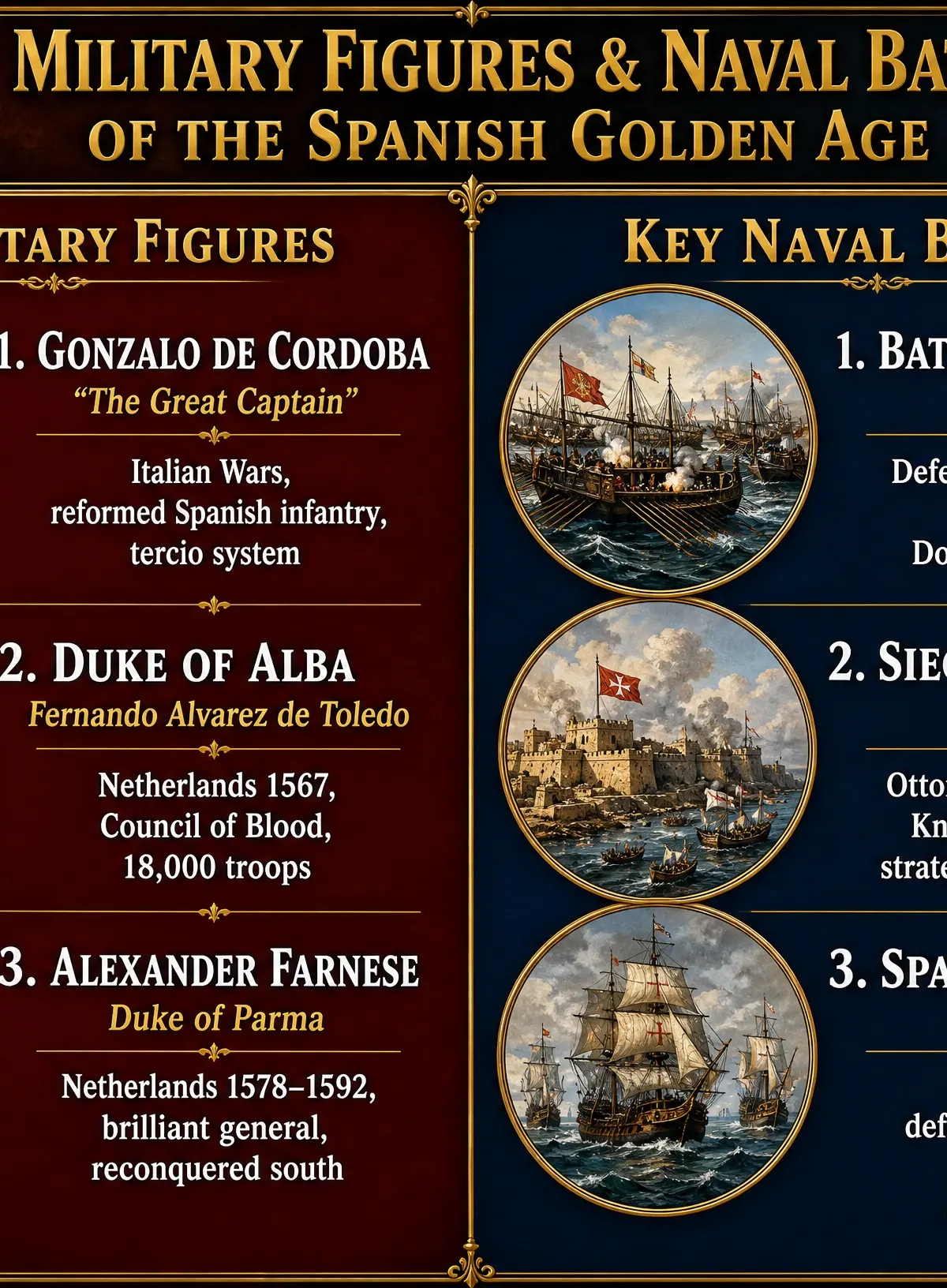
Gonzalo de Córdoba
Role: Spanish General ('The Great Captain')
Key Actions: Reformed the Spanish infantry during the Italian Wars, creating the highly effective tercio formation.
Impact: His tactical innovations made the Spanish army the dominant land force in Europe for over a century, securing Spanish control of Italy.
Fernando Álvarez de Toledo, Duke of Alba
Role: Spanish General and Governor of the Netherlands
Key Actions: Sent to the Netherlands in 1567 to suppress Protestant rebellion; established the harsh 'Council of Blood'.
Impact: His brutal methods alienated the population, turning a localized rebellion into a full-scale, entrenched war that drained Spanish resources.
Alexander Farnese, Duke of Parma
Role: Spanish General and Governor of the Netherlands
Key Actions: Commanded the Army of Flanders (1578-1592); successfully reconquered the southern Netherlands using a mix of military brilliance and diplomacy.
Impact: He secured the southern provinces (modern Belgium) for Spain, preventing the total loss of the Netherlands, though he could not subdue the northern Dutch Republic.
Don John of Austria
Role: Military Commander (half-brother to Philip II)
Key Actions: Commanded the Holy League fleet at the Battle of Lepanto in 1571.
Impact: Achieved the most significant naval victory over the Ottoman Empire, securing his legacy as a defender of Catholic Europe.
Second-Order Concepts
Causation
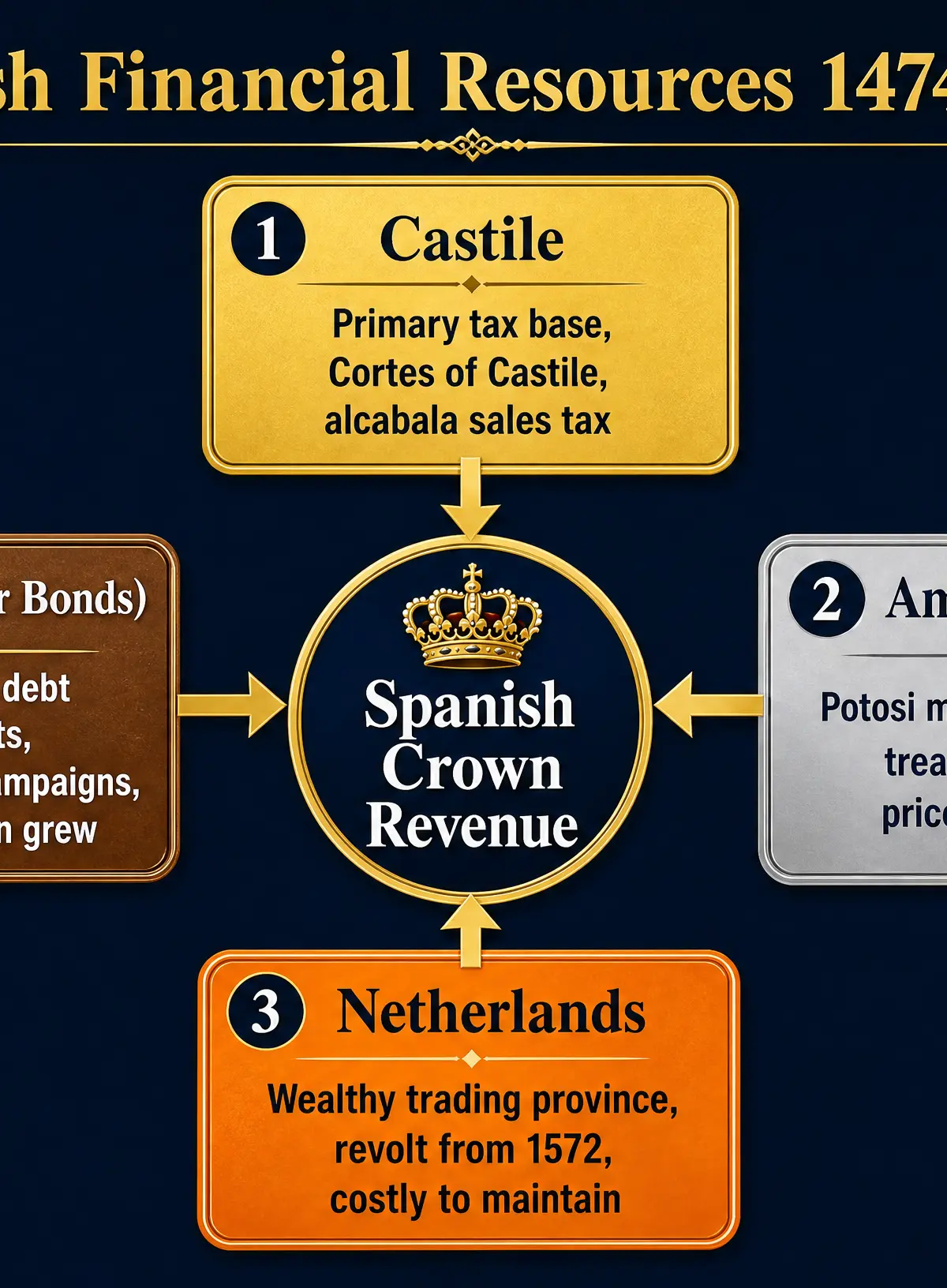
Spanish expansion was driven by a combination of long-term factors (dynastic marriages uniting Castile and Aragon, the inheritance of the Netherlands) and short-term triggers (the discovery of the New World, specific succession crises like Portugal in 1580). Military success was caused by tactical innovation (tercios) funded by new revenue streams (American silver, Castilian taxes).
Consequence
The immediate consequence of expansion was unprecedented wealth and power. However, the long-term consequences included devastating inflation (the price revolution), chronic state debt (reliance on juros), and the over-extension of military forces across too many fronts (Netherlands, Mediterranean, England), leading to repeated state bankruptcies.
Change & Continuity
A major change during this period was the strategic shift in focus. Under Ferdinand, Isabella, and Charles V, the primary focus was the Mediterranean and Italy. Under Philip II, while the Mediterranean remained important, the strategic centre of gravity shifted to the Atlantic, northern Europe (the Netherlands), and the New World. The continuity was the constant need for vast financial resources to maintain the empire.
Significance
The Golden Age of Spain is significant because it established the first global empire, fundamentally altered the European economy through the influx of New World silver, and defined the political and religious boundaries of early modern Europe through its conflicts with Protestantism and the Ottoman Empire.
Source Skills
When evaluating sources for this topic, consider the author's perspective carefully. Spanish court documents often emphasize divine right and military glory while downplaying financial crises. English or Dutch sources from the period are highly hostile, often exaggerating Spanish cruelty (the 'Black Legend'). Always assess the provenance: Was the source intended for public propaganda or private government administration? Use your specific knowledge of dates and financial realities to test the claims made in the sources.
Worked Examples
3 worked examples — open one to explore the question and available guidance.
Practice Questions
Test your understanding — click to reveal model answers
Describe two features of the Spanish tercio system. (4 marks)
Hint: Think about the types of soldiers involved and who created it.
Explain why the Spanish Armada was defeated in 1588. (12 marks)
Hint: Consider English tactics, weather, and Spanish leadership/planning.
Explain the significance of the Battle of Lepanto (1571). (8 marks)
Hint: What did it stop? What did it prove about Spanish power?
'The financial problems of the Spanish Empire were entirely caused by the cost of foreign wars.' How far do you agree? (16 marks)
Hint: Wars were expensive, but what about inflation, tax systems, and debt structures?
Describe two ways the Spanish Empire expanded between 1474 and 1580. (4 marks)
Hint: Think about the New World and Europe.
Test your understanding of The Golden Age of Spain, 1474–1598
Active recall beats re-reading. Take an instant quiz now to test what you’ve learned and lock it into long-term memory.
7 days Premium · Then free forever · No card, no charge