Pearson Edexcel · GCSE · History
Crime and punishment in Britain, c1000–present and Whitechapel, c1870–c1900: crime, policing and the inner city
This study guide covers a thousand years of British history, exploring how society's definition of crime, methods of law enforcement, and approaches to punishment have evolved. It includes a deep dive into the notorious Whitechapel murders of 1888, revealing the immense challenges of policing Victorian London's most deprived areas.
- 7 min read
- 3 worked examples
- 2 practice questions
- 6 key terms
Study Notes
Overview
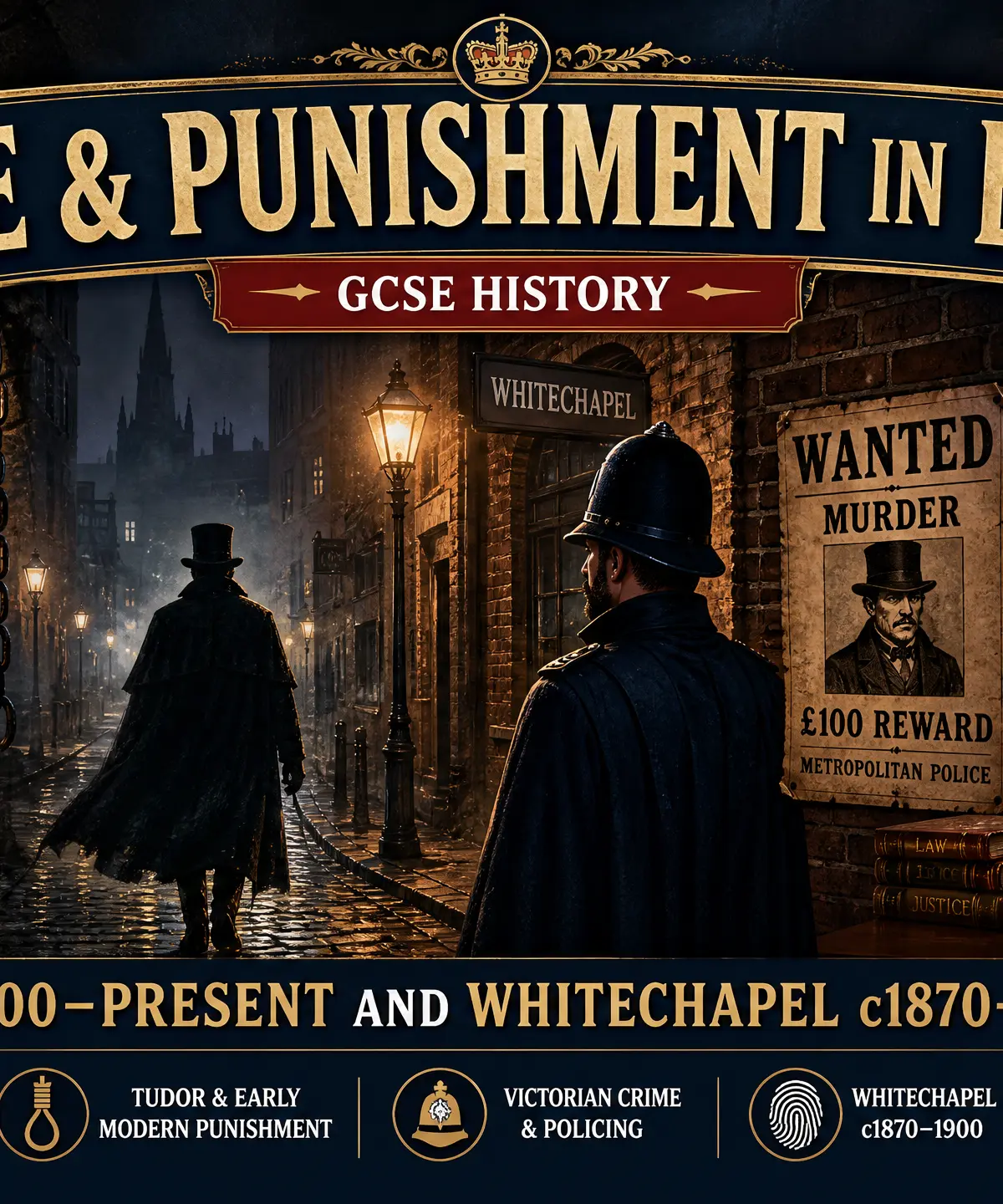
This comprehensive study guide covers the thematic study of Crime and Punishment in Britain, c1000–present, alongside the historical environment depth study of Whitechapel, c1870–1900: crime, policing and the inner city. This topic requires candidates to understand continuity and change over a millennium. Examiners expect you to identify patterns in how crimes were defined, how the law was enforced, and how criminals were punished. You must also be able to explain the factors driving these changes, such as the role of the Church, government intervention, social attitudes, and individuals. The Whitechapel depth study specifically tests your ability to analyse historical sources in the context of Victorian policing challenges.
Listen to the Podcast
Listen to our comprehensive 15-minute audio guide covering all key concepts, case studies, and exam techniques for this topic:
Key Eras & Developments
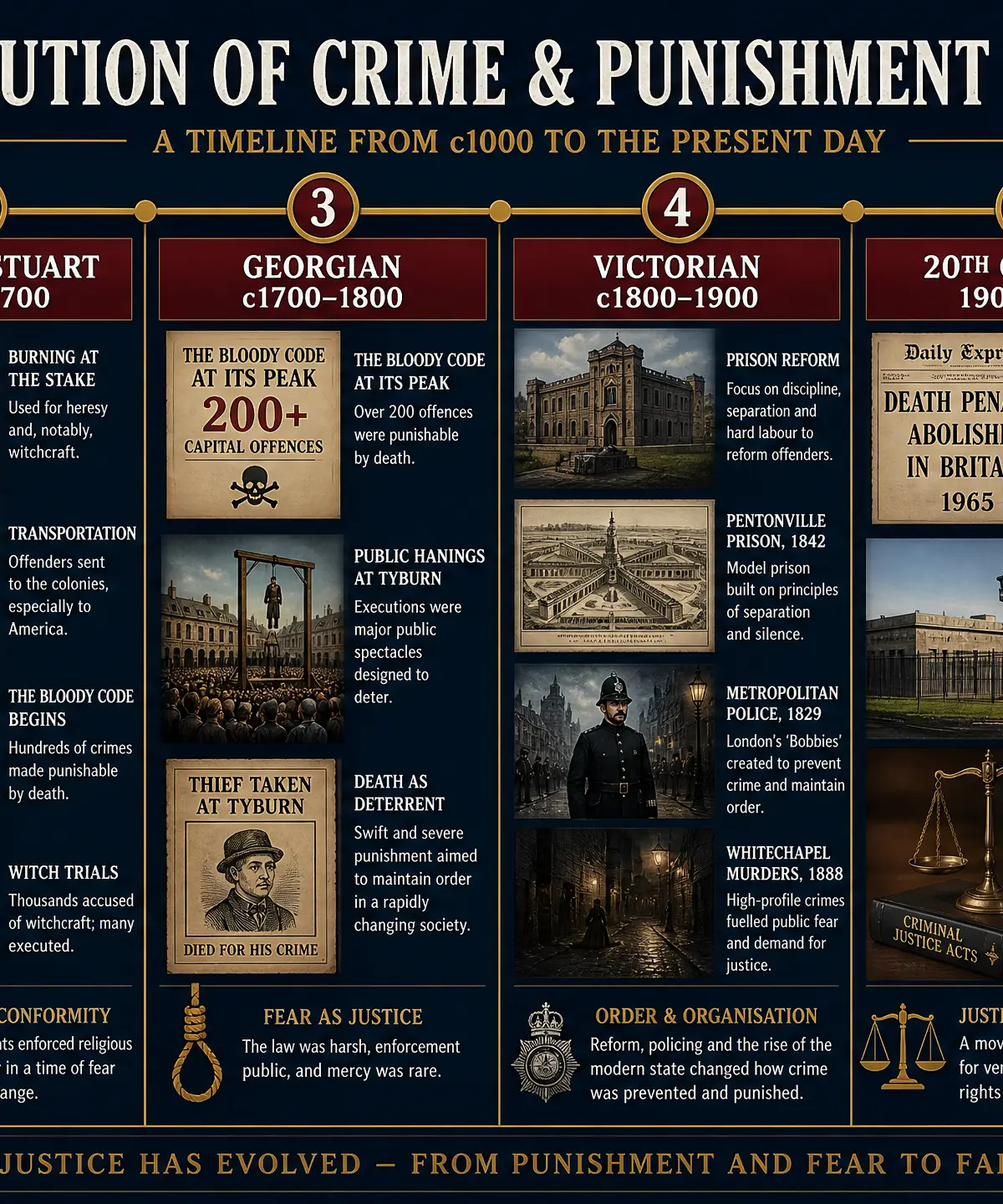
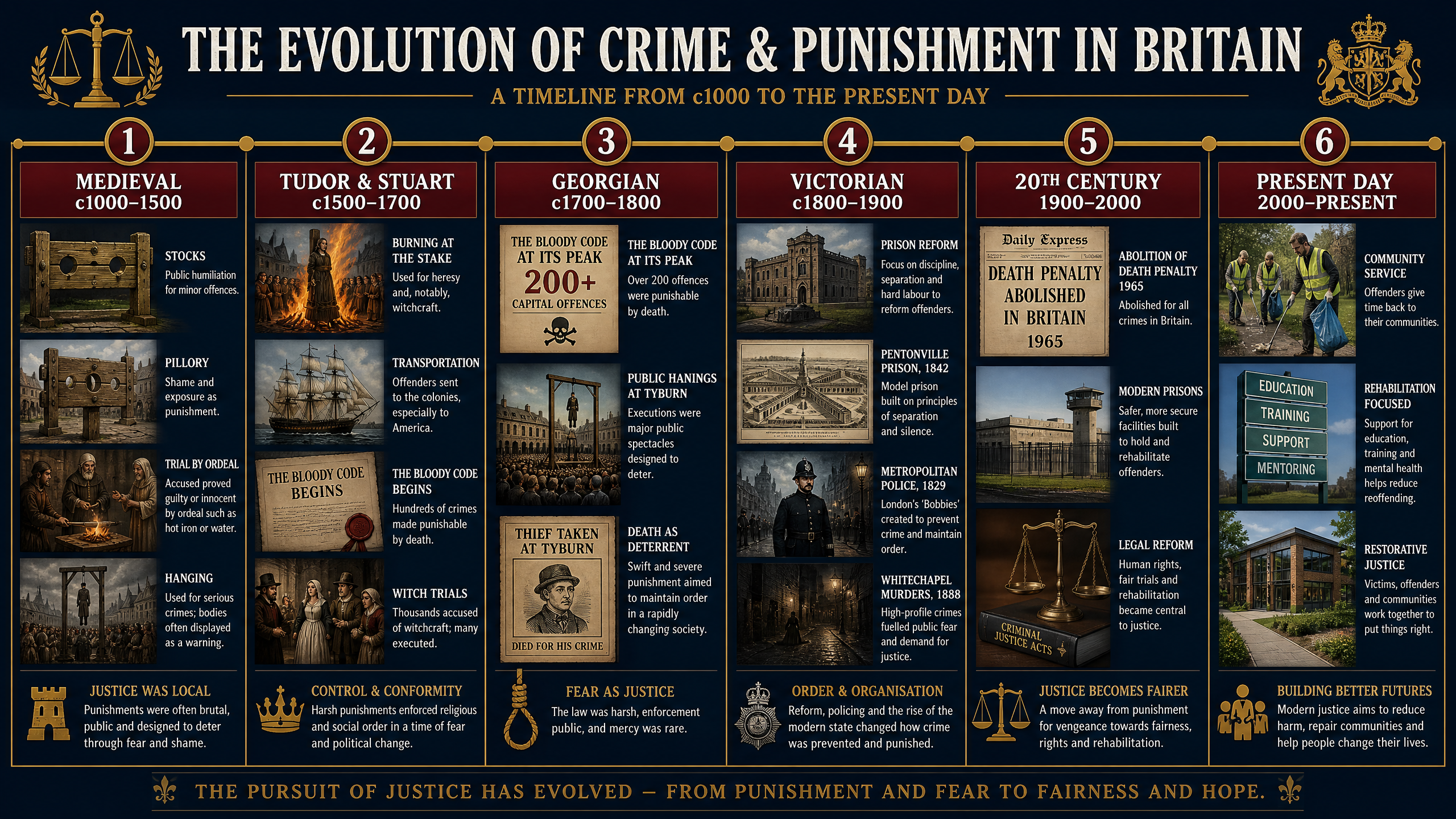
The Medieval Period (c1000–c1500)
Date(s): c1000–c1500
What happened: Law enforcement was highly localized and community-based. Punishments were public, physical, and designed primarily for deterrence and retribution.
Why it matters: This era establishes the baseline for 'continuity and change' questions. The transition from Anglo-Saxon community justice (tithings, hue and cry) to Norman centralization (Murdrum fine, Forest Laws) shows how conquest changes law.
Specific Knowledge:
- Tithings: Groups of 10 men responsible for each other's behaviour.
- Hue and Cry: The entire village was expected to hunt down a criminal.
- Trial by Ordeal: Used when juries couldn't decide (e.g., hot iron, cold water); abolished by the Pope in 1215.
- Benefit of Clergy: Church courts claiming the right to try priests, often resulting in more lenient sentences.
Early Modern England (c1500–c1700)
Date(s): c1500–c1700
What happened: A period of immense social and religious upheaval leading to new definitions of crime, specifically vagabondage and witchcraft. The role of the state increased.
Why it matters: Demonstrates how changing social conditions (population growth, inflation, religious reformation) create new fears, leading authorities to criminalize new behaviours.
Specific Knowledge:
- Vagabondage: 1547 Vagrancy Act (branding with a 'V'); 1597 Act (whipping and returning to home parish).
- Witchcraft: 1563 Witchcraft Act made it a capital offence. Over 1,000 executions in England, mostly women.
- Transportation: Began under James I (1603-1625) sending convicts to North America.
The Bloody Code & Its Decline (c1700–c1900)
Date(s): c1700–c1900
What happened: The number of capital crimes peaked at over 200 (The Bloody Code), but executions actually fell as juries refused to convict. This led to alternative punishments like transportation to Australia and, later, the reform of prisons.
Why it matters: Shows the failure of extreme deterrence and the shift towards the idea of rehabilitation.
Specific Knowledge:
- The Bloody Code: By 1815, there were 225 capital offences, including stealing goods worth 5 shillings.
- Transportation to Australia: Started in 1787; ended in 1868.
- Prison Reform: 1823 Gaols Act (Robert Peel); 1842 Pentonville Prison built on the 'separate system'.
Modern Law Enforcement (c1900–present)
Date(s): c1900–present
What happened: The professionalization of policing, abolition of the death penalty, and the emergence of new crimes (cybercrime, hate crime).
Why it matters: Illustrates the impact of science, technology, and changing social attitudes on justice.
Specific Knowledge:
- Abolition of the Death Penalty: 1965 (Murder Act suspended it, made permanent in 1969).
- New Crimes: 1967 Abortion Act and Sexual Offences Act decriminalized certain behaviours, showing changing social attitudes.
Key Case Studies & Depth Studies
The Gunpowder Plot (1605)
What happened: Robert Catesby and Guy Fawkes attempted to blow up Parliament and King James I.
Why it matters: A classic example of treason (crime against authority) and the use of harsh public punishment (hanged, drawn, and quartered) as a deterrent.
Matthew Hopkins and the Witch-Hunts (1645–1647)
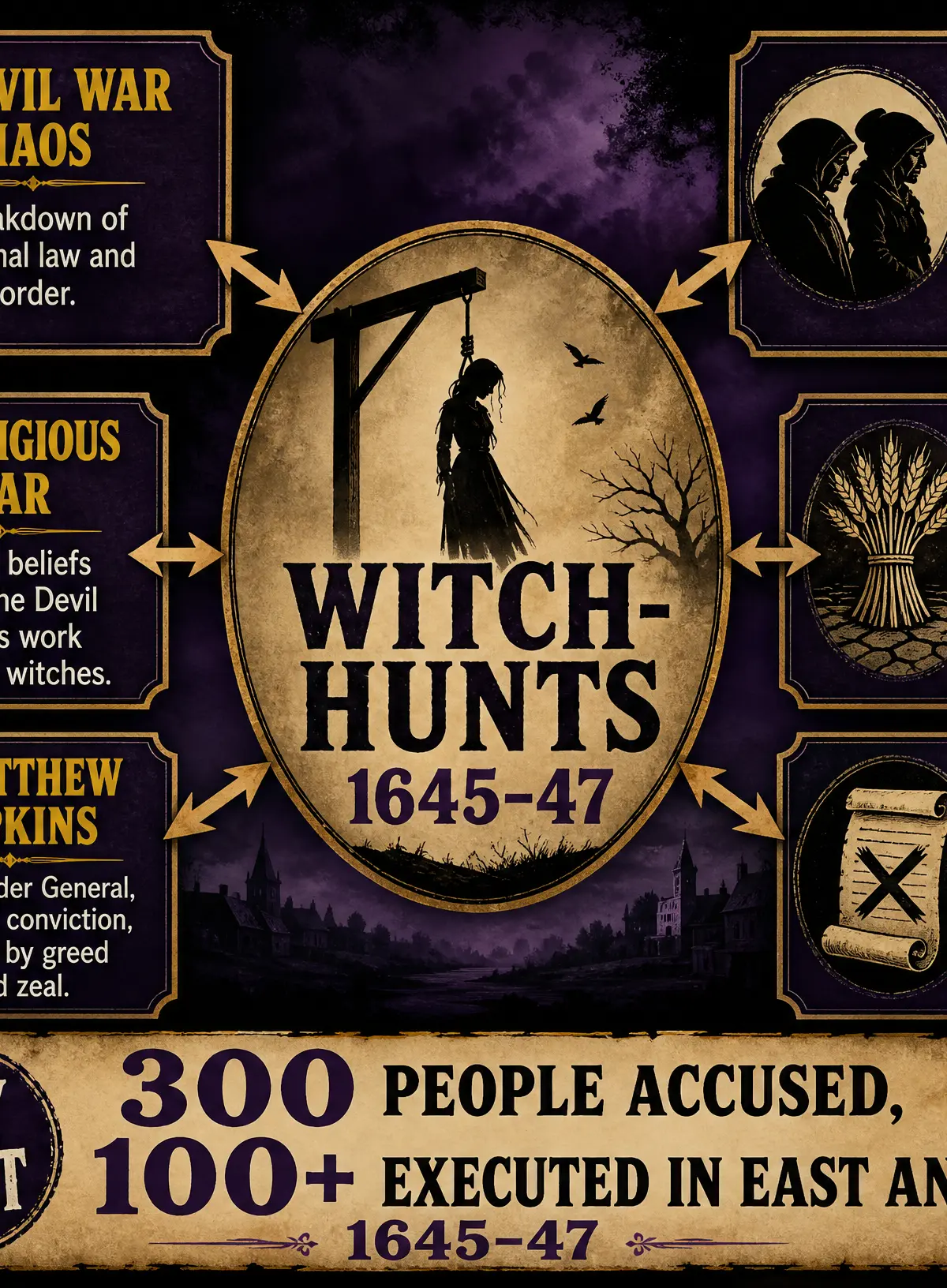
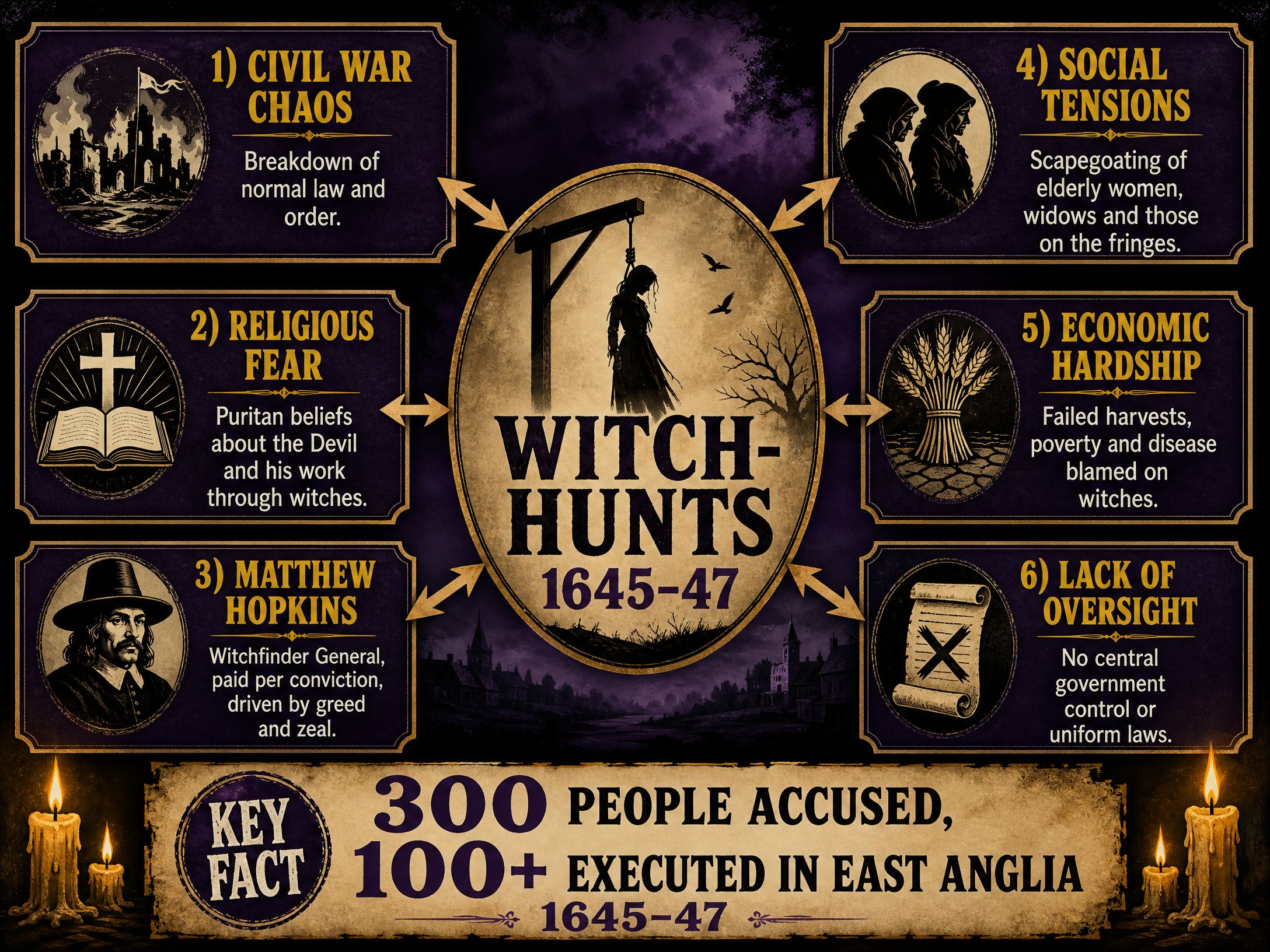
What happened: Hopkins, the 'Witchfinder General', orchestrated the execution of over 100 people in East Anglia.
Why it matters: Shows how lack of authority (during the English Civil War), religious extremism (Puritanism), and economic hardship can lead to mass panic and scapegoating.
Whitechapel (c1870–1900)
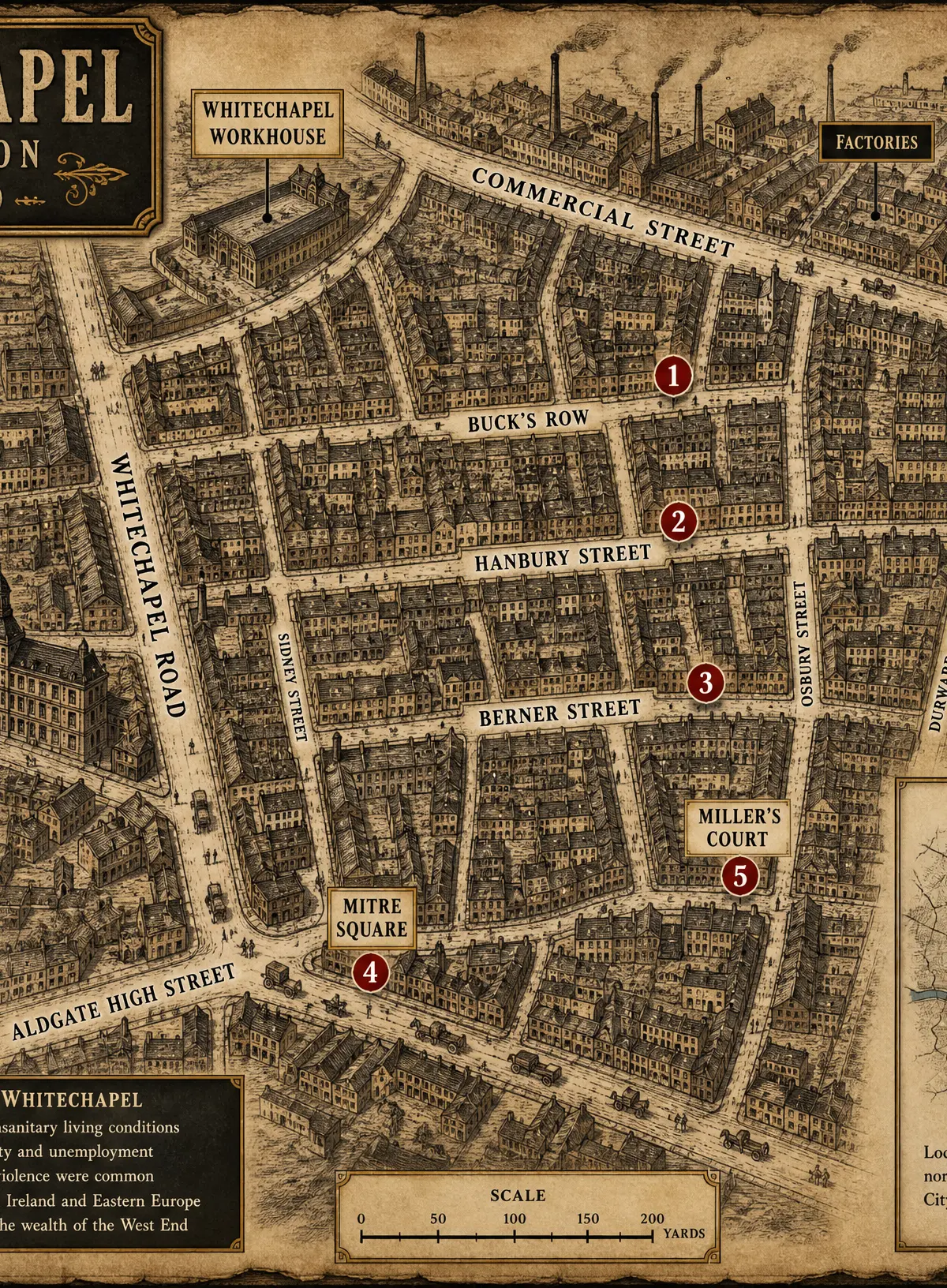
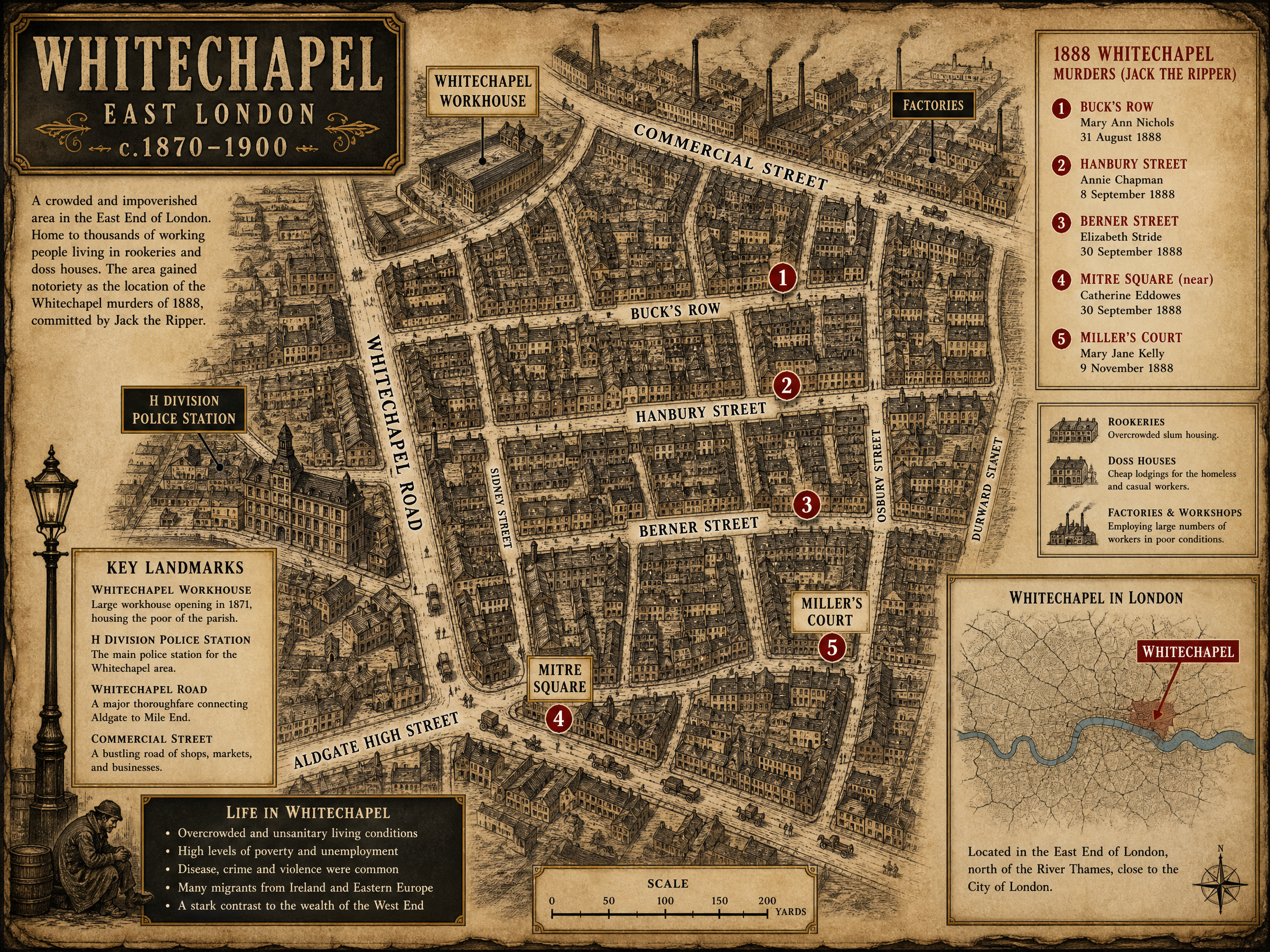
What happened: A period of intense poverty, overcrowding, and crime in London's East End, culminating in the 1888 Jack the Ripper murders.
Why it matters: This is your historical environment depth study. It tests your ability to evaluate historical sources regarding the difficulties of policing a slum area.
Specific Knowledge:
- H Division: The Metropolitan Police division responsible for Whitechapel.
- Rookeries: Slum housing areas with extremely high crime rates.
- The 1888 Murders: Five canonical victims (Nichols, Chapman, Stride, Eddowes, Kelly).
- Policing Methods: Use of bloodhounds (failed), photography, and witness sketches.
Second-Order Concepts
Causation
Why did crime rates or punishments change? Always look for the underlying factors: poverty, population growth, religious change (e.g., the Reformation causing fear of heresy and witchcraft), or government fear of rebellion (e.g., the Bloody Code).
Consequence
What were the effects of new laws? For example, the consequence of the Bloody Code was actually a decrease in executions, because juries thought the punishment was too harsh for minor crimes and found defendants 'not guilty'.
Change & Continuity
Examiners love this. Change: The shift from community policing (hue and cry) to professional policing (Metropolitan Police 1829). Continuity: The continued use of physical punishment and the belief in deterrence until the late 19th century.
Significance
The significance of an event is judged by its impact. The 1823 Gaols Act is significant because it marked the beginning of government responsibility for prison conditions, shifting the focus slightly from pure punishment to potential rehabilitation.
Source Skills (For Whitechapel Depth Study)
For the Whitechapel environment study, you will face an 8-mark 'How useful' source question. You must analyze:
- Content: What does the source actually tell you about policing or conditions in Whitechapel?
- Provenance: Who wrote it, when, and why? A police report has a different purpose than a sensationalist newspaper article.
- Contextual Knowledge: Use your own knowledge to verify or challenge the source.
- Limitations: What does it not tell you? Is it biased?
Worked Examples
3 worked examples — open one to explore the question and available guidance.
Practice Questions
Test your understanding — click to reveal model answers
'The role of the Church was the most important factor influencing justice in the Middle Ages.' How far do you agree? Explain your answer. (16 marks + 4 SPaG)
Hint: You must discuss the Church, but you MUST also discuss other factors like the role of the King/Government or the local community to provide a balanced argument.
Explain the significance of the 1823 Gaols Act. (8 marks)
Hint: Focus on the impact of the Act. What changed because of it? Mention Robert Peel.
Test your understanding of Crime and punishment in Britain, c1000–present and Whitechapel, c1870–c1900: crime, policing and the inner city
Active recall beats re-reading. Take an instant quiz now to test what you’ve learned and lock it into long-term memory.
7 days Premium · Then free forever · No card, no charge