Pearson Edexcel · GCSE · History
The reigns of King Richard I and King John, 1189–1216
This study covers the dramatic reigns of King Richard I and King John (1189–1216), a period defined by absentee kingship, heavy taxation, and a rebellious nobility. Understanding this era is crucial because it reveals how the feudal system operated in practice and how royal financial exploitation ultimately led to the creation of Magna Carta.
- 9 min read
- 3 worked examples
- 5 practice questions
- 6 key terms
Study Notes
Overview
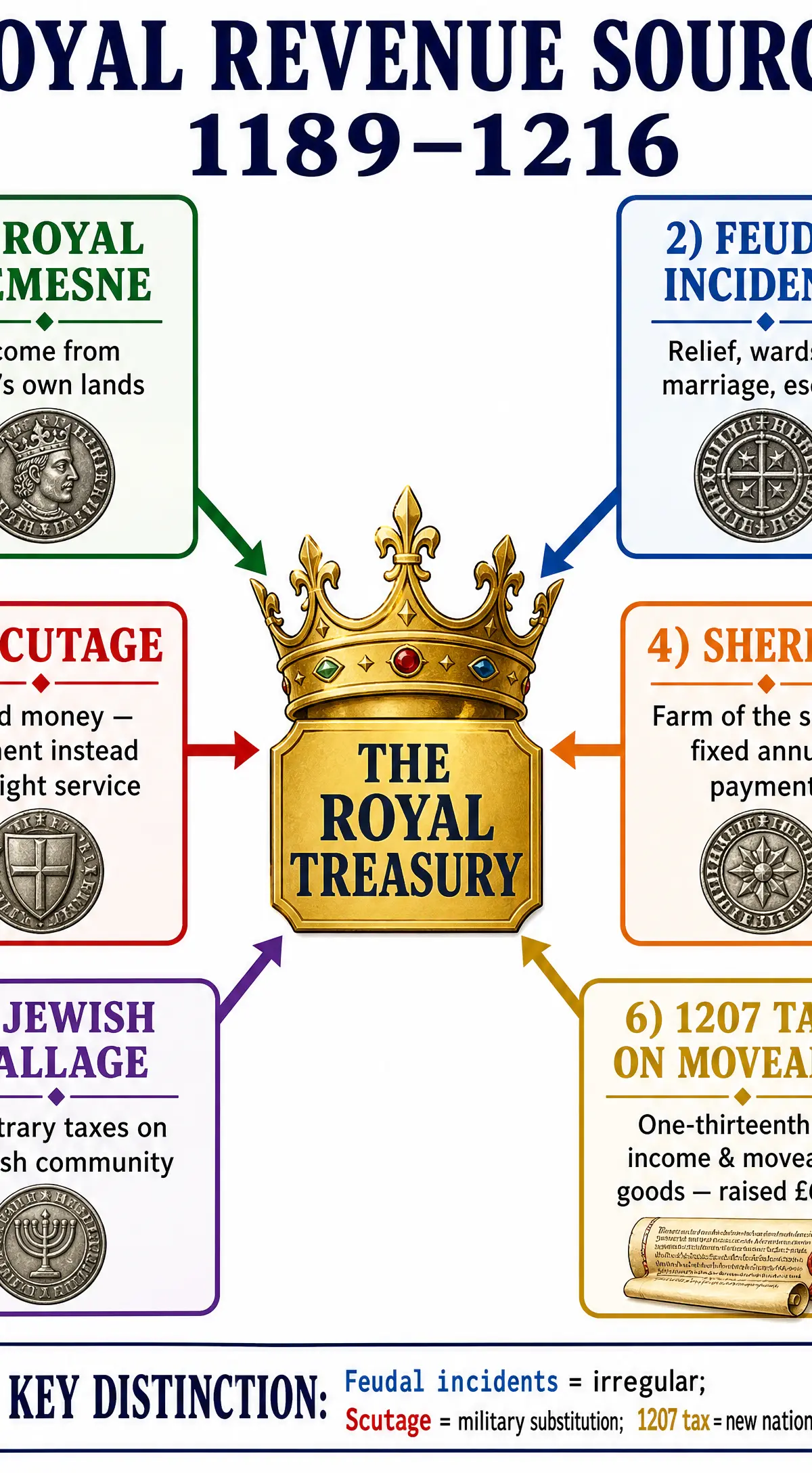
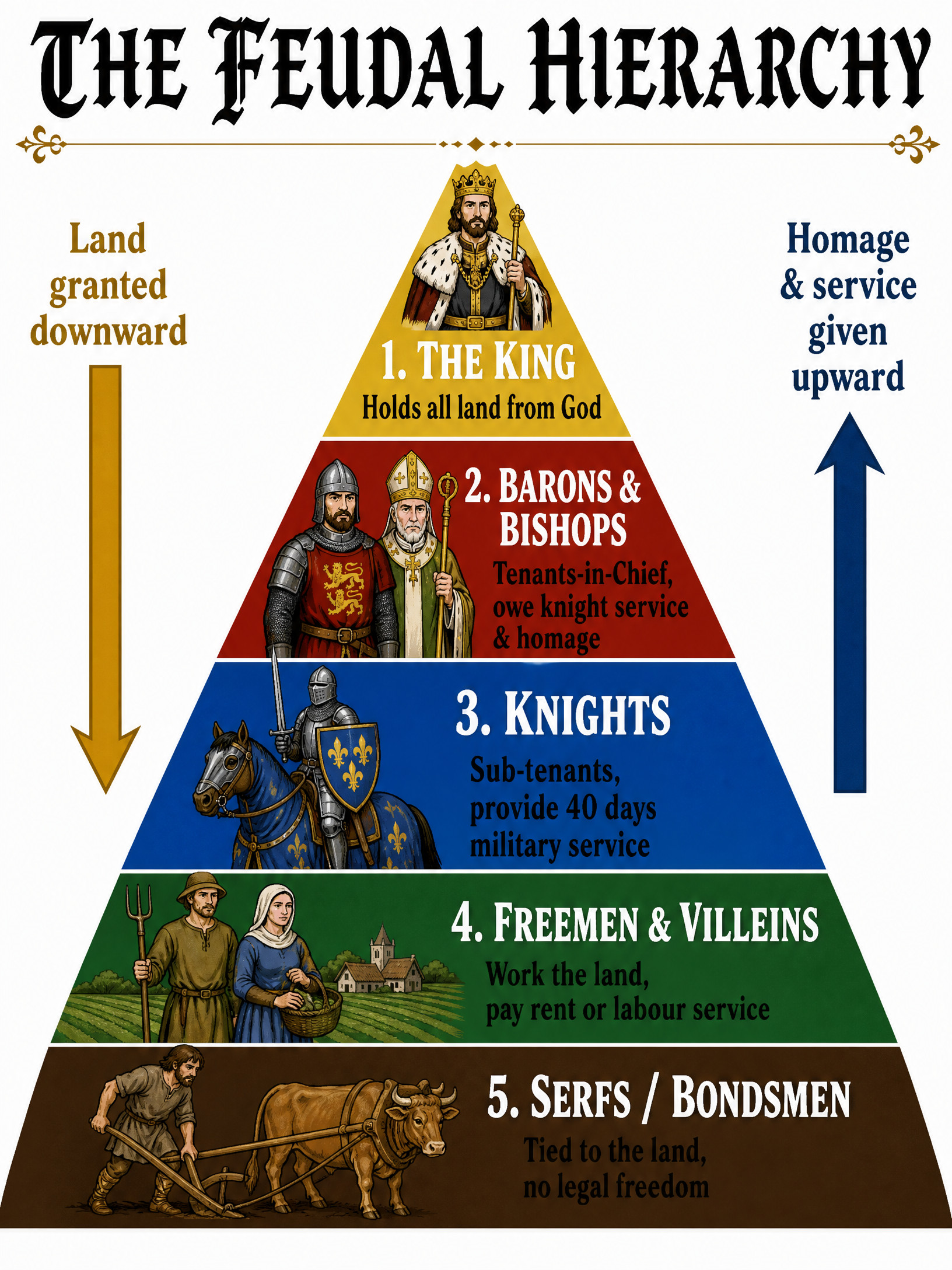
The reigns of King Richard I (the Lionheart) and his brother King John span from 1189 to 1216, representing a critical period in English medieval history. This topic explores the social, political, and economic structures of England during a time of immense strain. You will need to understand the mechanics of the feudal hierarchy, the methods by which these kings governed and raised revenue, the pervasive influence of the Church, and the tragic experiences of the Jewish community.
Examiners expect you to go beyond simply telling the story of these kings. You must be able to analyze how they maintained control, why they faced opposition, and the consequences of their actions. Key themes include the nature of medieval kingship, the transition from traditional feudal incidents to national taxation, and the intertwining of religious prejudice and royal financial exploitation.
Key Events & Developments
The Third Crusade and Richard's Ransom
Date(s): 1189–1194
What happened: Richard I spent only six months of his ten-year reign in England. He departed for the Third Crusade in 1190 to recapture Jerusalem from Saladin. To fund this, he sold royal offices, lands, and titles. On his return journey in 1192, he was captured by Duke Leopold of Austria. A massive ransom of 150,000 marks was demanded for his release, which was raised through heavy taxation in England.
Why it matters: This demonstrates that the system of royal government (led by justiciars like Hubert Walter) was sophisticated enough to function without the king's physical presence. It also highlights the immense financial burden placed on England to support Richard's military ambitions and secure his release.
Specific Knowledge: Ransom of 150,000 marks (roughly three times the annual royal income); Justiciars William Longchamp and Hubert Walter managed England in his absence.
The Pogroms against the Jews
Date(s): 1189–1190
What happened: Following Richard's coronation in September 1189, a wave of anti-Jewish violence (pogroms) swept across England, starting in London. The most infamous event occurred in York in March 1190, where approximately 150 Jews took refuge in Clifford's Tower and chose mass suicide over forced conversion or murder by the mob.
Why it matters: These events highlight the precarious position of Jews in medieval England. They were legally the king's property ('chattels') and relied on royal protection, which failed them. The violence was driven by a mix of religious antisemitism (fuelled by crusading zeal) and the desire of Christian debtors to destroy records of the money they owed to Jewish moneylenders.
Specific Knowledge: Richard's coronation (Sept 1189); York Massacre at Clifford's Tower (March 1190); approximately 150 deaths in York.
The Loss of Normandy
Date(s): 1204
What happened: King John lost control of the Duchy of Normandy to the French King, Philip II. Despite military campaigns to win it back, John was ultimately unsuccessful.
Why it matters: This was a catastrophic failure of John's primary duty as a medieval king: to defend his lands. It forced Anglo-Norman barons to choose between their English and French estates, costing John loyalty and military service. Furthermore, the loss of Norman revenues forced John to exploit his English feudal rights much more aggressively, leading directly to baronial rebellion.
Specific Knowledge: Lost to Philip II of France in 1204; earned John the nickname 'John Lackland'.
The 1207 Tax on Moveables
Date(s): 1207
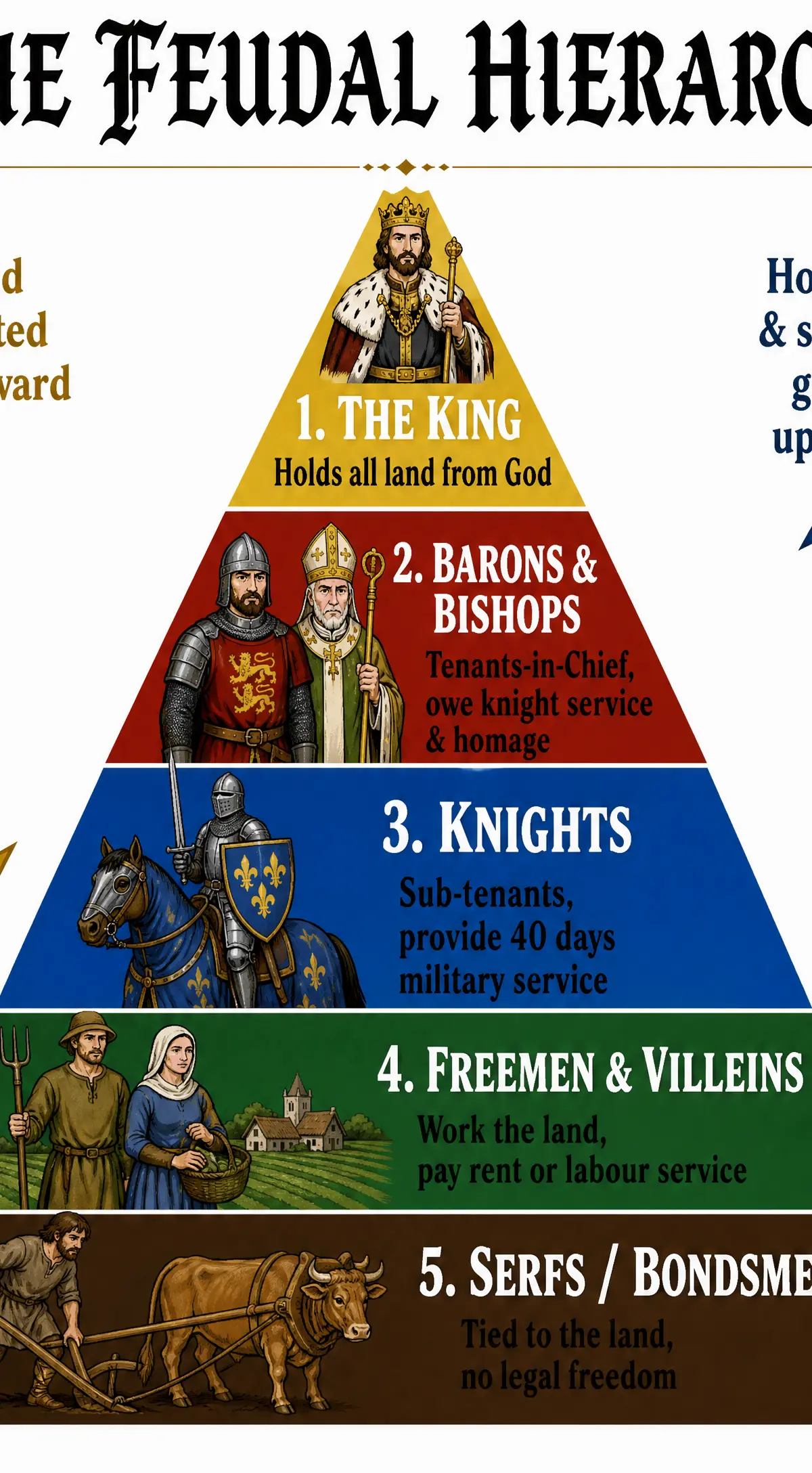
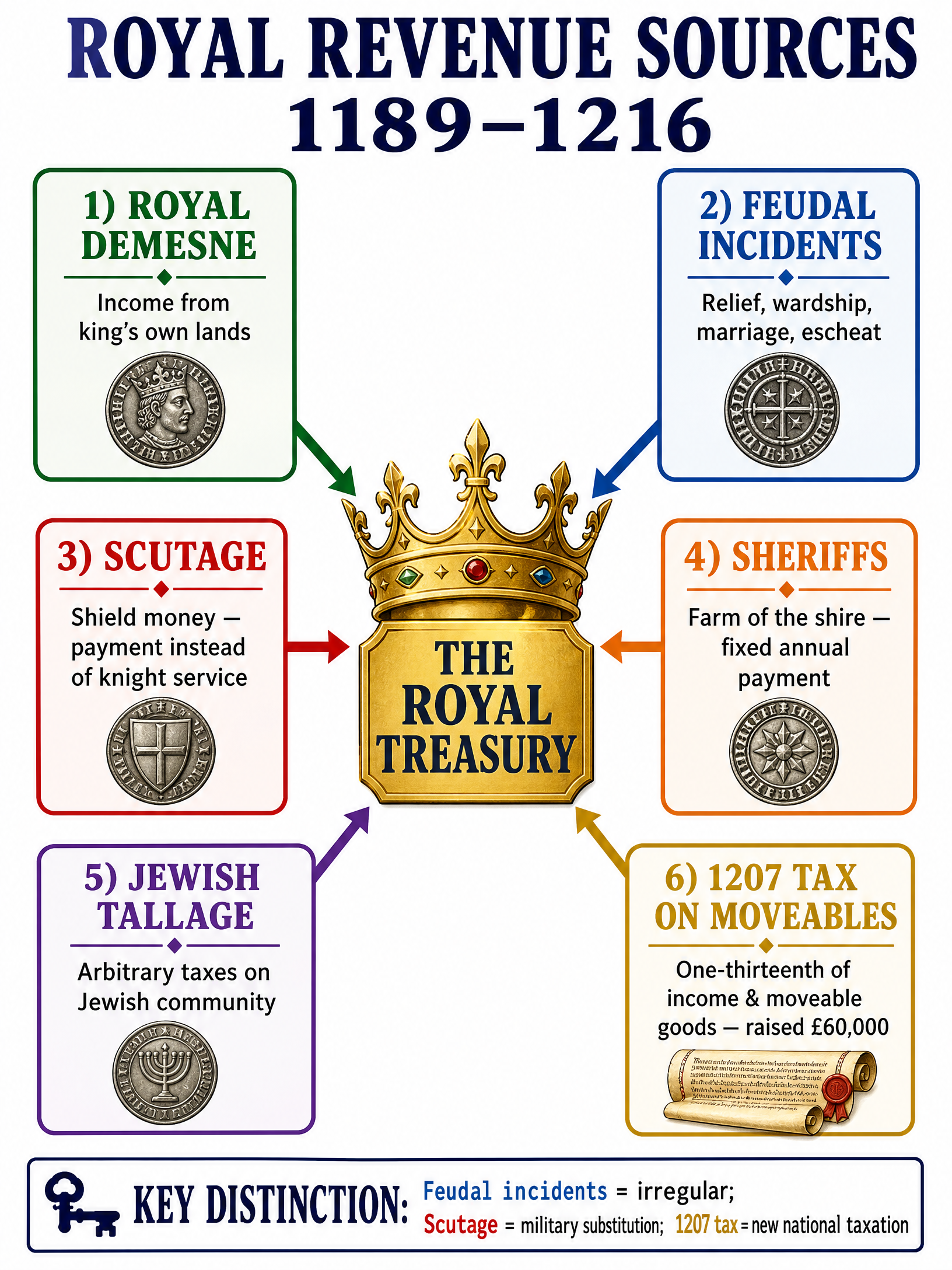
What happened: To fund his attempts to recapture Normandy, John introduced a new tax: a levy of one-thirteenth on all income and moveable goods.
Why it matters: This was a revolutionary development in royal finance. Unlike feudal incidents (which only affected the nobility) or scutage, this tax applied to a much wider section of society. It was highly effective at raising money but caused widespread resentment.
Specific Knowledge: Tax rate of one-thirteenth; raised approximately £60,000.
The Interdict and Excommunication
Date(s): 1208–1213
What happened: Following a dispute over the appointment of Stephen Langton as Archbishop of Canterbury, Pope Innocent III placed England under an Interdict in 1208 (suspending church services). In 1209, John was personally excommunicated. John finally submitted in 1213, accepting Langton and agreeing to hold England as a papal fief.
Why it matters: This demonstrates the immense political power of the Church. The Interdict terrified the deeply religious population, and excommunication threatened to release John's subjects from their oaths of loyalty, making him vulnerable to rebellion and foreign invasion.
Specific Knowledge: Pope Innocent III; Archbishop Stephen Langton; Interdict (1208); Excommunication (1209); Submission (1213).
Key Individuals
King Richard I (The Lionheart)
Role: King of England (1189–1199)
Key Actions: Spent most of his reign on Crusade or fighting in France; raised enormous sums through the sale of offices and the Saladin Tithe; appointed capable justiciars to govern England.
Impact: Maintained royal authority through his military reputation, but placed a heavy financial burden on the country.
King John
Role: King of England (1199–1216)
Key Actions: Lost Normandy in 1204; clashed with Pope Innocent III; heavily exploited feudal incidents and scutage; introduced the 1207 tax on moveables; forced to agree to Magna Carta in 1215.
Impact: His military failures and aggressive financial exactions alienated the barons, leading to rebellion and the constitutional limits placed on the monarchy by Magna Carta.
Hubert Walter
Role: Justiciar and Archbishop of Canterbury
Key Actions: Governed England effectively during Richard's absence; managed the collection of Richard's ransom; served both Richard and John loyally.
Impact: Demonstrates the sophistication of the royal administration, which could function smoothly even when the king was absent.
Pope Innocent III
Role: Head of the Catholic Church
Key Actions: Appointed Stephen Langton as Archbishop of Canterbury against John's wishes; placed England under Interdict and excommunicated John.
Impact: Proved that papal authority could successfully challenge and humble an English king.
Second-Order Concepts
Causation
The baronial rebellion against King John (leading to Magna Carta) was caused by a combination of factors. Long-term causes included the systemic tension inherent in the feudal system, where kings naturally sought to maximize their rights over the barons. Short-term causes included John's specific military failures (the loss of Normandy in 1204) and his aggressive financial exploitation (levying scutage 11 times). The trigger was John's final, disastrous military defeat at the Battle of Bouvines in 1214, which shattered his reputation and exhausted his funds.
Consequence
The financial demands of both Richard and John had significant consequences. For Richard, it meant the country was drained of wealth to fund foreign wars and a ransom, yet royal authority remained intact due to his military prestige. For John, the consequence of his financial exactions (especially the 1207 tax and frequent scutage) was the alienation of the political class, ultimately resulting in civil war and Magna Carta.
Change & Continuity
Continuity: The fundamental structure of the feudal system (the hierarchy of landholding in exchange for service) remained in place throughout both reigns. The king's reliance on the Church for administration and legitimacy also continued.
Change: The nature of royal finance changed significantly. Under Richard, finance was largely raised through extraordinary, one-off measures (crusade taxes, ransoms). Under John, there was a shift towards systematic exploitation of feudal rights and the introduction of national taxation (the 1207 tax on moveables), moving away from purely feudal sources of income.
Significance
This period is highly significant because it tests the limits of medieval kingship. Richard's reign proves that the administrative machinery of government could function without the king. John's reign proves that when a king fails in his military duties and abuses his feudal rights, the barons will rebel. The era culminates in the first major attempt to place written, legal limits on royal power.
Source Skills
When evaluating sources for this period, consider the provenance carefully. Many chronicles were written by monks (e.g., Roger of Wendover, Matthew Paris). Because John clashed severely with the Church (the Interdict), monastic chroniclers were heavily biased against him and often exaggerated his cruelty and incompetence. Conversely, official government records (like the Pipe Rolls) provide objective data on taxation and finance, but do not tell us about the emotional or political reaction to those taxes.
Worked Examples
3 worked examples — open one to explore the question and available guidance.
Practice Questions
Test your understanding — click to reveal model answers
Describe two features of the feudal system in medieval England. (4 marks)
Hint: Identify a feature, then add a specific supporting detail for each.
Explain why King John was so unpopular with his barons by 1215. (12 marks)
Hint: Think about money, military failure, and his relationship with the Church.
How useful is a chronicle written by a monk in 1220 for understanding King John's reign? (8 marks)
Hint: Consider the relationship between King John and the Church during his reign.
Explain why Richard I was able to govern England successfully despite being absent for most of his reign. (12 marks)
Hint: Focus on the administration he left behind and his personal reputation.
Describe two ways in which the Jewish community was economically important to the Crown between 1189 and 1216. (4 marks)
Hint: Think about their legal status and the rules regarding moneylending.
Test your understanding of The reigns of King Richard I and King John, 1189–1216
Active recall beats re-reading. Take an instant quiz now to test what you’ve learned and lock it into long-term memory.
7 days Premium · Then free forever · No card, no charge