OCR · GCSE · History
Course version: J410 · Version from Mar 2026
The changing international order 1918–1975 - Cold War confrontations and…
Full specification wording
International Relations: the changing international order 1918–1975 - Cold War confrontations and conflict 1954–1975: The Vietnam War: US tactics and their consequences; Vietcong tactics and their consequences.
This topic asks you to explain two sets of tactics used in the Vietnam War and the consequences of each.
Checked against the OCR J410 specification (opens in a new tab) on .
- Point 4 of 6
- 4 key terms
Study notes
From the checked teaching notes for this specification point.
The idea
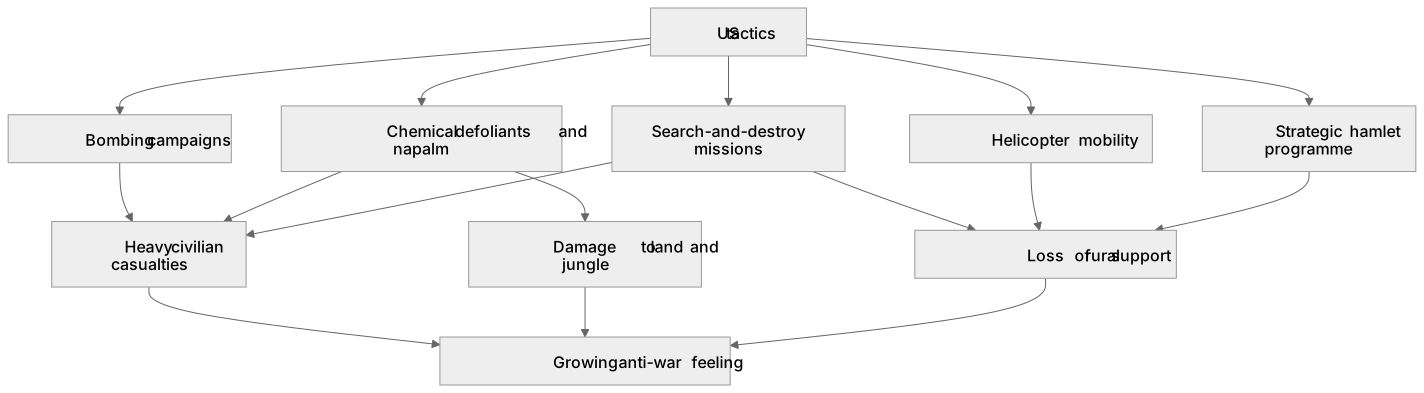
This topic asks you to explain two sets of tactics used in the Vietnam War and the consequences of each. For US tactics, think about bombing campaigns, the use of chemical defoliants and napalm, search-and-destroy missions, helicopter mobility and the strategic hamlet programme. Their consequences include heavy civilian casualties, loss of rural support, damage to land and jungle, and growing anti-war feeling. For Vietcong tactics, think about guerrilla warfare, ambush, booby traps, tunnel networks, close ties with villagers and use of the Ho Chi Minh Trail. Their consequences include US forces being unable to pin down an enemy, stretched supply lines, and political damage to the US cause. A good answer links each tactic to a specific result rather than listing tactics alone.
What earns the marks
- Links a named US tactic such as bombing or search-and-destroy missions to a specific consequence for the war effort.
- Explains how Vietcong guerrilla tactics such as ambush or booby traps made US forces struggle to locate and defeat the enemy.
- Identifies a consequence of chemical defoliants or napalm, such as civilian casualties or damage to land and crops.
- Describes how Vietcong tunnel networks or the Ho Chi Minh Trail helped the Vietcong sustain and supply their forces.
- Connects a tactic to its effect on civilian support or on opposition to the war within the USA.
Common mistakes and how to put them right
Lists tactics without stating any consequence.
Put it right: Add a clear result for each tactic named.
Treats all consequences as military only.
Put it right: Include political and social effects such as civilian casualties or anti-war feeling.
Confuses which side used a tactic.
Put it right: Check whether the tactic belongs to US forces or the Vietcong before linking it to a consequence.
Exam tips
- Read the question to see whether it asks about US tactics, Vietcong tactics or both, and answer only that part.
- For each tactic you choose, write one sentence naming the tactic and one sentence giving its consequence.
- Use precise vocabulary such as guerrilla warfare, defoliant and search-and-destroy rather than vague words like 'fighting'.
Try the lesson
The start of the International Relations: the changing international order 1918–1975 - Cold War confrontations and conflict 1954–1975: The Vietnam War: US tactics and their consequences; Vietcong tactics and their consequences. lesson, made from checked teaching notes for this specification point.
Have a go first
What was the main purpose of the US 'strategic hamlet' programme in South Vietnam?
Listen
This topic asks you to explain two sets of tactics used in the Vietnam War and the consequences of each. For US tactics, think about bombing campaigns, the use of chemical defoliants and napalm, search-and-destroy missions, helicopter mobility and the strategic hamlet programme. Their consequences include heavy civilian casualties, loss of rural support, damage to land and jungle, and growing anti-war feeling. For Vietcong tactics, think about guerrilla warfare, ambush, booby traps, tunnel networks, close ties with villagers and use of the Ho Chi Minh Trail. Their consequences include US forces being unable to pin down an enemy, stretched supply lines, and political damage to the US cause. A good answer links each tactic to a specific result rather than listing tactics alone. A strong answer earns marks for these points. Links a named US tactic such as bombing or search-and-destroy missions to a specific consequence for the war effort. Explains how Vietcong guerrilla tactics such as ambush or booby traps made US forces struggle to locate and defeat the enemy. Identifies a consequence of chemical defoliants or napalm, such as civilian casualties or damage to land and crops. Describes how Vietcong tunnel networks or the Ho Chi Minh Trail helped the Vietcong sustain and supply their forces. Exam tip: Read the question to see whether it asks about US tactics, Vietcong tactics or both, and answer only that part.
See it
Key words
Say what each word means before you turn the card.
US military tactics in Vietnam
Try answering aloud or in your head before turning the card.
Vietcong guerrilla tactics
Try answering aloud or in your head before turning the card.
Consequences for civilians and rural support
Try answering aloud or in your head before turning the card.
Impact of tactics on the course and outcome of the war
Try answering aloud or in your head before turning the card.
See every definition
- US military tactics in Vietnam
- Bombing campaigns, chemical defoliants and napalm, search-and-destroy missions, helicopter mobility and the strategic hamlet programme.
- Vietcong guerrilla tactics
- Guerrilla warfare, ambush, booby traps, tunnel networks, close ties with villagers and use of the Ho Chi Minh Trail.
- Consequences for civilians and rural support
- Heavy civilian casualties, loss of rural support, damage to land and jungle, and growing anti-war feeling.
- Impact of tactics on the course and outcome of the war
- US forces unable to pin down an enemy, stretched supply lines, and political damage to the US cause.
Label the diagram
Some boxes have lost their names. Pick the right name for each number.
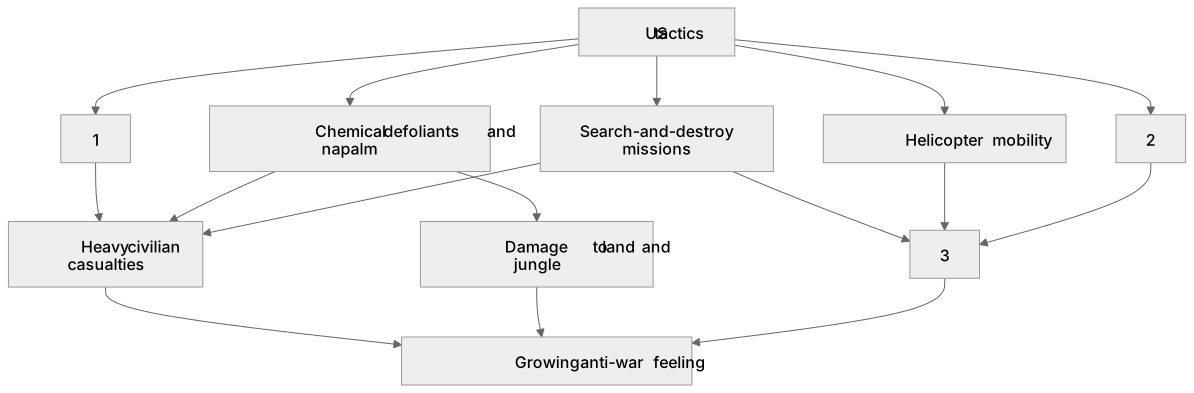
1Box 1
2Box 2
3Box 3
There is more to this lesson
The full lesson goes on to check your understanding and help you earn the marks. Create a free account to carry on, with your progress saved.
A week of Premium from your first lesson · Then the free plan continues · No card, no charge
Test your understanding of International Relations: the changing international order 1918–1975 - Cold War confrontations and conflict 1954–1975: The Vietnam War: US tactics and their consequences; Vietcong tactics and their consequences.
Active recall beats re-reading. Take an instant quiz now to test what you’ve learned and lock it into long-term memory.
A week of Premium from your first lesson · Then the free plan continues · No card, no charge