OCR · GCSE · History
Course version: J410 · Version from Mar 2026
The People and the State (J410/06) - The impact of the Second World War on…
Full specification wording
The USA 1919–1948: The People and the State (J410/06) - The impact of the Second World War on US society: The mobilisation of the US people for the war effort, including propaganda campaigns, war production and its effects, the end of Depression; increased government and Presidential powers, including control of wages and prices, response of population to US involvement in war; social impact of the war, including rationing, tax on luxuries, housing shortages and an increase in divorce; women and the war effort; Japanese internment; the war as the foundation for the Civil Rights movement; the Detroit Race Riots 1943; segregation within the military; Executive Order 8802; desegregation of US troops in 1948.
This topic examines how the Second World War changed the relationship between the US people and the federal state.
Checked against the OCR J410 specification (opens in a new tab) on .
- 4 key terms
Study notes
From the checked teaching notes for this specification point.
The idea
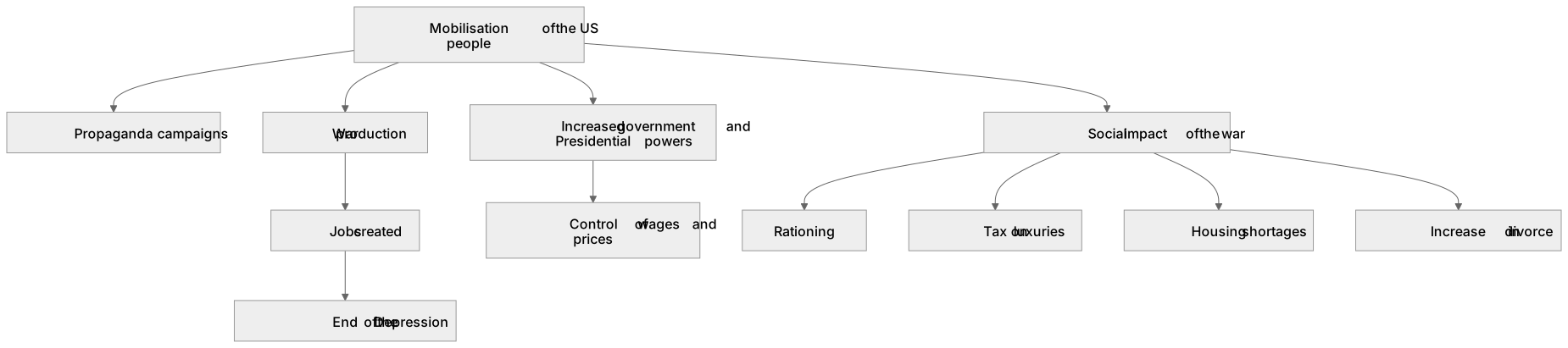
This topic examines how the Second World War changed the relationship between the US people and the federal state. Learn the mobilisation of people through propaganda campaigns and war production, and how this ended the Depression by creating jobs. Study the growth of government and Presidential powers, including control of wages and prices, and how the population responded to US involvement. Cover the social impact: rationing, tax on luxuries, housing shortages and rising divorce. Then learn women's role in the war effort, Japanese internment, the war as a foundation for the Civil Rights movement, the Detroit Race Riots of 1943, segregation within the military, Executive Order 8802 and the desegregation of US troops in 1948. For multiple-choice questions, match each fact to its precise cause or consequence.
What earns the marks
- Identifies propaganda campaigns as a method of mobilising the US people for the war effort.
- Explains that war production created jobs and helped end the Depression.
- Describes increased government and Presidential powers, including control of wages and prices.
- States that rationing, tax on luxuries, housing shortages and rising divorce formed part of the social impact of war.
- Recognises women's contribution to the war effort as a distinct theme.
- Identifies Japanese internment as a wartime policy affecting civil liberties.
- Links the war to the foundation of the Civil Rights movement.
- Places the Detroit Race Riots in 1943.
- Identifies segregation within the military as a wartime feature.
- Matches Executive Order 8802 to its role in fair employment.
- Dates the desegregation of US troops to 1948.
Common mistakes and how to put them right
Confuses the end of the Depression with the start of the war.
Put it right: War production created jobs that ended the Depression.
Places the Detroit Race Riots in the wrong year.
Put it right: Keep 1943 firmly attached to them.
Mixes up Executive Order 8802 with the 1948 desegregation of troops.
Put it right: Treat them as separate events.
Assumes all social impacts were positive.
Put it right: Include rationing, housing shortages and rising divorce.
Exam tips
- Read the whole question before choosing, because options often differ by one date or one policy name.
- Attach each key term to its exact year or order, such as 1943 for Detroit and 1948 for desegregation.
- Eliminate options that describe a different clause of the topic, such as propaganda instead of internment.
- Check whether the question asks for a cause, a consequence or a feature before selecting.
Try the lesson
The start of the The USA 1919–1948: The People and the State (J410/06) - The impact of the Second World War on US society: The mobilisation of the US people for the war effort, including propaganda campaigns, war production and its effects, the end of Depression; increased government and Presidential powers, including control of wages and prices, response of population to US involvement in war; social impact of the war, including rationing, tax on luxuries, housing shortages and an increase in divorce; women and the war effort; Japanese internment; the war as the foundation for the Civil Rights movement; the Detroit Race Riots 1943; segregation within the military; Executive Order 8802; desegregation of US troops in 1948. lesson, made from checked teaching notes for this specification point.
Have a go first
What did Executive Order 8802 of 1941 do?
Listen
This topic examines how the Second World War changed the relationship between the US people and the federal state. Learn the mobilisation of people through propaganda campaigns and war production, and how this ended the Depression by creating jobs. Study the growth of government and Presidential powers, including control of wages and prices, and how the population responded to US involvement. Cover the social impact: rationing, tax on luxuries, housing shortages and rising divorce. Then learn women's role in the war effort, Japanese internment, the war as a foundation for the Civil Rights movement, the Detroit Race Riots of 1943, segregation within the military, Executive Order 8802 and the desegregation of US troops in 1948. For multiple-choice questions, match each fact to its precise cause or consequence. A strong answer earns marks for these points. Identifies propaganda campaigns as a method of mobilising the US people for the war effort. Explains that war production created jobs and helped end the Depression. Describes increased government and Presidential powers, including control of wages and prices. States that rationing, tax on luxuries, housing shortages and rising divorce formed part of the social impact of war. Exam tip: Read the whole question before choosing, because options often differ by one date or one policy name.
See it
Key words
Say what each word means before you turn the card.
Mobilisation and propaganda
Try answering aloud or in your head before turning the card.
Government and Presidential power
Try answering aloud or in your head before turning the card.
Social impact of war
Try answering aloud or in your head before turning the card.
Women and the war effort
Try answering aloud or in your head before turning the card.
See every definition
- Mobilisation and propaganda
- The mobilisation of the US people for the war effort included propaganda campaigns and war production, which created jobs and helped end the Depression.
- Government and Presidential power
- Increased government and Presidential powers included control of wages and prices, and the population responded to US involvement in war.
- Social impact of war
- The social impact of the war included rationing, tax on luxuries, housing shortages and an increase in divorce.
- Women and the war effort
- Women's contribution to the war effort is a distinct theme of the impact of the Second World War on US society.
Label the diagram
Some boxes have lost their names. Pick the right name for each number.
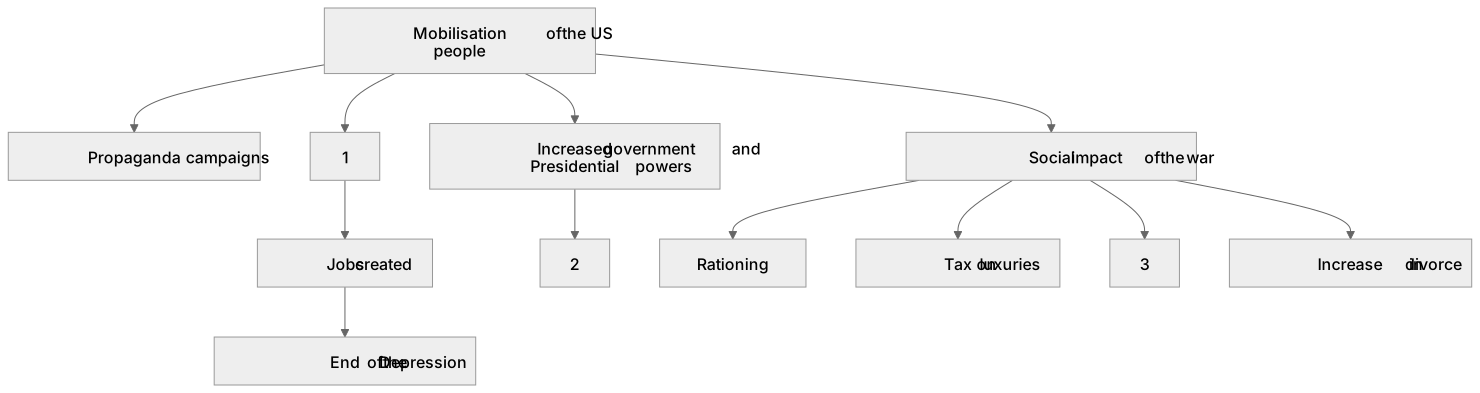
1Box 1
2Box 2
3Box 3
There is more to this lesson
The full lesson goes on to check your understanding and help you earn the marks. Create a free account to carry on, with your progress saved.
A week of Premium from your first lesson · Then the free plan continues · No card, no charge
Test your understanding of The USA 1919–1948: The People and the State (J410/06) - The impact of the Second World War on US society: The mobilisation of the US people for the war effort, including propaganda campaigns, war production and its effects, the end of Depression; increased government and Presidential powers, including control of wages and prices, response of population to US involvement in war; social impact of the war, including rationing, tax on luxuries, housing shortages and an increase in divorce; women and the war effort; Japanese internment; the war as the foundation for the Civil Rights movement; the Detroit Race Riots 1943; segregation within the military; Executive Order 8802; desegregation of US troops in 1948.
Active recall beats re-reading. Take an instant quiz now to test what you’ve learned and lock it into long-term memory.
A week of Premium from your first lesson · Then the free plan continues · No card, no charge