OCR · GCSE · History
Course version: J410 · Version from Mar 2026
The People and the State (J410/06) - The ‘Roaring Twenties’: The US…
Full specification wording
The USA 1919–1948: The People and the State (J410/06) - The ‘Roaring Twenties’: The US economy in the ‘Roaring Twenties’, including Republican party policies and ideology; areas of industry and social groups that did, and did not, experience prosperity; the US government and women in the 1920s, including women’s rights movements and the Sheppard-Towner Act; causes, aims, implementation and failure of prohibition; prejudice and discrimination in US society, including the Jim Crow Laws and the Ku Klux Klan; the Red Scare, including the Palmer Raids and Sacco and Vanzetti; restrictions on immigration throughout the 1920s; attempts to combat prejudice, including the NAACP and the UNIA.
This topic examines how far the 1920s brought prosperity and how far it brought division.
Checked against the OCR J410 specification (opens in a new tab) on .
- 3 key terms
Study notes
From the checked teaching notes for this specification point.
The idea
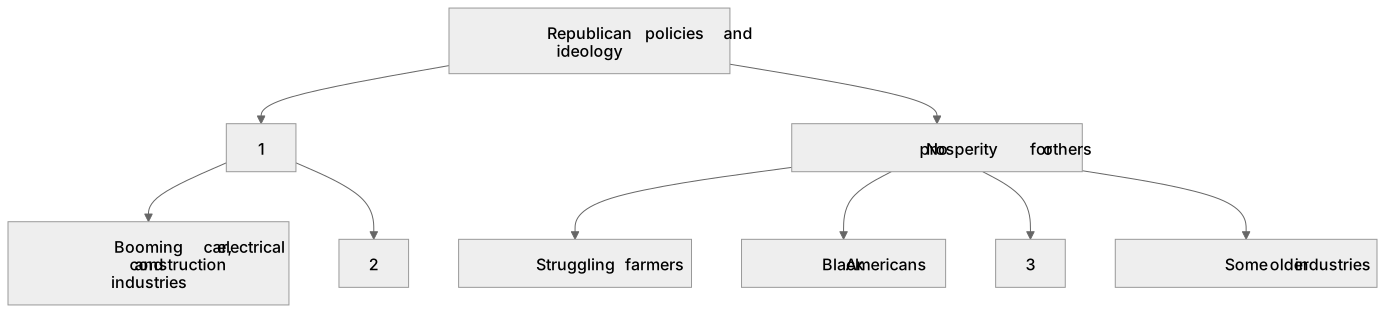
This topic examines how far the 1920s brought prosperity and how far it brought division. Learn Republican policies and ideology: low taxation, tariffs, laissez-faire and support for business, which encouraged mass production and consumer spending. Then sort winners from losers: booming car, electrical and construction industries, plus some urban white-collar workers, against struggling farmers, Black Americans, many immigrants and some older industries. Cover government and women, including women's rights movements and the Sheppard-Towner Act, which funded maternal and infant health care. Trace prohibition's causes, aims, implementation and failure. Study prejudice through Jim Crow Laws and the Ku Klux Klan, the Red Scare with the Palmer Raids and Sacco and Vanzetti, immigration restrictions, and attempts to combat prejudice by the NAACP and UNIA.
What earns the marks
- Identifies Republican policies and ideology such as low taxation, tariffs and laissez-faire as factors shaping the 1920s economy.
- Distinguishes industries and social groups that prospered from those that did not during the 1920s.
- Explains the role of the US government and women in the 1920s, including women's rights movements and the Sheppard-Towner Act.
- Outlines the causes, aims, implementation and failure of prohibition.
- Describes prejudice and discrimination in US society, including the Jim Crow Laws and the Ku Klux Klan.
- Explains the Red Scare, including the Palmer Raids and Sacco and Vanzetti.
- Identifies restrictions on immigration throughout the 1920s.
- Describes attempts to combat prejudice, including the NAACP and the UNIA.
Common mistakes and how to put them right
Treats the 1920s as uniformly prosperous.
Put it right: Recognise that farmers, Black Americans and many immigrants did not share the boom.
Assumes prohibition succeeded; explain that it failed through widespread evasion, organised crime and enforcement problems.
Confuses the NAACP with the UNIA.
Put it right: Keep their different leaders and aims distinct.
Ignores the Sheppard-Towner Act.
Put it right: Include it as government action affecting women and children.
Exam tips
- Read each option fully before choosing, since distractors often swap one group or policy for another.
- Link each key term to a specific example, such as the Palmer Raids to the Red Scare.
- Check whether a question asks about causes, aims, implementation or failure of prohibition before answering.
Try the lesson
The start of the The USA 1919–1948: The People and the State (J410/06) - The ‘Roaring Twenties’: The US economy in the ‘Roaring Twenties’, including Republican party policies and ideology; areas of industry and social groups that did, and did not, experience prosperity; the US government and women in the 1920s, including women’s rights movements and the Sheppard-Towner Act; causes, aims, implementation and failure of prohibition; prejudice and discrimination in US society, including the Jim Crow Laws and the Ku Klux Klan; the Red Scare, including the Palmer Raids and Sacco and Vanzetti; restrictions on immigration throughout the 1920s; attempts to combat prejudice, including the NAACP and the UNIA. lesson, made from checked teaching notes for this specification point.
Have a go first
What were the Jim Crow Laws in the southern states of the USA?
Listen
This topic examines how far the 1920s brought prosperity and how far it brought division. Learn Republican policies and ideology: low taxation, tariffs, laissez-faire and support for business, which encouraged mass production and consumer spending. Then sort winners from losers: booming car, electrical and construction industries, plus some urban white-collar workers, against struggling farmers, Black Americans, many immigrants and some older industries. Cover government and women, including women's rights movements and the Sheppard-Towner Act, which funded maternal and infant health care. Trace prohibition's causes, aims, implementation and failure. Study prejudice through Jim Crow Laws and the Ku Klux Klan, the Red Scare with the Palmer Raids and Sacco and Vanzetti, immigration restrictions, and attempts to combat prejudice by the NAACP and UNIA. A strong answer earns marks for these points. Identifies Republican policies and ideology such as low taxation, tariffs and laissez-faire as factors shaping the 1920s economy. Distinguishes industries and social groups that prospered from those that did not during the 1920s. Explains the role of the US government and women in the 1920s, including women's rights movements and the Sheppard-Towner Act. Outlines the causes, aims, implementation and failure of prohibition. Exam tip: Read each option fully before choosing, since distractors often swap one group or policy for another.
See it

Key words
Say what each word means before you turn the card.
Republican policies and ideology
Try answering aloud or in your head before turning the card.
Prosperity and inequality
Try answering aloud or in your head before turning the card.
Women and government
Try answering aloud or in your head before turning the card.
See every definition
- Republican policies and ideology
- Low taxation, tariffs, laissez-faire and support for business, which encouraged mass production and consumer spending.
- Prosperity and inequality
- Booming car, electrical and construction industries and some urban white-collar workers, against struggling farmers, Black Americans, many immigrants and some older industries.
- Women and government
- Women's rights movements and the Sheppard-Towner Act, which funded maternal and infant health care.
Label the diagram
Some boxes have lost their names. Pick the right name for each number.
1Box 1
2Box 2
3Box 3
There is more to this lesson
The full lesson goes on to check your understanding and help you earn the marks. Create a free account to carry on, with your progress saved.
A week of Premium from your first lesson · Then the free plan continues · No card, no charge
Test your understanding of The USA 1919–1948: The People and the State (J410/06) - The ‘Roaring Twenties’: The US economy in the ‘Roaring Twenties’, including Republican party policies and ideology; areas of industry and social groups that did, and did not, experience prosperity; the US government and women in the 1920s, including women’s rights movements and the Sheppard-Towner Act; causes, aims, implementation and failure of prohibition; prejudice and discrimination in US society, including the Jim Crow Laws and the Ku Klux Klan; the Red Scare, including the Palmer Raids and Sacco and Vanzetti; restrictions on immigration throughout the 1920s; attempts to combat prejudice, including the NAACP and the UNIA.
Active recall beats re-reading. Take an instant quiz now to test what you’ve learned and lock it into long-term memory.
A week of Premium from your first lesson · Then the free plan continues · No card, no charge