Pearson Edexcel · A-Level · History
Course version: 9HI0 · Version from Sept 2015
Political developments, 1932–35: Indian reaction to the failure of…
Full specification wording
Consultation and confrontation, 1930–42: Political developments, 1932–35: Indian reaction to the failure of consultation; the Communal Award and Gandhi’s response; the Yeravda Pact; support and opposition in Britain for constitutional change.
Following the deadlock of the Second Round Table Conference, Britain pressed ahead with its own solution.
Checked against the Pearson Edexcel 9HI0 specification (opens in a new tab) on .
- Point 2 of 4
Study notes
From the checked teaching notes for this specification point.
The idea
Following the deadlock of the Second Round Table Conference, Britain pressed ahead with its own solution. Ramsay MacDonald's Communal Award (August 1932) gave separate electorates to Muslims, Sikhs, Indian Christians, Anglo-Indians and Depressed Classes, preceding the Third Conference. Gandhi, imprisoned at Yeravda, opposed separate electorates for the Depressed Classes as a threat to Hindu unity and began a fast unto death. The Yeravda Pact (1932) between Gandhi and Ambedkar replaced separate electorates for the Depressed Classes with reserved seats within a joint electorate. Meanwhile, the 1935 Government of India Act faced support from reformers and opposition from Conservative backbenchers and Indian nationalists.
What earns the marks
- Explains Indian reactions to the failure of consultation, including nationalist frustration and the turn to communal bargaining.
- Details the Communal Award's provisions and Gandhi's fast as his response to separate electorates for the Depressed Classes.
- Explains the Yeravda Pact's compromise: reserved seats in a joint electorate instead of separate electorates.
- Assesses support and opposition in Britain for constitutional change, including the National Government's position, Conservative critics and Labour sympathies.
Common mistakes and how to put them right
Saying the Yeravda Pact abolished reserved seats.
Put it right by stating it kept reserved seats but within a joint electorate.
Attributing the Communal Award to Gandhi.
Put it right by naming Ramsay MacDonald as its author.
Placing the Communal Award after the Third Round Table Conference.
Put it right by noting the Award was announced in August 1932, before the Third Conference met in November.
Exam tips
- Use precise dates (August 1932 for the Award, September 1932 for the Pact, 1935 for the Act) to structure the answer.
- Quote the terms of the Award and Pact accurately rather than paraphrasing loosely.
Try the lesson
The start of the Consultation and confrontation, 1930–42: Political developments, 1932–35: Indian reaction to the failure of consultation; the Communal Award and Gandhi’s response; the Yeravda Pact; support and opposition in Britain for constitutional change. lesson, made from checked teaching notes for this specification point.
Have a go first
What was the Communal Award of 1932?
Listen
Following the deadlock of the Second Round Table Conference, Britain pressed ahead with its own solution. Ramsay MacDonald's Communal Award (August 1932) gave separate electorates to Muslims, Sikhs, Indian Christians, Anglo-Indians and Depressed Classes, preceding the Third Conference. Gandhi, imprisoned at Yeravda, opposed separate electorates for the Depressed Classes as a threat to Hindu unity and began a fast unto death. The Yeravda Pact (1932) between Gandhi and Ambedkar replaced separate electorates for the Depressed Classes with reserved seats within a joint electorate. Meanwhile, the 1935 Government of India Act faced support from reformers and opposition from Conservative backbenchers and Indian nationalists. A strong answer earns marks for these points. Explains Indian reactions to the failure of consultation, including nationalist frustration and the turn to communal bargaining. Details the Communal Award's provisions and Gandhi's fast as his response to separate electorates for the Depressed Classes. Explains the Yeravda Pact's compromise: reserved seats in a joint electorate instead of separate electorates. Assesses support and opposition in Britain for constitutional change, including the National Government's position, Conservative critics and Labour sympathies. A common slip: Saying the Yeravda Pact abolished reserved seats. Instead, stating it kept reserved seats but within a joint electorate. Exam tip: Use precise dates (August 1932 for the Award, September 1932 for the Pact, 1935 for the Act) to structure the answer.
See it
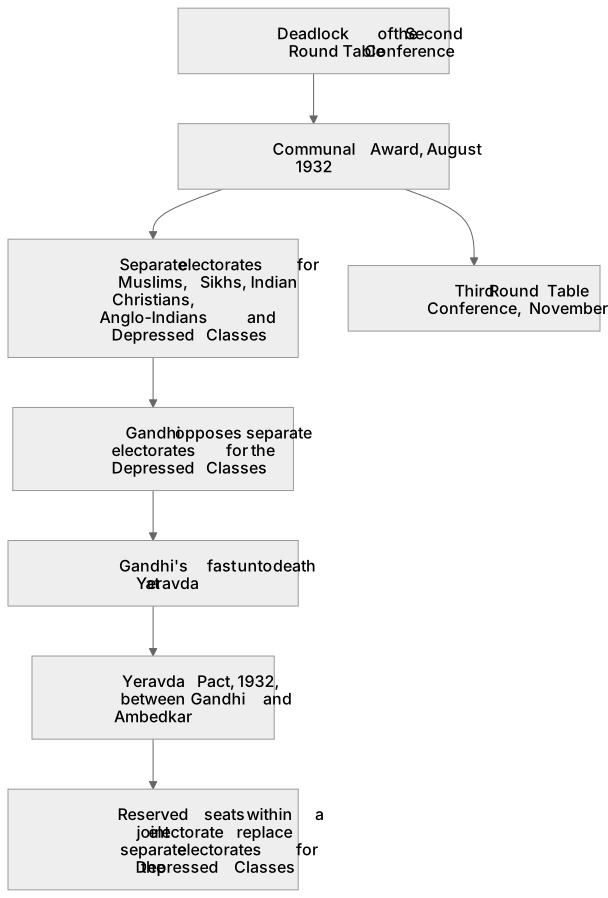
Label the diagram
Some boxes have lost their names. Pick the right name for each number.
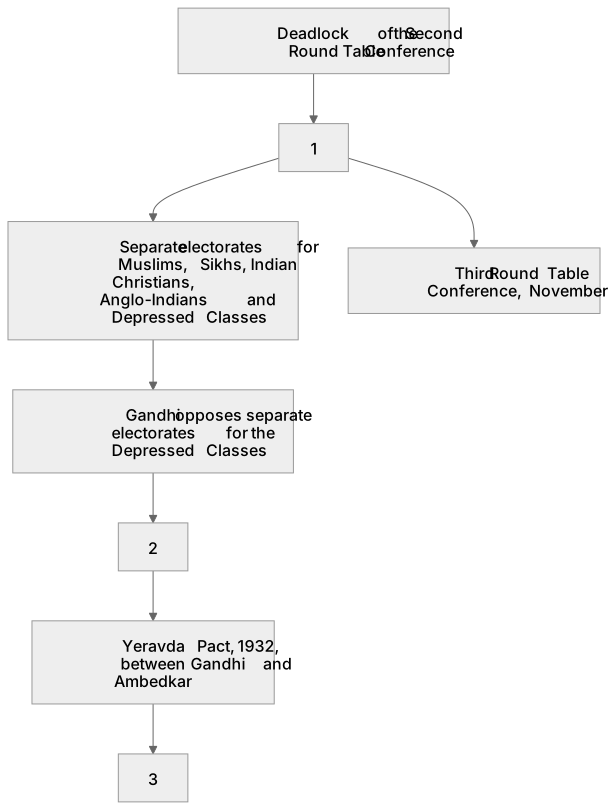
1Box 1
2Box 2
3Box 3
There is more to this lesson
The full lesson goes on to check your understanding and help you earn the marks. Create a free account to carry on, with your progress saved.
A week of Premium from your first lesson · Then the free plan continues · No card, no charge
Test your understanding of Consultation and confrontation, 1930–42: Political developments, 1932–35: Indian reaction to the failure of consultation; the Communal Award and Gandhi’s response; the Yeravda Pact; support and opposition in Britain for constitutional change.
Active recall beats re-reading. Take an instant quiz now to test what you’ve learned and lock it into long-term memory.
A week of Premium from your first lesson · Then the free plan continues · No card, no charge