Pearson Edexcel · A-Level · History
Course version: 9HI0 · Version from Sept 2015
Foreign intervention in Russia: reasons, nature and extent of…
Full specification wording
Defending the Bolshevik revolution, October 1917–24: Foreign intervention in Russia: reasons, nature and extent of intervention; the impact of war weariness and the lack of support in the west for intervention; the end of intervention.
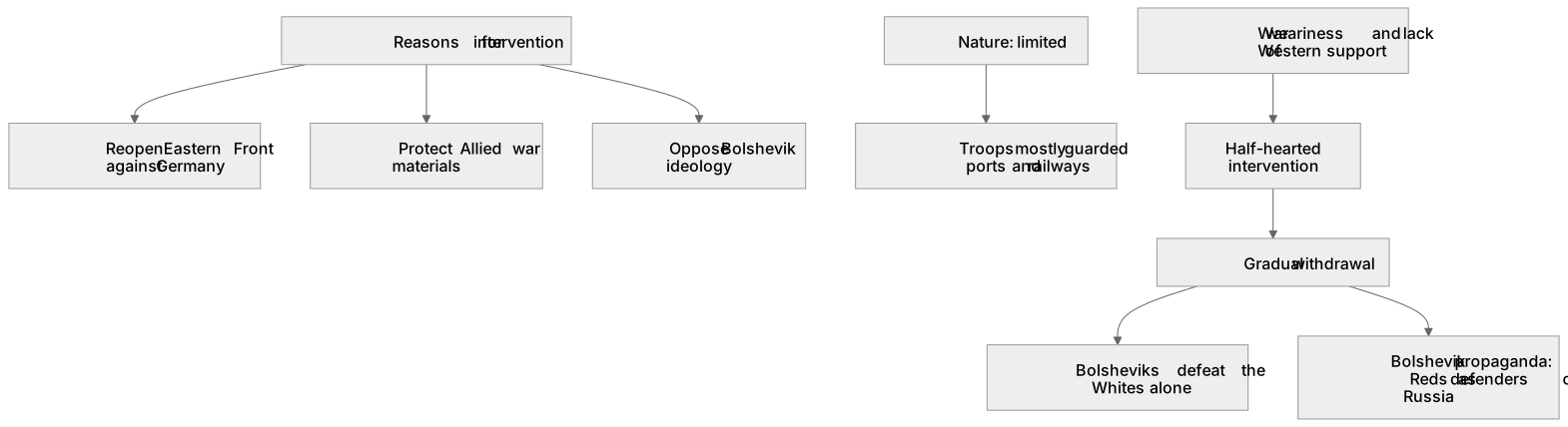
Foreign intervention in the Russian Civil War stemmed from Allied desires to reopen an Eastern Front against Germany, protect supplies, and oppose Bolshevik ideology.
Checked against the Pearson Edexcel 9HI0 specification (opens in a new tab) on .
- Point 4 of 4
Study notes
From the checked teaching notes for this specification point.
The idea
Foreign intervention in the Russian Civil War stemmed from Allied desires to reopen an Eastern Front against Germany, protect supplies, and oppose Bolshevik ideology. Intervention was limited: troops from Britain, France, USA, Japan and others landed at ports like Murmansk and Vladivostok, but rarely engaged in major combat. War weariness after World War I and lack of public support in the West meant intervention was half-hearted. By 1920, most forces withdrew, leaving the Bolsheviks to defeat the Whites alone.
What earns the marks
- Reasons for intervention included reopening an Eastern Front against Germany, protecting Allied war materials, and ideological opposition to Bolshevism.
- The nature of intervention was limited: foreign troops mostly guarded ports and railways, with only occasional clashes with Red forces.
- The extent varied: Japan sent the largest contingent (around 70,000) to Siberia, while Britain and France sent smaller forces to northern and southern Russia.
- War weariness in Western countries after 1918 reduced public appetite for another conflict, leading to calls for withdrawal.
- Lack of support in the West meant governments were reluctant to commit large resources or troops to a war against the Bolsheviks.
- The end of intervention came gradually: Allied forces withdrew from northern Russia in 1919 and from Siberia by 1920, with Japan remaining until 1922.
- The failure of intervention boosted Bolshevik propaganda, which portrayed the Reds as defenders of Russia against foreign invaders.
Common mistakes and how to put them right
Overstating the scale of foreign intervention, claiming it was a full-scale invasion.
Put it right: Intervention was limited in scope and manpower, with most troops not engaging in front-line combat.
Assuming all Allied powers intervened for the same reasons.
Put it right: Motivations varied, including anti-German strategy, protection of economic interests, and anti-Bolshevik ideology.
Claiming intervention ended immediately after WWI.
Put it right: It continued into 1920 and even 1922 in some regions, though it was winding down.
Exam tips
- Distinguish between reasons, nature and extent of intervention to structure your answer clearly.
- Use specific examples of countries and locations to demonstrate knowledge of the extent of intervention.
- Link the lack of support in the West to broader post-war attitudes, such as war weariness and domestic pressures.
Try the lesson
The start of the Defending the Bolshevik revolution, October 1917–24: Foreign intervention in Russia: reasons, nature and extent of intervention; the impact of war weariness and the lack of support in the west for intervention; the end of intervention. lesson, made from checked teaching notes for this specification point.
Have a go first
What was a primary initial reason for British and French intervention in Russia following the Bolshevik revolution?
Listen
Foreign intervention in the Russian Civil War stemmed from Allied desires to reopen an Eastern Front against Germany, protect supplies, and oppose Bolshevik ideology. Intervention was limited: troops from Britain, France, USA, Japan and others landed at ports like Murmansk and Vladivostok, but rarely engaged in major combat. War weariness after World War I and lack of public support in the West meant intervention was half-hearted. By 1920, most forces withdrew, leaving the Bolsheviks to defeat the Whites alone. A strong answer earns marks for these points. Reasons for intervention included reopening an Eastern Front against Germany, protecting Allied war materials, and ideological opposition to Bolshevism. The nature of intervention was limited: foreign troops mostly guarded ports and railways, with only occasional clashes with Red forces. The extent varied: Japan sent the largest contingent (around 70,000) to Siberia, while Britain and France sent smaller forces to northern and southern Russia. War weariness in Western countries after 1918 reduced public appetite for another conflict, leading to calls for withdrawal. A common slip: overstating the scale of foreign intervention, claiming it was a full-scale invasion. Instead, intervention was limited in scope and manpower, with most troops not engaging in front-line combat. Exam tip: Distinguish between reasons, nature and extent of intervention to structure your answer clearly.
See it
Label the diagram
Some boxes have lost their names. Pick the right name for each number.
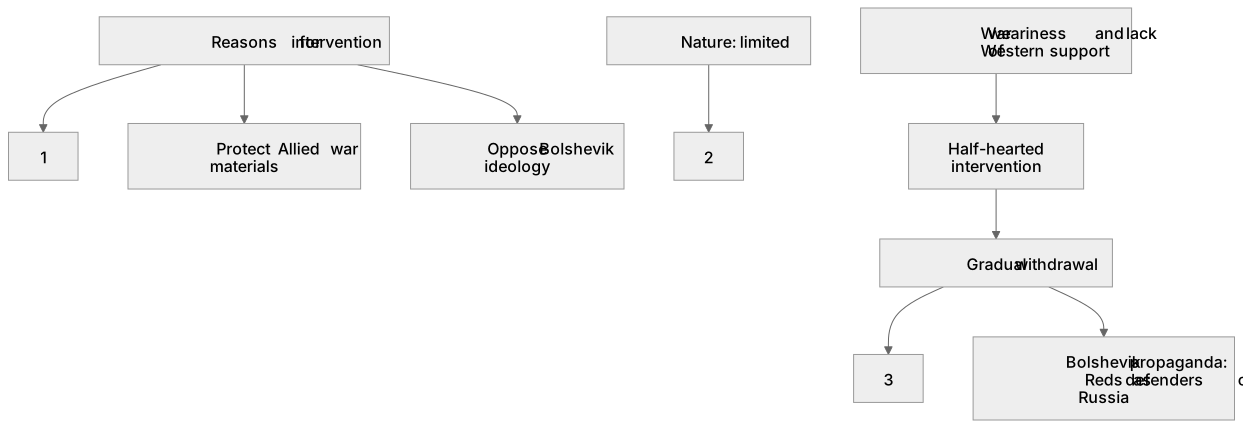
1Box 1
2Box 2
3Box 3
There is more to this lesson
The full lesson goes on to check your understanding and help you earn the marks. Create a free account to carry on, with your progress saved.
A week of Premium from your first lesson · Then the free plan continues · No card, no charge
Test your understanding of Defending the Bolshevik revolution, October 1917–24: Foreign intervention in Russia: reasons, nature and extent of intervention; the impact of war weariness and the lack of support in the west for intervention; the end of intervention.
Active recall beats re-reading. Take an instant quiz now to test what you’ve learned and lock it into long-term memory.
A week of Premium from your first lesson · Then the free plan continues · No card, no charge