Pearson Edexcel · A-Level · History
Course version: 9HI0 · Version from Sept 2015
Early threats to Harold’s throne: Edward’s death and the claimants to the…
Full specification wording
Late Anglo- Saxon England, c1053–66: Early threats to Harold’s throne: Edward’s death and the claimants to the throne; the witan and the coronation; Harald Hardrada’s invasion; reasons for, and significance of, the outcome of the battles of Gate Fulford and Stamford Bridge 1066.
Edward the Confessor died in January 1066 without a clear heir, triggering a succession crisis.
Checked against the Pearson Edexcel 9HI0 specification (opens in a new tab) on .
- Point 4 of 4
- 4 key terms
Study notes
From the checked teaching notes for this specification point.
The idea
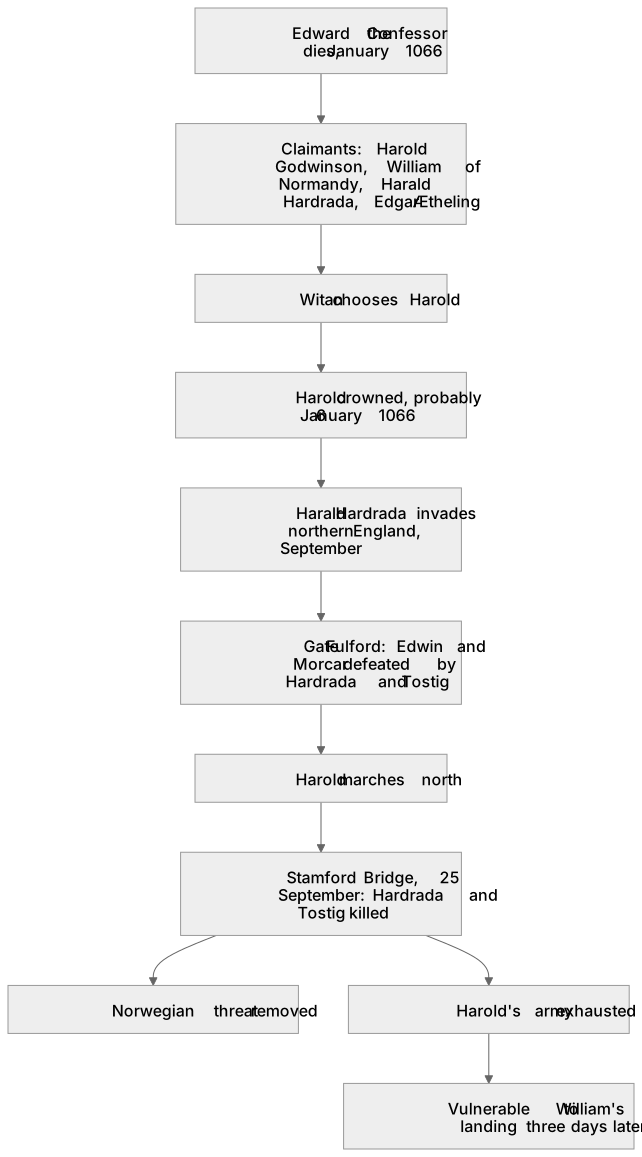
Edward the Confessor died in January 1066 without a clear heir, triggering a succession crisis. Claimants included Harold Godwinson, William of Normandy, Harald Hardrada and Edgar Ætheling. The witan met and chose Harold, who was crowned quickly, probably on 6 January 1066. Harold faced immediate threats: William prepared invasion, while Harald Hardrada invaded northern England in September. At Gate Fulford, near York, the northern earls Edwin and Morcar were defeated by Hardrada and Tostig. Harold marched north and won a decisive victory at Stamford Bridge on 25 September, killing Hardrada and Tostig. This removed the Norwegian threat but exhausted Harold’s army, leaving him vulnerable to William’s landing three days later.
What earns the marks
- Explains why Edward’s death in January 1066 created a succession crisis and identifies the main claimants and their claims.
- Describes the role of the witan in selecting Harold and the speed of his coronation, and explains why this was important.
- Explains Harald Hardrada’s invasion, including his alliance with Tostig and the reasons for the Norwegian campaign.
- Analyses the reasons for the outcome of Gate Fulford, including the defeat of Edwin and Morcar and the Norwegian victory.
- Assesses the significance of Stamford Bridge: Harold’s forced march, the defeat and death of Hardrada and Tostig, and the impact on Harold’s army and the Norman invasion.
Common mistakes and how to put them right
Saying Edward named Harold as heir without qualification.
Put it right: The succession was disputed and the witan’s choice was crucial.
Confusing the order of battles.
Put it right: Gate Fulford was fought before Stamford Bridge, both in 1066.
Claiming Stamford Bridge ended all threats to Harold.
Put it right: It removed Hardrada but left Harold’s army weakened for William’s invasion.
Treating the witan as a modern parliament.
Put it right: It was an assembly of leading nobles and clergy who advised the king and could endorse a successor.
Ignoring Edgar Ætheling as a claimant.
Put it right: He had a royal blood claim but lacked power and support.
Exam tips
- Make a timeline of 1066 events to keep the sequence clear: Edward’s death, coronation, Gate Fulford, Stamford Bridge, Norman landing.
- For each battle, explain both why the outcome happened and why it mattered for Harold’s kingship.
- Use the specification terms ‘claimants’, ‘witan’ and ‘coronation’ explicitly in your answers.
- Compare the threats from Hardrada and William to show understanding of relative danger.
Try the lesson
The start of the Late Anglo- Saxon England, c1053–66: Early threats to Harold’s throne: Edward’s death and the claimants to the throne; the witan and the coronation; Harald Hardrada’s invasion; reasons for, and significance of, the outcome of the battles of Gate Fulford and Stamford Bridge 1066. lesson, made from checked teaching notes for this specification point.
Have a go first
When did King Edward the Confessor die, leaving the English throne open to claimants?
Listen
Edward the Confessor died in January 1066 without a clear heir, triggering a succession crisis. Claimants included Harold Godwinson, William of Normandy, Harald Hardrada and Edgar Ætheling. The witan met and chose Harold, who was crowned quickly, probably on 6 January 1066. Harold faced immediate threats: William prepared invasion, while Harald Hardrada invaded northern England in September. At Gate Fulford, near York, the northern earls Edwin and Morcar were defeated by Hardrada and Tostig. Harold marched north and won a decisive victory at Stamford Bridge on 25 September, killing Hardrada and Tostig. This removed the Norwegian threat but exhausted Harold’s army, leaving him vulnerable to William’s landing three days later. A strong answer earns marks for these points. Explains why Edward’s death in January 1066 created a succession crisis and identifies the main claimants and their claims. Describes the role of the witan in selecting Harold and the speed of his coronation, and explains why this was important. Explains Harald Hardrada’s invasion, including his alliance with Tostig and the reasons for the Norwegian campaign. Analyses the reasons for the outcome of Gate Fulford, including the defeat of Edwin and Morcar and the Norwegian victory. A common slip: saying Edward named Harold as heir without qualification. Instead, the succession was disputed and the witan’s choice was crucial. Exam tip: Make a timeline of 1066 events to keep the sequence clear: Edward’s death, coronation, Gate Fulford, Stamford Bridge, Norman landing.
See it
Key words
Say what each word means before you turn the card.
Succession and legitimacy
Try answering aloud or in your head before turning the card.
Kingship and counsel
Try answering aloud or in your head before turning the card.
Invasion and warfare
Try answering aloud or in your head before turning the card.
Military leadership and logistics
Try answering aloud or in your head before turning the card.
See every definition
- Succession and legitimacy
- Edward the Confessor died in January 1066 without a clear heir, triggering a succession crisis among claimants including Harold Godwinson, William of Normandy, Harald Hardrada and Edgar Ætheling.
- Kingship and counsel
- The witan, an assembly of leading nobles and clergy who advised the king and could endorse a successor, met and chose Harold, who was crowned quickly, probably on 6 January 1066.
- Invasion and warfare
- Harald Hardrada invaded northern England in September, and at Gate Fulford near York the northern earls Edwin and Morcar were defeated by Hardrada and Tostig.
- Military leadership and logistics
- Harold marched north and won a decisive victory at Stamford Bridge on 25 September, killing Hardrada and Tostig, but this exhausted his army and left him vulnerable to William's landing three days later.
Label the diagram
Some boxes have lost their names. Pick the right name for each number.
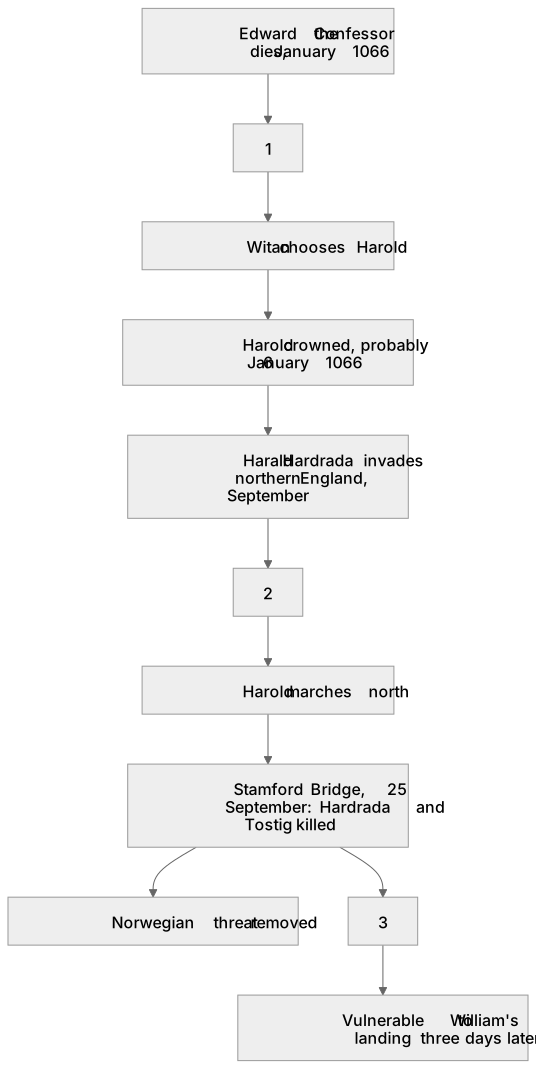
1Box 1
2Box 2
3Box 3
There is more to this lesson
The full lesson goes on to check your understanding and help you earn the marks. Create a free account to carry on, with your progress saved.
A week of Premium from your first lesson · Then the free plan continues · No card, no charge
Test your understanding of Late Anglo- Saxon England, c1053–66: Early threats to Harold’s throne: Edward’s death and the claimants to the throne; the witan and the coronation; Harald Hardrada’s invasion; reasons for, and significance of, the outcome of the battles of Gate Fulford and Stamford Bridge 1066.
Active recall beats re-reading. Take an instant quiz now to test what you’ve learned and lock it into long-term memory.
A week of Premium from your first lesson · Then the free plan continues · No card, no charge