Pearson Edexcel · A-Level · History
Course version: 9HI0 · Version from Sept 2015
Western influences on the GDR, including the impact of Ostpolitik on…
Full specification wording
Life in East Germany, 1949–85: Western influences on the GDR, including the impact of Ostpolitik on travel between the two German states; the influence of radio, television, films and popular music.
Western influences permeated the GDR despite the SED's efforts to control information.
Checked against the Pearson Edexcel 9HI0 specification (opens in a new tab) on .
- Point 4 of 4
- 4 key terms
Study notes
From the checked teaching notes for this specification point.
The idea
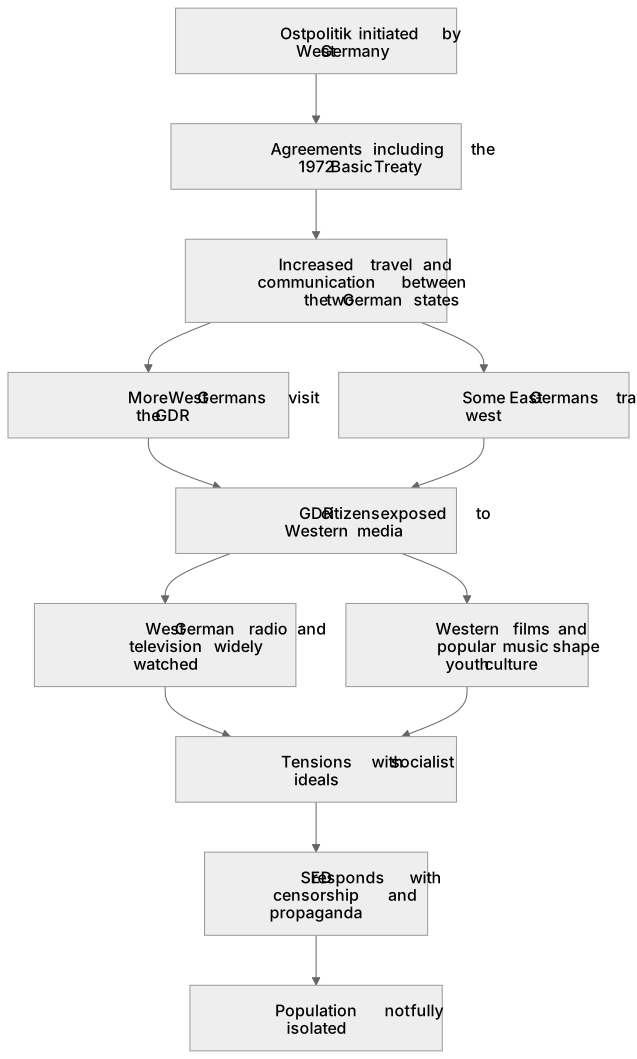
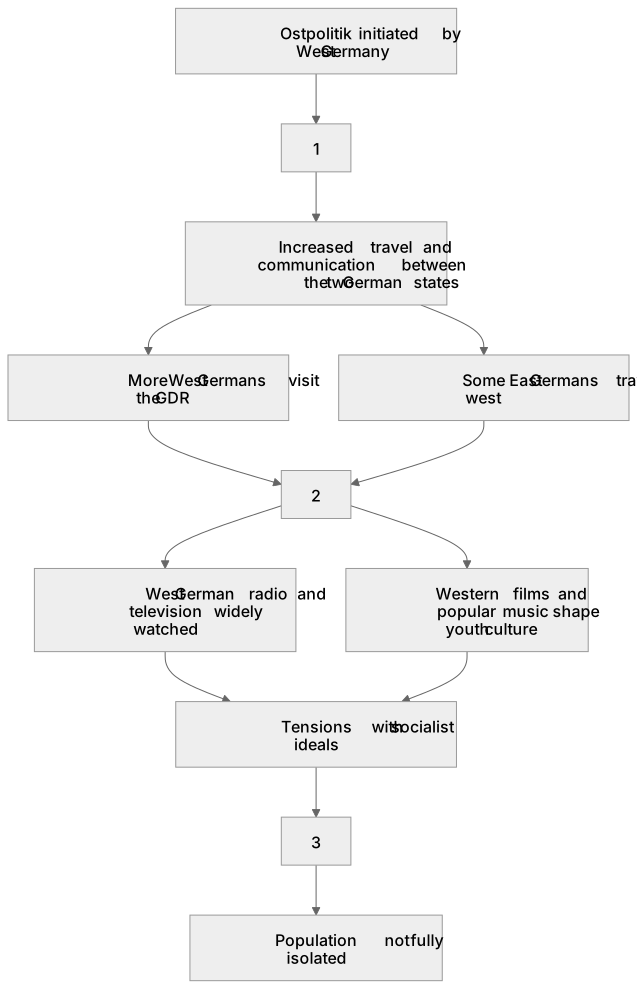
Western influences permeated the GDR despite the SED's efforts to control information. Ostpolitik, initiated by West Germany in the late 1960s, led to agreements that increased travel and communication between the two German states, allowing more West Germans to visit the GDR and enabling some East Germans to travel west. This exposed GDR citizens to Western media, including radio and television broadcasts from West Germany, which were widely watched. Films and popular music from the West also shaped youth culture, creating tensions with socialist ideals. The state responded with censorship and propaganda, but could not fully isolate its population.
What earns the marks
- Explains the impact of Ostpolitik on travel between the two German states, including agreements like the 1972 Basic Treaty.
- Describes the influence of Western radio and television, such as West German channels being widely received in the GDR.
- Analyses the influence of Western films and popular music on GDR society, especially among young people.
- Evaluates the effectiveness of SED attempts to limit Western influences through censorship and counter-propaganda.
Common mistakes and how to put them right
Assuming Ostpolitik only affected diplomacy.
Put it right by noting its concrete impact on travel and communication.
Underestimating the reach of Western media.
Put it right by recognising that many East Germans watched West German television.
Ignoring the state's responses to Western influences.
Put it right by including measures like jamming or restricting access.
Exam tips
- Use specific examples such as the Basic Treaty (1972) or the popularity of Western music to illustrate points.
- Consider both intended and unintended consequences of Western influences.
- Link Western influences to debates about GDR identity and stability.
Try the lesson
The start of the Life in East Germany, 1949–85: Western influences on the GDR, including the impact of Ostpolitik on travel between the two German states; the influence of radio, television, films and popular music. lesson, made from checked teaching notes for this specification point.
Have a go first
Which West German television news programme was widely watched by citizens in the GDR, exposing them to Western perspectives?
Listen
Western influences permeated the GDR despite the SED's efforts to control information. Ostpolitik, initiated by West Germany in the late 1960s, led to agreements that increased travel and communication between the two German states, allowing more West Germans to visit the GDR and enabling some East Germans to travel west. This exposed GDR citizens to Western media, including radio and television broadcasts from West Germany, which were widely watched. Films and popular music from the West also shaped youth culture, creating tensions with socialist ideals. The state responded with censorship and propaganda, but could not fully isolate its population. A strong answer earns marks for these points. Explains the impact of Ostpolitik on travel between the two German states, including agreements like the 1972 Basic Treaty. Describes the influence of Western radio and television, such as West German channels being widely received in the GDR. Analyses the influence of Western films and popular music on GDR society, especially among young people. Evaluates the effectiveness of SED attempts to limit Western influences through censorship and counter-propaganda. A common slip: Assuming Ostpolitik only affected diplomacy. Instead, noting its concrete impact on travel and communication. Exam tip: Use specific examples such as the Basic Treaty (1972) or the popularity of Western music to illustrate points.
See it
Key words
Say what each word means before you turn the card.
Ostpolitik
Try answering aloud or in your head before turning the card.
Travel and migration
Try answering aloud or in your head before turning the card.
Media and propaganda
Try answering aloud or in your head before turning the card.
Youth and popular culture
Try answering aloud or in your head before turning the card.
See every definition
- Ostpolitik
- Initiated by West Germany in the late 1960s, it led to agreements that increased travel and communication between the two German states.
- Travel and migration
- Ostpolitik allowed more West Germans to visit the GDR and enabled some East Germans to travel west.
- Media and propaganda
- Western radio and television broadcasts from West Germany were widely watched, while the state responded with censorship and propaganda.
- Youth and popular culture
- Films and popular music from the West shaped youth culture, creating tensions with socialist ideals.
Label the diagram
Some boxes have lost their names. Pick the right name for each number.
1Box 1
2Box 2
3Box 3
There is more to this lesson
The full lesson goes on to check your understanding and help you earn the marks. Create a free account to carry on, with your progress saved.
A week of Premium from your first lesson · Then the free plan continues · No card, no charge
Test your understanding of Life in East Germany, 1949–85: Western influences on the GDR, including the impact of Ostpolitik on travel between the two German states; the influence of radio, television, films and popular music.
Active recall beats re-reading. Take an instant quiz now to test what you’ve learned and lock it into long-term memory.
A week of Premium from your first lesson · Then the free plan continues · No card, no charge