Pearson Edexcel · A-Level · History
Course version: 9HI0 · Version from Sept 2015
Opposition of the Dutch grandees: the alliance of Orange, Hoorn and…
Full specification wording
Origins of the Dutch Revolt, c1563–67: Opposition of the Dutch grandees: the alliance of Orange, Hoorn and Egmont; resistance to the reform of the bishoprics; the removal of Granvelle; Margaret and the heresy laws; the Confederacy of Noblemen; the Compromise of 1566; the ‘Beggars’.
Opposition of the Dutch grandees escalated in the 1560s.
Checked against the Pearson Edexcel 9HI0 specification (opens in a new tab) on .
- Point 3 of 4
- 4 key terms
Study notes
From the checked teaching notes for this specification point.
The idea
Opposition of the Dutch grandees escalated in the 1560s. The alliance of Orange, Hoorn and Egmont led resistance to the reform of the bishoprics, fearing loss of patronage. This pressure forced the removal of Granvelle in 1564. However, Margaret and the heresy laws continued to alienate elites. In 1565-66, lesser nobles formed the Confederacy of Noblemen, presenting the Compromise of 1566 to suspend the Inquisition. During this, they were derisively named the 'Beggars' (Geuzen), a label they proudly adopted.
For example: They wore beggar medals to symbolise their unity and defiance against Habsburg religious policies, marking a shift towards open rebellion.
What earns the marks
- Explains the opposition of the Dutch grandees, focusing on the alliance of Orange, Hoorn and Egmont and their motivations.
- Analyses the resistance to the reform of the bishoprics and how this culminated in the removal of Granvelle in 1564.
- Evaluates the impact of Margaret and the heresy laws on escalating tensions between the Habsburgs and the Dutch nobility.
- Assesses the role of the Confederacy of Noblemen and the Compromise of 1566 in formalising resistance, including the adoption of the 'Beggars' identity.
Common mistakes and how to put them right
Mischaracterising the 'Beggars' as a separate radical group in 1566.
Put it right: Clarify that the term originally referred to the noble confederates who presented the Compromise of 1566.
Confusing the actions of the grandees with those of the lesser nobility.
Put it right: Distinguish between the alliance of Orange, Hoorn and Egmont and the lesser nobles who formed the Confederacy of Noblemen.
Assuming Granvelle's removal solved the crisis.
Put it right: Emphasise that Margaret and the strict enforcement of heresy laws maintained high levels of opposition.
Exam tips
- Ensure accurate causality: Granvelle's removal in 1564 was driven by the grandees' pressure, whereas the Compromise of 1566 was a petition by the Confederacy of Noblemen.
- Link the resistance to the reform of the bishoprics directly to the grandees' fears of losing political and religious influence.
Try the lesson
The start of the Origins of the Dutch Revolt, c1563–67: Opposition of the Dutch grandees: the alliance of Orange, Hoorn and Egmont; resistance to the reform of the bishoprics; the removal of Granvelle; Margaret and the heresy laws; the Confederacy of Noblemen; the Compromise of 1566; the ‘Beggars’. lesson, made from checked teaching notes for this specification point.
Have a go first
Which three leading Dutch grandees formed the alliance that opposed Cardinal Granvelle's dominance at Margaret of Parma's court in the early 1560s?
Listen
Opposition of the Dutch grandees escalated in the 1560s. The alliance of Orange, Hoorn and Egmont led resistance to the reform of the bishoprics, fearing loss of patronage. This pressure forced the removal of Granvelle in 1564. However, Margaret and the heresy laws continued to alienate elites. In 1565-66, lesser nobles formed the Confederacy of Noblemen, presenting the Compromise of 1566 to suspend the Inquisition. During this, they were derisively named the 'Beggars' (Geuzen), a label they proudly adopted. For example, they wore beggar medals to symbolise their unity and defiance against Habsburg religious policies, marking a shift towards open rebellion. A strong answer earns marks for these points. Explains the opposition of the Dutch grandees, focusing on the alliance of Orange, Hoorn and Egmont and their motivations. Analyses the resistance to the reform of the bishoprics and how this culminated in the removal of Granvelle in 1564. Evaluates the impact of Margaret and the heresy laws on escalating tensions between the Habsburgs and the Dutch nobility. Assesses the role of the Confederacy of Noblemen and the Compromise of 1566 in formalising resistance, including the adoption of the 'Beggars' identity. A common slip: Mischaracterising the 'Beggars' as a separate radical group in 1566. Instead, Clarify that the term originally referred to the noble confederates who presented the Compromise of 1566. Exam tip: Ensure accurate causality: Granvelle's removal in 1564 was driven by the grandees' pressure, whereas the Compromise of 1566 was a petition by the Confederacy of Noblemen.
See it
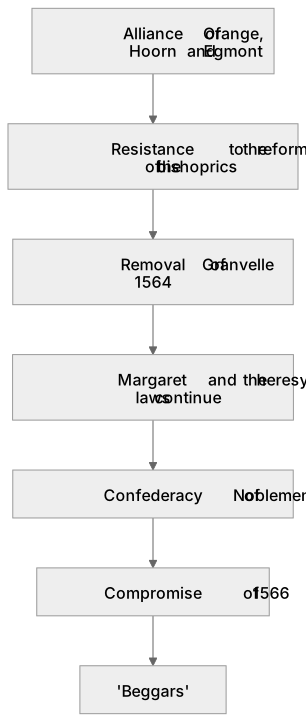
Put it in order
Put these steps in the order they happen.
- 1. 'Beggars'
- 2. Compromise of 1566
- 3. Removal of Granvelle in 1564
- 4. Confederacy of Noblemen
- 5. Alliance of Orange, Hoorn and Egmont
- 6. Resistance to the reform of the bishoprics
- 7. Margaret and the heresy laws continue
Put the events in order
Put these events in the order they happened, earliest first.
- 1. Pressure from the grandees forced the removal of Granvelle
- 2. The Confederacy presented the Compromise to suspend the Inquisition
- 3. Lesser nobles formed the Confederacy of Noblemen
Key words
Say what each word means before you turn the card.
reform of the bishoprics
Try answering aloud or in your head before turning the card.
removal of Granvelle
Try answering aloud or in your head before turning the card.
Compromise of 1566
Try answering aloud or in your head before turning the card.
'Beggars'
Try answering aloud or in your head before turning the card.
See every definition
- reform of the bishoprics
- A reform resisted by the alliance of Orange, Hoorn and Egmont, who feared loss of patronage.
- removal of Granvelle
- Forced in 1564 by pressure from the grandees, though Margaret and the heresy laws continued to alienate elites.
- Compromise of 1566
- Presented by the Confederacy of Noblemen to suspend the Inquisition, after lesser nobles formed the Confederacy in 1565-66.
- 'Beggars'
- A derisive name given to the noble confederates during the Compromise of 1566, which they proudly adopted, wearing beggar medals to symbolise unity and defiance.
Label the diagram
Some boxes have lost their names. Pick the right name for each number.
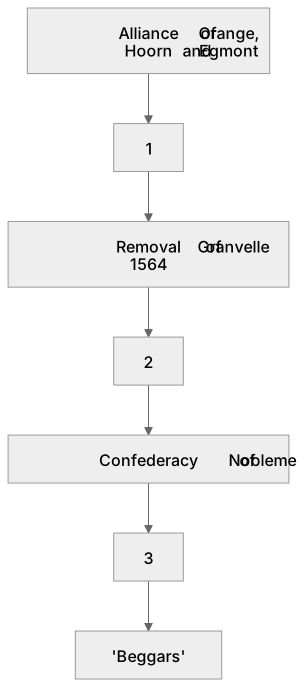
1Box 1
2Box 2
3Box 3
There is more to this lesson
The full lesson goes on to check your understanding and help you earn the marks. Create a free account to carry on, with your progress saved.
A week of Premium from your first lesson · Then the free plan continues · No card, no charge
Test your understanding of Origins of the Dutch Revolt, c1563–67: Opposition of the Dutch grandees: the alliance of Orange, Hoorn and Egmont; resistance to the reform of the bishoprics; the removal of Granvelle; Margaret and the heresy laws; the Confederacy of Noblemen; the Compromise of 1566; the ‘Beggars’.
Active recall beats re-reading. Take an instant quiz now to test what you’ve learned and lock it into long-term memory.
A week of Premium from your first lesson · Then the free plan continues · No card, no charge