Pearson Edexcel · A-Level · History
Course version: 9HI0 · Version from Sept 2015
Protest, agitation and parliamentary reform in Britain, c1780–1928 - 1…
Full specification wording
Paper 3, Option 36.1: Protest, agitation and parliamentary reform in Britain, c1780–1928 - 1 Radical reformers, c1790–1819: The influence of Tom Paine and the Rights of Man, John Cartwright and the Hampden Clubs, William Cobbett and the Political Register; the role of Henry Hunt as a radical orator.
This topic examines how four figures shaped radical reform between c1790 and 1819.
Checked against the Pearson Edexcel 9HI0 specification (opens in a new tab) on .
- Point 3 of 3
- 4 key terms
Study notes
From the checked teaching notes for this specification point.
The idea
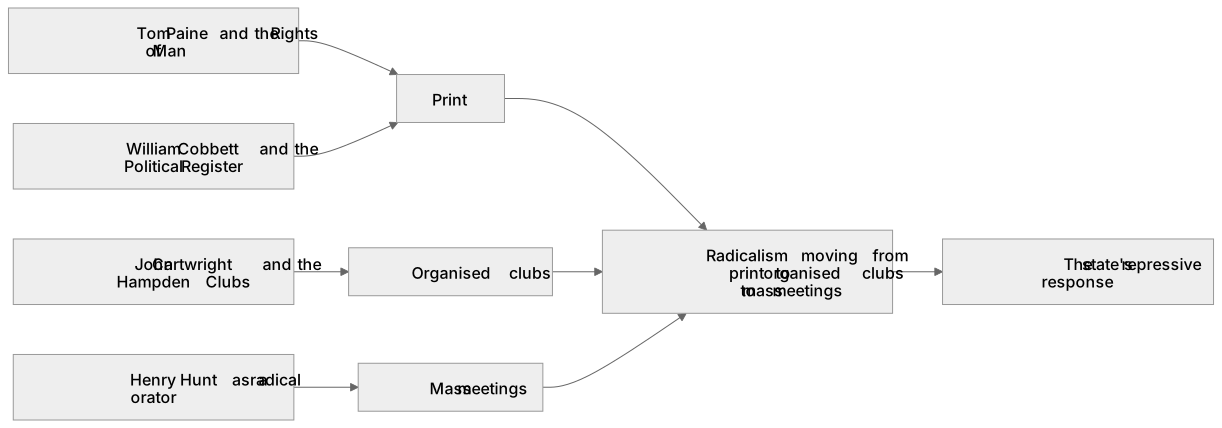
This topic examines how four figures shaped radical reform between c1790 and 1819. The influence of Tom Paine and the Rights of Man (1791–92) spread natural rights and popular sovereignty via cheap editions. John Cartwright revived the case for universal male suffrage; from 1816 the Hampden Clubs networked artisans and petitioned for reform. William Cobbett and the Political Register reached working readers, especially via the 1816 unstamped ‘Two-Penny Trash’ pamphlet which evaded stamp duty. The role of Henry Hunt as a radical orator is seen at Spa Fields (1816) and Peterloo (1819), drawing huge crowds. Together they show radicalism moving from print to organised clubs to mass meetings, and the state’s repressive response.
What earns the marks
- Explains the influence of Tom Paine and the Rights of Man as a direct reply to Burke, linking natural rights and popular sovereignty to the growth of reform sentiment.
- Analyses John Cartwright and the Hampden Clubs, noting his long-standing advocacy of universal male suffrage and how the clubs organised petitions from 1816.
- Assesses William Cobbett and the Political Register, including the shift to an unstamped pamphlet edition in 1816 to evade stamp duty, as a vehicle for working-class political education.
- Evaluates the role of Henry Hunt as a radical orator at Spa Fields and Peterloo, considering how his platform style mobilised crowds and provoked government alarm.
Common mistakes and how to put them right
Treating Paine as simply an American revolutionary.
Put it right: His Rights of Man was written for a British and French audience and directly challenged Burke’s Reflections.
Assuming the Hampden Clubs were founded by Hunt.
Put it right: They are associated with Cartwright’s campaigning and organised petitioning, while Hunt was a leading orator at mass meetings.
Describing Cobbett’s 1816 cheap Political Register as a stamped newspaper.
Put it right: The 1816 'Two-Penny Trash' was an unstamped pamphlet designed to evade stamp duty, which was later targeted by the Six Acts.
Exam tips
- Plan by theme (print, organisation, oratory) and then link each figure to the extent of change in radical methods.
- Use precise dates and titles, such as Rights of Man 1791–92, the 1816 Hampden Clubs and the 1816 unstamped ‘Two-Penny Trash’, to anchor analysis.
Try the lesson
The start of the Paper 3, Option 36.1: Protest, agitation and parliamentary reform in Britain, c1780–1928 - 1 Radical reformers, c1790–1819: The influence of Tom Paine and the Rights of Man, John Cartwright and the Hampden Clubs, William Cobbett and the Political Register; the role of Henry Hunt as a radical orator. lesson, made from checked teaching notes for this specification point.
Have a go first
Which radical reformer wrote Rights of Man, the pamphlet that argued ordinary people had natural rights and that government should be answerable to them?
Listen
This topic examines how four figures shaped radical reform between c1790 and 1819. The influence of Tom Paine and the Rights of Man (1791–92) spread natural rights and popular sovereignty via cheap editions. John Cartwright revived the case for universal male suffrage; from 1816 the Hampden Clubs networked artisans and petitioned for reform. William Cobbett and the Political Register reached working readers, especially via the 1816 unstamped ‘Two-Penny Trash’ pamphlet which evaded stamp duty. The role of Henry Hunt as a radical orator is seen at Spa Fields (1816) and Peterloo (1819), drawing huge crowds. Together they show radicalism moving from print to organised clubs to mass meetings, and the state’s repressive response. A strong answer earns marks for these points. Explains the influence of Tom Paine and the Rights of Man as a direct reply to Burke, linking natural rights and popular sovereignty to the growth of reform sentiment. Analyses John Cartwright and the Hampden Clubs, noting his long-standing advocacy of universal male suffrage and how the clubs organised petitions from 1816. Assesses William Cobbett and the Political Register, including the shift to an unstamped pamphlet edition in 1816 to evade stamp duty, as a vehicle for working-class political education. Evaluates the role of Henry Hunt as a radical orator at Spa Fields and Peterloo, considering how his platform style mobilised crowds and provoked government alarm. A common slip: Treating Paine as simply an American revolutionary. Instead, his Rights of Man was written for a British and French audience and directly challenged Burke’s Reflections. Exam tip: Plan by theme (print, organisation, oratory) and then link each figure to the extent of change in radical methods.
See it
Put the events in order
Put these events in the order they happened, earliest first.
- 1. Tom Paine's Rights of Man spread natural rights and popular sovereignty
- 2. Henry Hunt was a radical orator at Peterloo
- 3. Hampden Clubs networked artisans and petitioned for reform
Key words
Say what each word means before you turn the card.
Rights of Man
Try answering aloud or in your head before turning the card.
Hampden Clubs
Try answering aloud or in your head before turning the card.
Political Register
Try answering aloud or in your head before turning the card.
radical orator
Try answering aloud or in your head before turning the card.
See every definition
- Rights of Man
- Tom Paine's work of 1791–92 spread natural rights and popular sovereignty via cheap editions, written for a British and French audience.
- Hampden Clubs
- From 1816 these clubs, associated with John Cartwright's campaigning, networked artisans and organised petitioning for reform.
- Political Register
- William Cobbett's paper reached working readers, especially via the 1816 unstamped 'Two-Penny Trash' pamphlet which evaded stamp duty.
- radical orator
- Henry Hunt's role as a speaker at Spa Fields in 1816 and Peterloo in 1819 drew huge crowds and provoked government alarm.
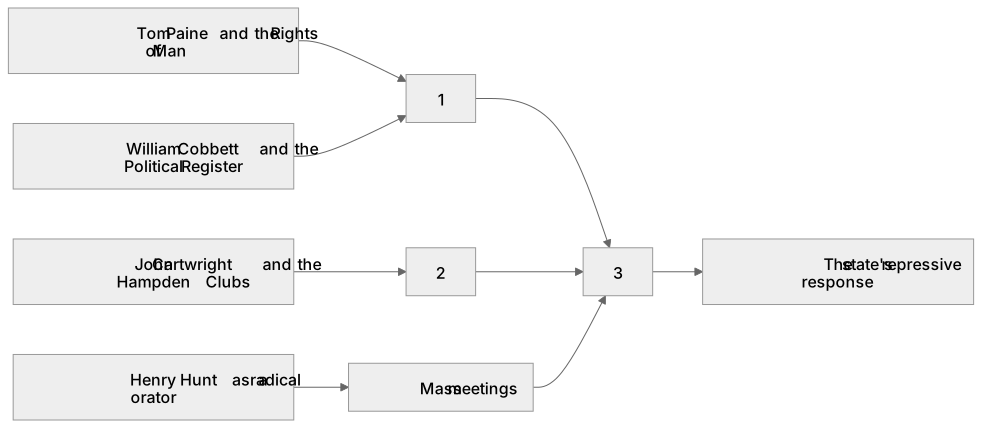
Label the diagram
Some boxes have lost their names. Pick the right name for each number.
1Box 1
2Box 2
3Box 3
There is more to this lesson
The full lesson goes on to check your understanding and help you earn the marks. Create a free account to carry on, with your progress saved.
A week of Premium from your first lesson · Then the free plan continues · No card, no charge
Test your understanding of Paper 3, Option 36.1: Protest, agitation and parliamentary reform in Britain, c1780–1928 - 1 Radical reformers, c1790–1819: The influence of Tom Paine and the Rights of Man, John Cartwright and the Hampden Clubs, William Cobbett and the Political Register; the role of Henry Hunt as a radical orator.
Active recall beats re-reading. Take an instant quiz now to test what you’ve learned and lock it into long-term memory.
A week of Premium from your first lesson · Then the free plan continues · No card, no charge