Pearson Edexcel · A-Level · History
Course version: 9HI0 · Version from Sept 2015
Protest, agitation and parliamentary reform in Britain, c1780–1928 - 3…
Full specification wording
Paper 3, Option 36.1: Protest, agitation and parliamentary reform in Britain, c1780–1928 - 3 Contagious Diseases Acts and the campaign for their repeal, 1862–86: The Acts’ impact on prostitutes and ordinary women.
The Contagious Diseases Acts subjected women suspected of prostitution in specified areas to compulsory medical examination and detention in lock hospitals if infected.
Checked against the Pearson Edexcel 9HI0 specification (opens in a new tab) on .
- Point 2 of 3
Study notes
From the checked teaching notes for this specification point.
The idea
The Contagious Diseases Acts subjected women suspected of prostitution in specified areas to compulsory medical examination and detention in lock hospitals if infected. This had a profound impact on prostitutes and ordinary women. Prostitutes faced invasive examinations, loss of liberty, and social stigma. Ordinary women, particularly working-class women in garrison towns, could be mistaken for prostitutes and subjected to the same treatment based on police suspicion. The Acts reinforced gender double standards, as men were not examined. They also led to resistance and the formation of repeal campaigns. The impact included physical and psychological harm, economic disruption, and the mobilisation of women's rights activists.
What earns the marks
- Describes the compulsory examination and detention of women under the Acts.
- Explains the impact on prostitutes, including loss of liberty and stigma.
- Discusses the impact on ordinary women, such as wrongful accusation.
- Analyses the gendered nature of the Acts and resistance to them.
Common mistakes and how to put them right
Assuming only prostitutes were affected.
Put it right: Ordinary women could also be targeted.
Overlooking the gender double standard.
Put it right: Men were not subject to examination.
Error: ignoring the resistance; correction: the Acts sparked organised repeal campaigns.
Exam tips
- Use specific examples of how women were affected to illustrate your points.
- Consider both intended and unintended consequences of the Acts.
- Link the impact to the wider campaign for women's rights.
Try the lesson
The start of the Paper 3, Option 36.1: Protest, agitation and parliamentary reform in Britain, c1780–1928 - 3 Contagious Diseases Acts and the campaign for their repeal, 1862–86: The Acts’ impact on prostitutes and ordinary women. lesson, made from checked teaching notes for this specification point.
Have a go first
Under the Contagious Diseases Acts, which women in the specified towns could be subjected to compulsory examination?
Listen
The Contagious Diseases Acts subjected women suspected of prostitution in specified areas to compulsory medical examination and detention in lock hospitals if infected. This had a profound impact on prostitutes and ordinary women. Prostitutes faced invasive examinations, loss of liberty, and social stigma. Ordinary women, particularly working-class women in garrison towns, could be mistaken for prostitutes and subjected to the same treatment based on police suspicion. The Acts reinforced gender double standards, as men were not examined. They also led to resistance and the formation of repeal campaigns. The impact included physical and psychological harm, economic disruption, and the mobilisation of women's rights activists. A strong answer earns marks for these points. Describes the compulsory examination and detention of women under the Acts. Explains the impact on prostitutes, including loss of liberty and stigma. Discusses the impact on ordinary women, such as wrongful accusation. Analyses the gendered nature of the Acts and resistance to them. A common slip: assuming only prostitutes were affected. Instead, ordinary women could also be targeted. Exam tip: Use specific examples of how women were affected to illustrate your points.
See it
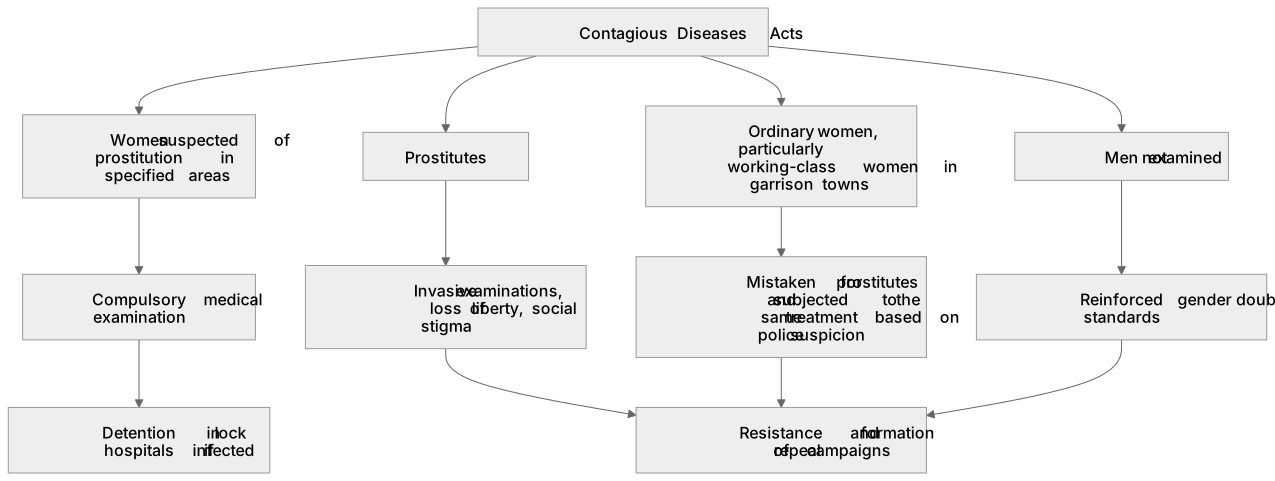
Label the diagram
Some boxes have lost their names. Pick the right name for each number.
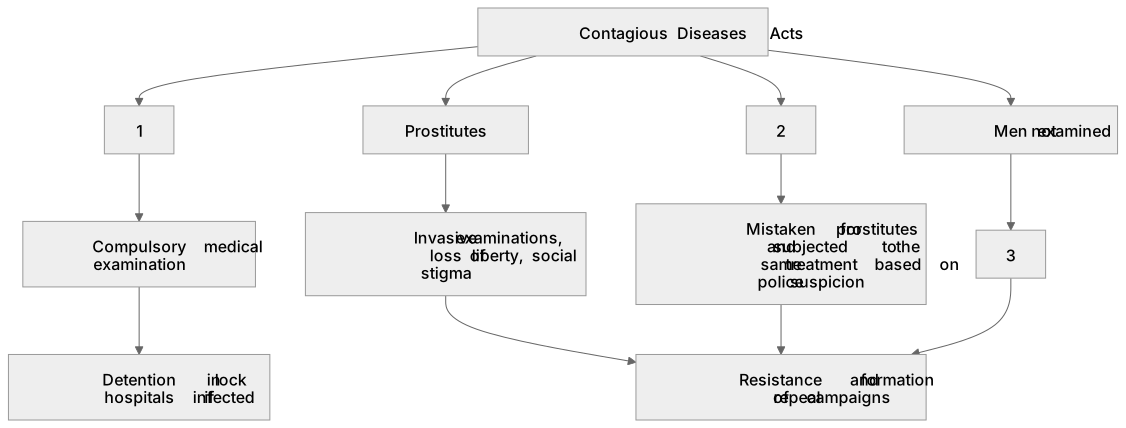
1Box 1
2Box 2
3Box 3
There is more to this lesson
The full lesson goes on to check your understanding and help you earn the marks. Create a free account to carry on, with your progress saved.
A week of Premium from your first lesson · Then the free plan continues · No card, no charge
Test your understanding of Paper 3, Option 36.1: Protest, agitation and parliamentary reform in Britain, c1780–1928 - 3 Contagious Diseases Acts and the campaign for their repeal, 1862–86: The Acts’ impact on prostitutes and ordinary women.
Active recall beats re-reading. Take an instant quiz now to test what you’ve learned and lock it into long-term memory.
A week of Premium from your first lesson · Then the free plan continues · No card, no charge