Pearson Edexcel · A-Level · History
Course version: 9HI0 · Version from Sept 2015
Civil rights and race relations in the USA, 1850–2009 - 2 Changing…
Full specification wording
Paper 3, Option 39.1: Civil rights and race relations in the USA, 1850–2009 - 2 Changing portrayal of civil rights issues in fiction and film: The role of literature in shaping and reflecting changing perceptions of race relations, 1850–2009 (key developments: the publication of Uncle Tom's Cabin 1852; Huckleberry Finn 1885, Gone with the Wind 1936, To Kill a Mockingbird 1960, Beloved 1987, The Help 2009).
Literature both shaped and reflected changing perceptions of race relations across 1850–2009.
Checked against the Pearson Edexcel 9HI0 specification (opens in a new tab) on .
- Point 1 of 2
- 4 key terms
Study notes
From the checked teaching notes for this specification point.
The idea
Literature both shaped and reflected changing perceptions of race relations across 1850–2009. Uncle Tom's Cabin (1852) mobilised Northern antislavery sentiment while trading in sentimental stereotypes. Huckleberry Finn (1885) used a white narrator's moral awakening, yet its language and ending remain contested. Gone with the Wind (1936) romanticised the plantation South and the Lost Cause, reflecting segregationist nostalgia. To Kill a Mockingbird (1960) exposed Southern injustice through a white child's eyes during the civil rights era. Beloved (1987) centred Black interiority and the trauma of slavery. The Help (2009) prompted debate over white-authored depictions of Black experience.
What earns the marks
- Explains how Uncle Tom's Cabin (1852) fuelled Northern antislavery feeling while also embedding sentimental racial stereotypes, showing literature as both agent and mirror.
- Analyses Huckleberry Finn (1885) as a post-Reconstruction text whose moral journey and racial language reveal contested white attitudes.
- Assesses Gone with the Wind (1936) as a Lost Cause romance that reflected and reinforced segregationist nostalgia in the 1930s.
- Evaluates To Kill a Mockingbird (1960) as a civil rights era text that challenged Southern injustice but filtered Black experience through a white child narrator.
- Examines Beloved (1987) as a reclamation of Black voice and memory that reshaped how slavery was publicly remembered.
- Weighs The Help (2009) as evidence of continuing tension between white-authored representation and Black self-representation.
- Judges the relative weight of shaping versus reflecting for each text using reception, sales, censorship and adaptation evidence.
Common mistakes and how to put them right
Treating each novel as a transparent record of attitudes rather than a constructed text with an author, audience and reception.
Put it right by asking who wrote it, for whom, and how it was received.
Assuming a single text changed national opinion on its own.
Put it right by linking texts to wider movements, legislation and media.
Ignoring the chronological spread and treating 1852 and 2009 as one undifferentiated period.
Put it right by situating each text in its specific decade and racial context.
Exam tips
- Anchor each paragraph on one named text and its date, then explain what it reveals and what it changed.
- Use precise reception evidence such as sales, bans, awards or criticism to support the shaping claim.
- Balance shaping and reflecting explicitly in your judgement rather than asserting one direction only.
Try the lesson
The start of the Paper 3, Option 39.1: Civil rights and race relations in the USA, 1850–2009 - 2 Changing portrayal of civil rights issues in fiction and film: The role of literature in shaping and reflecting changing perceptions of race relations, 1850–2009 (key developments: the publication of Uncle Tom's Cabin 1852; Huckleberry Finn 1885, Gone with the Wind 1936, To Kill a Mockingbird 1960, Beloved 1987, The Help 2009). lesson, made from checked teaching notes for this specification point.
Have a go first
Which novel about slavery was published in 1852 and became a key development in shaping perceptions of race relations in the USA?
Listen
Literature both shaped and reflected changing perceptions of race relations across 1850–2009. Uncle Tom's Cabin (1852) mobilised Northern antislavery sentiment while trading in sentimental stereotypes. Huckleberry Finn (1885) used a white narrator's moral awakening, yet its language and ending remain contested. Gone with the Wind (1936) romanticised the plantation South and the Lost Cause, reflecting segregationist nostalgia. To Kill a Mockingbird (1960) exposed Southern injustice through a white child's eyes during the civil rights era. Beloved (1987) centred Black interiority and the trauma of slavery. The Help (2009) prompted debate over white-authored depictions of Black experience. A strong answer earns marks for these points. Explains how Uncle Tom's Cabin (1852) fuelled Northern antislavery feeling while also embedding sentimental racial stereotypes, showing literature as both agent and mirror. Analyses Huckleberry Finn (1885) as a post-Reconstruction text whose moral journey and racial language reveal contested white attitudes. Assesses Gone with the Wind (1936) as a Lost Cause romance that reflected and reinforced segregationist nostalgia in the 1930s. Evaluates To Kill a Mockingbird (1960) as a civil rights era text that challenged Southern injustice but filtered Black experience through a white child narrator. A common slip: Treating each novel as a transparent record of attitudes rather than a constructed text with an author, audience and reception. Instead, asking who wrote it, for whom, and how it was received. Exam tip: Anchor each paragraph on one named text and its date, then explain what it reveals and what it changed.
See it
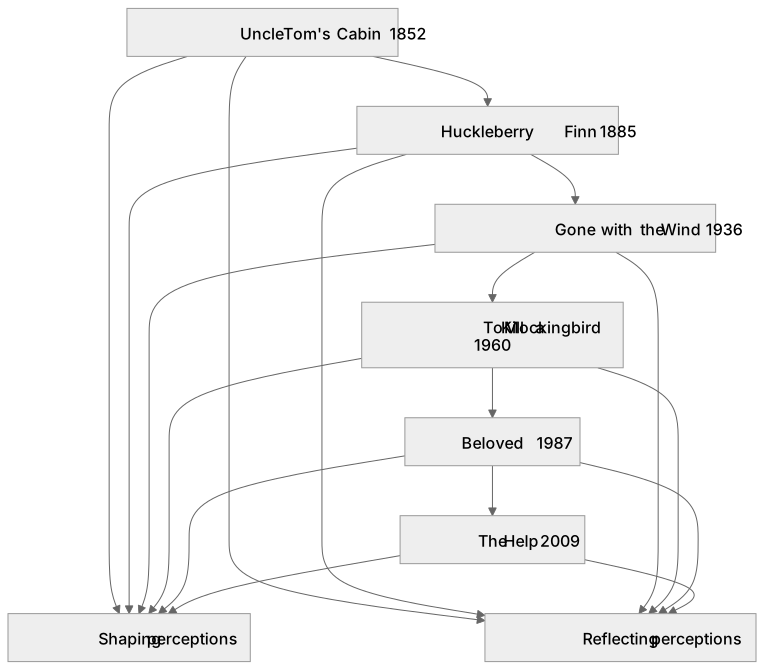
Put the events in order
Put these events in the order they happened, earliest first.
- 1. Publication of Gone with the Wind
- 2. Publication of To Kill a Mockingbird
- 3. Publication of Beloved
- 4. Publication of Huckleberry Finn
- 5. Publication of Uncle Tom's Cabin
- 6. Publication of The Help
Key words
Say what each word means before you turn the card.
Agency and representation
Try answering aloud or in your head before turning the card.
Race and authorship
Try answering aloud or in your head before turning the card.
Reception and public opinion
Try answering aloud or in your head before turning the card.
Continuity and change across 1850–2009
Try answering aloud or in your head before turning the card.
See every definition
- Agency and representation
- Judging each text as an agent of change and as evidence of its moment, weighing authorship, audience and reception.
- Race and authorship
- Weighing who wrote each text, for whom, and how it was received, including tension between white-authored representation and Black self-representation.
- Reception and public opinion
- Using evidence such as sales, censorship and adaptation to judge the relative weight of shaping versus reflecting for each text.
- Continuity and change across 1850–2009
- Situating each named text in its specific decade and racial context rather than treating 1852 and 2009 as one undifferentiated period.
Label the diagram
Some boxes have lost their names. Pick the right name for each number.
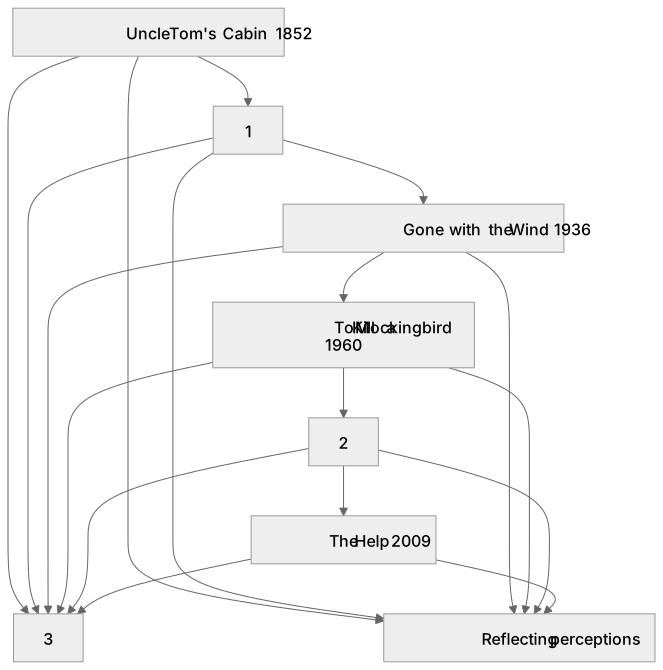
1Box 1
2Box 2
3Box 3
There is more to this lesson
The full lesson goes on to check your understanding and help you earn the marks. Create a free account to carry on, with your progress saved.
A week of Premium from your first lesson · Then the free plan continues · No card, no charge
Test your understanding of Paper 3, Option 39.1: Civil rights and race relations in the USA, 1850–2009 - 2 Changing portrayal of civil rights issues in fiction and film: The role of literature in shaping and reflecting changing perceptions of race relations, 1850–2009 (key developments: the publication of Uncle Tom's Cabin 1852; Huckleberry Finn 1885, Gone with the Wind 1936, To Kill a Mockingbird 1960, Beloved 1987, The Help 2009).
Active recall beats re-reading. Take an instant quiz now to test what you’ve learned and lock it into long-term memory.
A week of Premium from your first lesson · Then the free plan continues · No card, no charge