Pearson Edexcel · A-Level · History
Course version: 9HI0 · Version from Sept 2015
Civil rights and race relations in the USA, 1850–2009 - 2 Changing…
Full specification wording
Paper 3, Option 39.1: Civil rights and race relations in the USA, 1850–2009 - 2 Changing portrayal of civil rights issues in fiction and film: The role of visual portrayals in influencing and reflecting changing perceptions of race, 1850–2009 (key developments: images of black Americans in paintings, photographs and lithographs 1850–80, Birth of a Nation 1915, In the Heat of the Night 1967, Roots 1977, Mississippi Burning 1988, Malcolm X 1992, The Wire 2002–08).
Visual portrayals influenced and reflected changing perceptions of race, 1850–2009.
Checked against the Pearson Edexcel 9HI0 specification (opens in a new tab) on .
- Point 2 of 2
Study notes
From the checked teaching notes for this specification point.
The idea
Visual portrayals influenced and reflected changing perceptions of race, 1850–2009. Images of black Americans in paintings, photographs and lithographs of 1850–80 ranged from abolitionist sympathy to minstrel caricature. Birth of a Nation (1915) glorified the Ku Klux Klan, showing film as an active racial force. In the Heat of the Night (1967) dramatised interracial tension. Roots (1977) shifted popular memory of slavery. Mississippi Burning (1988) framed civil rights through white FBI protagonists. Malcolm X (1992) offered a Black-centred political biography. The Wire (2002–08) examined structural racism in a post-civil rights city.
What earns the marks
- Explains how images of black Americans in paintings, photographs and lithographs of 1850–80 could advance abolitionist sympathy or reinforce caricature and minstrel stereotypes.
- Analyses Birth of a Nation (1915) as a film that glorified the Klan and actively influenced racial attitudes and recruitment.
- Assesses In the Heat of the Night (1967) as a civil rights era film that dramatised racial tension by centring a Black detective, Virgil Tibbs, navigating a prejudiced white Southern town.
- Evaluates Roots (1977) as a mass-audience television event that reshaped popular memory of slavery.
- Examines Mississippi Burning (1988) as a contested portrayal that filtered civil rights history through white FBI heroes.
- Weighs Malcolm X (1992) as a Black-centred biography that reflected and promoted a politics of Black pride.
- Judges The Wire (2002–08) as a post-civil rights critique of structural racism in institutions and cities.
- Compares the relative influence of still images and moving images across the whole period.
Common mistakes and how to put them right
Treating a film as a neutral window on the past rather than a constructed portrayal with a director, studio and audience.
Put it right by analysing production context and reception.
Assuming visual media only reflected attitudes and never changed them.
Put it right by citing examples such as Birth of a Nation's role in Klan revival.
Ignoring the 1850–80 still images and jumping straight to twentieth-century film.
Put it right by covering paintings, photographs and lithographs as the period's opening visual evidence.
Exam tips
- Name the medium, date and maker where known, then explain the perception it shaped or reflected.
- Use reception evidence such as audience size, protests, censorship or awards to support claims about influence.
- Compare still and moving images explicitly to show change over time rather than listing them.
Try the lesson
The start of the Paper 3, Option 39.1: Civil rights and race relations in the USA, 1850–2009 - 2 Changing portrayal of civil rights issues in fiction and film: The role of visual portrayals in influencing and reflecting changing perceptions of race, 1850–2009 (key developments: images of black Americans in paintings, photographs and lithographs 1850–80, Birth of a Nation 1915, In the Heat of the Night 1967, Roots 1977, Mississippi Burning 1988, Malcolm X 1992, The Wire 2002–08). lesson, made from checked teaching notes for this specification point.
Have a go first
In what way did the 1915 film *The Birth of a Nation* reflect and influence perceptions of race relations in the United States?
Listen
Visual portrayals influenced and reflected changing perceptions of race, 1850–2009. Images of black Americans in paintings, photographs and lithographs of 1850–80 ranged from abolitionist sympathy to minstrel caricature. Birth of a Nation (1915) glorified the Ku Klux Klan, showing film as an active racial force. In the Heat of the Night (1967) dramatised interracial tension. Roots (1977) shifted popular memory of slavery. Mississippi Burning (1988) framed civil rights through white FBI protagonists. Malcolm X (1992) offered a Black-centred political biography. The Wire (2002–08) examined structural racism in a post-civil rights city. A strong answer earns marks for these points. Explains how images of black Americans in paintings, photographs and lithographs of 1850–80 could advance abolitionist sympathy or reinforce caricature and minstrel stereotypes. Analyses Birth of a Nation (1915) as a film that glorified the Klan and actively influenced racial attitudes and recruitment. Assesses In the Heat of the Night (1967) as a civil rights era film that dramatised racial tension by centring a Black detective, Virgil Tibbs, navigating a prejudiced white Southern town. Evaluates Roots (1977) as a mass-audience television event that reshaped popular memory of slavery. A common slip: Treating a film as a neutral window on the past rather than a constructed portrayal with a director, studio and audience. Instead, analysing production context and reception. Exam tip: Name the medium, date and maker where known, then explain the perception it shaped or reflected.
See it
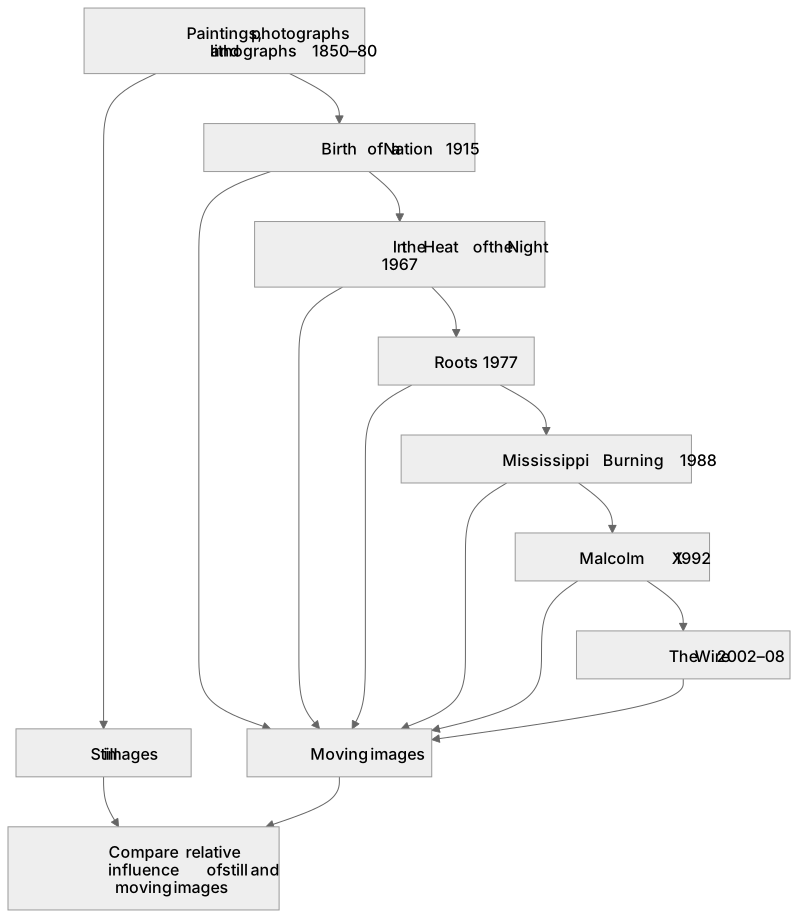
Label the diagram
Some boxes have lost their names. Pick the right name for each number.
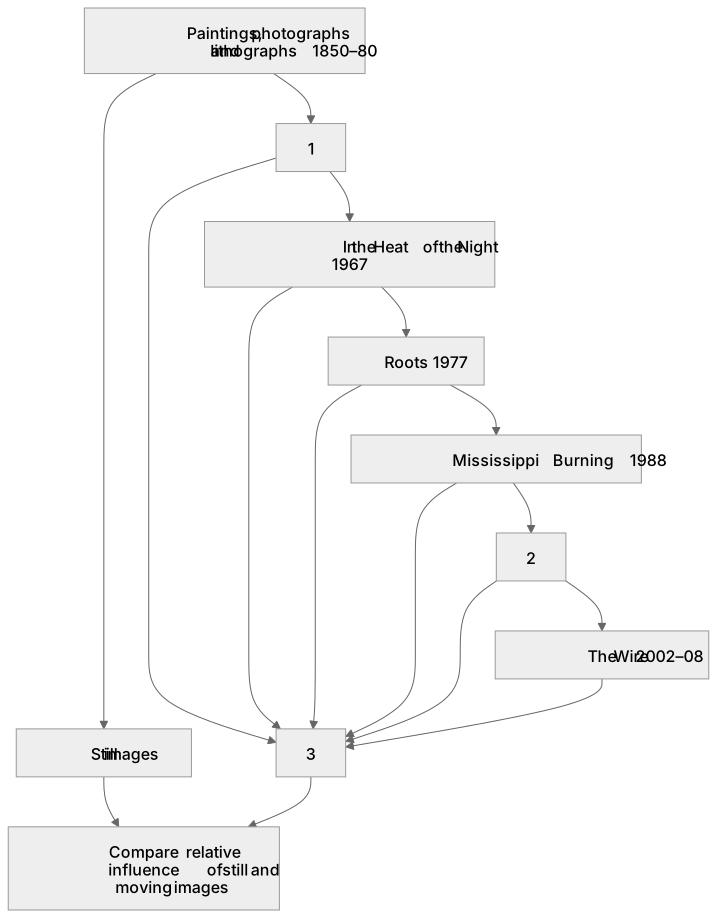
1Box 1
2Box 2
3Box 3
There is more to this lesson
The full lesson goes on to check your understanding and help you earn the marks. Create a free account to carry on, with your progress saved.
A week of Premium from your first lesson · Then the free plan continues · No card, no charge
Test your understanding of Paper 3, Option 39.1: Civil rights and race relations in the USA, 1850–2009 - 2 Changing portrayal of civil rights issues in fiction and film: The role of visual portrayals in influencing and reflecting changing perceptions of race, 1850–2009 (key developments: images of black Americans in paintings, photographs and lithographs 1850–80, Birth of a Nation 1915, In the Heat of the Night 1967, Roots 1977, Mississippi Burning 1988, Malcolm X 1992, The Wire 2002–08).
Active recall beats re-reading. Take an instant quiz now to test what you’ve learned and lock it into long-term memory.
A week of Premium from your first lesson · Then the free plan continues · No card, no charge