Pearson Edexcel · A-Level · History
Course version: 9HI0 · Version from Sept 2015
Mass media and social change in Britain, 1882–2004 - 1 The age of the…
Full specification wording
Paper 3, Option 39.2: Mass media and social change in Britain, 1882–2004 - 1 The age of the press barons, 1914–36: The importance of the Daily Herald: the role of George Lansbury; the significance of the editorial stance on the First World War, conscientious objectors and the Russian Revolutions; the impact of Kamenev’s telegram 1920.
The Daily Herald began as a radical socialist paper, with George Lansbury playing a central role in its early direction.
Checked against the Pearson Edexcel 9HI0 specification (opens in a new tab) on .
- Point 3 of 3
Study notes
From the checked teaching notes for this specification point.
The idea
The Daily Herald began as a radical socialist paper, with George Lansbury playing a central role in its early direction. Its editorial stance opposed the First World War, supported conscientious objectors, and welcomed the Russian Revolutions. These positions made it a voice for the labour left but also exposed it to government hostility and commercial pressure. In 1920, intercepted telegrams between Lev Kamenev (a Soviet envoy in London) and Moscow regarding a Soviet subsidy to the paper were published. The Herald’s association with such foreign interference damaged its standing and contributed to its later relaunch as a Labour Party paper.
What earns the marks
- Explains George Lansbury's role in founding, editing or directing the Daily Herald and his wider socialist commitment.
- Analyses the Herald's editorial opposition to the First World War and its support for conscientious objectors.
- Assesses the significance of the Herald's positive coverage of the Russian Revolutions for its political identity and readership.
- Examines the impact of Kamenev's telegram in 1920, including how the intercepted communications regarding a Soviet subsidy were used against the Herald and the labour left.
- Evaluates the importance of the Daily Herald by weighing its radical influence against its commercial and political difficulties.
- Connects the Herald's stance to broader debates about press freedom, patriotism and socialism in wartime and post-war Britain.
Common mistakes and how to put them right
Treating the Daily Herald as a mainstream Labour Party paper from its foundation.
Put it right: Note its early radical and independent socialist origins before later party control.
Assuming all labour movement figures opposed the First World War.
Put it right: Distinguish the Herald's editorial line from the wider and divided labour response.
Confusing Kamenev's telegram with a message to British workers.
Put it right: Identify it as intercepted communications between Kamenev in London and Moscow regarding a Soviet financial subsidy to the paper.
Ignoring the commercial consequences of the Herald's radical stance.
Put it right: Link its editorial positions to circulation, funding and survival pressures.
Exam tips
- Use the Herald's specific editorial positions as evidence of its political importance.
- Explain how the Kamenev telegram was used politically to discredit the paper, not just that it existed.
- Balance the Herald's ideological influence against its practical weaknesses.
- Link Lansbury's role to the paper's wider significance in the labour movement.
Try the lesson
The start of the Paper 3, Option 39.2: Mass media and social change in Britain, 1882–2004 - 1 The age of the press barons, 1914–36: The importance of the Daily Herald: the role of George Lansbury; the significance of the editorial stance on the First World War, conscientious objectors and the Russian Revolutions; the impact of Kamenev’s telegram 1920. lesson, made from checked teaching notes for this specification point.
Have a go first
Which Labour figure was closely associated with the Daily Herald as its editor and leading supporter in its early years?
Listen
The Daily Herald began as a radical socialist paper, with George Lansbury playing a central role in its early direction. Its editorial stance opposed the First World War, supported conscientious objectors, and welcomed the Russian Revolutions. These positions made it a voice for the labour left but also exposed it to government hostility and commercial pressure. In 1920, intercepted telegrams between Lev Kamenev (a Soviet envoy in London) and Moscow regarding a Soviet subsidy to the paper were published. The Herald’s association with such foreign interference damaged its standing and contributed to its later relaunch as a Labour Party paper. A strong answer earns marks for these points. Explains George Lansbury's role in founding, editing or directing the Daily Herald and his wider socialist commitment. Analyses the Herald's editorial opposition to the First World War and its support for conscientious objectors. Assesses the significance of the Herald's positive coverage of the Russian Revolutions for its political identity and readership. Examines the impact of Kamenev's telegram in 1920, including how the intercepted communications regarding a Soviet subsidy were used against the Herald and the labour left. A common slip: Treating the Daily Herald as a mainstream Labour Party paper from its foundation. Instead, note its early radical and independent socialist origins before later party control. Exam tip: Use the Herald's specific editorial positions as evidence of its political importance.
See it
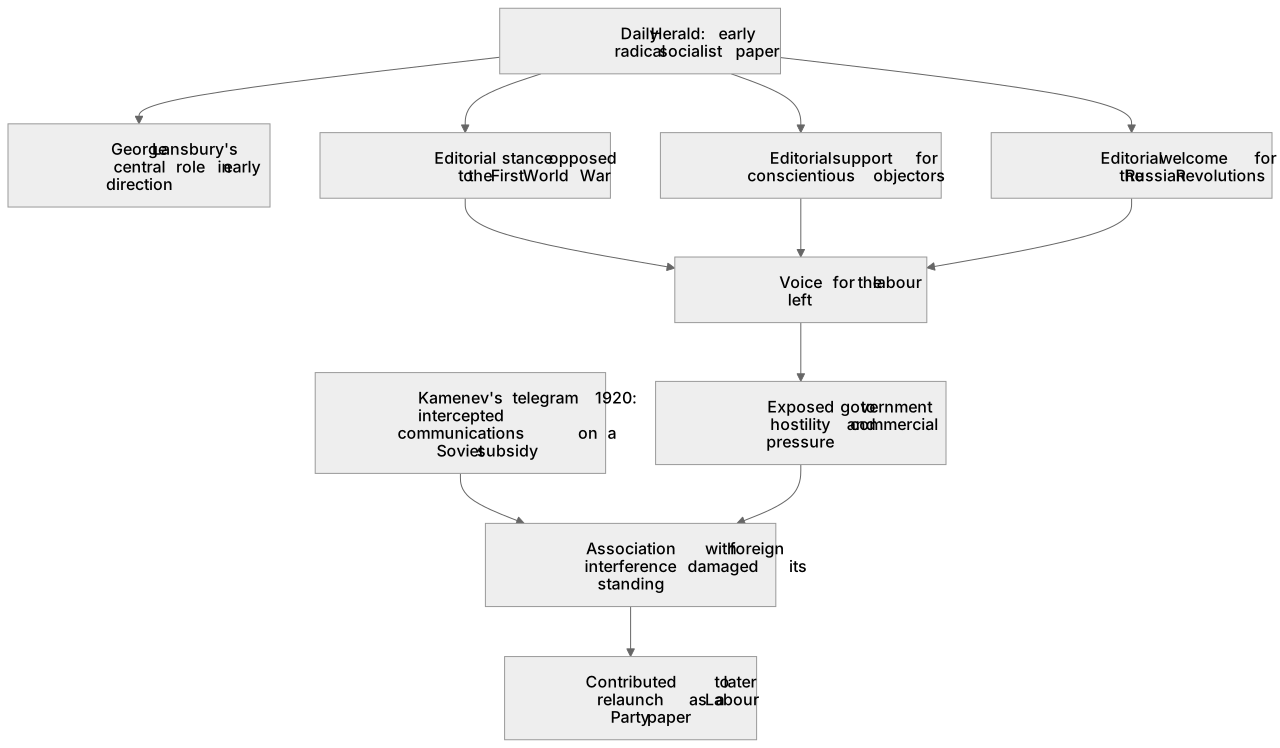
Label the diagram
Some boxes have lost their names. Pick the right name for each number.
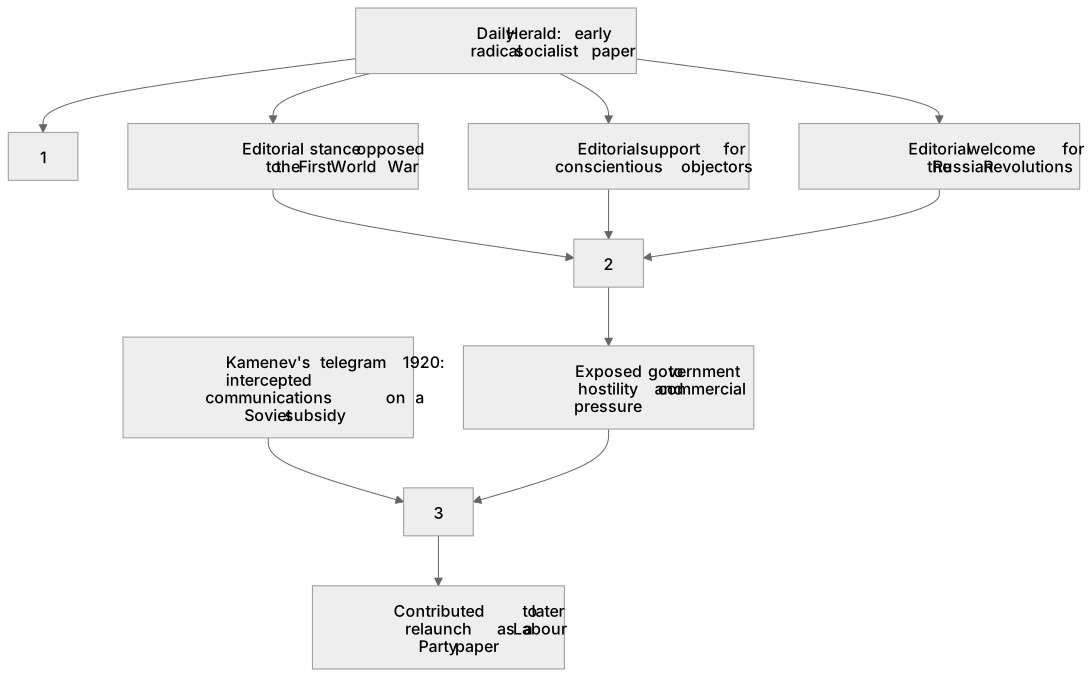
1Box 1
2Box 2
3Box 3
There is more to this lesson
The full lesson goes on to check your understanding and help you earn the marks. Create a free account to carry on, with your progress saved.
A week of Premium from your first lesson · Then the free plan continues · No card, no charge
Test your understanding of Paper 3, Option 39.2: Mass media and social change in Britain, 1882–2004 - 1 The age of the press barons, 1914–36: The importance of the Daily Herald: the role of George Lansbury; the significance of the editorial stance on the First World War, conscientious objectors and the Russian Revolutions; the impact of Kamenev’s telegram 1920.
Active recall beats re-reading. Take an instant quiz now to test what you’ve learned and lock it into long-term memory.
A week of Premium from your first lesson · Then the free plan continues · No card, no charge