Pearson Edexcel · GCSE · History
Course version: 1HI0 · Version from Sept 2016
C1250–c1500: Medicine in medieval England - 1 Ideas about the cause of…
Full specification wording
Option 11: c1250–c1500: Medicine in medieval England - 1 Ideas about the cause of disease and illness: Supernatural and religious explanations of the cause of disease.
In medieval England (c1250–c1500), supernatural and religious explanations dominated understandings of disease.
Checked against the Pearson Edexcel 1HI0 specification (opens in a new tab) on .
- Point 1 of 2
- 3 key terms
Study notes
From the checked teaching notes for this specification point.
The idea
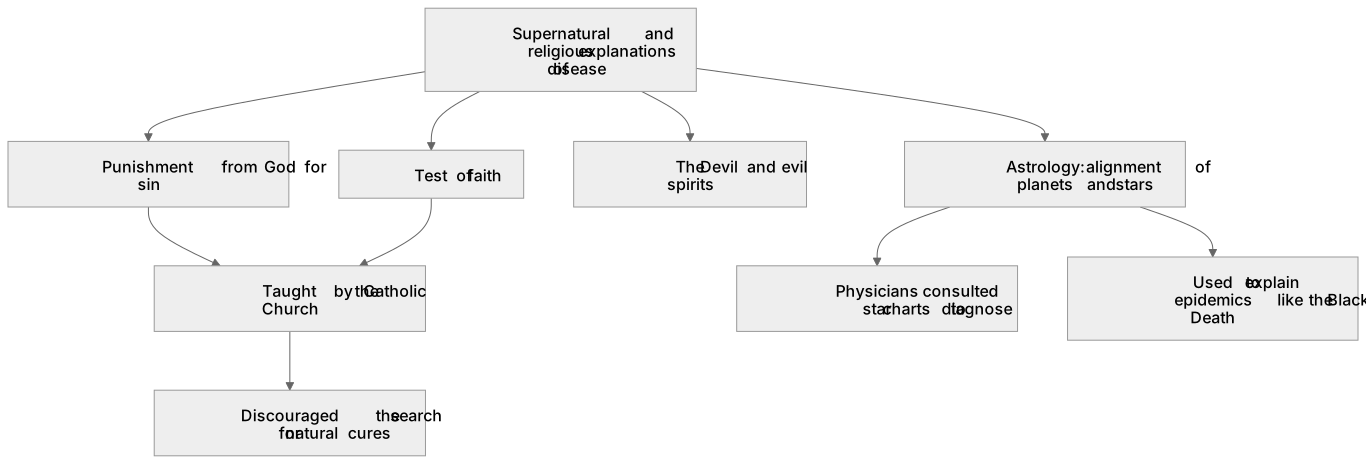
In medieval England (c1250–c1500), supernatural and religious explanations dominated understandings of disease. The Catholic Church taught that illness was a punishment from God for sin, or a test of faith, which discouraged the search for natural cures. The Devil and evil spirits were also blamed for causing sickness. Furthermore, supernatural explanations included astrology; the alignment of planets and stars was believed to influence health, especially during epidemics like the Black Death. Physicians routinely consulted star charts to diagnose patients. These explanations were deeply ingrained, heavily promoted by the Church, and provided a framework that made sense of sudden illness in the absence of scientific knowledge.
What earns the marks
- Explain the religious belief that disease was a punishment from God for sinful behaviour.
- Describe the role of the Devil and demons in supernatural explanations of illness.
- Explain how astrology and the alignment of planets were used to explain the cause of disease.
- Discuss the influence of the Catholic Church in promoting and maintaining these religious explanations.
- Connect these beliefs to the lack of progress in finding natural causes for diseases.
Common mistakes and how to put them right
Confusing supernatural explanations with rational ones like the Four Humours.
Put it right: Clearly distinguish between religious/astrological causes (supernatural) and humoral/miasma theories (rational).
Stating that people only believed in religious causes.
Put it right: Acknowledge that people often held both religious and rational beliefs simultaneously.
Ignoring the role of astrology.
Put it right: Include astrology as a key supernatural explanation, noting its use by trained physicians.
Exam tips
- When discussing the Church's influence, mention how it controlled medical learning and discouraged dissection.
- Use the Black Death as a prime example of when religious and astrological explanations were heavily relied upon.
- Remember that 'supernatural' covers both divine intervention (God/Devil) and cosmic forces (astrology).
Try the lesson
The start of the Option 11: c1250–c1500: Medicine in medieval England - 1 Ideas about the cause of disease and illness: Supernatural and religious explanations of the cause of disease. lesson, made from checked teaching notes for this specification point.
Have a go first
In medieval England, what was the most common religious explanation for why a person caught a disease?
Listen
In medieval England (c1250–c1500), supernatural and religious explanations dominated understandings of disease. The Catholic Church taught that illness was a punishment from God for sin, or a test of faith, which discouraged the search for natural cures. The Devil and evil spirits were also blamed for causing sickness. Furthermore, supernatural explanations included astrology; the alignment of planets and stars was believed to influence health, especially during epidemics like the Black Death. Physicians routinely consulted star charts to diagnose patients. These explanations were deeply ingrained, heavily promoted by the Church, and provided a framework that made sense of sudden illness in the absence of scientific knowledge. A strong answer earns marks for these points. Explain the religious belief that disease was a punishment from God for sinful behaviour. Describe the role of the Devil and demons in supernatural explanations of illness. Explain how astrology and the alignment of planets were used to explain the cause of disease. Discuss the influence of the Catholic Church in promoting and maintaining these religious explanations. A common slip: Confusing supernatural explanations with rational ones like the Four Humours. Instead, Clearly distinguish between religious/astrological causes (supernatural) and humoral/miasma theories (rational). Exam tip: When discussing the Church's influence, mention how it controlled medical learning and discouraged dissection.
See it
Watch it explained
What is the one idea the video explains? Say it in a sentence.
Read the described scene instead
Between about twelve fifty and fifteen hundred, most people in medieval England explained illness through religion and the supernatural. In this lesson we look at what they believed, who promoted those beliefs, and why they lasted so long. As you watch, notice how each explanation answered the same question: why has this person fallen ill? The Catholic Church taught that illness was a punishment from God for sin. Disease could also be a test of faith, sent to try a believer. Alongside God, the Devil and evil spirits were blamed for causing sickness. Because illness was seen as a spiritual matter, the search for natural cures was discouraged. The Church was central to medieval learning, and it promoted these religious explanations of disease. Because the Church controlled so much education, its teaching shaped what people accepted as true. Pause here and think: how would that control affect what people believed about illness? It helps explain why these explanations were so deeply ingrained, and why they were repeated across generations. Supernatural explanations also included astrology. The alignment of planets and stars was believed to influence health, and this was especially important during epidemics like the Black Death. Trained physicians routinely consulted star charts to diagnose their patients, so astrology was not folk belief alone but part of medical practice. A common mistake is to confuse supernatural explanations with rational ones. The Four Humours and miasma were rational theories; God, the Devil and astrology were supernatural. Another error is saying people believed only in religious causes. In practice, people often held religious and rational beliefs at the same time. So medieval explanations of disease were dominated by the supernatural. Illness could be God's punishment or a test of faith, or the work of the Devil and evil spirits. Astrology offered another explanation, used by physicians and relied on during the Black Death. The Church promoted these ideas, and without knowledge of natural causes, they made sense of sudden illness.
Key words
Say what each word means before you turn the card.
Role of the Church
Try answering aloud or in your head before turning the card.
Supernatural beliefs
Try answering aloud or in your head before turning the card.
Astrology in medicine
Try answering aloud or in your head before turning the card.
See every definition
- Role of the Church
- The Catholic Church taught that illness was a punishment from God for sin or a test of faith, and it discouraged the search for natural cures.
- Supernatural beliefs
- Explanations of disease that included the Devil and evil spirits being blamed for causing sickness.
- Astrology in medicine
- The belief that the alignment of planets and stars influenced health, so physicians consulted star charts to diagnose patients.
Label the diagram
Some boxes have lost their names. Pick the right name for each number.
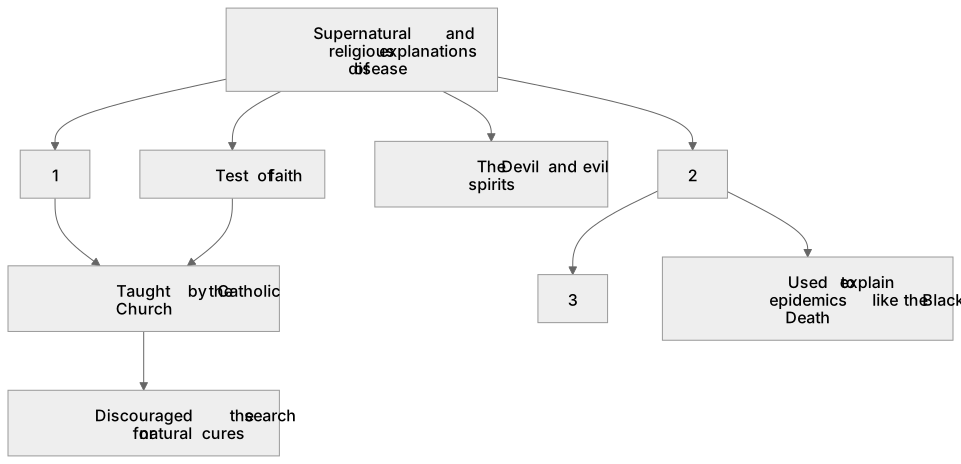
1Box 1
2Box 2
3Box 3
There is more to this lesson
The full lesson goes on to check your understanding and help you earn the marks. Create a free account to carry on, with your progress saved.
A week of Premium from your first lesson · Then the free plan continues · No card, no charge
Test your understanding of Option 11: c1250–c1500: Medicine in medieval England - 1 Ideas about the cause of disease and illness: Supernatural and religious explanations of the cause of disease.
Active recall beats re-reading. Take an instant quiz now to test what you’ve learned and lock it into long-term memory.
A week of Premium from your first lesson · Then the free plan continues · No card, no charge