Pearson Edexcel · GCSE · History
Course version: 1HI0 · Version from Sept 2016
C1900–present: Medicine in modern Britain - 2 Approaches to prevention and…
Full specification wording
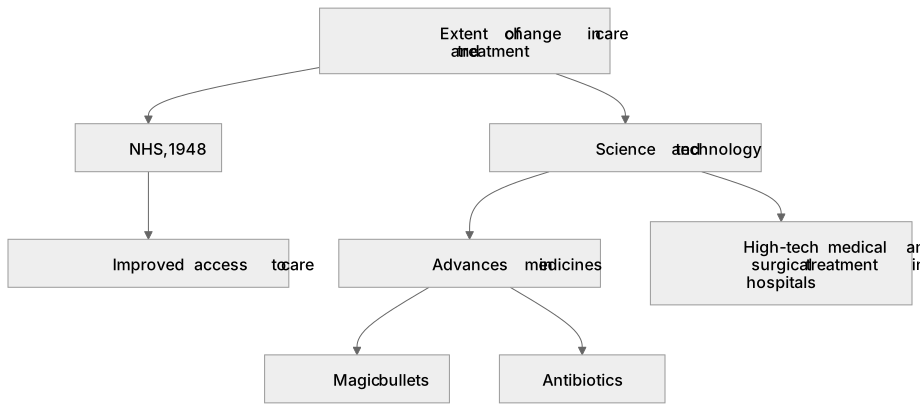
Option 11: c1900–present: Medicine in modern Britain - 2 Approaches to prevention and treatment: The extent of change in care and treatment. The impact of the NHS and science and technology: improved access to care; advances in medicines, including magic bullets and antibiotics; high-tech medical and surgical treatment in hospitals.
The twentieth century saw an unprecedented extent of change in medical care and treatment.
Checked against the Pearson Edexcel 1HI0 specification (opens in a new tab) on .
- Point 1 of 2
- 4 key terms
Study notes
From the checked teaching notes for this specification point.
The idea
The twentieth century saw an unprecedented extent of change in medical care and treatment. The creation of the NHS in 1948 drastically improved access to care, making treatment free at the point of use and removing financial barriers. Science and technology drove massive advances in medicines, starting with Ehrlich's 'magic bullet' Salvarsan 606, followed by the mass production of antibiotics like penicillin, which conquered many bacterial infections. Hospitals transformed into centres of high-tech medical and surgical treatment, utilising advanced machinery for dialysis and complex procedures like organ transplants and keyhole surgery. Together, these developments dramatically increased life expectancy and fundamentally altered patient care.
What earns the marks
- Explain how the establishment of the NHS in 1948 improved access to medical care by making it free at the point of use.
- Describe the development and impact of 'magic bullets' like Salvarsan 606 in targeting specific bacteria.
- Analyse the significance of the mass production of antibiotics, such as penicillin, in treating bacterial infections.
- Evaluate the transformation of hospitals into centres for high-tech medical and surgical treatments, including transplants and keyhole surgery.
Common mistakes and how to put them right
Confusing 'magic bullets' with antibiotics.
Put it right by explaining that magic bullets are chemical drugs (like Salvarsan 606), while antibiotics are produced by microorganisms (like penicillin).
Stating that the NHS was created in the 19th century.
Put it right by confirming the NHS was established in 1948 after the Second World War.
Claiming that antibiotics cure all diseases.
Put it right by specifying that antibiotics only treat bacterial infections, not viral ones.
Exam tips
- Clearly distinguish between the impact of the NHS on access to care and the impact of science on the quality of treatments.
- Use penicillin as a key example of how science, technology, and government funding combined to advance medicine.
- Discuss high-tech surgical treatments, such as keyhole surgery, to demonstrate the extent of change in hospital care.
Try the lesson
The start of the Option 11: c1900–present: Medicine in modern Britain - 2 Approaches to prevention and treatment: The extent of change in care and treatment. The impact of the NHS and science and technology: improved access to care; advances in medicines, including magic bullets and antibiotics; high-tech medical and surgical treatment in hospitals. lesson, made from checked teaching notes for this specification point.
Have a go first
What major change in healthcare provision was introduced in Britain in 1948?
Listen
The twentieth century saw an unprecedented extent of change in medical care and treatment. The creation of the NHS in 1948 drastically improved access to care, making treatment free at the point of use and removing financial barriers. Science and technology drove massive advances in medicines, starting with Ehrlich's 'magic bullet' Salvarsan 606, followed by the mass production of antibiotics like penicillin, which conquered many bacterial infections. Hospitals transformed into centres of high-tech medical and surgical treatment, utilising advanced machinery for dialysis and complex procedures like organ transplants and keyhole surgery. Together, these developments dramatically increased life expectancy and fundamentally altered patient care. A strong answer earns marks for these points. Explain how the establishment of the NHS in 1948 improved access to medical care by making it free at the point of use. Describe the development and impact of 'magic bullets' like Salvarsan 606 in targeting specific bacteria. Analyse the significance of the mass production of antibiotics, such as penicillin, in treating bacterial infections. Evaluate the transformation of hospitals into centres for high-tech medical and surgical treatments, including transplants and keyhole surgery. A common slip: Confusing 'magic bullets' with antibiotics. Instead, explaining that magic bullets are chemical drugs (like Salvarsan 606), while antibiotics are produced by microorganisms (like penicillin). Exam tip: Clearly distinguish between the impact of the NHS on access to care and the impact of science on the quality of treatments.
See it
Key words
Say what each word means before you turn the card.
NHS
Try answering aloud or in your head before turning the card.
Magic bullets
Try answering aloud or in your head before turning the card.
Antibiotics
Try answering aloud or in your head before turning the card.
High-tech medical and surgical treatment
Try answering aloud or in your head before turning the card.
See every definition
- NHS
- Created in 1948, it drastically improved access to care, making treatment free at the point of use and removing financial barriers.
- Magic bullets
- Chemical drugs, starting with Ehrlich's Salvarsan 606, that target specific bacteria.
- Antibiotics
- Produced by microorganisms, such as penicillin, they were mass produced and conquered many bacterial infections.
- High-tech medical and surgical treatment
- Hospitals transformed into centres for this, utilising advanced machinery for dialysis and complex procedures like organ transplants and keyhole surgery.
Label the diagram
Some boxes have lost their names. Pick the right name for each number.
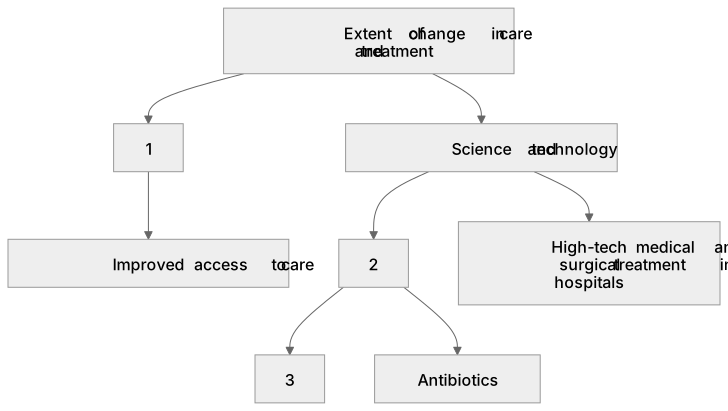
1Box 1
2Box 2
3Box 3
There is more to this lesson
The full lesson goes on to check your understanding and help you earn the marks. Create a free account to carry on, with your progress saved.
A week of Premium from your first lesson · Then the free plan continues · No card, no charge
Test your understanding of Option 11: c1900–present: Medicine in modern Britain - 2 Approaches to prevention and treatment: The extent of change in care and treatment. The impact of the NHS and science and technology: improved access to care; advances in medicines, including magic bullets and antibiotics; high-tech medical and surgical treatment in hospitals.
Active recall beats re-reading. Take an instant quiz now to test what you’ve learned and lock it into long-term memory.
A week of Premium from your first lesson · Then the free plan continues · No card, no charge