Pearson Edexcel · GCSE · History
Course version: 1HI0 · Version from Sept 2016
C1700–c1900: Migration in eighteenth- and nineteenth-century Britain - 2…
Full specification wording
Option 13: c1700–c1900: Migration in eighteenth- and nineteenth-century Britain - 2 The experience and impact of migrants: The experience of migrants in Britain: their relations with the authorities and the existing population. The role of the media.
Between 1700 and 1900, migrants in Britain faced varied experiences shaped by interactions with authorities, the existing population, and the media.
Checked against the Pearson Edexcel 1HI0 specification (opens in a new tab) on .
- Point 1 of 2
Study notes
From the checked teaching notes for this specification point.
The idea
Between 1700 and 1900, migrants in Britain faced varied experiences shaped by interactions with authorities, the existing population, and the media. Relations with authorities were often tense, seen in the policing of Irish communities or the 1793 Aliens Act targeting French refugees. Interactions with the existing population ranged from integration to hostility, often driven by economic competition for housing and jobs. The media played a crucial role in shaping public perception, frequently sensationalising migrant criminality or disease.
For example: Nineteenth-century newspapers depicted Irish migrants through anti-Catholic caricatures, exacerbating local tensions and influencing both public hostility and government policy.
What earns the marks
- Identify specific examples of tension or cooperation between migrants and local authorities, such as policing in Irish neighbourhoods.
- Explain how economic competition for jobs and housing influenced the existing population's attitude towards migrants.
- Analyse the role of the press in creating or reinforcing negative stereotypes, such as anti-Catholic cartoons targeting the Irish.
- Evaluate how media portrayals directly influenced government legislation, such as the build-up to the 1793 Aliens Act.
Common mistakes and how to put them right
Treating all migrant experiences as identical.
Put it right by distinguishing between the experiences of different groups like wealthy Huguenots and impoverished Irish labourers.
Ignoring the role of the media.
Put it right: Explicitly linking newspaper caricatures or reports to shifts in public opinion.
Assuming authorities were always hostile.
Put it right by noting instances of local support or the initial lack of national immigration controls before 1793.
Exam tips
- Use specific historical examples of media, such as Punch magazine cartoons, to illustrate public attitudes.
- When discussing relations with the existing population, always link social tensions to underlying economic factors like housing shortages.
Try the lesson
The start of the Option 13: c1700–c1900: Migration in eighteenth- and nineteenth-century Britain - 2 The experience and impact of migrants: The experience of migrants in Britain: their relations with the authorities and the existing population. The role of the media. lesson, made from checked teaching notes for this specification point.
Have a go first
How did the British press generally portray Irish migrants during the nineteenth century?
Listen
Between 1700 and 1900, migrants in Britain faced varied experiences shaped by interactions with authorities, the existing population, and the media. Relations with authorities were often tense, seen in the policing of Irish communities or the 1793 Aliens Act targeting French refugees. Interactions with the existing population ranged from integration to hostility, often driven by economic competition for housing and jobs. The media played a crucial role in shaping public perception, frequently sensationalising migrant criminality or disease. For example, nineteenth-century newspapers depicted Irish migrants through anti-Catholic caricatures, exacerbating local tensions and influencing both public hostility and government policy. A strong answer earns marks for these points. Identify specific examples of tension or cooperation between migrants and local authorities, such as policing in Irish neighbourhoods. Explain how economic competition for jobs and housing influenced the existing population's attitude towards migrants. Analyse the role of the press in creating or reinforcing negative stereotypes, such as anti-Catholic cartoons targeting the Irish. Evaluate how media portrayals directly influenced government legislation, such as the build-up to the 1793 Aliens Act. A common slip: Treating all migrant experiences as identical. Instead, distinguishing between the experiences of different groups like wealthy Huguenots and impoverished Irish labourers. Exam tip: Use specific historical examples of media, such as Punch magazine cartoons, to illustrate public attitudes.
See it
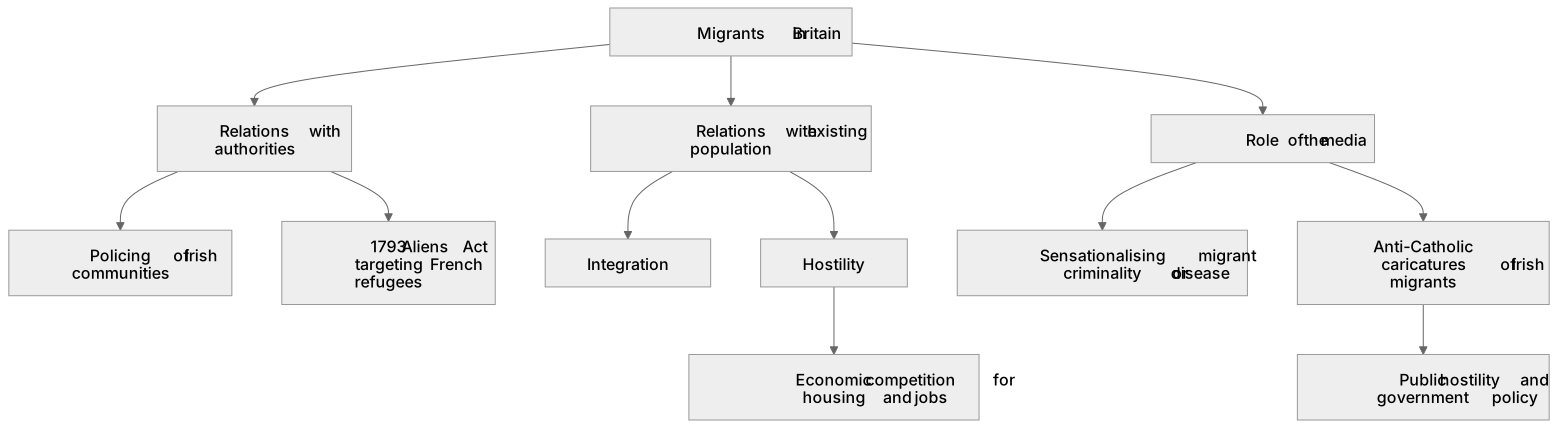
Label the diagram
Some boxes have lost their names. Pick the right name for each number.
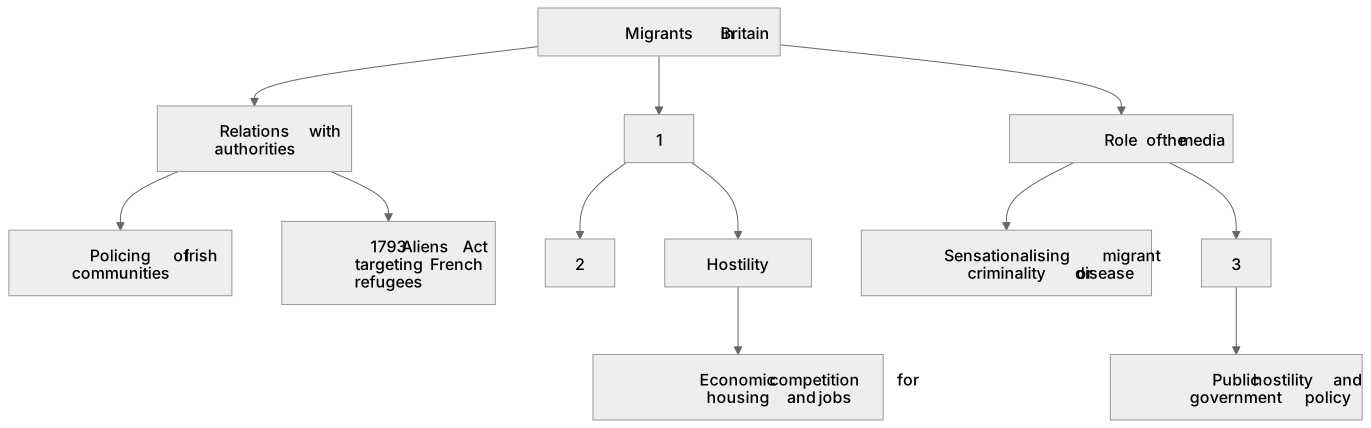
1Box 1
2Box 2
3Box 3
There is more to this lesson
The full lesson goes on to check your understanding and help you earn the marks. Create a free account to carry on, with your progress saved.
A week of Premium from your first lesson · Then the free plan continues · No card, no charge
Test your understanding of Option 13: c1700–c1900: Migration in eighteenth- and nineteenth-century Britain - 2 The experience and impact of migrants: The experience of migrants in Britain: their relations with the authorities and the existing population. The role of the media.
Active recall beats re-reading. Take an instant quiz now to test what you’ve learned and lock it into long-term memory.
A week of Premium from your first lesson · Then the free plan continues · No card, no charge