Pearson Edexcel · GCSE · History
Course version: 1HI0 · Version from Sept 2016
Key topic 1: The revolutions of 1917 - 1 The growth of opposition to the…
Full specification wording
Option 30: Key topic 1: The revolutions of 1917 - 1 The growth of opposition to the tsar in early 1917: The impact of the First World War: military defeats; economic, political and social effects; the Tsar as commander-in-chief.
The First World War devastated Russia, catalysing the Tsar's downfall.
Checked against the Pearson Edexcel 1HI0 specification (opens in a new tab) on .
- Point 2 of 2
- 3 key terms
Study notes
From the checked teaching notes for this specification point.
The idea
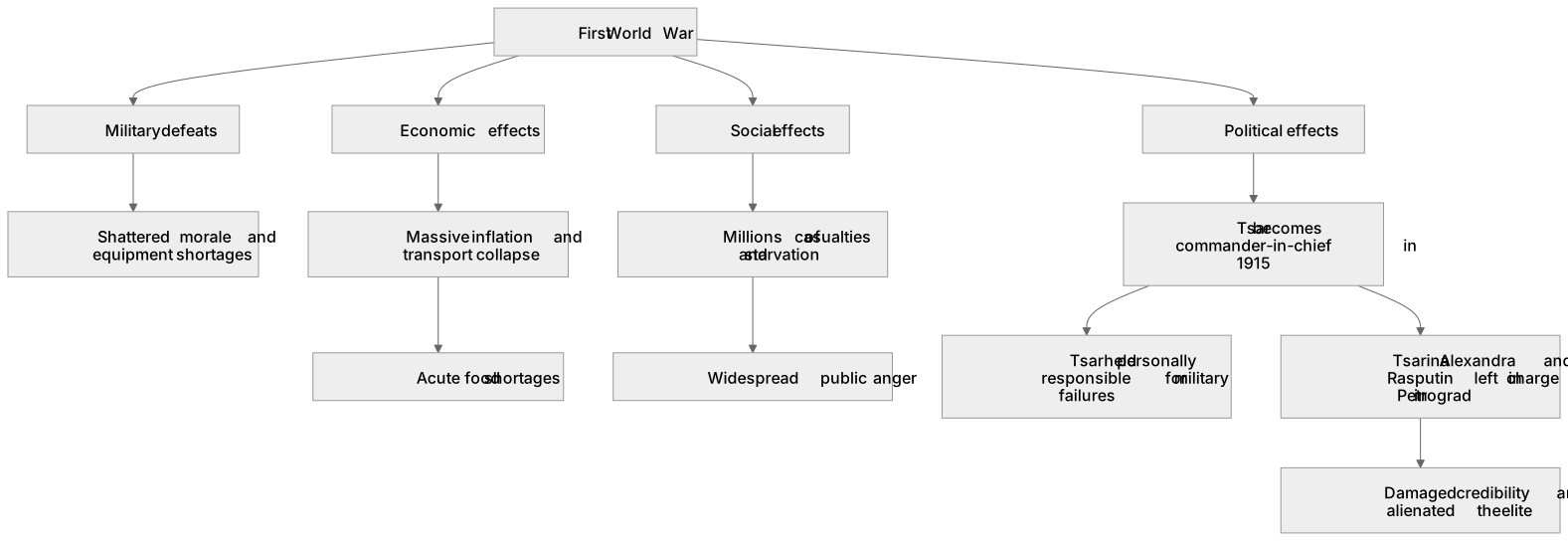
The First World War devastated Russia, catalysing the Tsar's downfall. Military defeats, such as at Tannenberg, shattered morale and highlighted equipment shortages. Economically, the war caused massive inflation and transport collapse, leading to acute food shortages. Socially, millions of casualties and widespread starvation fuelled immense public anger. Politically, the situation worsened in 1915 when Tsar Nicholas II became commander-in-chief. This disastrous decision meant he was held personally responsible for all military failures. Furthermore, his absence from Petrograd left the government in the hands of the unpopular Tsarina Alexandra and Rasputin, severely damaging the regime's credibility and alienating the Russian elite.
What earns the marks
- Detail specific military failures and their impact on army morale and public confidence.
- Explain the economic consequences, including inflation and the breakdown of the railway system.
- Describe the social impact of the war, focusing on casualties, conscription, and food shortages.
- Analyse the political consequences of the Tsar becoming commander-in-chief and leaving the Tsarina in charge.
Common mistakes and how to put them right
Stating the Tsar was a poor military tactician.
Put it right: Focus on the political impact of him taking personal responsibility for defeats, regardless of his tactical skills.
Confusing the economic and social effects.
Put it right: Clearly distinguish between economic factors like inflation and social factors like starvation and grief.
Overstating Rasputin's actual power.
Put it right: Emphasise that the perception of his influence was more damaging than his actual political control.
Exam tips
- Use the decision to become commander-in-chief as a key turning point in the Tsar's loss of support.
- Link the breakdown of the railway system directly to the food shortages in the cities.
- When discussing political effects, mention the alienation of the aristocracy, not just the lower classes.
Try the lesson
The start of the Option 30: Key topic 1: The revolutions of 1917 - 1 The growth of opposition to the tsar in early 1917: The impact of the First World War: military defeats; economic, political and social effects; the Tsar as commander-in-chief. lesson, made from checked teaching notes for this specification point.
Have a go first
What significant decision did Tsar Nicholas II make in September 1915 regarding the First World War?
Listen
The First World War devastated Russia, catalysing the Tsar's downfall. Military defeats, such as at Tannenberg, shattered morale and highlighted equipment shortages. Economically, the war caused massive inflation and transport collapse, leading to acute food shortages. Socially, millions of casualties and widespread starvation fuelled immense public anger. Politically, the situation worsened in 1915 when Tsar Nicholas II became commander-in-chief. This disastrous decision meant he was held personally responsible for all military failures. Furthermore, his absence from Petrograd left the government in the hands of the unpopular Tsarina Alexandra and Rasputin, severely damaging the regime's credibility and alienating the Russian elite. A strong answer earns marks for these points. Detail specific military failures and their impact on army morale and public confidence. Explain the economic consequences, including inflation and the breakdown of the railway system. Describe the social impact of the war, focusing on casualties, conscription, and food shortages. Analyse the political consequences of the Tsar becoming commander-in-chief and leaving the Tsarina in charge. A common slip: Stating the Tsar was a poor military tactician. Instead, focus on the political impact of him taking personal responsibility for defeats, regardless of his tactical skills. Exam tip: Use the decision to become commander-in-chief as a key turning point in the Tsar's loss of support.
See it
Key words
Say what each word means before you turn the card.
Economic collapse
Try answering aloud or in your head before turning the card.
Political instability
Try answering aloud or in your head before turning the card.
Commander-in-chief
Try answering aloud or in your head before turning the card.
See every definition
- Economic collapse
- The war caused massive inflation and transport collapse, leading to acute food shortages.
- Political instability
- The Tsar's absence from Petrograd left the government in the hands of the unpopular Tsarina Alexandra and Rasputin, severely damaging the regime's credibility and alienating the Russian elite.
- Commander-in-chief
- The role Tsar Nicholas II took in 1915, meaning he was held personally responsible for all military failures.
Label the diagram
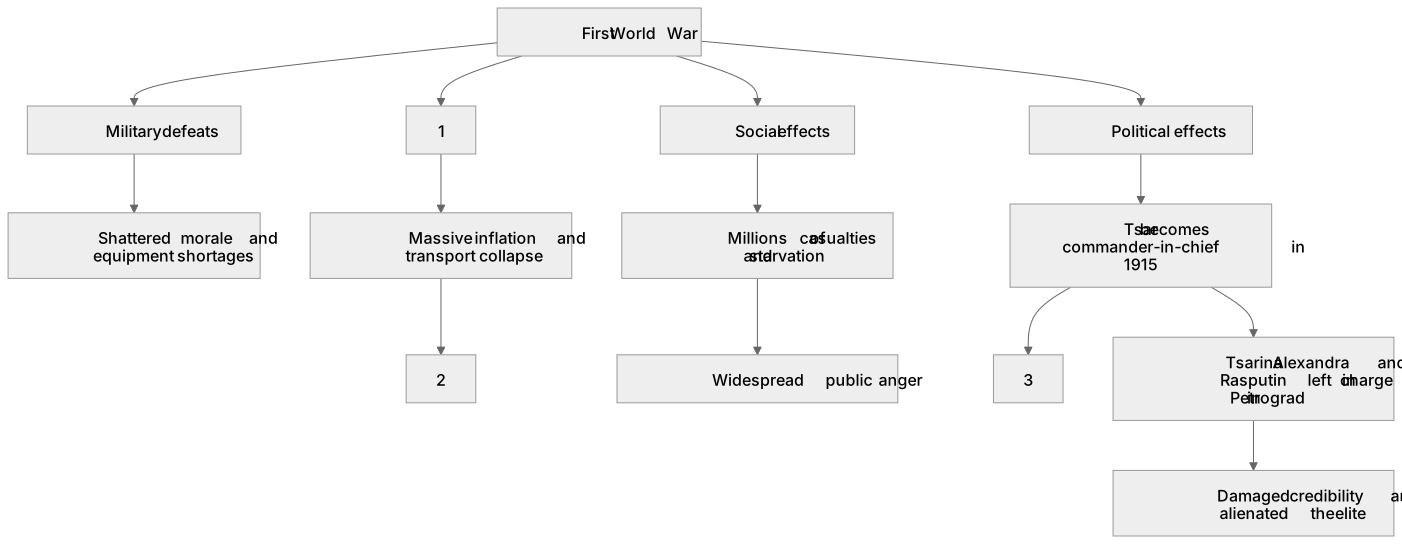
Some boxes have lost their names. Pick the right name for each number.
1Box 1
2Box 2
3Box 3
There is more to this lesson
The full lesson goes on to check your understanding and help you earn the marks. Create a free account to carry on, with your progress saved.
A week of Premium from your first lesson · Then the free plan continues · No card, no charge
Test your understanding of Option 30: Key topic 1: The revolutions of 1917 - 1 The growth of opposition to the tsar in early 1917: The impact of the First World War: military defeats; economic, political and social effects; the Tsar as commander-in-chief.
Active recall beats re-reading. Take an instant quiz now to test what you’ve learned and lock it into long-term memory.
A week of Premium from your first lesson · Then the free plan continues · No card, no charge