Pearson Edexcel · GCSE · History
Course version: 1HI0 · Version from Sept 2016
Key topic 3: Nazi control and dictatorship, 1933–39 - 4 Opposition,…
Full specification wording
Option 31: Key topic 3: Nazi control and dictatorship, 1933–39 - 4 Opposition, resistance and conformity: Opposition from the young, including the Swing Youth and the Edelweiss Pirates.
Youth opposition to the Nazi regime often took the form of cultural rebellion against the strict conformity of the Hitler Youth.
Checked against the Pearson Edexcel 1HI0 specification (opens in a new tab) on .
- Point 3 of 3
Study notes
From the checked teaching notes for this specification point.
The idea
Youth opposition to the Nazi regime often took the form of cultural rebellion against the strict conformity of the Hitler Youth. The Swing Youth, mainly middle-class teenagers in large cities, defied Nazi cultural policies by listening to banned American jazz, growing their hair long, and organising illegal dances. In contrast, the Edelweiss Pirates were predominantly working-class youths who engaged in physical confrontations with the Hitler Youth, went on hiking trips to escape surveillance, and sang anti-Nazi songs. Both groups demonstrated that the Nazis failed to achieve total control over German youth.
What earns the marks
- Identify the Swing Youth as a middle-class movement focused on cultural rebellion through jazz music and fashion.
- Describe the Edelweiss Pirates as working-class youths who actively avoided Hitler Youth meetings and engaged in physical altercations.
- Explain that youth opposition was largely a reaction against the regimentation and militarisation of the Hitler Youth.
- Evaluate the threat level of these groups, noting they were primarily a social nuisance rather than a political danger before 1939.
Common mistakes and how to put them right
Viewing the Edelweiss Pirates as a highly organised political resistance group.
Put it right: Understand that they were loosely organised local groups primarily focused on social rebellion and avoiding the Hitler Youth.
Confusing the social backgrounds of the youth groups.
Put it right: The Swing Youth were mostly middle-class, while the Edelweiss Pirates were predominantly working-class.
Assuming youth opposition posed a serious threat to the regime before 1939.
Put it right: Recognise that their activities were mostly an irritant and a rejection of Nazi culture rather than a political threat during this period.
Exam tips
- Compare and contrast the methods of opposition used by the Swing Youth and the Edelweiss Pirates.
- Use these groups as evidence to argue that Nazi attempts to control the youth were not entirely successful.
- Be careful to distinguish between the pre-war activities of these groups and their more radical actions during World War II.
Try the lesson
The start of the Option 31: Key topic 3: Nazi control and dictatorship, 1933–39 - 4 Opposition, resistance and conformity: Opposition from the young, including the Swing Youth and the Edelweiss Pirates. lesson, made from checked teaching notes for this specification point.
Have a go first
How did the Edelweiss Pirates typically express their opposition to the Nazi regime during the late 1930s?
Listen
Youth opposition to the Nazi regime often took the form of cultural rebellion against the strict conformity of the Hitler Youth. The Swing Youth, mainly middle-class teenagers in large cities, defied Nazi cultural policies by listening to banned American jazz, growing their hair long, and organising illegal dances. In contrast, the Edelweiss Pirates were predominantly working-class youths who engaged in physical confrontations with the Hitler Youth, went on hiking trips to escape surveillance, and sang anti-Nazi songs. Both groups demonstrated that the Nazis failed to achieve total control over German youth. A strong answer earns marks for these points. Identify the Swing Youth as a middle-class movement focused on cultural rebellion through jazz music and fashion. Describe the Edelweiss Pirates as working-class youths who actively avoided Hitler Youth meetings and engaged in physical altercations. Explain that youth opposition was largely a reaction against the regimentation and militarisation of the Hitler Youth. Evaluate the threat level of these groups, noting they were primarily a social nuisance rather than a political danger before 1939. A common slip: Viewing the Edelweiss Pirates as a highly organised political resistance group. Instead, Understand that they were loosely organised local groups primarily focused on social rebellion and avoiding the Hitler Youth. Exam tip: Compare and contrast the methods of opposition used by the Swing Youth and the Edelweiss Pirates.
See it
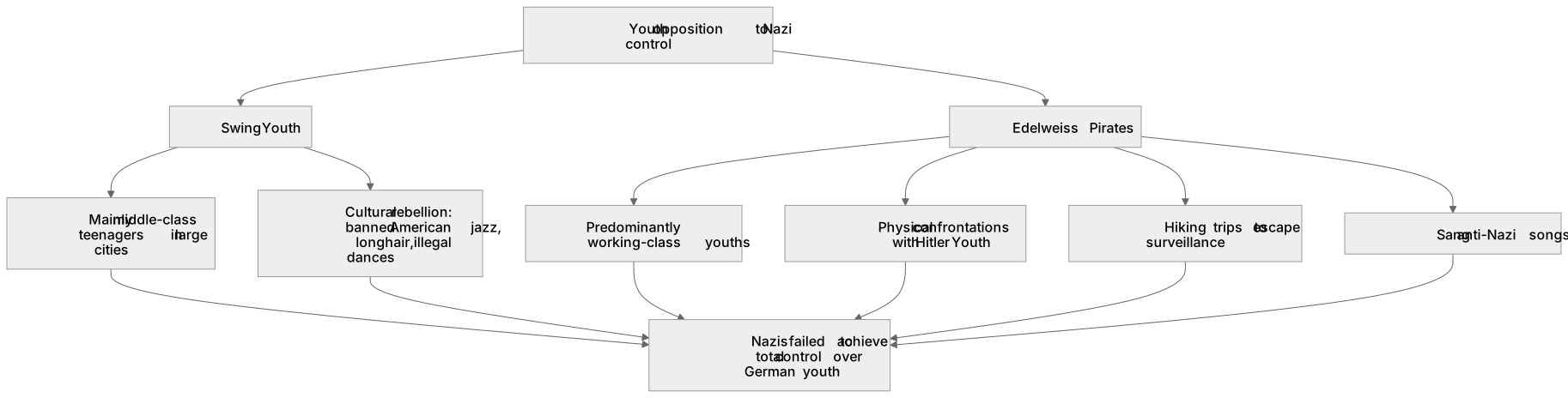
Label the diagram
Some boxes have lost their names. Pick the right name for each number.
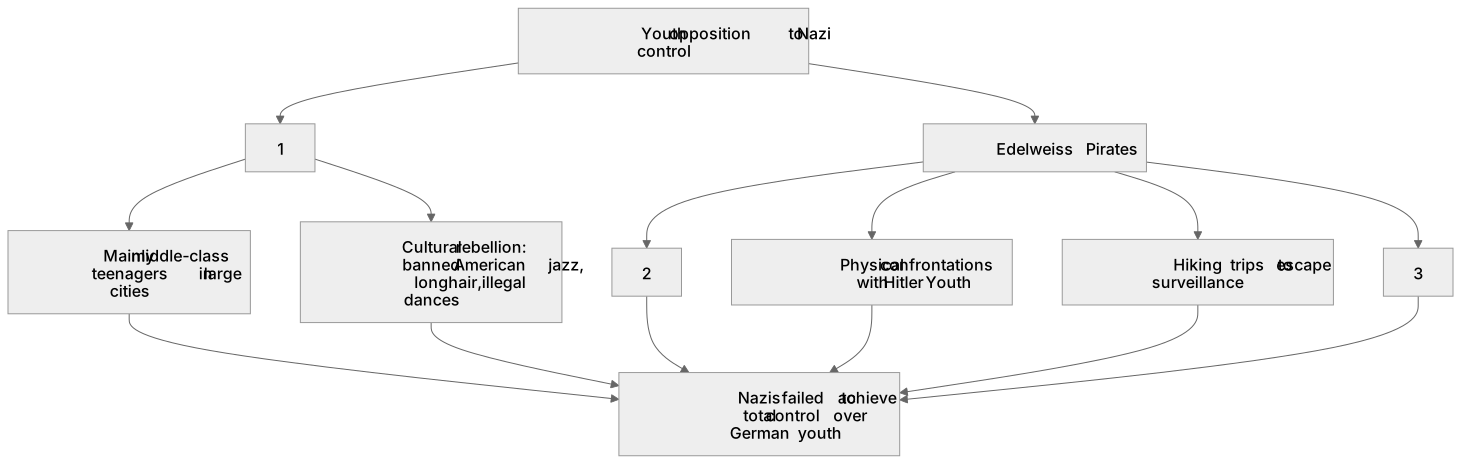
1Box 1
2Box 2
3Box 3
There is more to this lesson
The full lesson goes on to check your understanding and help you earn the marks. Create a free account to carry on, with your progress saved.
A week of Premium from your first lesson · Then the free plan continues · No card, no charge
Test your understanding of Option 31: Key topic 3: Nazi control and dictatorship, 1933–39 - 4 Opposition, resistance and conformity: Opposition from the young, including the Swing Youth and the Edelweiss Pirates.
Active recall beats re-reading. Take an instant quiz now to test what you’ve learned and lock it into long-term memory.
A week of Premium from your first lesson · Then the free plan continues · No card, no charge