Pearson Edexcel · GCSE · History
Course version: 1HI0 · Version from Sept 2016
Key topic 2: William I in power: securing the kingdom, 1066–87 - 4 Revolt…
Full specification wording
Option B1: Key topic 2: William I in power: securing the kingdom, 1066–87 - 4 Revolt of the Earls, 1075: The defeat of the revolt and its effects.
The defeat of the 1075 Revolt of the Earls was swift and decisive, managed largely by Archbishop Lanfranc while William was in Normandy.
Checked against the Pearson Edexcel 1HI0 specification (opens in a new tab) on .
- Point 2 of 2
- 4 key terms
Study notes
From the checked teaching notes for this specification point.
The idea
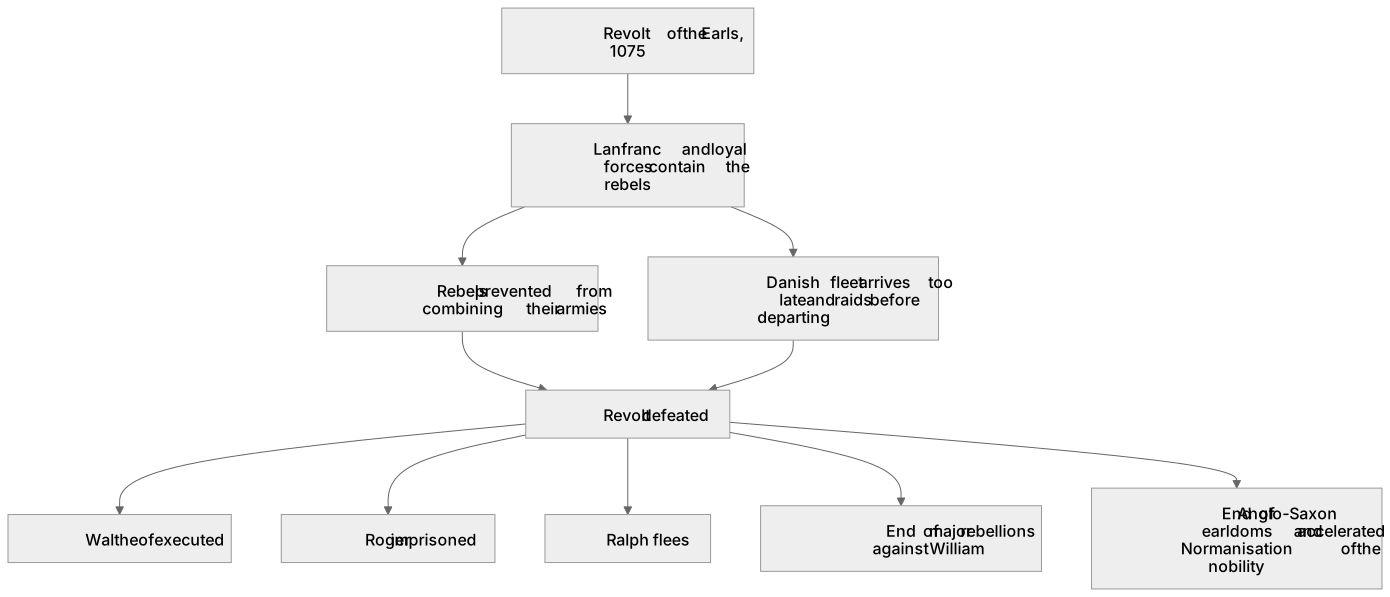
The defeat of the 1075 Revolt of the Earls was swift and decisive, managed largely by Archbishop Lanfranc while William was in Normandy. Lanfranc used excommunication and loyal forces to trap the rebels, preventing them from combining their armies. The Danish fleet arrived too late and merely raided before departing. The effects of the defeat were profound: it marked the end of major rebellions against William. Waltheof was executed, ending Anglo-Saxon earldoms, while Roger was imprisoned and Ralph fled. The revolt's failure solidified William's absolute control, demonstrating the effectiveness of his loyal administration and castles, and accelerating the complete Normanisation of the English nobility.
What earns the marks
- Explain how Archbishop Lanfranc and loyal barons successfully contained the rebel forces using castles and strategic positioning.
- Describe the failure of the Danish fleet to provide meaningful support, arriving too late to alter the outcome.
- Detail the severe punishments inflicted on the leaders: Waltheof's execution, Roger's life imprisonment, and Ralph's exile.
- Analyse the effects of the revolt, noting it was the last serious rebellion and resulted in the eradication of Anglo-Saxon earls.
Common mistakes and how to put them right
Claiming William personally led the army that defeated the earls.
Put it right by explaining that Lanfranc and loyal deputies handled the military response.
Stating that the Danes fought a major battle against the Normans in 1075.
Put it right by noting the Danes arrived late, raided York, and left without a pitched battle.
Believing Waltheof was the main instigator.
Put it right by clarifying he was drawn into the plot by the Norman earls but suffered the harshest penalty.
Exam tips
- Highlight the execution of Waltheof as a turning point, marking the definitive end of Anglo-Saxon representation at the highest levels of nobility.
- Use the defeat to illustrate the strength of the Norman administrative and military system, even in the king's absence.
- Discuss how the aftermath of the revolt allowed William to further consolidate his power and tighten his grip on landownership.
Try the lesson
The start of the Option B1: Key topic 2: William I in power: securing the kingdom, 1066–87 - 4 Revolt of the Earls, 1075: The defeat of the revolt and its effects. lesson, made from checked teaching notes for this specification point.
Have a go first
Who was left in charge of England and successfully organised the defeat of the 1075 Revolt of the Earls while William was in Normandy?
Listen
The defeat of the 1075 Revolt of the Earls was swift and decisive, managed largely by Archbishop Lanfranc while William was in Normandy. Lanfranc used excommunication and loyal forces to trap the rebels, preventing them from combining their armies. The Danish fleet arrived too late and merely raided before departing. The effects of the defeat were profound: it marked the end of major rebellions against William. Waltheof was executed, ending Anglo-Saxon earldoms, while Roger was imprisoned and Ralph fled. The revolt's failure solidified William's absolute control, demonstrating the effectiveness of his loyal administration and castles, and accelerating the complete Normanisation of the English nobility. A strong answer earns marks for these points. Explain how Archbishop Lanfranc and loyal barons successfully contained the rebel forces using castles and strategic positioning. Describe the failure of the Danish fleet to provide meaningful support, arriving too late to alter the outcome. Detail the severe punishments inflicted on the leaders: Waltheof's execution, Roger's life imprisonment, and Ralph's exile. Analyse the effects of the revolt, noting it was the last serious rebellion and resulted in the eradication of Anglo-Saxon earls. A common slip: Claiming William personally led the army that defeated the earls. Instead, explaining that Lanfranc and loyal deputies handled the military response. Exam tip: Highlight the execution of Waltheof as a turning point, marking the definitive end of Anglo-Saxon representation at the highest levels of nobility.
See it
Key words
Say what each word means before you turn the card.
Consolidation of power
Try answering aloud or in your head before turning the card.
Justice and punishment
Try answering aloud or in your head before turning the card.
Military strategy
Try answering aloud or in your head before turning the card.
Normanisation
Try answering aloud or in your head before turning the card.
See every definition
- Consolidation of power
- The tightening of William's grip on landownership and control that the aftermath of the revolt allowed him to further achieve.
- Justice and punishment
- The severe penalties inflicted on the leaders: Waltheof's execution, Roger's life imprisonment and Ralph's exile.
- Military strategy
- The use of castles and strategic positioning by Lanfranc and loyal barons to contain the rebel forces.
- Normanisation
- The complete process affecting the English nobility that the revolt's failure accelerated.
Label the diagram
Some boxes have lost their names. Pick the right name for each number.
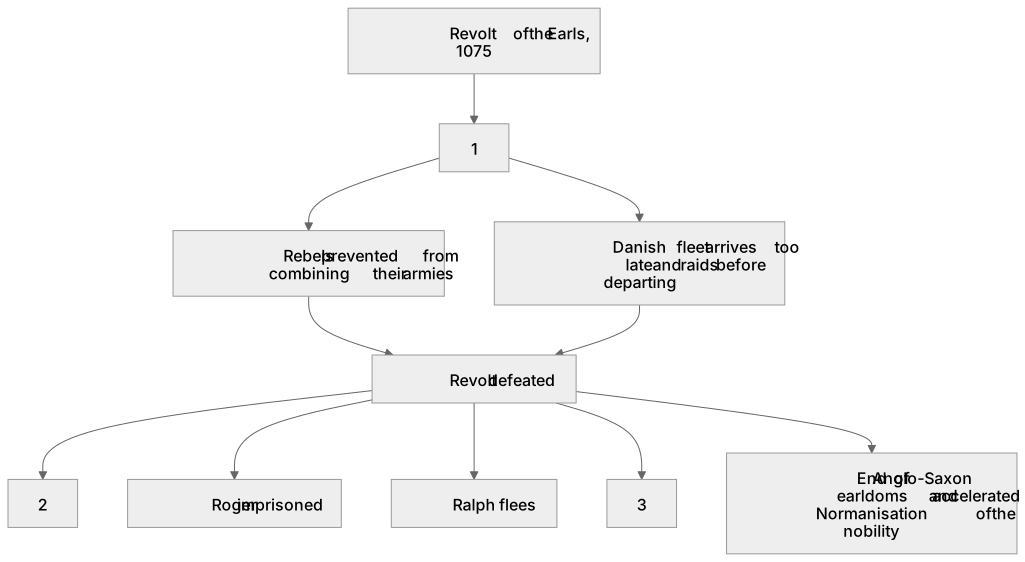
1Box 1
2Box 2
3Box 3
There is more to this lesson
The full lesson goes on to check your understanding and help you earn the marks. Create a free account to carry on, with your progress saved.
A week of Premium from your first lesson · Then the free plan continues · No card, no charge
Test your understanding of Option B1: Key topic 2: William I in power: securing the kingdom, 1066–87 - 4 Revolt of the Earls, 1075: The defeat of the revolt and its effects.
Active recall beats re-reading. Take an instant quiz now to test what you’ve learned and lock it into long-term memory.
A week of Premium from your first lesson · Then the free plan continues · No card, no charge