Pearson Edexcel · GCSE · History
Course version: 1HI0 · Version from Sept 2016
Key topic 3: The Reformation and its impact, 1529–40 - 2 Opposition to,…
Full specification wording
Option B3: Key topic 3: The Reformation and its impact, 1529–40 - 2 Opposition to, and impact of, Reformation, 1534–40: The significance of opposition from Thomas More.
Thomas More's opposition to the Reformation was highly significant due to his international reputation as a humanist scholar and his former role as Henry VIII's Lord Chancellor.
Checked against the Pearson Edexcel 1HI0 specification (opens in a new tab) on .
- Point 2 of 3
- 3 key terms
Study notes
From the checked teaching notes for this specification point.
The idea
Thomas More's opposition to the Reformation was highly significant due to his international reputation as a humanist scholar and his former role as Henry VIII's Lord Chancellor. More resigned in 1532, unable to support the break with Rome. In 1534, he refused to swear the Oath of Succession because it repudiated papal authority and validated the annulment of Henry's marriage to Catherine of Aragon. More attempted to remain silent on the Act of Supremacy to avoid treason charges, but Cromwell used perjured testimony from Richard Rich to secure a conviction. More's execution in 1535 shocked Catholic Europe, alienated foreign monarchs, and demonstrated that Henry would not tolerate defiance from anyone, regardless of their status.
What earns the marks
- Thomas More was a highly respected scholar and former Lord Chancellor, making his opposition particularly embarrassing and dangerous for Henry VIII.
- More resigned as Lord Chancellor in 1532 because he could not reconcile his Catholic faith with Henry's attacks on the Church.
- He was imprisoned for refusing to take the Oath of Succession, as it required rejecting the Pope's authority.
- More's execution for treason in 1535 served as a powerful warning to others and caused international outrage across Catholic Europe.
Common mistakes and how to put them right
Stating that Thomas More actively campaigned against Henry VIII in public.
Put it right: More tried to use his legal knowledge to remain silent and avoid explicitly denying the King's supremacy, but was convicted anyway.
Believing More was executed for refusing to attend Henry's wedding to Anne Boleyn.
Put it right: While his absence from Anne Boleyn's coronation angered Henry, he was legally executed for allegedly denying the Royal Supremacy under the Treason Act.
Mistake: Underestimating More's status. Correction: More was not just an ordinary opponent; his status as a former Lord Chancellor and renowned European intellectual made his execution highly significant.
Exam tips
- Emphasise the significance of More's silence; explain how the Crown had to manipulate the law (via Richard Rich) to secure his execution.
- Discuss the international impact of More's death to show the wider consequences of Henry's domestic policies.
Try the lesson
The start of the Option B3: Key topic 3: The Reformation and its impact, 1529–40 - 2 Opposition to, and impact of, Reformation, 1534–40: The significance of opposition from Thomas More. lesson, made from checked teaching notes for this specification point.
Have a go first
Why did Thomas More resign from his position as Lord Chancellor in 1532?
Listen
Thomas More's opposition to the Reformation was highly significant due to his international reputation as a humanist scholar and his former role as Henry VIII's Lord Chancellor. More resigned in 1532, unable to support the break with Rome. In 1534, he refused to swear the Oath of Succession because it repudiated papal authority and validated the annulment of Henry's marriage to Catherine of Aragon. More attempted to remain silent on the Act of Supremacy to avoid treason charges, but Cromwell used perjured testimony from Richard Rich to secure a conviction. More's execution in 1535 shocked Catholic Europe, alienated foreign monarchs, and demonstrated that Henry would not tolerate defiance from anyone, regardless of their status. A strong answer earns marks for these points. Thomas More was a highly respected scholar and former Lord Chancellor, making his opposition particularly embarrassing and dangerous for Henry VIII. More resigned as Lord Chancellor in 1532 because he could not reconcile his Catholic faith with Henry's attacks on the Church. He was imprisoned for refusing to take the Oath of Succession, as it required rejecting the Pope's authority. More's execution for treason in 1535 served as a powerful warning to others and caused international outrage across Catholic Europe. A common slip: Stating that Thomas More actively campaigned against Henry VIII in public. Instead, More tried to use his legal knowledge to remain silent and avoid explicitly denying the King's supremacy, but was convicted anyway. Exam tip: Emphasise the significance of More's silence; explain how the Crown had to manipulate the law (via Richard Rich) to secure his execution.
See it
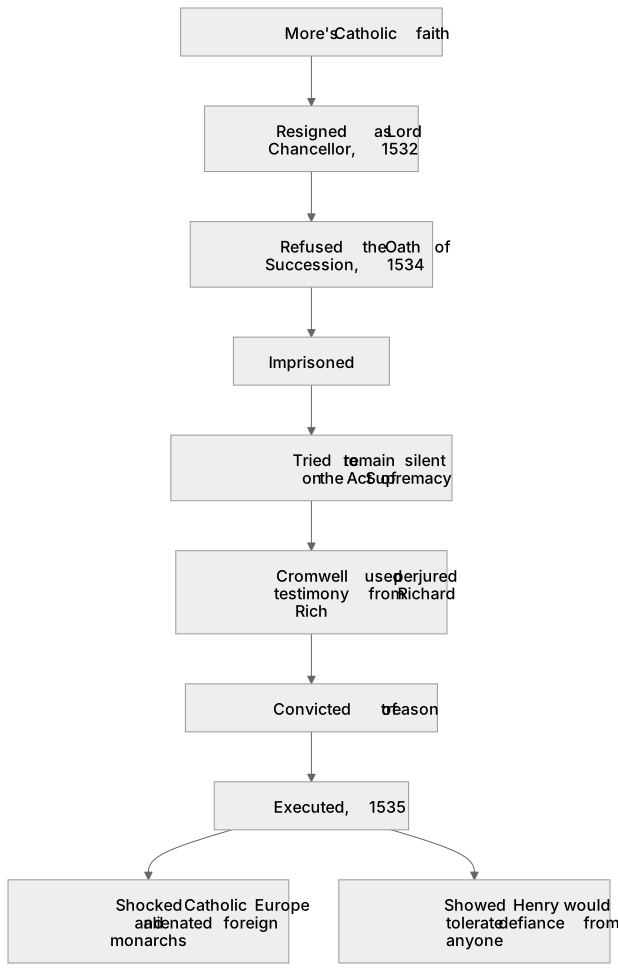
Put the events in order
Put these events in the order they happened, earliest first.
- 1. More resigned as Lord Chancellor
- 2. More was executed for treason
- 3. More refused to swear the Oath of Succession
Key words
Say what each word means before you turn the card.
Opposition and resistance
Try answering aloud or in your head before turning the card.
Power and authority
Try answering aloud or in your head before turning the card.
Religion and the Church
Try answering aloud or in your head before turning the card.
See every definition
- Opposition and resistance
- More's refusal to support the break with Rome, including resigning and refusing the Oath of Succession, showed defiance that Henry would not tolerate from anyone.
- Power and authority
- More's execution in 1535 demonstrated that Henry would not tolerate defiance from anyone, regardless of their status.
- Religion and the Church
- More could not reconcile his Catholic faith with Henry's attacks on the Church, and he refused the Oath of Succession because it repudiated papal authority.
Label the diagram
Some boxes have lost their names. Pick the right name for each number.
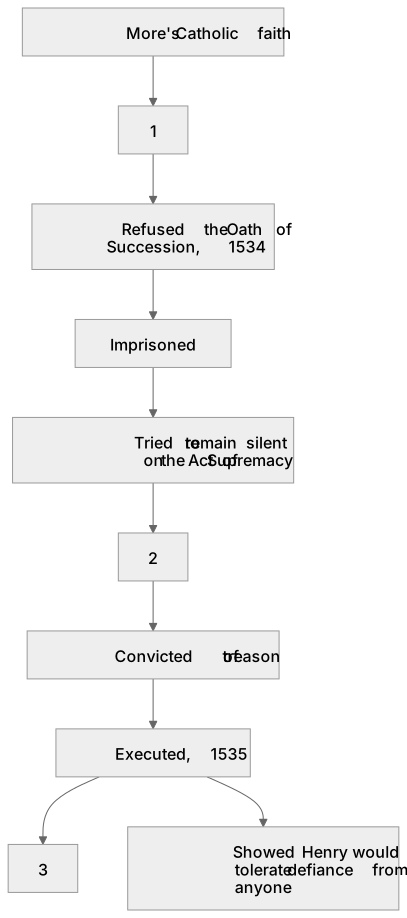
1Box 1
2Box 2
3Box 3
There is more to this lesson
The full lesson goes on to check your understanding and help you earn the marks. Create a free account to carry on, with your progress saved.
A week of Premium from your first lesson · Then the free plan continues · No card, no charge
Test your understanding of Option B3: Key topic 3: The Reformation and its impact, 1529–40 - 2 Opposition to, and impact of, Reformation, 1534–40: The significance of opposition from Thomas More.
Active recall beats re-reading. Take an instant quiz now to test what you’ve learned and lock it into long-term memory.
A week of Premium from your first lesson · Then the free plan continues · No card, no charge