Pearson Edexcel · GCSE · History
Course version: 1HI0 · Version from Sept 2016
Key topic 3: The Reformation and its impact, 1529–40 - 4 The Pilgrimage of…
Full specification wording
Option B3: Key topic 3: The Reformation and its impact, 1529–40 - 4 The Pilgrimage of Grace, 1536: Key events of the uprising, including rebellions in Lincolnshire and Yorkshire and the roles of Robert Aske and the Duke of Norfolk.
The Pilgrimage of Grace (1536) began with the Lincolnshire Rising, sparked by rumours of church confiscations.
Checked against the Pearson Edexcel 1HI0 specification (opens in a new tab) on .
- Point 2 of 2
- 4 key terms
Study notes
From the checked teaching notes for this specification point.
The idea
The Pilgrimage of Grace (1536) began with the Lincolnshire Rising, sparked by rumours of church confiscations. It quickly collapsed when the Duke of Suffolk arrived, but ignited a larger rebellion in Yorkshire led by lawyer Robert Aske. Aske provided disciplined leadership, naming the uprising a 'pilgrimage' to emphasise its peaceful, religious nature, and drafted the Pontefract Articles detailing their demands. The Duke of Norfolk, representing Henry VIII, met the rebels at Doncaster. Vastly outnumbered, Norfolk negotiated a truce, falsely promising a free parliament and a general pardon. Believing they had succeeded, Aske dispersed his forces. However, subsequent minor uprisings gave Henry the excuse to renege on his promises, leading to the execution of Aske and other leaders.
What earns the marks
- Identify the Lincolnshire Rising as the initial spark, triggered by local grievances and fears over church closures.
- Explain Robert Aske's role in organising the Yorkshire rebellion, ensuring discipline, and drafting the Pontefract Articles.
- Describe the Duke of Norfolk's strategy of negotiation at Doncaster due to being outnumbered by the rebel forces.
- Analyse how Norfolk's false promises of a pardon and a parliament led to the dispersal and ultimate failure of the uprising.
Common mistakes and how to put them right
Confusing the Duke of Norfolk with the Duke of Suffolk.
Put it right: Suffolk dealt with the Lincolnshire Rising, while Norfolk negotiated with Aske in Yorkshire.
Assuming the rebels wanted to overthrow Henry VIII.
Put it right: They actually swore loyalty to the King and blamed his 'evil councillors' like Thomas Cromwell.
Believing the uprising was entirely violent.
Put it right: Aske insisted on a peaceful 'pilgrimage' and maintained strict discipline among his followers.
Exam tips
- Use the Pontefract Articles as concrete evidence of the rebels' religious, economic, and political motives.
- Contrast the rapid collapse of the Lincolnshire rebellion with the highly organised nature of the Yorkshire uprising.
- When evaluating the failure of the rebellion, focus on Aske's fatal trust in the Duke of Norfolk's negotiated promises.
Try the lesson
The start of the Option B3: Key topic 3: The Reformation and its impact, 1529–40 - 4 The Pilgrimage of Grace, 1536: Key events of the uprising, including rebellions in Lincolnshire and Yorkshire and the roles of Robert Aske and the Duke of Norfolk. lesson, made from checked teaching notes for this specification point.
Have a go first
What was the primary role of Robert Aske during the Pilgrimage of Grace in 1536?
Listen
The Pilgrimage of Grace (1536) began with the Lincolnshire Rising, sparked by rumours of church confiscations. It quickly collapsed when the Duke of Suffolk arrived, but ignited a larger rebellion in Yorkshire led by lawyer Robert Aske. Aske provided disciplined leadership, naming the uprising a 'pilgrimage' to emphasise its peaceful, religious nature, and drafted the Pontefract Articles detailing their demands. The Duke of Norfolk, representing Henry VIII, met the rebels at Doncaster. Vastly outnumbered, Norfolk negotiated a truce, falsely promising a free parliament and a general pardon. Believing they had succeeded, Aske dispersed his forces. However, subsequent minor uprisings gave Henry the excuse to renege on his promises, leading to the execution of Aske and other leaders. A strong answer earns marks for these points. Identify the Lincolnshire Rising as the initial spark, triggered by local grievances and fears over church closures. Explain Robert Aske's role in organising the Yorkshire rebellion, ensuring discipline, and drafting the Pontefract Articles. Describe the Duke of Norfolk's strategy of negotiation at Doncaster due to being outnumbered by the rebel forces. Analyse how Norfolk's false promises of a pardon and a parliament led to the dispersal and ultimate failure of the uprising. Exam tip: Use the Pontefract Articles as concrete evidence of the rebels' religious, economic, and political motives.
See it
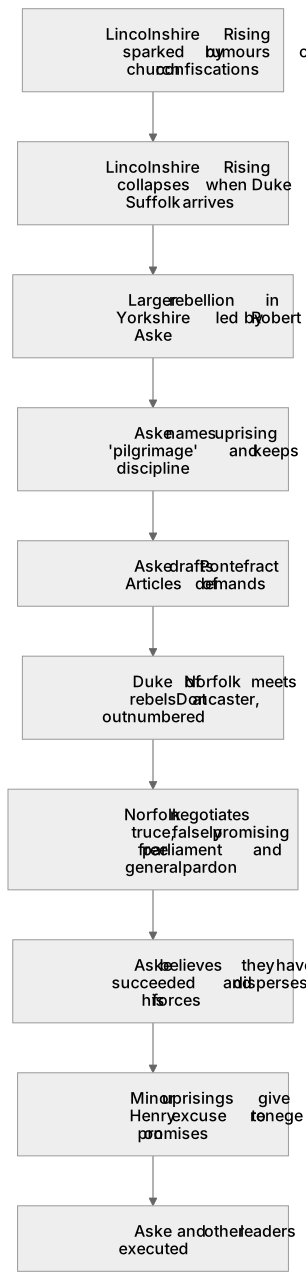
Key words
Say what each word means before you turn the card.
Rebellion and opposition
Try answering aloud or in your head before turning the card.
Religious change
Try answering aloud or in your head before turning the card.
Royal authority
Try answering aloud or in your head before turning the card.
Leadership and strategy
Try answering aloud or in your head before turning the card.
See every definition
- Rebellion and opposition
- The uprising began with the Lincolnshire Rising and grew into a larger rebellion in Yorkshire, with later minor uprisings giving Henry the excuse to renege on his promises.
- Religious change
- The Lincolnshire Rising was sparked by rumours of church confiscations, and Aske named the uprising a 'pilgrimage' to emphasise its peaceful, religious nature.
- Royal authority
- The Duke of Norfolk represented Henry VIII in meeting the rebels at Doncaster, and Henry later reneged on promises and executed Aske and other leaders.
- Leadership and strategy
- Aske provided disciplined leadership and drafted the Pontefract Articles, while Norfolk, vastly outnumbered, negotiated a truce with false promises of a free parliament and a general pardon.
Label the diagram
Some boxes have lost their names. Pick the right name for each number.
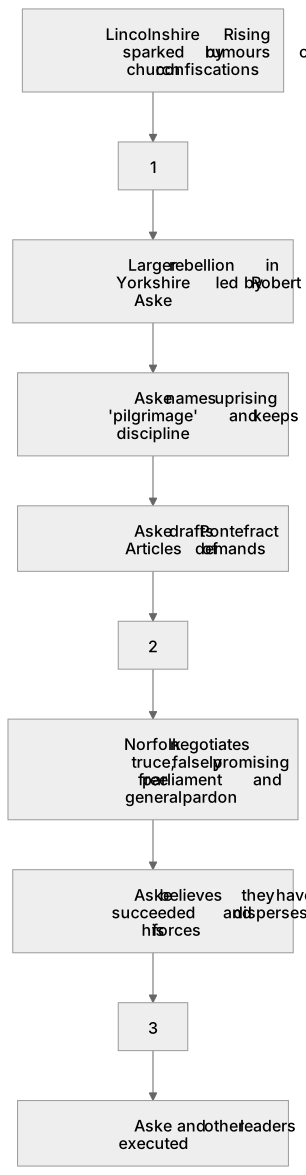
1Box 1
2Box 2
3Box 3
There is more to this lesson
The full lesson goes on to check your understanding and help you earn the marks. Create a free account to carry on, with your progress saved.
A week of Premium from your first lesson · Then the free plan continues · No card, no charge
Test your understanding of Option B3: Key topic 3: The Reformation and its impact, 1529–40 - 4 The Pilgrimage of Grace, 1536: Key events of the uprising, including rebellions in Lincolnshire and Yorkshire and the roles of Robert Aske and the Duke of Norfolk.
Active recall beats re-reading. Take an instant quiz now to test what you’ve learned and lock it into long-term memory.
A week of Premium from your first lesson · Then the free plan continues · No card, no charge