Pearson Edexcel · GCSE · History
Course version: 1HI0 · Version from Sept 2016
Key topic 3: Attempts at a solution, 1974–95 - 1 Diplomatic negotiations:…
Full specification wording
Option P5: Key topic 3: Attempts at a solution, 1974–95 - 1 Diplomatic negotiations: Kissinger, ‘shuttle diplomacy’ and the reopening of the Suez Canal.
Following the 1973 Yom Kippur War, US Secretary of State Henry Kissinger engaged in 'shuttle diplomacy', flying repeatedly between Middle Eastern capitals to mediate peace agreements without…
Checked against the Pearson Edexcel 1HI0 specification (opens in a new tab) on .
- Point 2 of 3
- 4 key terms
Study notes
From the checked teaching notes for this specification point.
The idea
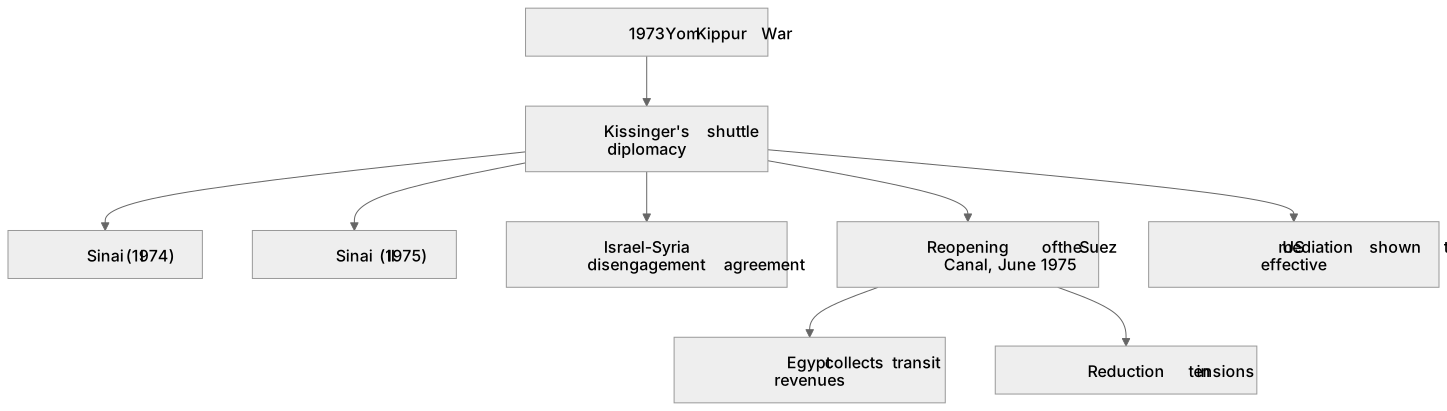
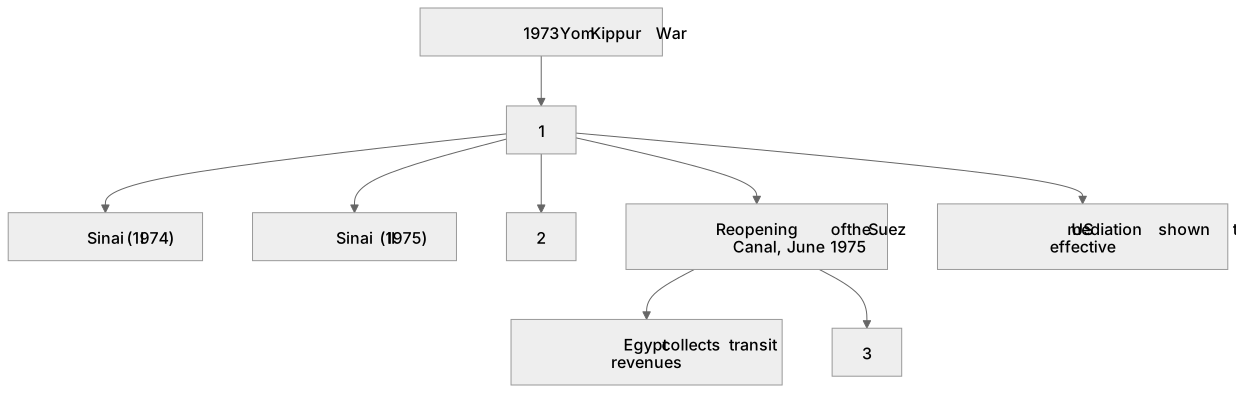
Following the 1973 Yom Kippur War, US Secretary of State Henry Kissinger engaged in 'shuttle diplomacy', flying repeatedly between Middle Eastern capitals to mediate peace agreements without requiring direct face-to-face talks between hostile Arab and Israeli leaders. This intense diplomatic effort led to the Sinai I (1974) and Sinai II (1975) agreements between Egypt and Israel, and a disengagement agreement between Israel and Syria. A major consequence of these negotiations was the reopening of the Suez Canal in June 1975, which had been closed since the 1967 Six-Day War. This reopening symbolised a reduction in tensions, allowed Egypt to collect vital transit revenues, and demonstrated the effectiveness of US mediation in the region.
What earns the marks
- Define 'shuttle diplomacy' as Kissinger's method of travelling between nations to negotiate indirectly.
- Identify the context: the aftermath of the 1973 Yom Kippur War.
- Explain the outcomes: Sinai agreements and Syrian-Israeli disengagement.
- Explain the significance of reopening the Suez Canal in 1975 for Egypt's economy and international trade.
- Assess the role of the USA in brokering these early steps towards peace.
Common mistakes and how to put them right
Confusing shuttle diplomacy with direct peace talks.
Put it right: Emphasise that Kissinger acted as an intermediary because the leaders refused to meet face-to-face.
Stating the Suez Canal was closed in 1973.
Put it right: The canal had been closed since the 1967 Six-Day War and was reopened in 1975.
Attributing the Camp David Accords to Kissinger.
Put it right: Kissinger's shuttle diplomacy occurred earlier (1974-1975) under Presidents Nixon and Ford, not Carter.
Exam tips
- Use the term 'shuttle diplomacy' explicitly and explain how it bypassed the refusal of Arab states to negotiate directly with Israel.
- Link the reopening of the Suez Canal to both economic benefits for Egypt and a strategic victory for US diplomacy.
- When discussing consequences of the 1973 war, include Kissinger's diplomacy as a key political outcome.
Try the lesson
The start of the Option P5: Key topic 3: Attempts at a solution, 1974–95 - 1 Diplomatic negotiations: Kissinger, ‘shuttle diplomacy’ and the reopening of the Suez Canal. lesson, made from checked teaching notes for this specification point.
Have a go first
What was the primary method used by US Secretary of State Henry Kissinger during his 'shuttle diplomacy' in the Middle East?
Listen
Following the 1973 Yom Kippur War, US Secretary of State Henry Kissinger engaged in 'shuttle diplomacy', flying repeatedly between Middle Eastern capitals to mediate peace agreements without requiring direct face-to-face talks between hostile Arab and Israeli leaders. This intense diplomatic effort led to the Sinai I (1974) and Sinai II (1975) agreements between Egypt and Israel, and a disengagement agreement between Israel and Syria. A major consequence of these negotiations was the reopening of the Suez Canal in June 1975, which had been closed since the 1967 Six-Day War. This reopening symbolised a reduction in tensions, allowed Egypt to collect vital transit revenues, and demonstrated the effectiveness of US mediation in the region. A strong answer earns marks for these points. Define 'shuttle diplomacy' as Kissinger's method of travelling between nations to negotiate indirectly. Identify the context: the aftermath of the 1973 Yom Kippur War. Explain the outcomes: Sinai agreements and Syrian-Israeli disengagement. Explain the significance of reopening the Suez Canal in 1975 for Egypt's economy and international trade. A common slip: Confusing shuttle diplomacy with direct peace talks. Instead, Emphasise that Kissinger acted as an intermediary because the leaders refused to meet face-to-face. Exam tip: Use the term 'shuttle diplomacy' explicitly and explain how it bypassed the refusal of Arab states to negotiate directly with Israel.
See it
Put the events in order
Put these events in the order they happened, earliest first.
- 1. Sinai II agreement between Egypt and Israel
- 2. Six-Day War, after which the Suez Canal was closed
- 3. Sinai I agreement between Egypt and Israel
- 4. Yom Kippur War provides the context for Kissinger's diplomacy
Key words
Say what each word means before you turn the card.
Shuttle diplomacy
Try answering aloud or in your head before turning the card.
Suez Canal
Try answering aloud or in your head before turning the card.
Sinai agreements
Try answering aloud or in your head before turning the card.
US mediation
Try answering aloud or in your head before turning the card.
See every definition
- Shuttle diplomacy
- Kissinger's method of flying repeatedly between Middle Eastern capitals to mediate peace agreements without requiring direct face-to-face talks between hostile Arab and Israeli leaders.
- Suez Canal
- A waterway closed since the 1967 Six-Day War and reopened in June 1975, allowing Egypt to collect vital transit revenues.
- Sinai agreements
- The Sinai I (1974) and Sinai II (1975) agreements between Egypt and Israel reached through Kissinger's diplomatic effort.
- US mediation
- American diplomatic involvement that brokered early steps towards peace and demonstrated its effectiveness in the region.
Label the diagram
Some boxes have lost their names. Pick the right name for each number.
1Box 1
2Box 2
3Box 3
There is more to this lesson
The full lesson goes on to check your understanding and help you earn the marks. Create a free account to carry on, with your progress saved.
A week of Premium from your first lesson · Then the free plan continues · No card, no charge
Test your understanding of Option P5: Key topic 3: Attempts at a solution, 1974–95 - 1 Diplomatic negotiations: Kissinger, ‘shuttle diplomacy’ and the reopening of the Suez Canal.
Active recall beats re-reading. Take an instant quiz now to test what you’ve learned and lock it into long-term memory.
A week of Premium from your first lesson · Then the free plan continues · No card, no charge