Pearson Edexcel · GCSE · Music
Course version: 1MU0 · Version from Sept 2016
Musical vocabulary - Organisation of pitch: A melody (or ‘melodic line’)…
Full specification wording
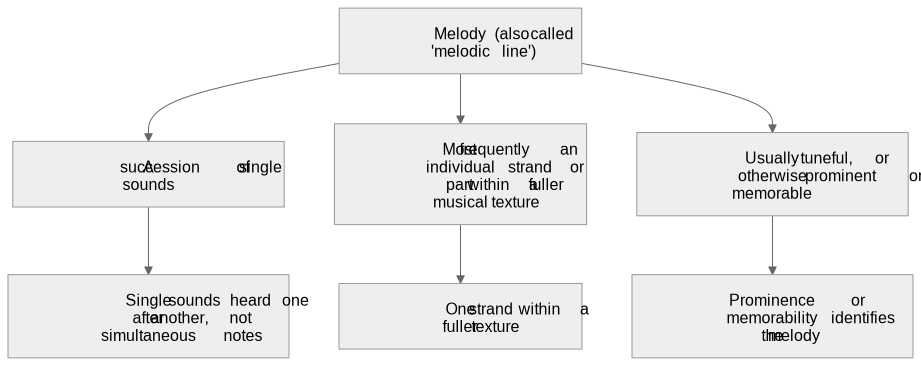
Appendix 3: Musical vocabulary - Organisation of pitch: A melody (or ‘melodic line’) is a succession of single sounds – most frequently an individual strand or part within a fuller musical texture. A melody is usually ‘tuneful’ or otherwise prominent or memorable
A melody, also called a melodic line, is a succession of single sounds heard one after another.
- Point 16 of 27
- 4 key terms
Study notes
From the teaching notes for this specification point.
The idea
A melody, also called a melodic line, is a succession of single sounds heard one after another. It is most often one individual strand or part within a fuller musical texture, such as the top line above accompanying chords, though it can stand alone. A melody is usually tuneful, or otherwise prominent or memorable, which is why listeners can often recall or hum it. To identify a melody in a texture, listen for the single line of successive notes that stands out or sticks in the memory, and distinguish it from accompanying parts and chords. Recognising the melodic line helps you describe how pitch is organised and how a part functions within the whole texture.
What earns the marks
- Defines a melody as a succession of single sounds.
- Notes the alternative term 'melodic line'.
- Explains that a melody is most frequently an individual strand or part within a fuller musical texture.
- States that a melody is usually tuneful, prominent or memorable.
Common mistakes and how to put them right
Confusing a melody with harmony or chords.
Put it right: A melody is a succession of single sounds, not simultaneous notes.
Assuming a melody must always be the highest part.
Put it right: It is most frequently an individual strand, but prominence or memorability, not height alone, identifies it.
Thinking a melody cannot exist within a texture.
Put it right: A melody is often one strand within a fuller musical texture.
Exam tips
- Link the term to 'succession of single sounds' to separate melody from chords.
- Use 'melodic line' as an accepted alternative when matching definitions.
- Look for the words tuneful, prominent or memorable as clues in multiple-choice options.
Try the lesson
The start of the Appendix 3: Musical vocabulary - Organisation of pitch: A melody (or ‘melodic line’) is a succession of single sounds – most frequently an individual strand or part within a fuller musical texture. A melody is usually ‘tuneful’ or otherwise prominent or memorable lesson, made from teaching notes for this specification point.
Have a go first
Which statement best defines a melody in music?
Listen
A melody, also called a melodic line, is a succession of single sounds heard one after another. It is most often one individual strand or part within a fuller musical texture, such as the top line above accompanying chords, though it can stand alone. A melody is usually tuneful, or otherwise prominent or memorable, which is why listeners can often recall or hum it. To identify a melody in a texture, listen for the single line of successive notes that stands out or sticks in the memory, and distinguish it from accompanying parts and chords. Recognising the melodic line helps you describe how pitch is organised and how a part functions within the whole texture. A strong answer earns marks for these points. Defines a melody as a succession of single sounds. Notes the alternative term 'melodic line'. Explains that a melody is most frequently an individual strand or part within a fuller musical texture. States that a melody is usually tuneful, prominent or memorable. A common slip: Confusing a melody with harmony or chords. Instead, a melody is a succession of single sounds, not simultaneous notes. Exam tip: Link the term to 'succession of single sounds' to separate melody from chords.
See it
Key words
Say what each word means before you turn the card.
Melody
Try answering aloud or in your head before turning the card.
Melodic line
Try answering aloud or in your head before turning the card.
Texture
Try answering aloud or in your head before turning the card.
Organisation of pitch
Try answering aloud or in your head before turning the card.
See every definition
- Melody
- A succession of single sounds, most frequently an individual strand or part within a fuller musical texture, and usually tuneful or otherwise prominent or memorable.
- Melodic line
- An alternative term for a melody, a succession of single sounds that is usually tuneful or otherwise prominent or memorable.
- Texture
- The fuller musical whole within which a melody is most frequently an individual strand or part.
- Organisation of pitch
- The musical vocabulary section under which a melody, a succession of single sounds, is described.
Label the diagram
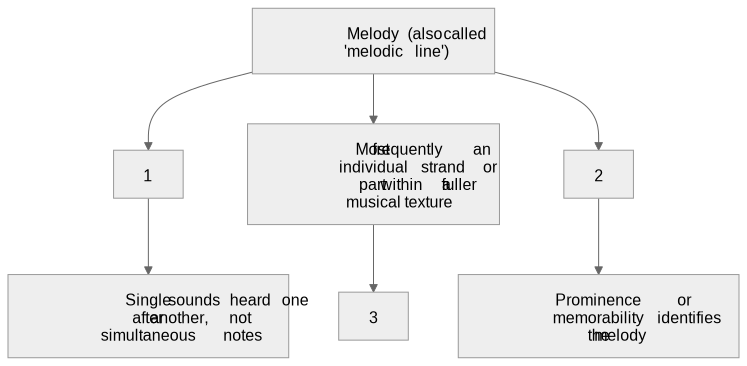
Some boxes have lost their names. Pick the right name for each number.
1Box 1
2Box 2
3Box 3
There is more to this lesson
The full lesson goes on to check your understanding and help you earn the marks. Create a free account to carry on, with your progress saved.
A week of Premium from your first lesson · Then the free plan continues · No card, no charge
Test your understanding of Appendix 3: Musical vocabulary - Organisation of pitch: A melody (or ‘melodic line’) is a succession of single sounds – most frequently an individual strand or part within a fuller musical texture. A melody is usually ‘tuneful’ or otherwise prominent or memorable
Active recall beats re-reading. Take an instant quiz now to test what you’ve learned and lock it into long-term memory.
A week of Premium from your first lesson · Then the free plan continues · No card, no charge