Pearson Edexcel · GCSE · Music
Course version: 1MU0 · Version from Sept 2016
Musical vocabulary - Organisation of pitch: A melody (or occasionally some…
Full specification wording
Appendix 3: Musical vocabulary - Organisation of pitch: A melody (or occasionally some other form of musical material) on which part or all of a piece is based
The glossary term defined here is a subject.
- Point 27 of 27
- 3 key terms
Study notes
From the teaching notes for this specification point.
The idea
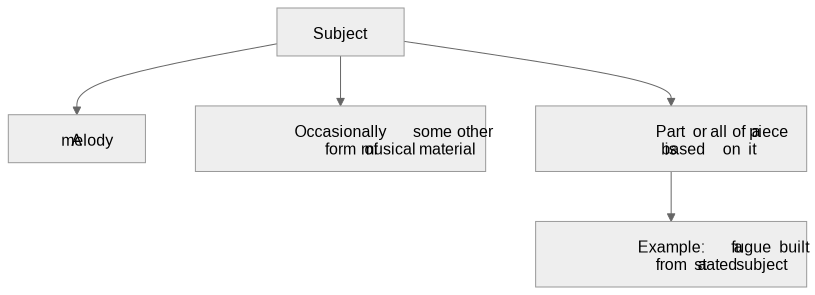
The glossary term defined here is a subject. A subject is a melody, or occasionally another form of musical material, on which part or all of a piece is built. The definition has two parts to hold together: the material is melodic (with the occasional alternative of other material), and it may underpin only part of a piece or the whole of it. A fugue, for instance, is constructed from a subject that is stated and then developed, so the subject is the melodic idea the rest of the music grows from. The term is about the foundational material of a piece, not about a passing phrase or accompaniment figure.
What earns the marks
- Identifies the term as a subject.
- States that the material is a melody, or occasionally another form of musical material.
- Explains that part or all of a piece may be based on it.
- Recognises the subject as foundational material rather than a decorative or accompanying figure.
- Applies the term to a context such as a fugue built from a stated subject.
Common mistakes and how to put them right
Naming the term as a sequence.
Put it right: A subject is the foundational melody of a piece, while a sequence is a repetition at a different pitch level.
Assuming a subject must underpin an entire piece.
Put it right: The definition allows part or all of a piece to be based on it.
Limiting a subject to melody only.
Put it right: The definition allows occasionally some other form of musical material.
Exam tips
- Match the definition to the term subject by focusing on the idea of foundational material for a piece.
- Check whether an option claims the material must run through the whole piece; the definition permits part or all.
- Link the term to a familiar context such as a fugue to confirm your choice.
Try the lesson
The start of the Appendix 3: Musical vocabulary - Organisation of pitch: A melody (or occasionally some other form of musical material) on which part or all of a piece is based lesson, made from teaching notes for this specification point.
Have a go first
In music, what is the term for a melody or other musical material on which part or all of a piece is based?
Listen
The glossary term defined here is a subject. A subject is a melody, or occasionally another form of musical material, on which part or all of a piece is built. The definition has two parts to hold together: the material is melodic (with the occasional alternative of other material), and it may underpin only part of a piece or the whole of it. A fugue, for instance, is constructed from a subject that is stated and then developed, so the subject is the melodic idea the rest of the music grows from. The term is about the foundational material of a piece, not about a passing phrase or accompaniment figure. A strong answer earns marks for these points. Identifies the term as a subject. States that the material is a melody, or occasionally another form of musical material. Explains that part or all of a piece may be based on it. Recognises the subject as foundational material rather than a decorative or accompanying figure. A common slip: Naming the term as a sequence. Instead, a subject is the foundational melody of a piece, while a sequence is a repetition at a different pitch level. Exam tip: Match the definition to the term subject by focusing on the idea of foundational material for a piece.
See it
Key words
Say what each word means before you turn the card.
Subject
Try answering aloud or in your head before turning the card.
Organisation of pitch
Try answering aloud or in your head before turning the card.
Foundational musical material
Try answering aloud or in your head before turning the card.
See every definition
- Subject
- A melody, or occasionally some other form of musical material, on which part or all of a piece is based.
- Organisation of pitch
- The section of the musical vocabulary glossary in which the term subject is defined.
- Foundational musical material
- The material a piece grows from, rather than a decorative or accompanying figure.
Label the diagram
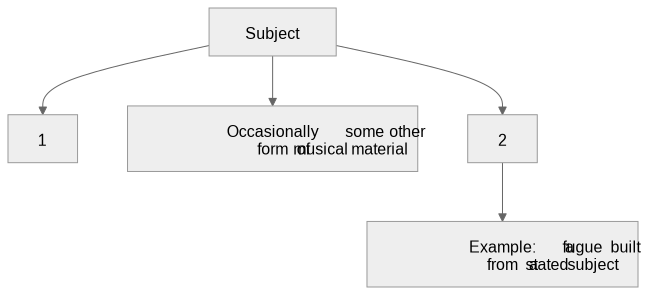
Some boxes have lost their names. Pick the right name for each number.
1Box 1
2Box 2
There is more to this lesson
The full lesson goes on to check your understanding and help you earn the marks. Create a free account to carry on, with your progress saved.
A week of Premium from your first lesson · Then the free plan continues · No card, no charge
Test your understanding of Appendix 3: Musical vocabulary - Organisation of pitch: A melody (or occasionally some other form of musical material) on which part or all of a piece is based
Active recall beats re-reading. Take an instant quiz now to test what you’ve learned and lock it into long-term memory.
A week of Premium from your first lesson · Then the free plan continues · No card, no charge