Pearson Edexcel · GCSE · Music
Course version: 1MU0 · Version from Sept 2016
Area of Study 2: Vocal Music: H Purcell: Music for a While
Henry Purcell's 'Music for a While' is a set work in Area of Study 2, Vocal Music.
- Point 1 of 2
- 4 key terms
Study notes
From the teaching notes for this specification point.
The idea
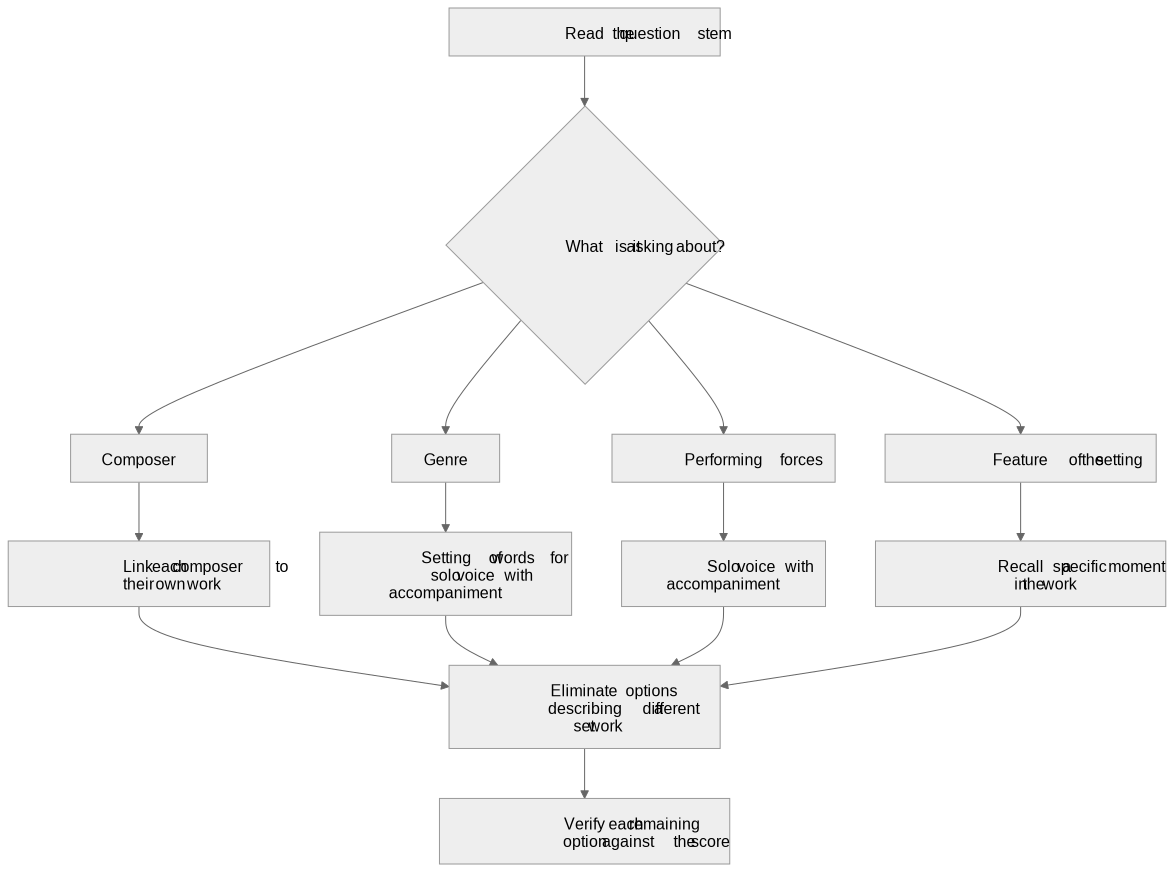
Henry Purcell's 'Music for a While' is a set work in Area of Study 2, Vocal Music. It is a setting of words for solo voice with an accompaniment, so study the text, the solo vocal line and the accompanying instruments together. Learn how the voice shapes the words, how the accompaniment supports or interacts with the singer, and the musical features that identify Purcell's style. For multiple-choice questions, match each option to specific evidence from the work rather than guessing from the title. Check the exact wording of the question: it may ask about the composer, the genre, the performing forces or a feature of the setting. Eliminate options that describe a different work or contradict what the score shows.
What earns the marks
- Identify 'Music for a While' as a setting of words for solo voice with an accompaniment.
- Recognise Henry Purcell as the composer of the set work.
- Describe how the solo vocal line sets and shapes the words of the text.
- Explain the role of the accompaniment in supporting or interacting with the solo voice.
- Match a stated musical feature to evidence in the work rather than to the title alone.
Common mistakes and how to put them right
Confusing Purcell with a composer from another set work.
Put it right: Link each composer firmly to their own work.
Treating the piece as an instrumental work.
Put it right: It is a setting of words for solo voice with accompaniment.
Choosing an option because it sounds plausible without checking the score.
Put it right: Verify each option against specific musical evidence.
Exam tips
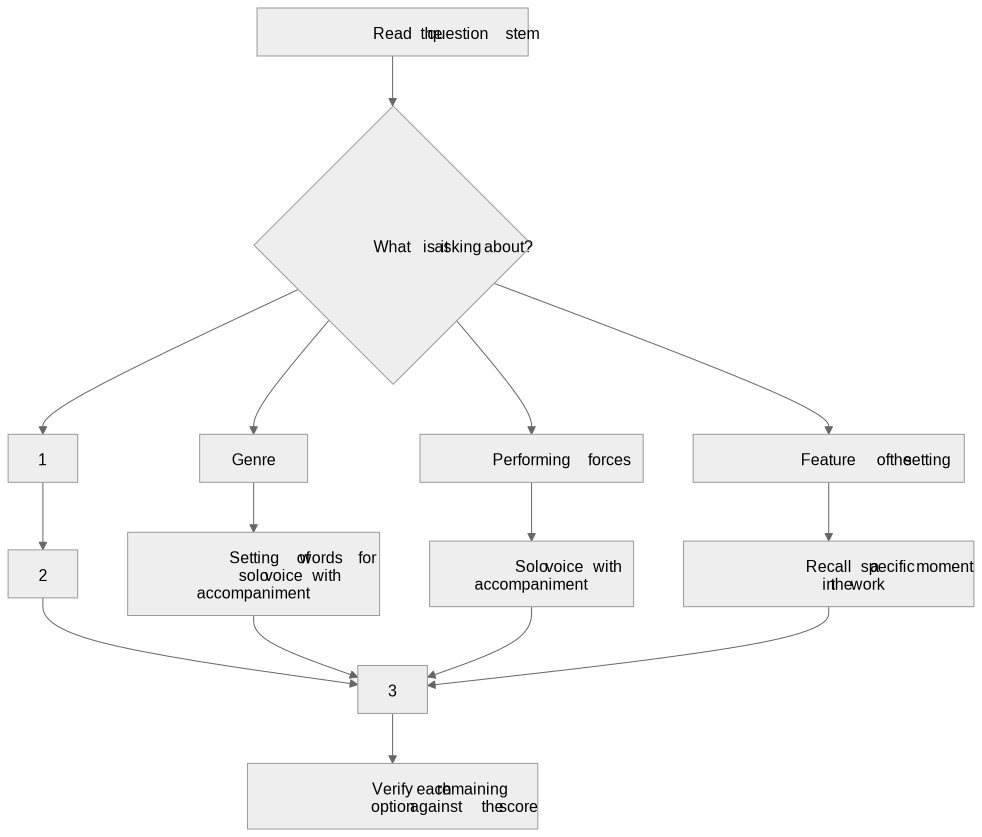
- Read the question stem carefully to see whether it asks about composer, forces, text setting or a musical feature.
- Eliminate options that describe a different set work before choosing between the remainder.
- For feature questions, recall a specific moment in the work that demonstrates the feature.
Try the lesson
The start of the Area of Study 2: Vocal Music: H Purcell: Music for a While lesson, made from teaching notes for this specification point.
Have a go first
In Purcell's 'Music for a While', what is the harmonic function of the ground bass?
Listen
Henry Purcell's 'Music for a While' is a set work in Area of Study 2, Vocal Music. It is a setting of words for solo voice with an accompaniment, so study the text, the solo vocal line and the accompanying instruments together. Learn how the voice shapes the words, how the accompaniment supports or interacts with the singer, and the musical features that identify Purcell's style. For multiple-choice questions, match each option to specific evidence from the work rather than guessing from the title. Check the exact wording of the question: it may ask about the composer, the genre, the performing forces or a feature of the setting. Eliminate options that describe a different work or contradict what the score shows. A strong answer earns marks for these points. Identify 'Music for a While' as a setting of words for solo voice with an accompaniment. Recognise Henry Purcell as the composer of the set work. Describe how the solo vocal line sets and shapes the words of the text. Explain the role of the accompaniment in supporting or interacting with the solo voice. A common slip: Confusing Purcell with a composer from another set work. Instead, link each composer firmly to their own work. Exam tip: Read the question stem carefully to see whether it asks about composer, forces, text setting or a musical feature.
See it
Key words
Say what each word means before you turn the card.
Purcell as composer
Try answering aloud or in your head before turning the card.
Solo voice with accompaniment
Try answering aloud or in your head before turning the card.
Word setting
Try answering aloud or in your head before turning the card.
Musical features of the set work
Try answering aloud or in your head before turning the card.
See every definition
- Purcell as composer
- Henry Purcell is the composer of the set work 'Music for a While', and each composer should be linked firmly to their own work.
- Solo voice with accompaniment
- 'Music for a While' is a setting of words for solo voice with an accompaniment, so the text, the solo vocal line and the accompanying instruments are studied together.
- Word setting
- The solo vocal line sets and shapes the words of the text, and the accompaniment supports or interacts with the singer.
- Musical features of the set work
- The musical features identify Purcell's style, and a stated feature should be matched to evidence in the work rather than to the title alone.
Label the diagram
Some boxes have lost their names. Pick the right name for each number.
1Box 1
2Box 2
3Box 3
There is more to this lesson
The full lesson goes on to check your understanding and help you earn the marks. Create a free account to carry on, with your progress saved.
A week of Premium from your first lesson · Then the free plan continues · No card, no charge
Test your understanding of Area of Study 2: Vocal Music: H Purcell: Music for a While
Active recall beats re-reading. Take an instant quiz now to test what you’ve learned and lock it into long-term memory.
A week of Premium from your first lesson · Then the free plan continues · No card, no charge