Pearson Edexcel · GCSE · Music
Course version: 1MU0 · Version from Sept 2016
Music for Stage and Screen: J Williams: Main title/rebel blockade runner…
Full specification wording
Area of Study 3: Music for Stage and Screen: J Williams: Main title/rebel blockade runner (from the soundtrack to Star Wars Episode IV: A New Hope)
This set work is John Williams's 'Main Title' and 'Rebel Blockade Runner' from the Star Wars Episode IV: A New Hope soundtrack.
- Point 2 of 2
- 4 key terms
Study notes
From the teaching notes for this specification point.
The idea
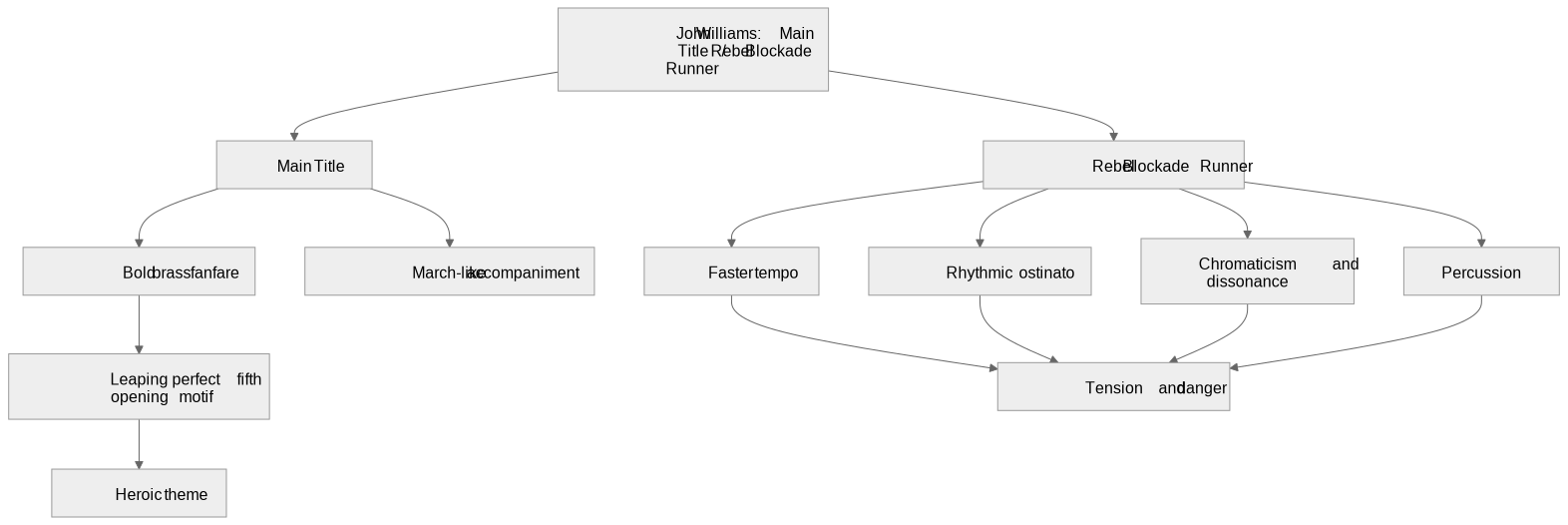
This set work is John Williams's 'Main Title' and 'Rebel Blockade Runner' from the Star Wars Episode IV: A New Hope soundtrack. Learn the two linked cues as film music. The Main Title opens with a bold brass fanfare built on a leaping perfect fifth, establishing the heroic theme, then moves into a march-like accompaniment. 'Rebel Blockade Runner' underscores the opening space battle with faster, more dissonant and rhythmically driving music, using ostinato, chromaticism and percussion to create tension. Notice how Williams uses leitmotif, instrumentation, dynamics, tempo and dissonance to signal heroism and danger. Practise recognising these features by ear from short excerpts, because the question tests what you can identify in the recorded cues.
What earns the marks
- Identifies the work as film music by John Williams from the Star Wars Episode IV: A New Hope soundtrack.
- Recognises the Main Title fanfare: bold brass, a leaping perfect fifth opening motif and a march-like feel.
- Recognises 'Rebel Blockade Runner' features such as faster tempo, rhythmic ostinato, chromaticism, dissonance and percussion.
- Explains the use of leitmotif and how instrumentation and dynamics signal heroism or danger.
- Links musical features to the film's on-screen action and atmosphere.
Common mistakes and how to put them right
Confusing the two cues and describing the Main Title as dissonant battle music.
Put it right: Keep the fanfare and the battle cue distinct.
Attributing the music to another composer or film.
Put it right: Credit Williams and Episode IV: A New Hope.
Describing the music only as 'exciting' without naming features.
Put it right: Use terms such as fanfare, ostinato, chromaticism or leitmotif.
Ignoring the film-music purpose.
Put it right: Connect the musical feature to the on-screen action or mood.
Exam tips
- Learn the opening interval and brass sound of the Main Title so you can identify it instantly.
- Contrast the two cues in a table of tempo, texture, harmony and instrumentation.
- For each feature you name, add the effect it creates for the film audience.
Try the lesson
The start of the Area of Study 3: Music for Stage and Screen: J Williams: Main title/rebel blockade runner (from the soundtrack to Star Wars Episode IV: A New Hope) lesson, made from teaching notes for this specification point.
Listen
This set work is John Williams's 'Main Title' and 'Rebel Blockade Runner' from the Star Wars Episode IV: A New Hope soundtrack. Learn the two linked cues as film music. The Main Title opens with a bold brass fanfare built on a leaping perfect fifth, establishing the heroic theme, then moves into a march-like accompaniment. Rebel Blockade Runner' underscores the opening space battle with faster, more dissonant and rhythmically driving music, using ostinato, chromaticism and percussion to create tension. Notice how Williams uses leitmotif, instrumentation, dynamics, tempo and dissonance to signal heroism and danger. Practise recognising these features by ear from short excerpts, because the question tests what you can identify in the recorded cues. A strong answer earns marks for these points. Identifies the work as film music by John Williams from the Star Wars Episode IV: A New Hope soundtrack. Recognises the Main Title fanfare: bold brass, a leaping perfect fifth opening motif and a march-like feel. Recognises 'Rebel Blockade Runner' features such as faster tempo, rhythmic ostinato, chromaticism, dissonance and percussion. Explains the use of leitmotif and how instrumentation and dynamics signal heroism or danger. Exam tip: Learn the opening interval and brass sound of the Main Title so you can identify it instantly.
See it
Key words
Say what each word means before you turn the card.
Film music and leitmotif
Try answering aloud or in your head before turning the card.
Brass fanfare and heroic motif
Try answering aloud or in your head before turning the card.
Dissonance, ostinato and tension
Try answering aloud or in your head before turning the card.
Instrumentation and mood
Try answering aloud or in your head before turning the card.
See every definition
- Film music and leitmotif
- Music written for a film; a leitmotif is used by Williams to signal heroism and danger.
- Brass fanfare and heroic motif
- The Main Title opens with a bold brass fanfare built on a leaping perfect fifth, establishing the heroic theme.
- Dissonance, ostinato and tension
- 'Rebel Blockade Runner' uses ostinato, chromaticism and dissonance to create tension in the space battle.
- Instrumentation and mood
- Williams uses instrumentation and dynamics to signal heroism or danger and to link features to on-screen action and atmosphere.
Label the diagram
Some boxes have lost their names. Pick the right name for each number.
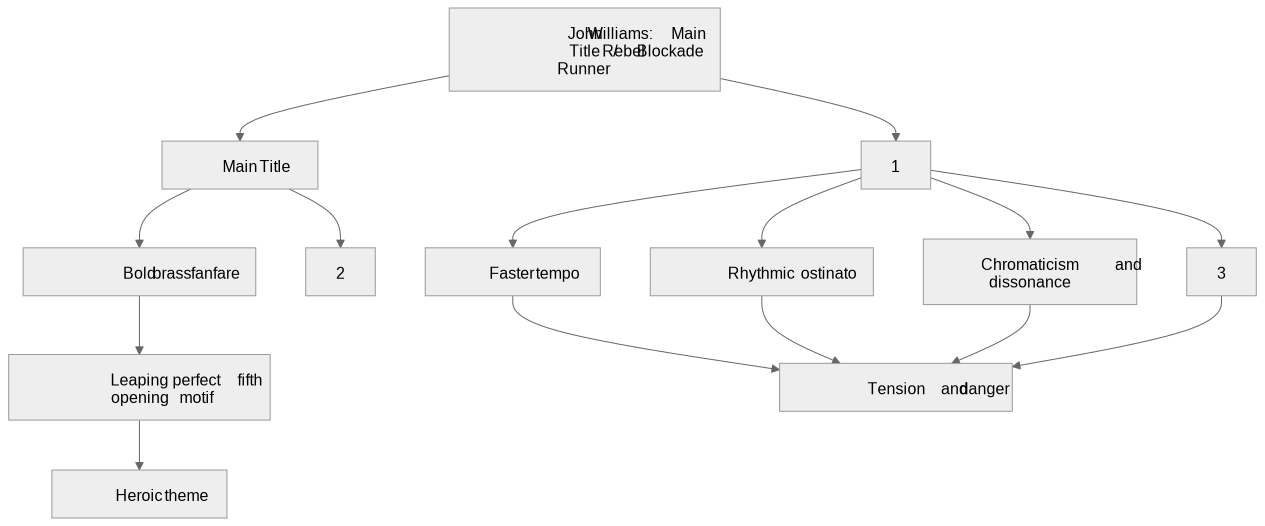
1Box 1
2Box 2
3Box 3
There is more to this lesson
The full lesson goes on to check your understanding and help you earn the marks. Create a free account to carry on, with your progress saved.
A week of Premium from your first lesson · Then the free plan continues · No card, no charge
Test your understanding of Area of Study 3: Music for Stage and Screen: J Williams: Main title/rebel blockade runner (from the soundtrack to Star Wars Episode IV: A New Hope)
Active recall beats re-reading. Take an instant quiz now to test what you’ve learned and lock it into long-term memory.
A week of Premium from your first lesson · Then the free plan continues · No card, no charge