Pearson Edexcel · GCSE · Music
Course version: 1MU0 · Version from Sept 2016
Appraising - Set works: S Schwartz: Defying Gravity (from the album of the…
Full specification wording
Component 3: Appraising - Set works: S Schwartz: Defying Gravity (from the album of the cast recording of Wicked)
This set work is Stephen Schwartz's song 'Defying Gravity' as it appears on the cast recording album of the musical Wicked.
- Point 5 of 8
- 4 key terms
Study notes
From the teaching notes for this specification point.
The idea
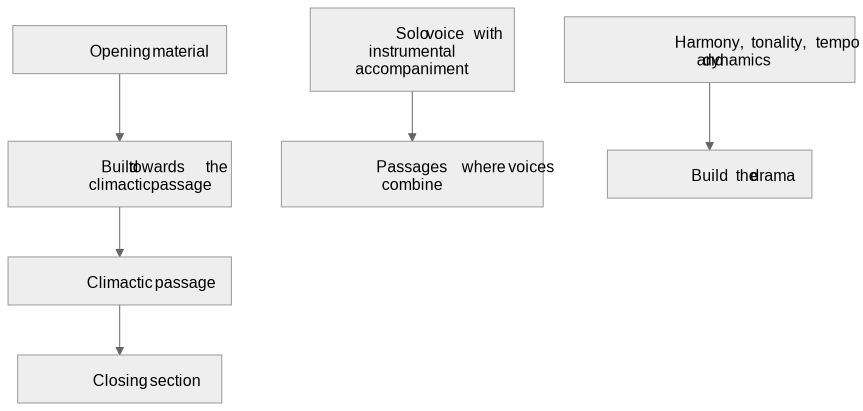
This set work is Stephen Schwartz's song 'Defying Gravity' as it appears on the cast recording album of the musical Wicked. For the listening exam you must recognise the music by ear and connect what you hear to accurate musical vocabulary. Learn the song's structural shape, its use of voices and instruments, and how harmony, tonality, tempo and dynamics build the drama. Practise identifying the opening material, the build towards the climactic passage and the closing section, and be ready to describe texture (for example melody with accompaniment, or passages where voices combine) and word-setting. Use short timed listening extracts and label features you can actually hear rather than guessing from the title.
What earns the marks
- Identifies the work as a song from the cast recording album of the musical Wicked by Stephen Schwartz.
- Recognises musical features by ear, such as the use of solo voice with instrumental accompaniment and passages where the texture thickens.
- Describes structural sections and how the music builds towards a climax, using correct terms for tempo, dynamics and texture.
- Links harmonic and tonal features, such as changes of key or chord colour, to the dramatic meaning of the lyrics.
- Uses accurate musical vocabulary when naming instruments, voices and expressive devices heard in the extract.
Common mistakes and how to put them right
Treating the title as a description of the music rather than identifying it as a song from a stage musical cast recording.
Put it right by naming the work, composer and source album.
Guessing features from the story rather than from the sound.
Put it right by describing only what is audible in the extract.
Confusing the solo vocal line with a full chorus throughout.
Put it right by noting where the texture changes between solo and combined voices.
Exam tips
- Listen to short extracts repeatedly and jot down one feature per hearing: texture, dynamics, tempo, instrumentation.
- Learn to place the main sections in order so you can say where in the song an extract comes from.
- Use precise terms such as crescendo, accelerando, homophonic and unison rather than vague words like 'loud' or 'fast'.
Try the lesson
The start of the Component 3: Appraising - Set works: S Schwartz: Defying Gravity (from the album of the cast recording of Wicked) lesson, made from teaching notes for this specification point.
Have a go first
In Stephen Schwartz's Defying Gravity (from the cast recording of the musical Wicked), the final section features a belted vocal line. What is the main dramatic function of this belted vocal line?
Listen
This set work is Stephen Schwartz's song 'Defying Gravity' as it appears on the cast recording album of the musical Wicked. For the listening exam you must recognise the music by ear and connect what you hear to accurate musical vocabulary. Learn the song's structural shape, its use of voices and instruments, and how harmony, tonality, tempo and dynamics build the drama. Practise identifying the opening material, the build towards the climactic passage and the closing section, and be ready to describe texture (for example melody with accompaniment, or passages where voices combine) and word-setting. Use short timed listening extracts and label features you can actually hear rather than guessing from the title. A strong answer earns marks for these points. Identifies the work as a song from the cast recording album of the musical Wicked by Stephen Schwartz. Recognises musical features by ear, such as the use of solo voice with instrumental accompaniment and passages where the texture thickens. Describes structural sections and how the music builds towards a climax, using correct terms for tempo, dynamics and texture. Links harmonic and tonal features, such as changes of key or chord colour, to the dramatic meaning of the lyrics. A common slip: Treating the title as a description of the music rather than identifying it as a song from a stage musical cast recording. Instead, naming the work, composer and source album. Exam tip: Listen to short extracts repeatedly and jot down one feature per hearing: texture, dynamics, tempo, instrumentation.
See it
Key words
Say what each word means before you turn the card.
Vocal writing and word-setting
Try answering aloud or in your head before turning the card.
Texture and the build to a climax
Try answering aloud or in your head before turning the card.
Harmony, tonality and chord colour
Try answering aloud or in your head before turning the card.
Dynamics, tempo and expressive devices
Try answering aloud or in your head before turning the card.
See every definition
- Vocal writing and word-setting
- The song uses solo voice with instrumental accompaniment, and passages where voices combine, so word-setting can be described from what is heard.
- Texture and the build to a climax
- Texture may be melody with accompaniment, or passages where voices combine, and the music builds towards a climactic passage.
- Harmony, tonality and chord colour
- Changes of key or chord colour can be linked to the dramatic meaning of the lyrics.
- Dynamics, tempo and expressive devices
- Correct terms for tempo, dynamics and texture describe how the music builds towards a climax, using precise words such as crescendo and accelerando.
Label the diagram
Some boxes have lost their names. Pick the right name for each number.
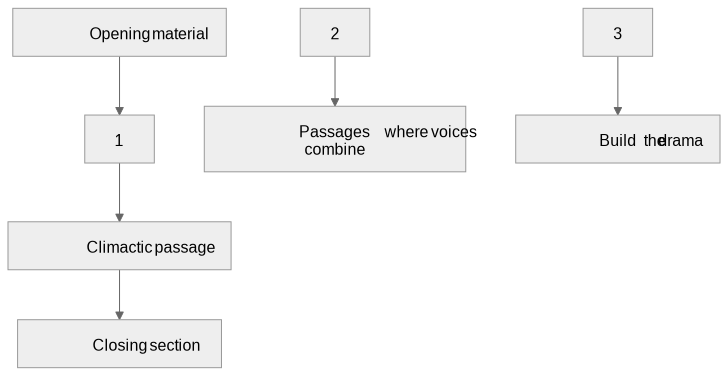
1Box 1
2Box 2
3Box 3
There is more to this lesson
The full lesson goes on to check your understanding and help you earn the marks. Create a free account to carry on, with your progress saved.
A week of Premium from your first lesson · Then the free plan continues · No card, no charge
Test your understanding of Component 3: Appraising - Set works: S Schwartz: Defying Gravity (from the album of the cast recording of Wicked)
Active recall beats re-reading. Take an instant quiz now to test what you’ve learned and lock it into long-term memory.
A week of Premium from your first lesson · Then the free plan continues · No card, no charge