AQA · A-Level · Physical Education
Course version: 7582 · Version from Sept 2016
Adaptations to body systems resulting in training effect.
Full specification wording
Cardiovascular system: Adaptations to body systems resulting in training effect.
Regular cardiovascular training produces adaptations in several body systems, and together these create the training effect.
Checked against the AQA 7582 specification (opens in a new tab) on .
- Point 25 of 25
- 4 key terms
Study notes
From the checked teaching notes for this specification point.
The idea
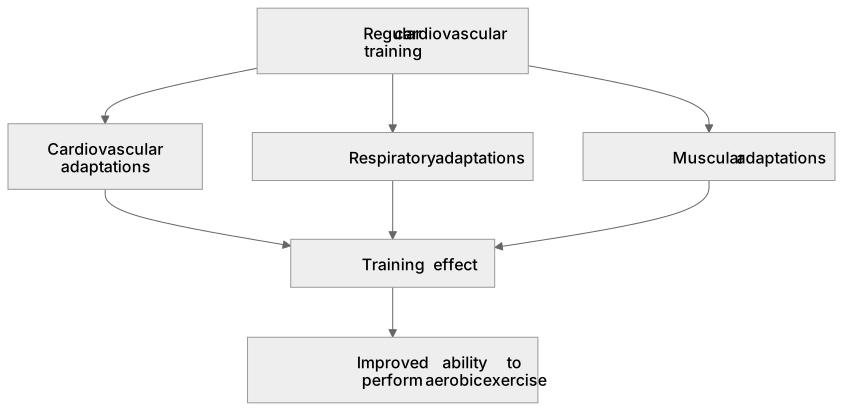
Regular cardiovascular training produces adaptations in several body systems, and together these create the training effect. In the cardiovascular system, the heart muscle, especially the left ventricle, enlarges so stroke volume increases; capillary density and venous return also improve. In the respiratory system, respiratory muscles strengthen and lung volumes and capacities can increase, supporting greater oxygen uptake. In the muscular system, mitochondria and myoglobin increase, and aerobic enzymes become more active, so muscles extract and use oxygen more efficiently. These adaptations lower resting heart rate, speed recovery and raise maximum oxygen uptake. The training effect is the improved ability to perform aerobic exercise.
What earns the marks
- Cardiovascular adaptations include cardiac hypertrophy, increased stroke volume, increased capillary density and improved venous return.
- Respiratory adaptations include strengthened respiratory muscles and increased lung volumes and capacities, supporting greater oxygen uptake.
- Muscular adaptations include increased mitochondria, increased myoglobin and increased aerobic enzyme activity, improving oxygen extraction and use.
- The combined adaptations lower resting heart rate, improve recovery and increase maximum oxygen uptake.
- The training effect is the improved capacity to perform aerobic exercise produced by these system adaptations.
- Adaptations are specific to the type and intensity of training undertaken.
Common mistakes and how to put them right
Listing only cardiovascular changes.
Put it right: , the training effect also involves respiratory and muscular adaptations such as stronger respiratory muscles and more mitochondria.
Confusing an acute response with a chronic adaptation.
Put it right: , an acute response occurs during or immediately after exercise, while an adaptation is a longer-term change from repeated training.
Claiming lung volume increases without limit.
Put it right: , respiratory adaptations support greater oxygen uptake but are bounded by body size and training status.
Assuming all training produces the same adaptations.
Put it right: , adaptations are specific to the type, intensity and duration of the training performed.
Exam tips
- Name the body system before stating the adaptation, so the link is clear.
- Explain how each adaptation contributes to the training effect, such as increased stroke volume raising cardiac output.
- Use correct terminology, including stroke volume, cardiac output, mitochondria and maximum oxygen uptake.
- Avoid listing adaptations without linking them to improved aerobic performance.
Try the lesson
The start of the Cardiovascular system: Adaptations to body systems resulting in training effect. lesson, made from checked teaching notes for this specification point.
Have a go first
A performer follows a regular aerobic training programme for several months. Which change to the heart is a chronic cardiovascular adaptation to this training?
Listen
Regular cardiovascular training produces adaptations in several body systems, and together these create the training effect. In the cardiovascular system, the heart muscle, especially the left ventricle, enlarges so stroke volume increases; capillary density and venous return also improve. In the respiratory system, respiratory muscles strengthen and lung volumes and capacities can increase, supporting greater oxygen uptake. In the muscular system, mitochondria and myoglobin increase, and aerobic enzymes become more active, so muscles extract and use oxygen more efficiently. These adaptations lower resting heart rate, speed recovery and raise maximum oxygen uptake. The training effect is the improved ability to perform aerobic exercise. A strong answer earns marks for these points. Cardiovascular adaptations include cardiac hypertrophy, increased stroke volume, increased capillary density and improved venous return. Respiratory adaptations include strengthened respiratory muscles and increased lung volumes and capacities, supporting greater oxygen uptake. Muscular adaptations include increased mitochondria, increased myoglobin and increased aerobic enzyme activity, improving oxygen extraction and use. The combined adaptations lower resting heart rate, improve recovery and increase maximum oxygen uptake. A common slip: Listing only cardiovascular changes. Instead, , the training effect also involves respiratory and muscular adaptations such as stronger respiratory muscles and more mitochondria. Exam tip: Name the body system before stating the adaptation, so the link is clear.
See it
Key words
Say what each word means before you turn the card.
Cardiovascular adaptations
Try answering aloud or in your head before turning the card.
Respiratory adaptations
Try answering aloud or in your head before turning the card.
Muscular adaptations
Try answering aloud or in your head before turning the card.
The training effect
Try answering aloud or in your head before turning the card.
See every definition
- Cardiovascular adaptations
- Changes including cardiac hypertrophy, increased stroke volume, increased capillary density and improved venous return.
- Respiratory adaptations
- Changes including strengthened respiratory muscles and increased lung volumes and capacities, supporting greater oxygen uptake.
- Muscular adaptations
- Changes including increased mitochondria, increased myoglobin and increased aerobic enzyme activity, improving oxygen extraction and use.
- The training effect
- The improved capacity to perform aerobic exercise produced by these system adaptations.
Label the diagram
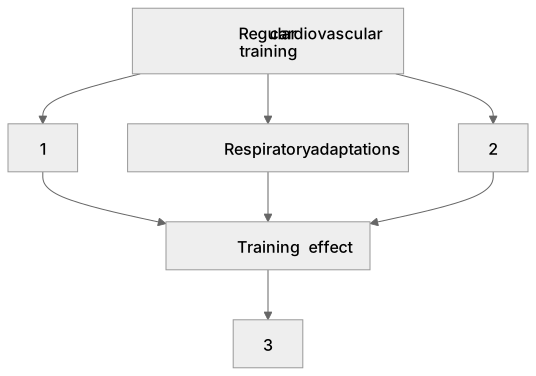
Some boxes have lost their names. Pick the right name for each number.
1Box 1
2Box 2
3Box 3
There is more to this lesson
The full lesson goes on to check your understanding and help you earn the marks. Create a free account to carry on, with your progress saved.
A week of Premium from your first lesson · Then the free plan continues · No card, no charge
Test your understanding of Cardiovascular system: Adaptations to body systems resulting in training effect.
Active recall beats re-reading. Take an instant quiz now to test what you’ve learned and lock it into long-term memory.
A week of Premium from your first lesson · Then the free plan continues · No card, no charge