AQA · A-Level · Physical Education
Course version: 7582 · Version from Sept 2016
Receptors involved in regulation of responses during physical activity.
Full specification wording
Cardiovascular system: Receptors involved in regulation of responses during physical activity.
During physical activity the cardiovascular and respiratory systems adjust so that working muscles receive more oxygenated blood while the brain and vital organs remain adequately supplied.
Checked against the AQA 7582 specification (opens in a new tab) on .
- Point 10 of 25
- 4 key terms
Study notes
From the checked teaching notes for this specification point.
The idea
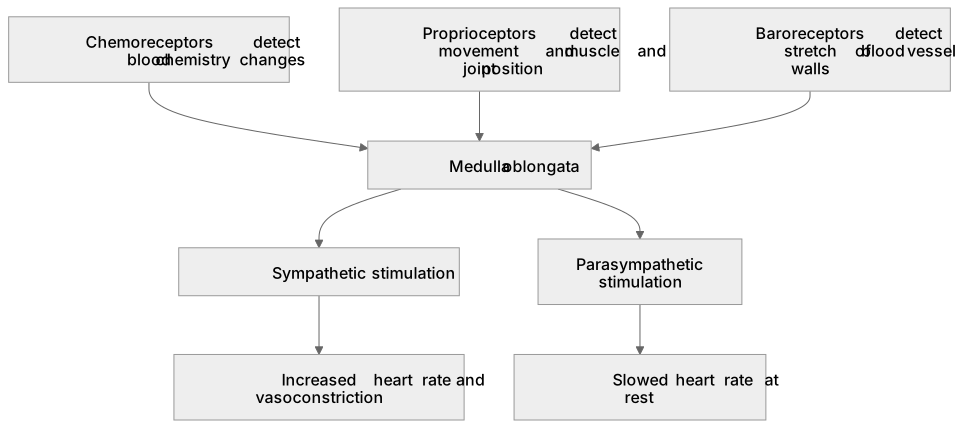
During physical activity the cardiovascular and respiratory systems adjust so that working muscles receive more oxygenated blood while the brain and vital organs remain adequately supplied. This regulation depends on sensory receptors that continuously monitor the internal environment and feed information to the medulla oblongata in the brain stem. Chemoreceptors detect changes in blood chemistry, proprioceptors detect movement and changes in muscle and joint position, and baroreceptors detect stretching of blood vessel walls linked to blood pressure. The medulla then alters sympathetic and parasympathetic outflow, changing heart rate, stroke volume and blood vessel diameter.
For example: As exercise begins, proprioceptor firing and rising carbon dioxide levels stimulate the cardiac control centre, so heart rate increases before and during the activity.
What earns the marks
- Chemoreceptors detect chemical changes in the blood, including rising carbon dioxide and falling pH, and falling oxygen levels.
- Proprioceptors detect movement and changes in muscle and joint position, informing the brain that exercise has started.
- Baroreceptors detect stretch of blood vessel walls and therefore changes in blood pressure.
- Receptor information is sent to the medulla oblongata, which regulates heart rate and blood vessel diameter via the autonomic nervous system.
- Sympathetic stimulation increases heart rate and vasoconstriction, while parasympathetic stimulation slows heart rate at rest.
- The overall purpose is to match blood flow and oxygen delivery to the increased metabolic demand of physical activity.
Common mistakes and how to put them right
Confusing chemoreceptors with baroreceptors.
Put it right: Chemoreceptors respond to blood chemistry such as carbon dioxide and pH, whereas baroreceptors respond to stretch caused by blood pressure changes.
Thinking proprioceptors detect blood pressure.
Put it right: Proprioceptors detect movement and position of muscles and joints, not pressure inside vessels.
Believing receptors themselves raise heart rate.
Put it right: Receptors only detect and send information; the medulla oblongata and autonomic nervous system produce the response.
Assuming only one receptor type operates during exercise.
Put it right: Chemoreceptors, proprioceptors and baroreceptors all contribute information during physical activity.
Exam tips
- Link each receptor to the specific stimulus it detects, then state the response that follows, such as increased heart rate.
- Use the correct pathway: receptor detects change, sends impulse to medulla oblongata, autonomic nervous system alters heart rate or vessel diameter.
- Apply each receptor to a concrete exercise context, for example proprioceptors firing at the start of a sprint and chemoreceptors responding as carbon dioxide rises.
Try the lesson
The start of the Cardiovascular system: Receptors involved in regulation of responses during physical activity. lesson, made from checked teaching notes for this specification point.
Have a go first
Which receptor type detects changes in blood pressure during physical activity?
Listen
During physical activity the cardiovascular and respiratory systems adjust so that working muscles receive more oxygenated blood while the brain and vital organs remain adequately supplied. This regulation depends on sensory receptors that continuously monitor the internal environment and feed information to the medulla oblongata in the brain stem. Chemoreceptors detect changes in blood chemistry, proprioceptors detect movement and changes in muscle and joint position, and baroreceptors detect stretching of blood vessel walls linked to blood pressure. The medulla then alters sympathetic and parasympathetic outflow, changing heart rate, stroke volume and blood vessel diameter. For example, as exercise begins, proprioceptor firing and rising carbon dioxide levels stimulate the cardiac control centre, so heart rate increases before and during the activity. A strong answer earns marks for these points. Chemoreceptors detect chemical changes in the blood, including rising carbon dioxide and falling pH, and falling oxygen levels. Proprioceptors detect movement and changes in muscle and joint position, informing the brain that exercise has started. Baroreceptors detect stretch of blood vessel walls and therefore changes in blood pressure. Receptor information is sent to the medulla oblongata, which regulates heart rate and blood vessel diameter via the autonomic nervous system. Exam tip: Link each receptor to the specific stimulus it detects, then state the response that follows, such as increased heart rate.
See it
Key words
Say what each word means before you turn the card.
Chemoreceptors
Try answering aloud or in your head before turning the card.
Proprioceptors
Try answering aloud or in your head before turning the card.
Baroreceptors
Try answering aloud or in your head before turning the card.
Medulla oblongata
Try answering aloud or in your head before turning the card.
See every definition
- Chemoreceptors
- Detect chemical changes in the blood, including rising carbon dioxide and falling pH, and falling oxygen levels.
- Proprioceptors
- Detect movement and changes in muscle and joint position, informing the brain that exercise has started.
- Baroreceptors
- Detect stretch of blood vessel walls and therefore changes in blood pressure.
- Medulla oblongata
- Part of the brain stem that receives receptor information and regulates heart rate and blood vessel diameter via the autonomic nervous system.
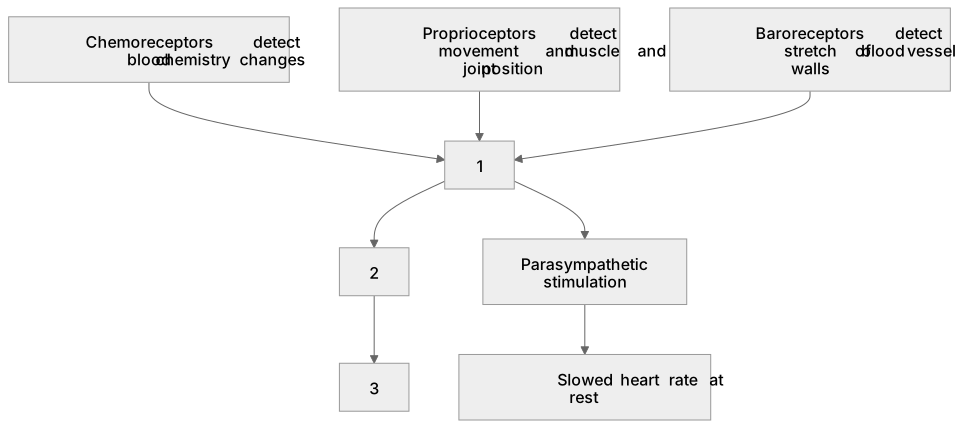
Label the diagram
Some boxes have lost their names. Pick the right name for each number.
1Box 1
2Box 2
3Box 3
There is more to this lesson
The full lesson goes on to check your understanding and help you earn the marks. Create a free account to carry on, with your progress saved.
A week of Premium from your first lesson · Then the free plan continues · No card, no charge
Test your understanding of Cardiovascular system: Receptors involved in regulation of responses during physical activity.
Active recall beats re-reading. Take an instant quiz now to test what you’ve learned and lock it into long-term memory.
A week of Premium from your first lesson · Then the free plan continues · No card, no charge