AQA · A-Level · Physical Education
Course version: 7582 · Version from Sept 2016
Cardiovascular system: Transportation of oxygen.
Oxygen is carried in blood in two ways.
Checked against the AQA 7582 specification (opens in a new tab) on .
- Point 12 of 25
- 4 key terms
Study notes
From the checked teaching notes for this specification point.
The idea
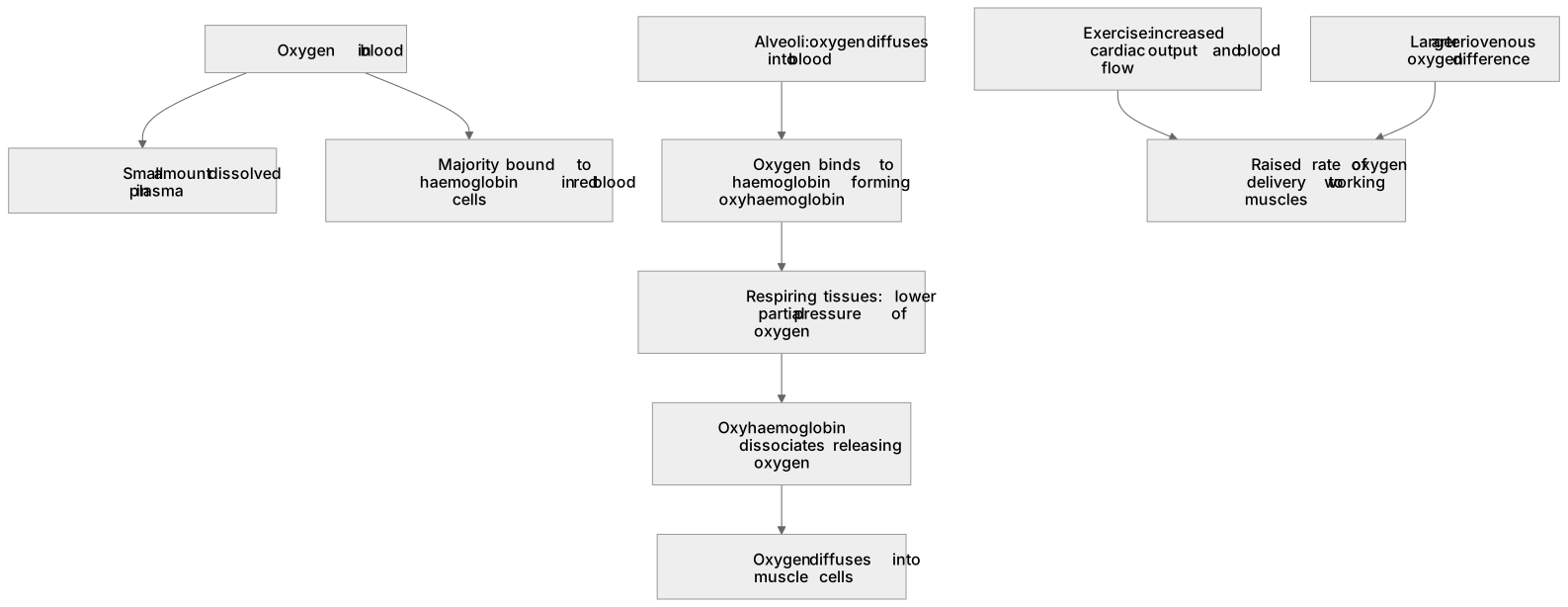
Oxygen is carried in blood in two ways. A small fraction dissolves directly in plasma, but because oxygen has low solubility in water, this dissolved amount is tiny and cannot meet the demand of working muscle. The great majority is carried by haemoglobin inside red blood cells. At the lungs, oxygen diffuses from the alveoli into the blood and binds to haemoglobin to form oxyhaemoglobin. At tissues that are respiring, the partial pressure of oxygen is lower, so oxyhaemoglobin dissociates and releases oxygen, which then diffuses into the muscle cells. During exercise, increased blood flow, greater cardiac output and a larger arteriovenous oxygen difference all raise the rate of oxygen delivery to the working muscles.
What earns the marks
- Oxygen is transported in blood in two forms: a small amount dissolved in plasma and the majority bound to haemoglobin within red blood cells.
- Oxygen has low solubility in plasma, so dissolved transport alone is insufficient to meet the oxygen demand of working muscles.
- At the alveoli, oxygen diffuses into the blood down a partial pressure gradient and combines with haemoglobin to form oxyhaemoglobin.
- At respiring tissues, the lower partial pressure of oxygen causes oxyhaemoglobin to dissociate, releasing oxygen that diffuses into the cells.
- During exercise, increased cardiac output and redistribution of blood flow increase the rate at which oxygen is delivered to active muscles.
- The arteriovenous oxygen difference widens during exercise because more oxygen is extracted by the working tissues.
Common mistakes and how to put them right
Thinking that all oxygen is carried dissolved in plasma.
Put it right: Most oxygen is bound to haemoglobin, and only a small fraction dissolves in plasma.
Believing that oxygen is actively pumped by haemoglobin.
Put it right: Oxygen moves by diffusion down partial pressure gradients, and haemoglobin binds and releases it according to those gradients.
Confusing oxyhaemoglobin with haemoglobin.
Put it right: Oxyhaemoglobin is the combined form produced when oxygen binds to haemoglobin at the lungs.
Assuming oxygen is released at the lungs rather than the tissues.
Put it right: Oxygen binds at the lungs and dissociates at the respiring tissues.
Exam tips
- Link each transport step to a partial pressure gradient so the direction of oxygen movement is explicit.
- Use the terms oxyhaemoglobin and dissociation accurately when describing loading at the lungs and unloading at the tissues.
- When a question mentions exercise, connect oxygen transport to increased cardiac output and greater oxygen extraction by active muscle.
Try the lesson
The start of the Cardiovascular system: Transportation of oxygen. lesson, made from checked teaching notes for this specification point.
Have a go first
Which substance in red blood cells binds oxygen so that it can be carried from the lungs to the muscles?
Listen
Oxygen is carried in blood in two ways. A small fraction dissolves directly in plasma, but because oxygen has low solubility in water, this dissolved amount is tiny and cannot meet the demand of working muscle. The great majority is carried by haemoglobin inside red blood cells. At the lungs, oxygen diffuses from the alveoli into the blood and binds to haemoglobin to form oxyhaemoglobin. At tissues that are respiring, the partial pressure of oxygen is lower, so oxyhaemoglobin dissociates and releases oxygen, which then diffuses into the muscle cells. During exercise, increased blood flow, greater cardiac output and a larger arteriovenous oxygen difference all raise the rate of oxygen delivery to the working muscles. A strong answer earns marks for these points. Oxygen is transported in blood in two forms: a small amount dissolved in plasma and the majority bound to haemoglobin within red blood cells. Oxygen has low solubility in plasma, so dissolved transport alone is insufficient to meet the oxygen demand of working muscles. At the alveoli, oxygen diffuses into the blood down a partial pressure gradient and combines with haemoglobin to form oxyhaemoglobin. At respiring tissues, the lower partial pressure of oxygen causes oxyhaemoglobin to dissociate, releasing oxygen that diffuses into the cells. Exam tip: Link each transport step to a partial pressure gradient so the direction of oxygen movement is explicit.
See it
Key words
Say what each word means before you turn the card.
Oxyhaemoglobin
Try answering aloud or in your head before turning the card.
Dissociation
Try answering aloud or in your head before turning the card.
Partial pressure gradient
Try answering aloud or in your head before turning the card.
Arteriovenous oxygen difference
Try answering aloud or in your head before turning the card.
See every definition
- Oxyhaemoglobin
- The combined form produced when oxygen binds to haemoglobin at the lungs.
- Dissociation
- The process at respiring tissues where the lower partial pressure of oxygen causes oxyhaemoglobin to release oxygen.
- Partial pressure gradient
- The difference in partial pressure that oxygen diffuses down, into the blood at the alveoli and into the cells at respiring tissues.
- Arteriovenous oxygen difference
- A measure that widens during exercise because more oxygen is extracted by the working tissues.
Label the diagram
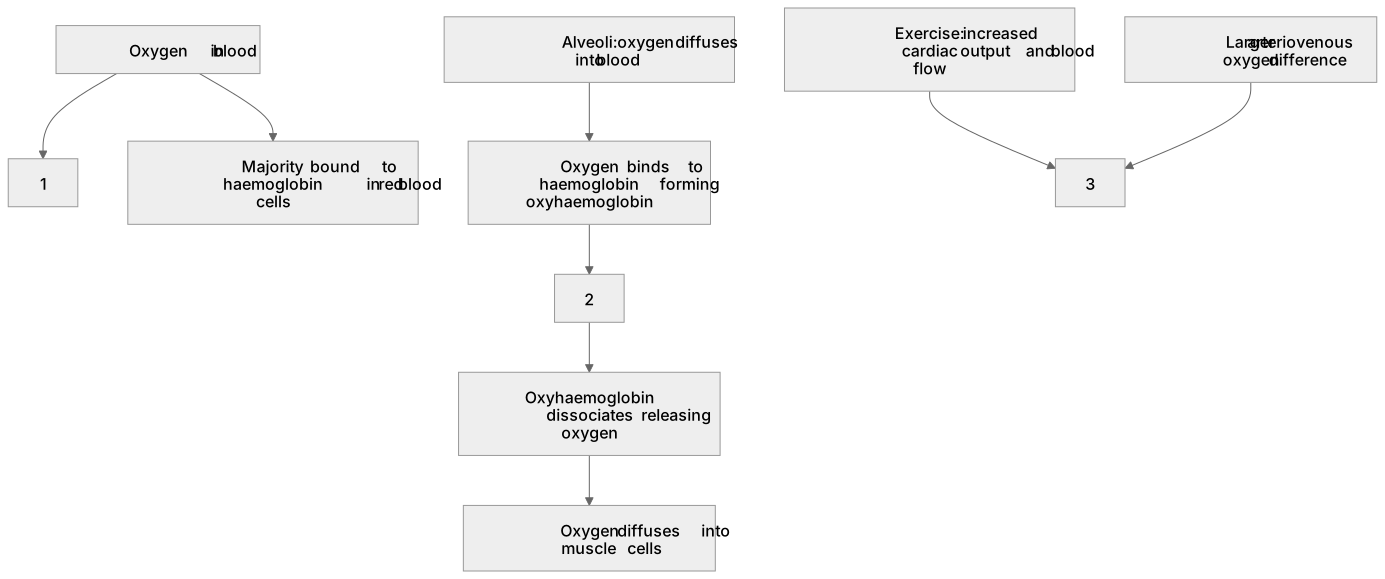
Some boxes have lost their names. Pick the right name for each number.
1Box 1
2Box 2
3Box 3
There is more to this lesson
The full lesson goes on to check your understanding and help you earn the marks. Create a free account to carry on, with your progress saved.
A week of Premium from your first lesson · Then the free plan continues · No card, no charge
Test your understanding of Cardiovascular system: Transportation of oxygen.
Active recall beats re-reading. Take an instant quiz now to test what you’ve learned and lock it into long-term memory.
A week of Premium from your first lesson · Then the free plan continues · No card, no charge