AQA · A-Level · Physical Education
Course version: 7582 · Version from Sept 2016
Understanding of the impact of physical activity and sport on the health…
Full specification wording
Cardiovascular system: Understanding of the impact of physical activity and sport on the health and fitness of the individual.
Physical activity and sport significantly impact an individual's cardiovascular health and fitness.
Checked against the AQA 7582 specification (opens in a new tab) on .
- Point 1 of 25
- 4 key terms
Study notes
From the checked teaching notes for this specification point.
The idea
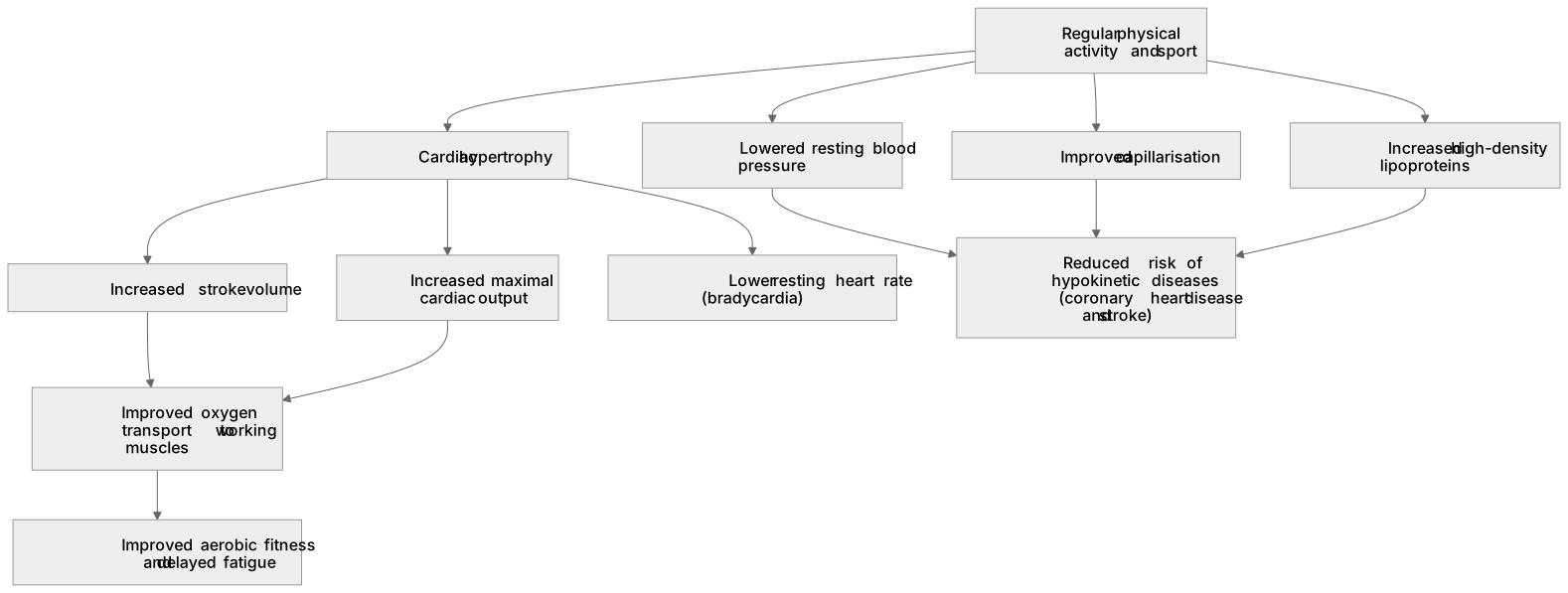
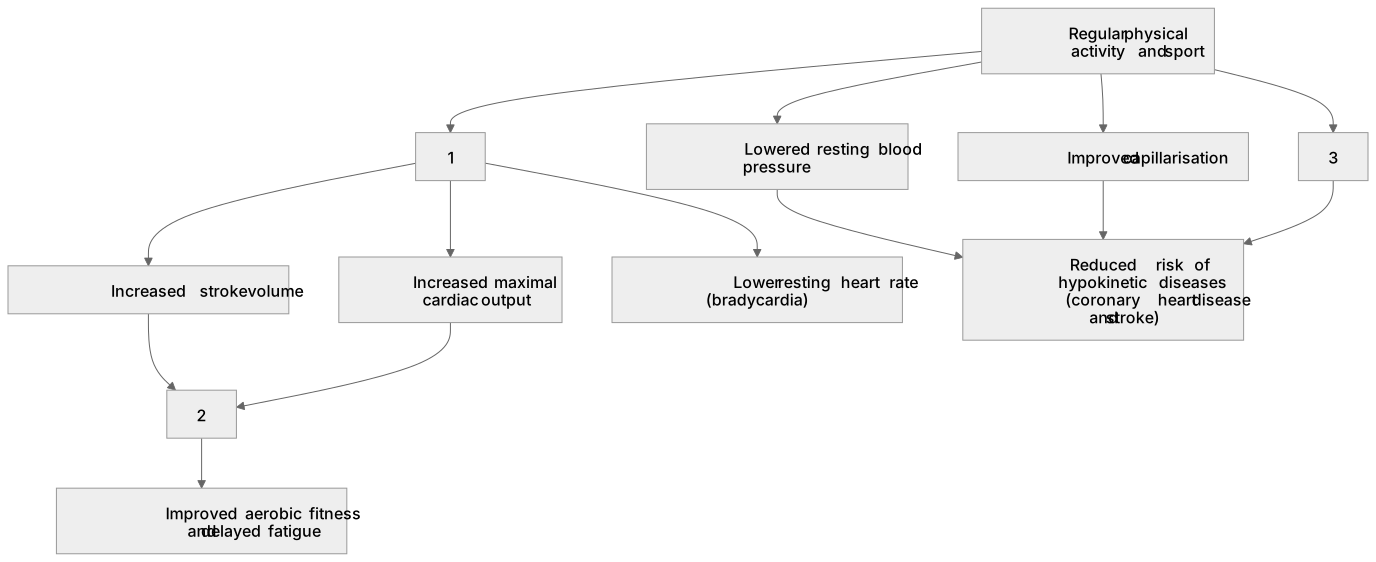
Physical activity and sport significantly impact an individual's cardiovascular health and fitness. Regular training induces physiological adaptations such as cardiac hypertrophy, which increases stroke volume and maximal cardiac output while lowering resting heart rate (bradycardia). These changes enhance the ability to transport oxygen to working muscles, improving aerobic fitness and delaying fatigue. From a health perspective, regular physical activity reduces the risk of hypokinetic diseases. It helps lower resting blood pressure, improves capillarisation, increases high-density lipoproteins and reduces the risk of coronary heart disease and stroke. These cardiovascular benefits highlight the importance of an active lifestyle.
What earns the marks
- Regular physical activity induces cardiac hypertrophy, increasing stroke volume and maximal cardiac output.
- Training lowers resting heart rate (bradycardia) and improves the efficiency of oxygen transport to working muscles.
- Physical activity reduces the risk of hypokinetic diseases, such as coronary heart disease and stroke.
- Health benefits include lowered resting blood pressure, improved capillarisation and increased high-density lipoproteins.
Common mistakes and how to put them right
Misunderstanding: students treat health and fitness as identical.
Put it right: Health is the overall state of well-being and absence of disease, while fitness is the ability to meet environmental demands.
Misunderstanding: students think only vigorous sport improves cardiovascular health.
Put it right: Moderate regular activity also produces significant health benefits, such as lowered blood pressure.
Misunderstanding: students state that maximum heart rate increases with training.
Put it right: Maximum heart rate remains relatively unchanged (220 minus age); it is stroke volume and cardiac output that increase.
Exam tips
- Define health and fitness precisely before explaining their relationship to the cardiovascular system.
- Use specific examples of cardiovascular adaptations (e.g. increased stroke volume, bradycardia) to support your answer.
- In multiple-choice questions, reject options that claim training increases maximum heart rate.
Try the lesson
The start of the Cardiovascular system: Understanding of the impact of physical activity and sport on the health and fitness of the individual. lesson, made from checked teaching notes for this specification point.
Have a go first
Which change to the heart is a direct result of regular aerobic training?
Listen
Physical activity and sport significantly impact an individual's cardiovascular health and fitness. Regular training induces physiological adaptations such as cardiac hypertrophy, which increases stroke volume and maximal cardiac output while lowering resting heart rate (bradycardia). These changes enhance the ability to transport oxygen to working muscles, improving aerobic fitness and delaying fatigue. From a health perspective, regular physical activity reduces the risk of hypokinetic diseases. It helps lower resting blood pressure, improves capillarisation, increases high-density lipoproteins and reduces the risk of coronary heart disease and stroke. These cardiovascular benefits highlight the importance of an active lifestyle. A strong answer earns marks for these points. Regular physical activity induces cardiac hypertrophy, increasing stroke volume and maximal cardiac output. Training lowers resting heart rate (bradycardia) and improves the efficiency of oxygen transport to working muscles. Physical activity reduces the risk of hypokinetic diseases, such as coronary heart disease and stroke. Health benefits include lowered resting blood pressure, improved capillarisation and increased high-density lipoproteins. A common slip: Misunderstanding: students treat health and fitness as identical. Instead, health is the overall state of well-being and absence of disease, while fitness is the ability to meet environmental demands. Exam tip: Define health and fitness precisely before explaining their relationship to the cardiovascular system.
See it
Key words
Say what each word means before you turn the card.
Health versus fitness
Try answering aloud or in your head before turning the card.
Cardiovascular adaptations to exercise
Try answering aloud or in your head before turning the card.
Reduced risk of hypokinetic disease
Try answering aloud or in your head before turning the card.
Healthy active lifestyle
Try answering aloud or in your head before turning the card.
See every definition
- Health versus fitness
- Health is the overall state of well-being and absence of disease, while fitness is the ability to meet environmental demands.
- Cardiovascular adaptations to exercise
- Regular training induces physiological changes such as cardiac hypertrophy, which increases stroke volume and maximal cardiac output while lowering resting heart rate (bradycardia).
- Reduced risk of hypokinetic disease
- Regular physical activity reduces the risk of hypokinetic diseases, such as coronary heart disease and stroke.
- Healthy active lifestyle
- The cardiovascular benefits of regular physical activity highlight the importance of an active lifestyle.
Label the diagram
Some boxes have lost their names. Pick the right name for each number.
1Box 1
2Box 2
3Box 3
There is more to this lesson
The full lesson goes on to check your understanding and help you earn the marks. Create a free account to carry on, with your progress saved.
A week of Premium from your first lesson · Then the free plan continues · No card, no charge
Test your understanding of Cardiovascular system: Understanding of the impact of physical activity and sport on the health and fitness of the individual.
Active recall beats re-reading. Take an instant quiz now to test what you’ve learned and lock it into long-term memory.
A week of Premium from your first lesson · Then the free plan continues · No card, no charge