AQA · A-Level · Physical Education
Course version: 7582 · Version from Sept 2016
Carbohydrate.
Full specification wording
Diet and nutrition and their effect on physical activity and performance: Carbohydrate.
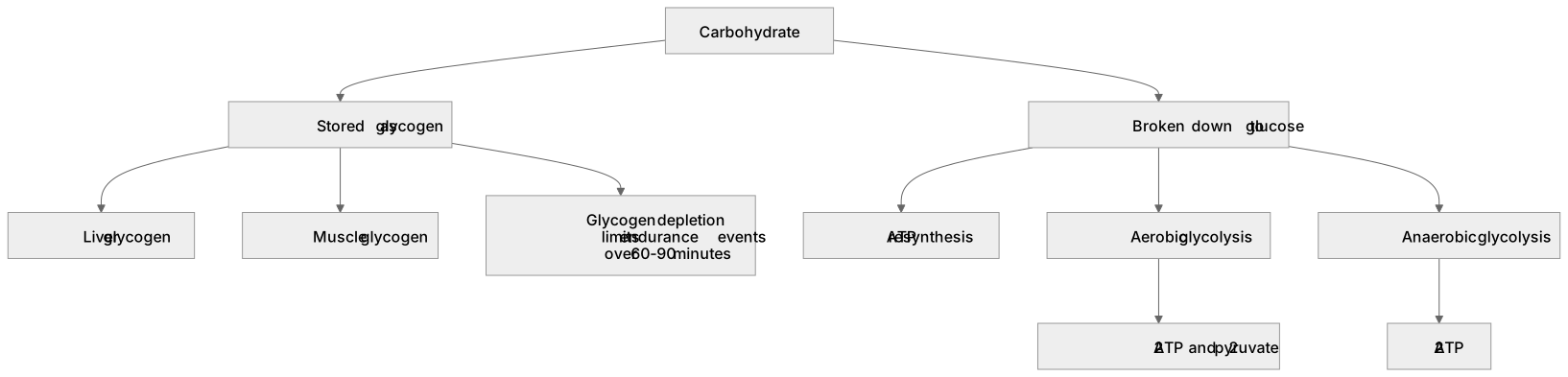
Carbohydrate is the body's preferred fuel for exercise, stored as glycogen in the liver and muscles and broken down to glucose for ATP resynthesis.
Checked against the AQA 7582 specification (opens in a new tab) on .
- Point 2 of 6
- 4 key terms
Study notes
From the checked teaching notes for this specification point.
The idea
Carbohydrate is the body's preferred fuel for exercise, stored as glycogen in the liver and muscles and broken down to glucose for ATP resynthesis. It provides approximately 17 kJ (about 4 kcal) per gram. During aerobic glycolysis, one glucose molecule yields a net gain of 2 ATP and 2 pyruvate; anaerobic glycolysis yields 2 ATP per glucose. Glycogen depletion limits performance in endurance events lasting more than about 60–90 minutes. Athletes manipulate intake before, during and after exercise to maintain blood glucose and replenish stores.
For example: A marathon runner may consume 30–60 g of carbohydrate per hour during a race.
What earns the marks
- Carbohydrate is the body's preferred fuel for exercise, stored as glycogen in the liver and muscles.
- Aerobic glycolysis yields a net gain of 2 ATP and 2 pyruvate per glucose molecule, while anaerobic glycolysis yields 2 ATP.
- Glycogen depletion limits performance in endurance events lasting more than about 60–90 minutes.
- Athletes manipulate carbohydrate intake before, during and after exercise to maintain blood glucose and replenish stores.
Common mistakes and how to put them right
Misunderstanding fatigue mechanisms: stating glycogen depletion causes fatigue in 60–90 seconds, when it actually limits endurance events lasting 60–90 minutes; short-term fatigue is due to acidosis or phosphocreatine depletion.
Misunderstanding energy yield: assuming carbohydrate provides 4 kcal per gram but failing to recognise this is equivalent to approximately 17 kJ per gram (1 kcal = 4.184 kJ).
Misunderstanding storage locations: assuming glycogen is stored only in the liver, whereas it is stored in both liver and muscle, with muscle glycogen used locally and liver glycogen maintaining blood glucose.
Exam tips
- Learn the energy yield of carbohydrate in both kJ and kcal, and be ready to identify either unit in a multiple-choice option.
- Distinguish between the roles of liver glycogen (blood glucose maintenance) and muscle glycogen (local fuel for contraction).
- Remember that glycogen depletion is a limiting factor for prolonged endurance exercise (over 60 minutes), not short, high-intensity sprints.
Try the lesson
The start of the Diet and nutrition and their effect on physical activity and performance: Carbohydrate. lesson, made from checked teaching notes for this specification point.
Have a go first
In which form is carbohydrate stored in the muscles and liver of a well-fed performer?
Listen
Carbohydrate is the body's preferred fuel for exercise, stored as glycogen in the liver and muscles and broken down to glucose for ATP resynthesis. It provides approximately 17 kJ (about 4 kcal) per gram. During aerobic glycolysis, one glucose molecule yields a net gain of 2 ATP and 2 pyruvate; anaerobic glycolysis yields 2 ATP per glucose. Glycogen depletion limits performance in endurance events lasting more than about 60–90 minutes. Athletes manipulate intake before, during and after exercise to maintain blood glucose and replenish stores. For example, a marathon runner may consume 30–60 g of carbohydrate per hour during a race. A strong answer earns marks for these points. Carbohydrate is the body's preferred fuel for exercise, stored as glycogen in the liver and muscles. Aerobic glycolysis yields a net gain of 2 ATP and 2 pyruvate per glucose molecule, while anaerobic glycolysis yields 2 ATP. Glycogen depletion limits performance in endurance events lasting more than about 60–90 minutes. Athletes manipulate carbohydrate intake before, during and after exercise to maintain blood glucose and replenish stores. Exam tip: Learn the energy yield of carbohydrate in both kJ and kcal, and be ready to identify either unit in a multiple-choice option.
See it
Key words
Say what each word means before you turn the card.
Glycogen
Try answering aloud or in your head before turning the card.
Glycolysis
Try answering aloud or in your head before turning the card.
Glycogen depletion
Try answering aloud or in your head before turning the card.
Carbohydrate intake
Try answering aloud or in your head before turning the card.
See every definition
- Glycogen
- The storage form of carbohydrate in the liver and muscles, broken down to glucose for ATP resynthesis.
- Glycolysis
- The breakdown of glucose yielding a net gain of 2 ATP and 2 pyruvate aerobically, or 2 ATP anaerobically.
- Glycogen depletion
- A limiting factor for performance in endurance events lasting more than about 60–90 minutes.
- Carbohydrate intake
- Manipulated by athletes before, during and after exercise to maintain blood glucose and replenish stores.
Label the diagram
Some boxes have lost their names. Pick the right name for each number.
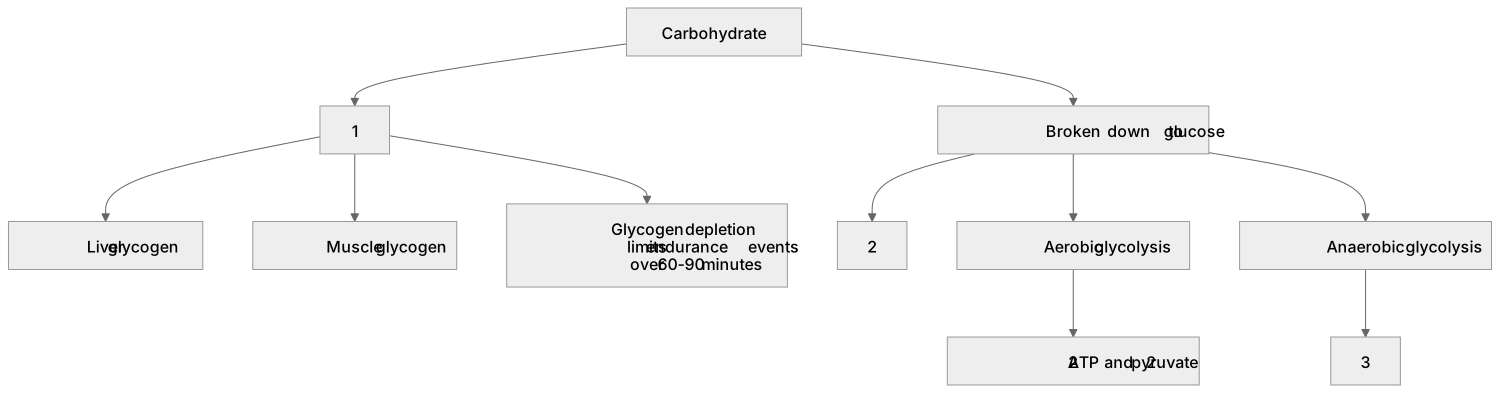
1Box 1
2Box 2
3Box 3
There is more to this lesson
The full lesson goes on to check your understanding and help you earn the marks. Create a free account to carry on, with your progress saved.
A week of Premium from your first lesson · Then the free plan continues · No card, no charge
Test your understanding of Diet and nutrition and their effect on physical activity and performance: Carbohydrate.
Active recall beats re-reading. Take an instant quiz now to test what you’ve learned and lock it into long-term memory.
A week of Premium from your first lesson · Then the free plan continues · No card, no charge