AQA · A-Level · Physical Education
Course version: 7582 · Version from Sept 2016
Creatine, sodium bicarbonate, caffeine, Glycogen loading.
Full specification wording
Diet and nutrition and their effect on physical activity and performance: Creatine, sodium bicarbonate, caffeine, Glycogen loading.
This topic covers four ergogenic aids: creatine, sodium bicarbonate, caffeine and glycogen loading.
Checked against the AQA 7582 specification (opens in a new tab) on .
- Point 6 of 6
- 4 key terms
Study notes
From the checked teaching notes for this specification point.
The idea
This topic covers four ergogenic aids: creatine, sodium bicarbonate, caffeine and glycogen loading. Creatine increases phosphocreatine stores, aiding short, explosive efforts such as sprint starts or repeated jumps. Sodium bicarbonate acts as a buffer, neutralising hydrogen ions that lower muscle pH during high-intensity work, so it can delay fatigue in events lasting roughly one to several minutes. Caffeine is a stimulant that can reduce perceived exertion and increase alertness, benefiting endurance and some team sports. Glycogen loading raises muscle glycogen before endurance events by tapering training while increasing carbohydrate intake, extending time to exhaustion. Each aid has evidence-based benefits, side effects and legal or ethical considerations, and effects vary with dose, timing, individual response and event demands.
What earns the marks
- Creatine increases phosphocreatine stores, supporting ATP resynthesis during short, explosive efforts such as sprinting or jumping.
- Sodium bicarbonate buffers hydrogen ions, reducing the acidity that contributes to fatigue in high-intensity exercise lasting about one to several minutes.
- Caffeine is a stimulant that can lower perceived exertion and improve alertness, benefiting endurance performance and some team-sport activities.
- Glycogen loading raises muscle glycogen stores before endurance events by tapering training and increasing carbohydrate intake, delaying fatigue.
- Each aid has side effects and legal or ethical considerations, and effectiveness depends on dose, timing, individual response and the demands of the event.
Common mistakes and how to put them right
Misunderstanding: creatine directly provides energy for endurance events.
Put it right: Creatine increases phosphocreatine stores, which support short, explosive efforts, not prolonged aerobic performance.
Misunderstanding: sodium bicarbonate works by increasing oxygen delivery.
Put it right: It acts as a buffer, neutralising hydrogen ions that lower muscle pH during high-intensity work.
Misunderstanding: caffeine is banned in all sport.
Put it right: Caffeine is permitted by WADA at all times, though it remains a stimulant with side effects and individual variability.
Misunderstanding: glycogen loading means eating more protein.
Put it right: Glycogen loading involves tapering training while increasing carbohydrate intake to raise muscle glycogen stores.
Exam tips
- Link each aid to the specific energy system or fatigue mechanism it targets, such as phosphocreatine for creatine or buffering for sodium bicarbonate.
- Use precise terms like phosphocreatine, hydrogen ions, perceived exertion and muscle glycogen rather than vague phrases like 'gives energy'.
- When evaluating, consider dose, timing, individual response, side effects and the legal or ethical context of each aid.
Try the lesson
The start of the Diet and nutrition and their effect on physical activity and performance: Creatine, sodium bicarbonate, caffeine, Glycogen loading. lesson, made from checked teaching notes for this specification point.
Have a go first
A sprinter takes a creatine supplement to support training. Which effect does creatine have on the performer?
Listen
This topic covers four ergogenic aids: creatine, sodium bicarbonate, caffeine and glycogen loading. Creatine increases phosphocreatine stores, aiding short, explosive efforts such as sprint starts or repeated jumps. Sodium bicarbonate acts as a buffer, neutralising hydrogen ions that lower muscle pH during high-intensity work, so it can delay fatigue in events lasting roughly one to several minutes. Caffeine is a stimulant that can reduce perceived exertion and increase alertness, benefiting endurance and some team sports. Glycogen loading raises muscle glycogen before endurance events by tapering training while increasing carbohydrate intake, extending time to exhaustion. Each aid has evidence-based benefits, side effects and legal or ethical considerations, and effects vary with dose, timing, individual response and event demands. A strong answer earns marks for these points. Creatine increases phosphocreatine stores, supporting ATP resynthesis during short, explosive efforts such as sprinting or jumping. Sodium bicarbonate buffers hydrogen ions, reducing the acidity that contributes to fatigue in high-intensity exercise lasting about one to several minutes. Caffeine is a stimulant that can lower perceived exertion and improve alertness, benefiting endurance performance and some team-sport activities. Glycogen loading raises muscle glycogen stores before endurance events by tapering training and increasing carbohydrate intake, delaying fatigue. A common slip: Misunderstanding: creatine directly provides energy for endurance events. Instead, creatine increases phosphocreatine stores, which support short, explosive efforts, not prolonged aerobic performance. Exam tip: Link each aid to the specific energy system or fatigue mechanism it targets, such as phosphocreatine for creatine or buffering for sodium bicarbonate.
See it
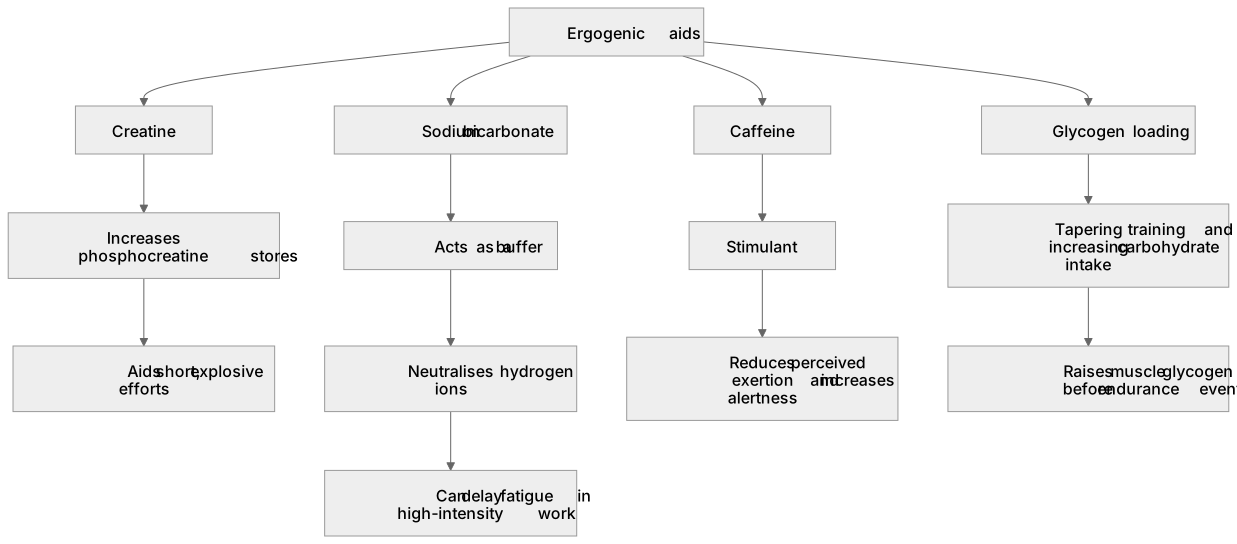
Key words
Say what each word means before you turn the card.
Creatine
Try answering aloud or in your head before turning the card.
Sodium bicarbonate
Try answering aloud or in your head before turning the card.
Caffeine
Try answering aloud or in your head before turning the card.
Glycogen loading
Try answering aloud or in your head before turning the card.
See every definition
- Creatine
- Increases phosphocreatine stores, supporting ATP resynthesis during short, explosive efforts such as sprinting or jumping.
- Sodium bicarbonate
- Acts as a buffer, neutralising hydrogen ions that lower muscle pH during high-intensity work, so it can delay fatigue in events lasting roughly one to several minutes.
- Caffeine
- A stimulant that can reduce perceived exertion and increase alertness, benefiting endurance and some team sports.
- Glycogen loading
- Raises muscle glycogen before endurance events by tapering training while increasing carbohydrate intake, extending time to exhaustion.
Label the diagram
Some boxes have lost their names. Pick the right name for each number.
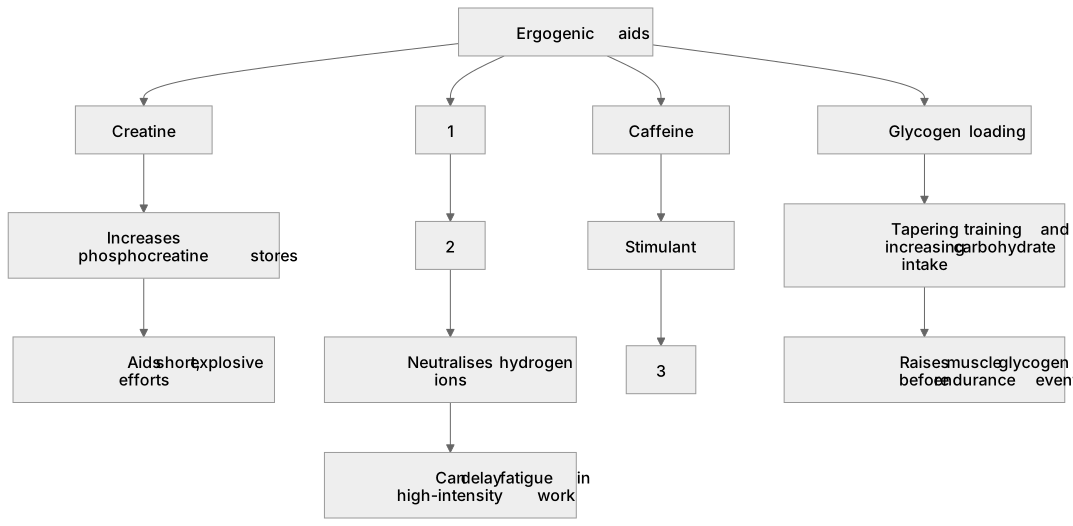
1Box 1
2Box 2
3Box 3
There is more to this lesson
The full lesson goes on to check your understanding and help you earn the marks. Create a free account to carry on, with your progress saved.
A week of Premium from your first lesson · Then the free plan continues · No card, no charge
Test your understanding of Diet and nutrition and their effect on physical activity and performance: Creatine, sodium bicarbonate, caffeine, Glycogen loading.
Active recall beats re-reading. Take an instant quiz now to test what you’ve learned and lock it into long-term memory.
A week of Premium from your first lesson · Then the free plan continues · No card, no charge