AQA · A-Level · Physical Education
Course version: 7582 · Version from Sept 2016
Projectile motion: Factors affecting horizontal displacement of projectiles.
Horizontal displacement of a projectile is the horizontal distance it travels from release or projection to landing.
Checked against the AQA 7582 specification (opens in a new tab) on .
- Point 1 of 4
- 4 key terms
Study notes
From the checked teaching notes for this specification point.
The idea
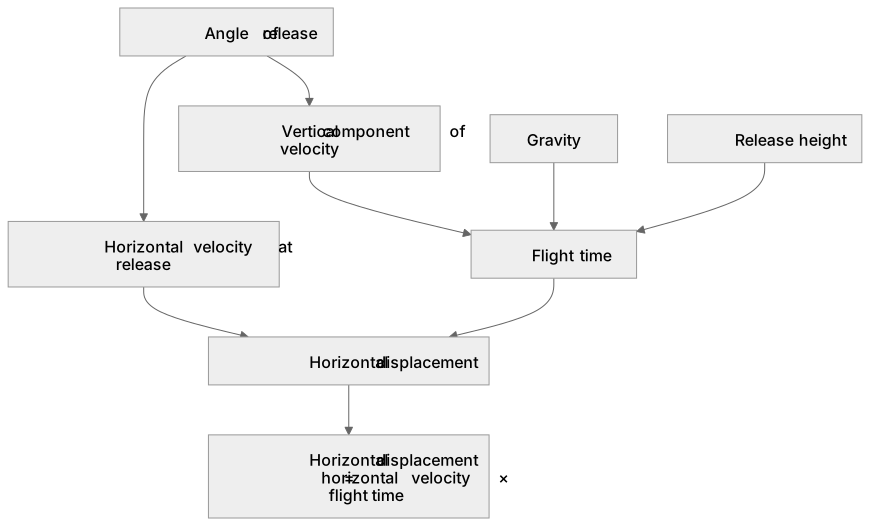
Horizontal displacement of a projectile is the horizontal distance it travels from release or projection to landing. It depends on the horizontal velocity at release, the time the projectile spends in the air, and the angle of release. For a projectile released and landing at the same height, horizontal displacement equals horizontal velocity × flight time. Flight time is determined by the vertical component of velocity and gravity: a larger vertical component or a greater release height increases time in the air. The angle of release affects how the initial velocity splits into horizontal and vertical components. In many sporting situations, such as a shot put or long jump, the optimum angle is less than 45° because release height and the need for horizontal speed reduce the ideal angle.
What earns the marks
- Horizontal displacement is the horizontal distance a projectile travels from release to landing.
- Horizontal displacement equals horizontal velocity multiplied by flight time.
- Horizontal velocity at release affects how far the projectile travels horizontally in a given time.
- Flight time depends on the vertical component of velocity, gravity and release height.
- The angle of release determines the split of initial velocity into horizontal and vertical components.
- In sport, the optimum angle of release is often less than 45° because of release height and the need to maximise horizontal velocity.
Common mistakes and how to put them right
Thinking horizontal velocity changes during flight.
Put it right: In the absence of air resistance, horizontal velocity remains constant, so horizontal displacement depends on that constant velocity and the time in the air.
Assuming 45° is always the best angle of release.
Put it right: When release height is above landing height, or when horizontal speed is important, the optimum angle is often less than 45°.
Confusing horizontal and vertical components.
Put it right: The vertical component affects flight time, while the horizontal component affects how far the projectile travels horizontally.
Believing gravity acts horizontally.
Put it right: Gravity acts vertically downwards, so it changes vertical velocity but not horizontal velocity.
Exam tips
- Identify the horizontal velocity and the flight time before calculating or explaining horizontal displacement.
- Explain how release angle changes the horizontal and vertical components of the initial velocity.
- Use sporting examples such as shot put or long jump to show why the optimum angle may be less than 45°.
Try the lesson
The start of the Projectile motion: Factors affecting horizontal displacement of projectiles. lesson, made from checked teaching notes for this specification point.
Have a go first
A ball is released horizontally from a fixed height with a horizontal velocity of 6 m/s and travels through the air for 2 s before landing. Ignoring air resistance, what is the horizontal displacement of the ball?
Listen
Horizontal displacement of a projectile is the horizontal distance it travels from release or projection to landing. It depends on the horizontal velocity at release, the time the projectile spends in the air, and the angle of release. For a projectile released and landing at the same height, horizontal displacement equals horizontal velocity × flight time. Flight time is determined by the vertical component of velocity and gravity: a larger vertical component or a greater release height increases time in the air. The angle of release affects how the initial velocity splits into horizontal and vertical components. In many sporting situations, such as a shot put or long jump, the optimum angle is less than 45° because release height and the need for horizontal speed reduce the ideal angle. A strong answer earns marks for these points. Horizontal displacement is the horizontal distance a projectile travels from release to landing. Horizontal displacement equals horizontal velocity multiplied by flight time. Horizontal velocity at release affects how far the projectile travels horizontally in a given time. Flight time depends on the vertical component of velocity, gravity and release height. Exam tip: Identify the horizontal velocity and the flight time before calculating or explaining horizontal displacement.
See it
Key words
Say what each word means before you turn the card.
Horizontal displacement
Try answering aloud or in your head before turning the card.
Horizontal velocity
Try answering aloud or in your head before turning the card.
Flight time
Try answering aloud or in your head before turning the card.
Angle of release
Try answering aloud or in your head before turning the card.
See every definition
- Horizontal displacement
- The horizontal distance a projectile travels from release or projection to landing.
- Horizontal velocity
- The velocity at release that affects how far the projectile travels horizontally in a given time.
- Flight time
- The time the projectile spends in the air, determined by the vertical component of velocity and gravity.
- Angle of release
- The angle that determines how the initial velocity splits into horizontal and vertical components.
Label the diagram
Some boxes have lost their names. Pick the right name for each number.
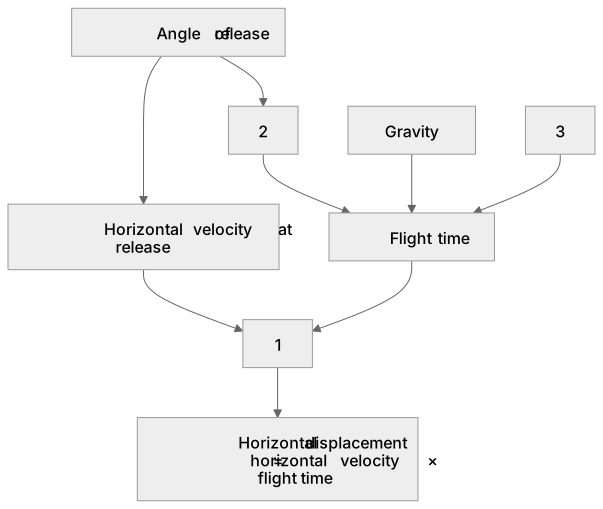
1Box 1
2Box 2
3Box 3
There is more to this lesson
The full lesson goes on to check your understanding and help you earn the marks. Create a free account to carry on, with your progress saved.
A week of Premium from your first lesson · Then the free plan continues · No card, no charge
Test your understanding of Projectile motion: Factors affecting horizontal displacement of projectiles.
Active recall beats re-reading. Take an instant quiz now to test what you’ve learned and lock it into long-term memory.
A week of Premium from your first lesson · Then the free plan continues · No card, no charge