AQA · A-Level · Physical Education
Course version: 7582 · Version from Sept 2016
The neural and chemical regulation of pulmonary ventilation during…
Full specification wording
Respiratory system: The neural and chemical regulation of pulmonary ventilation during physical activity and sport.
Pulmonary ventilation is regulated by neural and chemical mechanisms that adjust breathing rate and depth during physical activity and sport.
Checked against the AQA 7582 specification (opens in a new tab) on .
- Point 10 of 17
- 2 key terms
Study notes
From the checked teaching notes for this specification point.
The idea
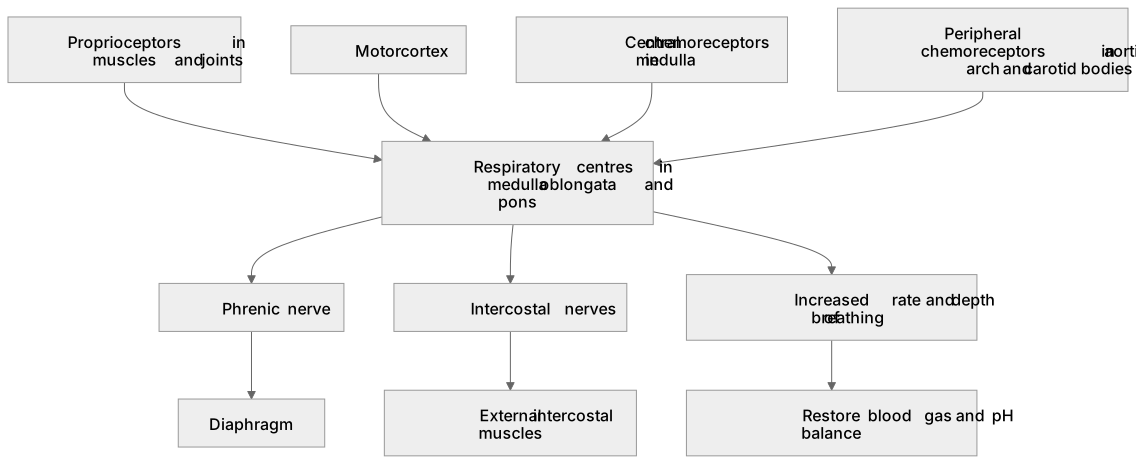
Pulmonary ventilation is regulated by neural and chemical mechanisms that adjust breathing rate and depth during physical activity and sport. Neural control originates in the respiratory centres of the medulla oblongata and pons, which send impulses via the phrenic nerve to the diaphragm and via intercostal nerves to the external intercostal muscles. During exercise, proprioceptors in muscles and joints and the motor cortex stimulate these centres, increasing ventilation before and during movement. Chemical regulation involves chemoreceptors: central chemoreceptors in the medulla detect a rise in carbon dioxide, which lowers blood pH, while peripheral chemoreceptors in the aortic arch and carotid bodies detect falls in oxygen and rises in carbon dioxide. These signals increase the rate and depth of breathing to restore blood gas and pH balance.
What earns the marks
- Neural control of pulmonary ventilation originates in the respiratory centres of the medulla oblongata and pons.
- Impulses travel via the phrenic nerve to the diaphragm and via intercostal nerves to the external intercostal muscles.
- During physical activity, proprioceptors in muscles and joints and the motor cortex stimulate the respiratory centres to increase ventilation.
- Central chemoreceptors in the medulla detect a rise in carbon dioxide, which lowers blood pH and stimulates increased ventilation.
- Peripheral chemoreceptors in the aortic arch and carotid bodies detect falls in oxygen and rises in carbon dioxide and stimulate increased ventilation.
- Chemical regulation adjusts the rate and depth of breathing to restore blood gas and pH balance during and after exercise.
Common mistakes and how to put them right
Thinking that breathing is controlled only by the lungs.
Put it right: The respiratory centres in the medulla oblongata and pons control breathing, with the lungs acting as effectors.
Confusing the roles of central and peripheral chemoreceptors.
Put it right: Central chemoreceptors in the medulla are mainly sensitive to carbon dioxide and pH, while peripheral chemoreceptors in the aortic arch and carotid bodies respond to oxygen, carbon dioxide and pH.
Believing that oxygen is the main stimulus for breathing at rest.
Put it right: Carbon dioxide is the primary chemical stimulus for ventilation at rest, with oxygen becoming more important during intense exercise.
Ignoring neural input from proprioceptors and the motor cortex.
Put it right: These provide feed-forward stimulation that increases ventilation at the onset of exercise.
Exam tips
- When asked about regulation, separate your answer into neural and chemical mechanisms to ensure both are covered.
- Name the specific structures: medulla oblongata, pons, phrenic nerve, intercostal nerves, central chemoreceptors, peripheral chemoreceptors, aortic arch and carotid bodies.
- Link each receptor to the specific change it detects: carbon dioxide and pH for central chemoreceptors; oxygen, carbon dioxide and pH for peripheral chemoreceptors.
- Explain the effect on ventilation: increased rate and depth of breathing to restore blood gas and pH balance.
Try the lesson
The start of the Respiratory system: The neural and chemical regulation of pulmonary ventilation during physical activity and sport. lesson, made from checked teaching notes for this specification point.
Have a go first
Which chemical change in the blood is detected by chemoreceptors and causes an increase in the rate and depth of pulmonary ventilation during exercise?
Listen
Pulmonary ventilation is regulated by neural and chemical mechanisms that adjust breathing rate and depth during physical activity and sport. Neural control originates in the respiratory centres of the medulla oblongata and pons, which send impulses via the phrenic nerve to the diaphragm and via intercostal nerves to the external intercostal muscles. During exercise, proprioceptors in muscles and joints and the motor cortex stimulate these centres, increasing ventilation before and during movement. Chemical regulation involves chemoreceptors: central chemoreceptors in the medulla detect a rise in carbon dioxide, which lowers blood pH, while peripheral chemoreceptors in the aortic arch and carotid bodies detect falls in oxygen and rises in carbon dioxide. These signals increase the rate and depth of breathing to restore blood gas and pH balance. A strong answer earns marks for these points. Neural control of pulmonary ventilation originates in the respiratory centres of the medulla oblongata and pons. Impulses travel via the phrenic nerve to the diaphragm and via intercostal nerves to the external intercostal muscles. During physical activity, proprioceptors in muscles and joints and the motor cortex stimulate the respiratory centres to increase ventilation. Central chemoreceptors in the medulla detect a rise in carbon dioxide, which lowers blood pH and stimulates increased ventilation. A common slip: Thinking that breathing is controlled only by the lungs. Instead, the respiratory centres in the medulla oblongata and pons control breathing, with the lungs acting as effectors. Exam tip: When asked about regulation, separate your answer into neural and chemical mechanisms to ensure both are covered.
See it
Key words
Say what each word means before you turn the card.
Neural control of breathing
Try answering aloud or in your head before turning the card.
Exercise-induced changes in ventilation
Try answering aloud or in your head before turning the card.
See every definition
- Neural control of breathing
- Originates in the respiratory centres of the medulla oblongata and pons, which send impulses via the phrenic nerve to the diaphragm and via intercostal nerves to the external intercostal muscles.
- Exercise-induced changes in ventilation
- During exercise, proprioceptors in muscles and joints and the motor cortex stimulate the respiratory centres, increasing ventilation before and during movement.
Label the diagram
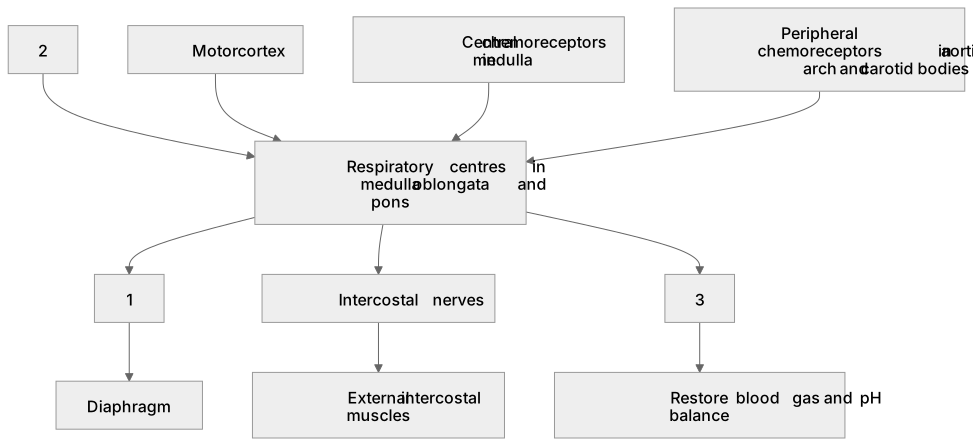
Some boxes have lost their names. Pick the right name for each number.
1Box 1
2Box 2
3Box 3
There is more to this lesson
The full lesson goes on to check your understanding and help you earn the marks. Create a free account to carry on, with your progress saved.
A week of Premium from your first lesson · Then the free plan continues · No card, no charge
Test your understanding of Respiratory system: The neural and chemical regulation of pulmonary ventilation during physical activity and sport.
Active recall beats re-reading. Take an instant quiz now to test what you’ve learned and lock it into long-term memory.
A week of Premium from your first lesson · Then the free plan continues · No card, no charge