AQA · A-Level · Physical Education
Course version: 7582 · Version from Sept 2016
Sociological theory applied to equal opportunities: Fitness benefits.
Fitness benefits are the improvements in the components of physical fitness that result from training.
Checked against the AQA 7582 specification (opens in a new tab) on .
- Point 17 of 18
- 3 key terms
Study notes
From the checked teaching notes for this specification point.
The idea
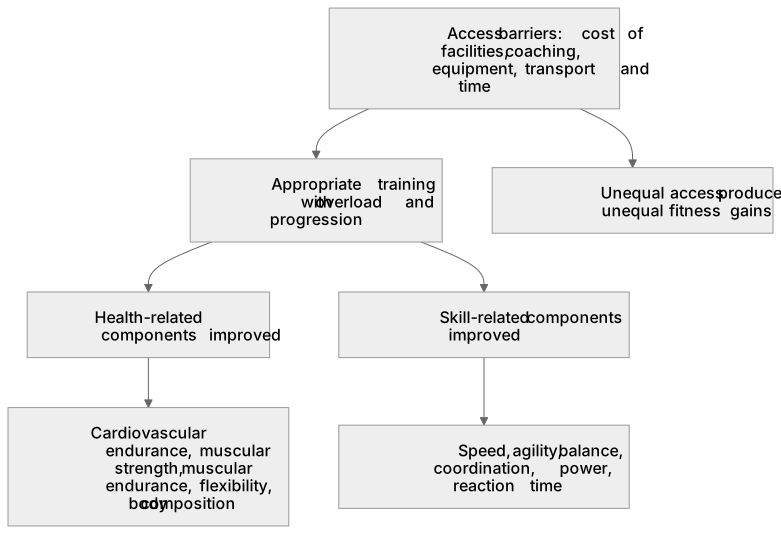
Fitness benefits are the improvements in the components of physical fitness that result from training. Health-related components include cardiovascular endurance, muscular strength, muscular endurance, flexibility and body composition; skill-related components include speed, agility, balance, coordination, power and reaction time. Regular, appropriately overloaded training improves these components, so a performer can work longer, lift more, move more efficiently and react faster. In this section you apply sociological theory to equal opportunities, so you must also consider who can access training: cost of facilities, coaching, equipment, transport and time all shape who gains fitness benefits. A useful method is to name one fitness component, state the training that improves it, then explain how access barriers affect whether a group can train.
What earns the marks
- Identifies health-related fitness components improved by training, such as cardiovascular endurance, muscular strength, muscular endurance, flexibility and body composition.
- Identifies skill-related fitness components improved by training, such as speed, agility, balance, coordination, power and reaction time.
- Explains that improvement depends on appropriate training, including overload and progression.
- Links fitness benefits to equal opportunities by explaining that cost, facilities, coaching, equipment, transport and time affect who can train and therefore who gains fitness benefits.
Common mistakes and how to put them right
Confusing fitness benefits with health benefits.
Put it right: Keep fitness components such as stamina or strength distinct from health outcomes such as reduced disease risk.
Naming only skill-related components and omitting health-related components, or the reverse.
Put it right: Cover both categories.
Assuming fitness improves without training.
Put it right: State that improvement requires appropriate training with overload and progression.
Ignoring access barriers; the correction is to explain that unequal access to facilities, coaching, equipment, transport and time produces unequal fitness gains.
Exam tips
- Check whether the stem asks about health-related or skill-related fitness before selecting an option.
- Eliminate options that describe health outcomes when the question asks about fitness components.
- Use the equal opportunities theme to reject options that assume everyone can access training equally.
Try the lesson
The start of the Sociological theory applied to equal opportunities: Fitness benefits. lesson, made from checked teaching notes for this specification point.
Have a go first
How would an interactionist sociologist most likely study the fitness benefits of a community sports programme aimed at underrepresented groups?
Listen
Fitness benefits are the improvements in the components of physical fitness that result from training. Health-related components include cardiovascular endurance, muscular strength, muscular endurance, flexibility and body composition; skill-related components include speed, agility, balance, coordination, power and reaction time. Regular, appropriately overloaded training improves these components, so a performer can work longer, lift more, move more efficiently and react faster. In this section you apply sociological theory to equal opportunities, so you must also consider who can access training: cost of facilities, coaching, equipment, transport and time all shape who gains fitness benefits. A useful method is to name one fitness component, state the training that improves it, then explain how access barriers affect whether a group can train. A strong answer earns marks for these points. Identifies health-related fitness components improved by training, such as cardiovascular endurance, muscular strength, muscular endurance, flexibility and body composition. Identifies skill-related fitness components improved by training, such as speed, agility, balance, coordination, power and reaction time. Explains that improvement depends on appropriate training, including overload and progression. Links fitness benefits to equal opportunities by explaining that cost, facilities, coaching, equipment, transport and time affect who can train and therefore who gains fitness benefits. A common slip: Confusing fitness benefits with health benefits. Instead, keep fitness components such as stamina or strength distinct from health outcomes such as reduced disease risk. Exam tip: Check whether the stem asks about health-related or skill-related fitness before selecting an option.
See it
Key words
Say what each word means before you turn the card.
Fitness benefits
Try answering aloud or in your head before turning the card.
Health-related components
Try answering aloud or in your head before turning the card.
Skill-related components
Try answering aloud or in your head before turning the card.
See every definition
- Fitness benefits
- The improvements in the components of physical fitness that result from training.
- Health-related components
- Cardiovascular endurance, muscular strength, muscular endurance, flexibility and body composition.
- Skill-related components
- Speed, agility, balance, coordination, power and reaction time.
Label the diagram
Some boxes have lost their names. Pick the right name for each number.
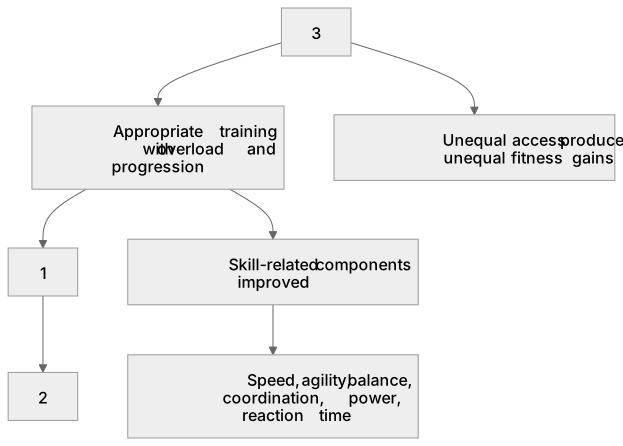
1Box 1
2Box 2
3Box 3
There is more to this lesson
The full lesson goes on to check your understanding and help you earn the marks. Create a free account to carry on, with your progress saved.
A week of Premium from your first lesson · Then the free plan continues · No card, no charge
Test your understanding of Sociological theory applied to equal opportunities: Fitness benefits.
Active recall beats re-reading. Take an instant quiz now to test what you’ve learned and lock it into long-term memory.
A week of Premium from your first lesson · Then the free plan continues · No card, no charge