AQA · GCSE · Physics
Course version: 8463 · Version from Sept 2016
Adding an iron core increases the strength of the magnetic field of a…
Full specification wording
Electromagnetism: Adding an iron core increases the strength of the magnetic field of a solenoid.
Slide an iron core inside a solenoid and the magnetic field gets much stronger for the same current.
Checked against the AQA 8463 specification (opens in a new tab) on .
- Point 6 of 9
Study notes
From the checked teaching notes for this specification point.
The idea
Slide an iron core inside a solenoid and the magnetic field gets much stronger for the same current. The core sits in the coil's field and becomes an induced magnet, so its own field adds to the coil's and the total field outside is far greater. Take the core out and the field is weaker again. Iron is the required material because it is magnetically soft: it is easily magnetised and easily demagnetised. This means it strengthens the field while the current flows and loses its magnetism the moment the current stops. Steel is rejected because it is magnetically hard and keeps its magnetism, leaving the electromagnet permanently on.
What earns the marks
- Stating that adding an iron core increases the strength of the magnetic field.
- Stating that removing the core makes the field weaker at the same current.
- Explaining that the core becomes an induced magnet so its field adds to that of the coil.
- Justifying iron as the material because it is easily magnetised and demagnetised.
Common mistakes and how to put them right
Saying the core increases the current in the coil, rather than increasing the magnetic field strength.
Choosing steel, nickel, or cobalt for the core.
Put it right: AQA specifically requires iron for electromagnets.
Claiming the core stores the magnetism so the electromagnet stays on after the current stops, instead of demagnetising.
Giving only 'easily magnetised' and leaving out 'and easily demagnetised' when explaining the choice of iron.
Exam tips
- Core questions want the specific material (iron) and the reason; the reason mark usually depends on the material mark.
- Write both halves of the reason: easily magnetised and easily demagnetised.
Try the lesson
The start of the Electromagnetism: Adding an iron core increases the strength of the magnetic field of a solenoid. lesson, made from checked teaching notes for this specification point.
Have a go first
What happens to the magnetic field of a solenoid when an iron core is placed inside it?
Listen
Slide an iron core inside a solenoid and the magnetic field gets much stronger for the same current. The core sits in the coil's field and becomes an induced magnet, so its own field adds to the coil's and the total field outside is far greater. Take the core out and the field is weaker again. Iron is the required material because it is magnetically soft: it is easily magnetised and easily demagnetised. This means it strengthens the field while the current flows and loses its magnetism the moment the current stops. Steel is rejected because it is magnetically hard and keeps its magnetism, leaving the electromagnet permanently on. A strong answer earns marks for these points. stating that adding an iron core increases the strength of the magnetic field. stating that removing the core makes the field weaker at the same current. explaining that the core becomes an induced magnet so its field adds to that of the coil. justifying iron as the material because it is easily magnetised and demagnetised. Exam tip: Core questions want the specific material (iron) and the reason; the reason mark usually depends on the material mark.
See it
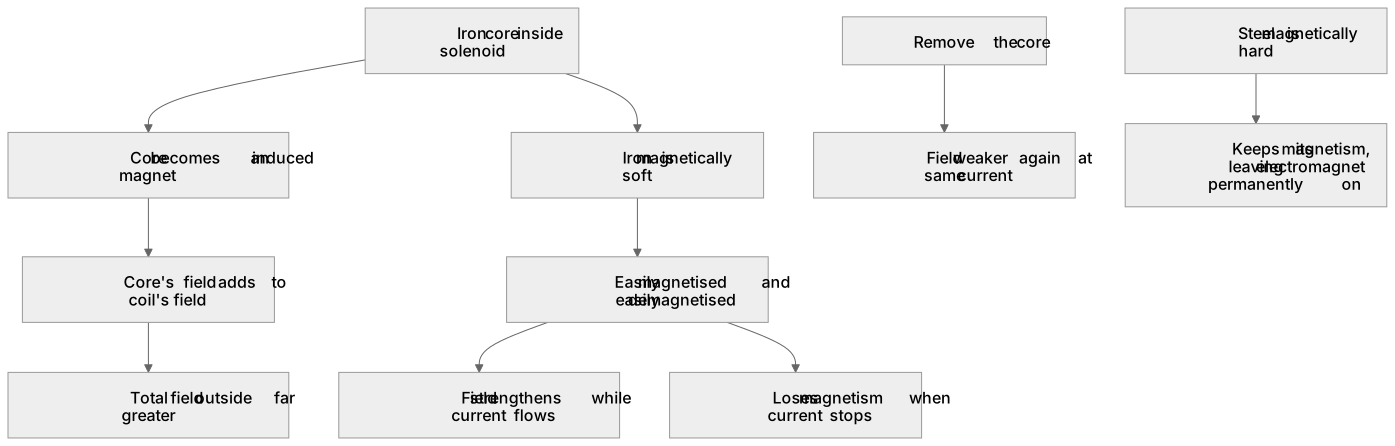
Label the diagram
Some boxes have lost their names. Pick the right name for each number.
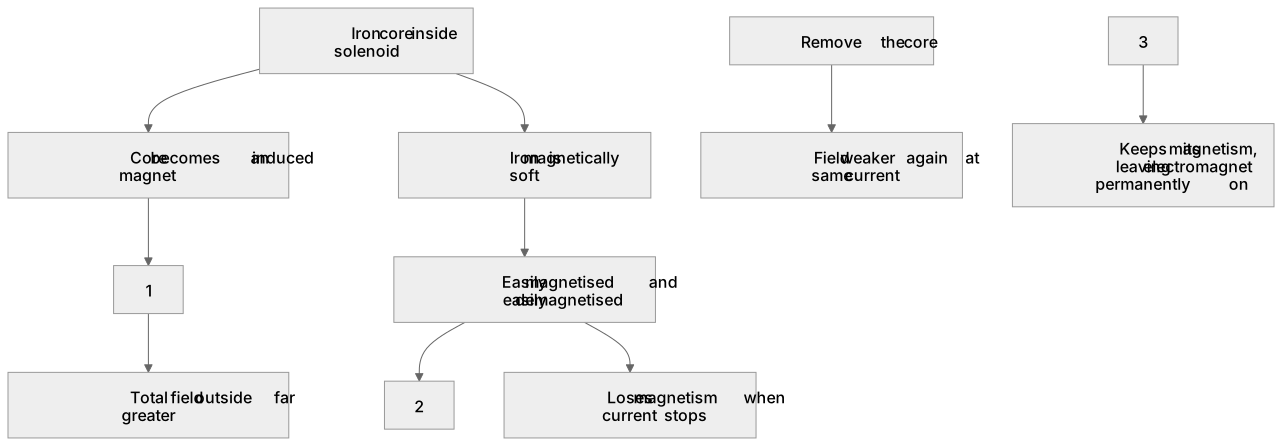
1Box 1
2Box 2
3Box 3
There is more to this lesson
The full lesson goes on to check your understanding and help you earn the marks. Create a free account to carry on, with your progress saved.
A week of Premium from your first lesson · Then the free plan continues · No card, no charge
Test your understanding of Electromagnetism: Adding an iron core increases the strength of the magnetic field of a solenoid.
Active recall beats re-reading. Take an instant quiz now to test what you’ve learned and lock it into long-term memory.
A week of Premium from your first lesson · Then the free plan continues · No card, no charge