AQA · GCSE · Physics
Course version: 8463 · Version from Sept 2016
The material that loses electrons is left with an equal positive charge.
Full specification wording
Static charge: The material that loses electrons is left with an equal positive charge.
Nothing positive ever moves.
Checked against the AQA 8463 specification (opens in a new tab) on .
- Point 4 of 9
- 4 key terms
Study notes
From the checked teaching notes for this specification point.
The idea
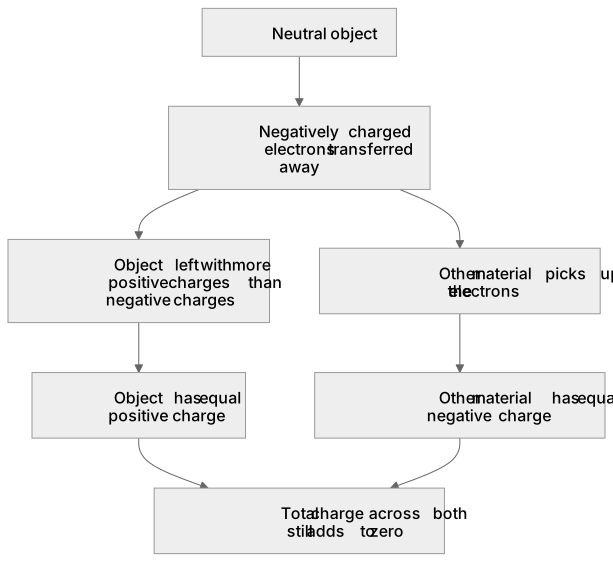
Nothing positive ever moves. An object becomes positively charged by losing electrons, which leaves its protons outnumbering its remaining electrons, so the overall charge is positive. The size of that positive charge is exactly equal to the negative charge picked up by the other material, because every electron that left one surface arrived on the other; charge is conserved, and the pair together is still neutral. This is the answer examiners want for 'explain how an uncharged object may become positively charged': negatively charged electrons are transferred away from the object. Given a cloth and a rod, say which lost electrons, say electrons are negative, then conclude that the cloth now has more positive charges than negative ones.
What earns the marks
- Negatively charged electrons being transferred away from the object.
- Electrons being negatively charged.
- The object then holding more positive charges than negative charges.
- The positive charge gained equalling the negative charge gained by the other material.
Common mistakes and how to put them right
Saying the object gains protons or gains positive charge.
Leaving out the word negatively before electrons, so the link to the positive result is never made.
Claiming the two charges differ in size because one material is bigger.
Asserting the object is positive without saying that anything moved.
Exam tips
- The conclusion mark depends on first saying that electrons left, so write the steps in that order.
- Use 'more positive charges than negative charges' rather than 'more protons', which examiners may only ignore.
- Check that the total charge across both objects still adds to zero.
Try the lesson
The start of the Static charge: The material that loses electrons is left with an equal positive charge. lesson, made from checked teaching notes for this specification point.
Have a go first
A polythene rod is rubbed with a cloth and the rod gains electrons. What charge does the cloth have after the rubbing?
Listen
Nothing positive ever moves. An object becomes positively charged by losing electrons, which leaves its protons outnumbering its remaining electrons, so the overall charge is positive. The size of that positive charge is exactly equal to the negative charge picked up by the other material, because every electron that left one surface arrived on the other; charge is conserved, and the pair together is still neutral. This is the answer examiners want for 'explain how an uncharged object may become positively charged': negatively charged electrons are transferred away from the object. Given a cloth and a rod, say which lost electrons, say electrons are negative, then conclude that the cloth now has more positive charges than negative ones. A strong answer earns marks for these points. negatively charged electrons being transferred away from the object. electrons being negatively charged. the object then holding more positive charges than negative charges. the positive charge gained equalling the negative charge gained by the other material. Exam tip: The conclusion mark depends on first saying that electrons left, so write the steps in that order.
See it
Key words
Say what each word means before you turn the card.
loss of electrons
Try answering aloud or in your head before turning the card.
positive charge
Try answering aloud or in your head before turning the card.
conservation of charge
Try answering aloud or in your head before turning the card.
equal and opposite
Try answering aloud or in your head before turning the card.
See every definition
- loss of electrons
- Negatively charged electrons are transferred away from the object, which leaves its protons outnumbering its remaining electrons.
- positive charge
- The material that loses electrons is left with an overall charge that is positive.
- conservation of charge
- Every electron that left one surface arrived on the other, so the pair together is still neutral.
- equal and opposite
- The size of the positive charge is exactly equal to the negative charge picked up by the other material.
Label the diagram
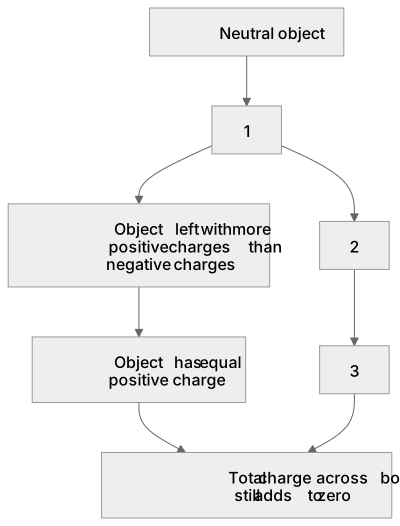
Some boxes have lost their names. Pick the right name for each number.
1Box 1
2Box 2
3Box 3
There is more to this lesson
The full lesson goes on to check your understanding and help you earn the marks. Create a free account to carry on, with your progress saved.
A week of Premium from your first lesson · Then the free plan continues · No card, no charge
Test your understanding of Static charge: The material that loses electrons is left with an equal positive charge.
Active recall beats re-reading. Take an instant quiz now to test what you’ve learned and lock it into long-term memory.
A week of Premium from your first lesson · Then the free plan continues · No card, no charge