AQA · GCSE · Physics
Course version: 8463 · Version from Sept 2016
The specific heat capacity of a substance is the amount of energy required…
Full specification wording
Temperature changes in a system and specific heat capacity: The specific heat capacity of a substance is the amount of energy required to raise the temperature of one kilogram of the substance by one degree Celsius.
Specific heat capacity is an energy price per kilogram per degree.
Checked against the AQA 8463 specification (opens in a new tab) on .
- Point 3 of 3
- 4 key terms
Study notes
From the checked teaching notes for this specification point.
The idea
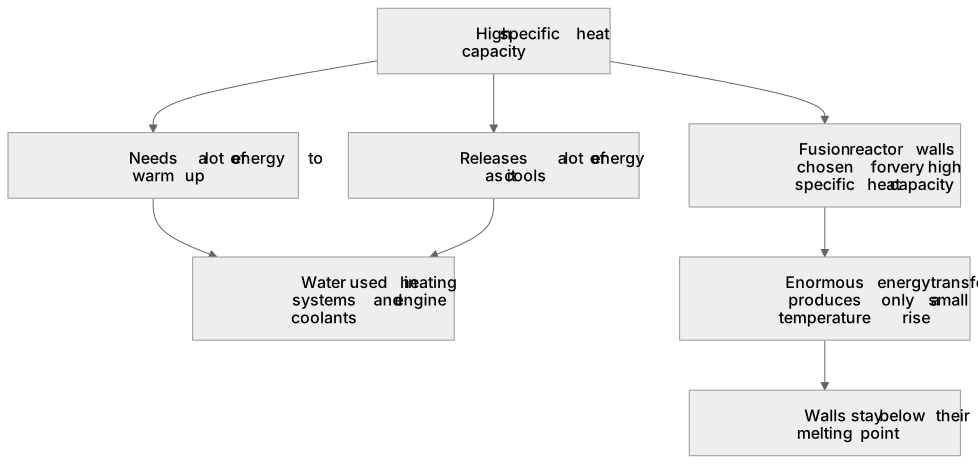
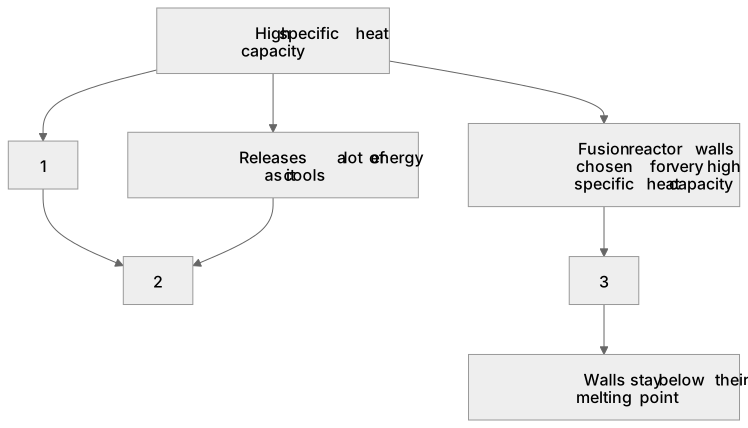
Specific heat capacity is an energy price per kilogram per degree. The word specific means per kilogram, and the unit J/kg °C carries the whole definition: joules, per kilogram, per degree Celsius. Water is unusually expensive at 4200 J/kg °C, while aluminium is about 900 and copper about 385. A high value has two consequences worth remembering: the substance needs a lot of energy to warm up, and it also releases a lot as it cools. That is why water is used in heating systems and engine coolants, and why the walls of a fusion reactor are chosen for a very high specific heat capacity, so that an enormous energy transfer produces only a small temperature rise and the walls stay below their melting point.
What earns the marks
- The energy needed to raise the temperature of one kilogram of the substance.
- Specifying a rise of one degree Celsius.
- Stating that a large energy transfer causes only a small temperature increase when the specific heat capacity is high.
- The consequence in context, for example that the reactor walls do not reach their melting point.
Common mistakes and how to put them right
Omitting the one kilogram and defining it as the energy to raise the temperature of the substance by one degree.
Writing the energy needed to raise the temperature to 1 °C rather than by 1 °C.
Giving the definition of specific latent heat, which involves no temperature change at all.
Assuming a high specific heat capacity means the material cannot store much energy.
Exam tips
- Learn the definition as three separate conditions: energy, one kilogram, one degree Celsius; each is worth checking before you move on.
- Quote the unit J/kg °C when asked for it; it reads the definition back to you if you forget the wording.
- In an application question, always finish with the effect on temperature, not just the value of c.
Try the lesson
The start of the Temperature changes in a system and specific heat capacity: The specific heat capacity of a substance is the amount of energy required to raise the temperature of one kilogram of the substance by one degree Celsius. lesson, made from checked teaching notes for this specification point.
Have a go first
The specific heat capacity of water is 4200 J/kg °C. What does this value tell you about water?
Listen
Specific heat capacity is an energy price per kilogram per degree. The word specific means per kilogram, and the unit J/kg °C carries the whole definition: joules, per kilogram, per degree Celsius. Water is unusually expensive at 4200 J/kg °C, while aluminium is about 900 and copper about 385. A high value has two consequences worth remembering: the substance needs a lot of energy to warm up, and it also releases a lot as it cools. That is why water is used in heating systems and engine coolants, and why the walls of a fusion reactor are chosen for a very high specific heat capacity, so that an enormous energy transfer produces only a small temperature rise and the walls stay below their melting point. A strong answer earns marks for these points. the energy needed to raise the temperature of one kilogram of the substance. specifying a rise of one degree Celsius. stating that a large energy transfer causes only a small temperature increase when the specific heat capacity is high. the consequence in context, for example that the reactor walls do not reach their melting point. Exam tip: Learn the definition as three separate conditions: energy, one kilogram, one degree Celsius; each is worth checking before you move on.
See it
Key words
Say what each word means before you turn the card.
specific heat capacity
Try answering aloud or in your head before turning the card.
J/kg °C
Try answering aloud or in your head before turning the card.
high specific heat capacity
Try answering aloud or in your head before turning the card.
material choice
Try answering aloud or in your head before turning the card.
See every definition
- specific heat capacity
- The amount of energy required to raise the temperature of one kilogram of a substance by one degree Celsius.
- J/kg °C
- The unit of specific heat capacity, carrying the whole definition: joules, per kilogram, per degree Celsius.
- high specific heat capacity
- A high value means the substance needs a lot of energy to warm up and also releases a lot as it cools.
- material choice
- Water is used in heating systems and engine coolants, and reactor walls are chosen for a very high specific heat capacity so an enormous energy transfer produces only a small temperature rise.
Label the diagram
Some boxes have lost their names. Pick the right name for each number.
1Box 1
2Box 2
3Box 3
There is more to this lesson
The full lesson goes on to check your understanding and help you earn the marks. Create a free account to carry on, with your progress saved.
A week of Premium from your first lesson · Then the free plan continues · No card, no charge
Test your understanding of Temperature changes in a system and specific heat capacity: The specific heat capacity of a substance is the amount of energy required to raise the temperature of one kilogram of the substance by one degree Celsius.
Active recall beats re-reading. Take an instant quiz now to test what you’ve learned and lock it into long-term memory.
A week of Premium from your first lesson · Then the free plan continues · No card, no charge