OCR · A-Level · Physics
Course version: H556 · Version from Sept 2015
Practical skills: (d) use of a stopwatch or light gates for timing
This skill covers selecting and using a stopwatch or light gates to measure time intervals.
Checked against the OCR H556 specification (opens in a new tab) on .
- Point 4 of 11
Study notes
From the checked teaching notes for this specification point.
The idea
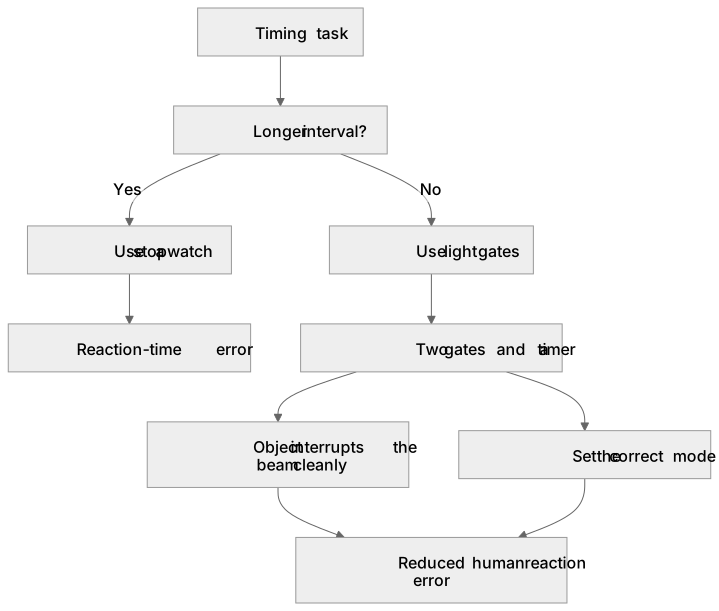
This skill covers selecting and using a stopwatch or light gates to measure time intervals. A stopwatch is suitable for longer intervals, such as the period of a pendulum, but has reaction-time error. Light gates measure the time an object takes to pass between two points, often using a timer connected to two gates; they are more precise for short intervals and reduce human reaction error. When using light gates, ensure the object interrupts the beam cleanly and that the gate is set to the correct mode (e.g. time, speed). For example, to measure the speed of a falling card, use two light gates a known distance apart and record the time between interruptions. The skill is assessed in practical contexts where you must choose the appropriate timing method and use it correctly.
What earns the marks
- Select a stopwatch for timing longer intervals where reaction time is a small fraction of the total time.
- Use light gates to measure short time intervals with reduced human reaction error.
- Set up light gates so that the object interrupts the beam and the timer records the correct interval.
- Read and record times with appropriate precision and units.
- Explain the advantages and limitations of each timing method.
Common mistakes and how to put them right
Using a stopwatch for very short intervals, leading to large percentage uncertainty.
Put it right: Use light gates or time multiple events.
Misaligning light gates so the object does not interrupt the beam properly.
Put it right: Adjust the gates so the object passes cleanly through.
Forgetting to reset the timer between measurements.
Put it right: Reset or zero the timer before each reading.
Assuming light gates measure speed directly without entering the distance.
Put it right: Check the mode and input the distance if required.
Exam tips
- State the timing method and explain why it is suitable for the interval measured.
- For light gates, describe the setup: two gates, a timer, and the object interrupting the beam.
- Include the resolution of the timer when discussing uncertainty.
Try the lesson
The start of the Practical skills: (d) use of a stopwatch or light gates for timing lesson, made from checked teaching notes for this specification point.
Listen
This skill covers selecting and using a stopwatch or light gates to measure time intervals. A stopwatch is suitable for longer intervals, such as the period of a pendulum, but has reaction-time error. Light gates measure the time an object takes to pass between two points, often using a timer connected to two gates; they are more precise for short intervals and reduce human reaction error. When using light gates, ensure the object interrupts the beam cleanly and that the gate is set to the correct mode (e.g. time, speed). For example, to measure the speed of a falling card, use two light gates a known distance apart and record the time between interruptions. The skill is assessed in practical contexts where you must choose the appropriate timing method and use it correctly. A strong answer earns marks for these points. Select a stopwatch for timing longer intervals where reaction time is a small fraction of the total time. Use light gates to measure short time intervals with reduced human reaction error. Set up light gates so that the object interrupts the beam and the timer records the correct interval. Read and record times with appropriate precision and units. A common slip: Using a stopwatch for very short intervals, leading to large percentage uncertainty. Instead, use light gates or time multiple events. Exam tip: State the timing method and explain why it is suitable for the interval measured.
See it
Label the diagram
Some boxes have lost their names. Pick the right name for each number.
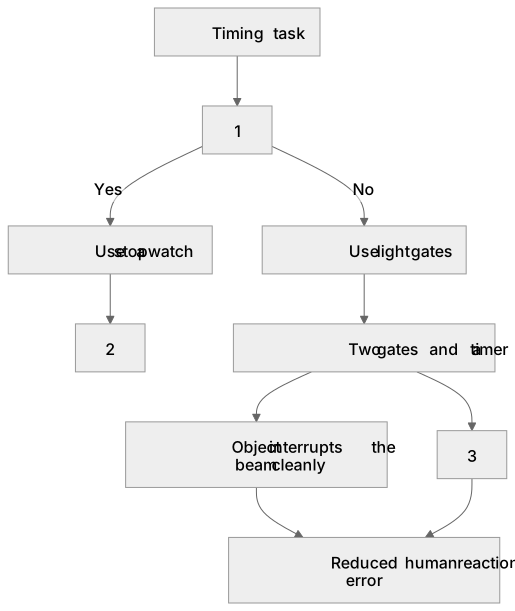
1Box 1
2Box 2
3Box 3
There is more to this lesson
The full lesson goes on to check your understanding and help you earn the marks. Create a free account to carry on, with your progress saved.
A week of Premium from your first lesson · Then the free plan continues · No card, no charge
Test your understanding of Practical skills: (d) use of a stopwatch or light gates for timing
Active recall beats re-reading. Take an instant quiz now to test what you’ve learned and lock it into long-term memory.
A week of Premium from your first lesson · Then the free plan continues · No card, no charge