AQA · A-Level · Psychology
Course version: 7182-2025 · Exams from 2027
The divisions of the nervous system: central and peripheral (somatic and…
Full specification wording
Biopsychology: The divisions of the nervous system: central and peripheral (somatic and autonomic).
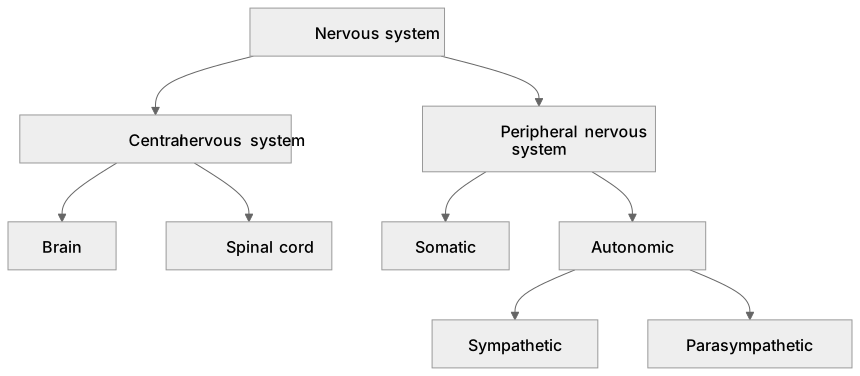
The nervous system is the body's fast, electrical messaging network, and the marks are in the branching diagram.
Checked against the AQA 7182-2025 specification (opens in a new tab) on .
- Point 1 of 6
- 4 key terms
Study notes
From the checked teaching notes for this specification point.
The idea
The nervous system is the body's fast, electrical messaging network, and the marks are in the branching diagram. The central nervous system is the brain plus the spinal cord: the brain is where conscious decisions are made, while the spinal cord relays messages up and down and runs reflexes without waiting for the brain. Everything outside those two structures is peripheral, and it divides twice. The somatic branch carries sensory information in from receptors and motor commands out to skeletal muscle, and it is under voluntary control. The autonomic branch is involuntary, governing organs and glands through a sympathetic division that arouses the body and a parasympathetic division that restores it. Strong answers place a structure, name its job, then apply it: a thumping heart before a performance is sympathetic, not somatic.
What earns the marks
- CNS identified as brain and spinal cord, with the brain as the centre of conscious awareness and the spinal cord relaying messages and mediating reflexes.
- PNS defined as everything outside the brain and spinal cord, transmitting messages to and from the CNS.
- Somatic branch: voluntary, carries sensory input from receptors and motor output to skeletal muscle.
- Autonomic branch: involuntary, controls internal organs and glands, subdivided into sympathetic and parasympathetic.
- Sympathetic described as arousing (heart rate up, digestion suppressed) and parasympathetic as returning the body to baseline.
- An example from the stem correctly allocated to a named division.
Common mistakes and how to put them right
Placing the autonomic nervous system inside the CNS.
Put it right: It is a branch of the peripheral nervous system, even though its control centres sit in the brain.
Saying the somatic system is sensory and the autonomic is motor.
Put it right: The somatic carries both sensory and motor pathways.
Treating sympathetic and parasympathetic as separate systems rather than the two divisions of the autonomic branch.
Drifting into hormones and glands, which belongs to the endocrine statement, and losing the neural detail the question asked for.
Exam tips
- An 'outline the divisions' answer is best written top down: CNS, then PNS, then somatic and autonomic, then sympathetic and parasympathetic, with one sentence of function each.
- In a scenario question, quote the bodily change described in the stem and label the division responsible for it, rather than describing the whole system again.
- Match the breadth of the response to the command word by naming each relevant division and briefly explaining its distinct function.
Try the lesson
The start of the Biopsychology: The divisions of the nervous system: central and peripheral (somatic and autonomic). lesson, made from checked teaching notes for this specification point.
Have a go first
Which of the following accurately describes the two main components of the central nervous system (CNS)?
Listen
The nervous system is the body's fast, electrical messaging network, and the marks are in the branching diagram. The central nervous system is the brain plus the spinal cord: the brain is where conscious decisions are made, while the spinal cord relays messages up and down and runs reflexes without waiting for the brain. Everything outside those two structures is peripheral, and it divides twice. The somatic branch carries sensory information in from receptors and motor commands out to skeletal muscle, and it is under voluntary control. The autonomic branch is involuntary, governing organs and glands through a sympathetic division that arouses the body and a parasympathetic division that restores it. Strong answers place a structure, name its job, then apply it: a thumping heart before a performance is sympathetic, not somatic. A strong answer earns marks for these points. CNS identified as brain and spinal cord, with the brain as the centre of conscious awareness and the spinal cord relaying messages and mediating reflexes. PNS defined as everything outside the brain and spinal cord, transmitting messages to and from the CNS. Somatic branch: voluntary, carries sensory input from receptors and motor output to skeletal muscle. Autonomic branch: involuntary, controls internal organs and glands, subdivided into sympathetic and parasympathetic. Exam tip: An 'outline the divisions' answer is best written top down: CNS, then PNS, then somatic and autonomic, then sympathetic and parasympathetic, with one sentence of function each.
See it
Key words
Say what each word means before you turn the card.
Central nervous system
Try answering aloud or in your head before turning the card.
Peripheral nervous system
Try answering aloud or in your head before turning the card.
Somatic branch
Try answering aloud or in your head before turning the card.
Autonomic branch
Try answering aloud or in your head before turning the card.
See every definition
- Central nervous system
- The brain plus the spinal cord, where the brain is where conscious decisions are made and the spinal cord relays messages and runs reflexes.
- Peripheral nervous system
- Everything outside the brain and spinal cord, transmitting messages to and from the central nervous system.
- Somatic branch
- Under voluntary control, carrying sensory information in from receptors and motor commands out to skeletal muscle.
- Autonomic branch
- Involuntary, governing organs and glands through a sympathetic division that arouses the body and a parasympathetic division that restores it.
Label the diagram
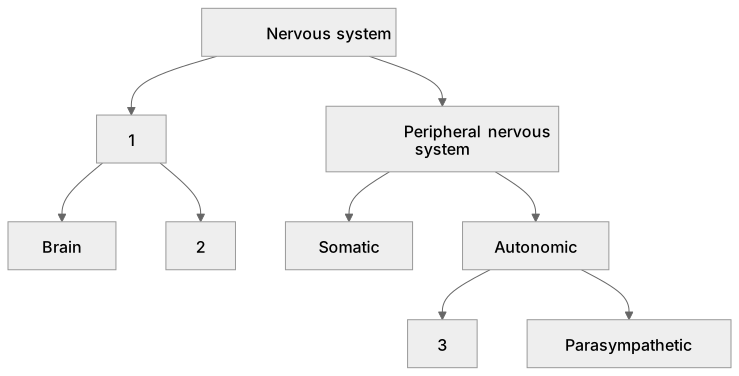
Some boxes have lost their names. Pick the right name for each number.
1Box 1
2Box 2
3Box 3
There is more to this lesson
The full lesson goes on to check your understanding and help you earn the marks. Create a free account to carry on, with your progress saved.
A week of Premium from your first lesson · Then the free plan continues · No card, no charge
Test your understanding of Biopsychology: The divisions of the nervous system: central and peripheral (somatic and autonomic).
Active recall beats re-reading. Take an instant quiz now to test what you’ve learned and lock it into long-term memory.
A week of Premium from your first lesson · Then the free plan continues · No card, no charge