AQA · A-Level · Psychology
Course version: 7182-2025 · Exams from 2027
Social sensitivity in psychological research.
Full specification wording
Issues and debates in Psychology: Social sensitivity in psychological research.
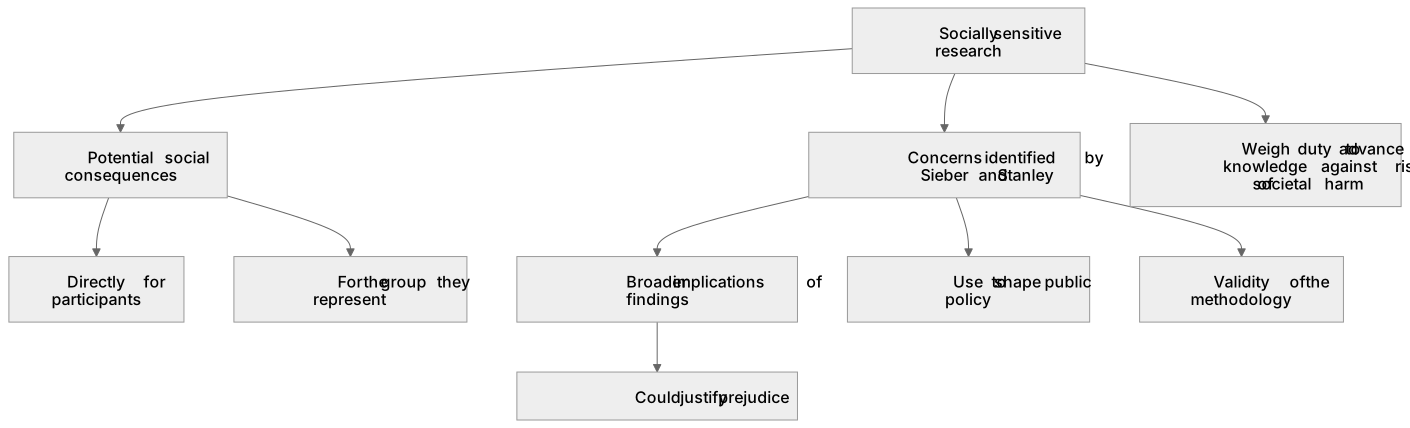
Socially sensitive research involves studies where there are potential social consequences or implications, either directly for the participants or for the group they represent.
Checked against the AQA 7182-2025 specification (opens in a new tab) on .
- Point 6 of 6
- 4 key terms
Study notes
From the checked teaching notes for this specification point.
The idea
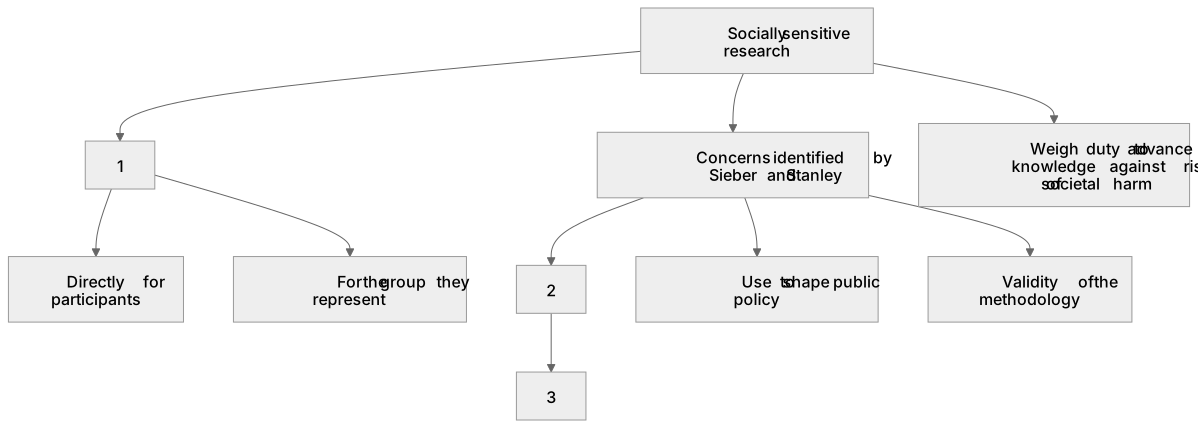
Socially sensitive research involves studies where there are potential social consequences or implications, either directly for the participants or for the group they represent. Sieber and Stanley identified key concerns researchers must address: the broader implications of the findings (which could justify prejudice), how the research might be used to shape public policy, and the validity of the methodology. For example, investigating a potential genetic basis for criminality or intelligence is highly socially sensitive, as findings could be misused to discriminate against specific demographic groups. Researchers must carefully weigh the ethical duty to advance knowledge against the risk of causing societal harm.
What earns the marks
- Define socially sensitive research as studies with potential consequences for participants or the broader groups they represent.
- Identify implications, such as the risk of findings giving scientific credibility to prejudice or discrimination.
- Explain the role of public policy, noting that governments may use socially sensitive findings to shape laws or allocate resources.
- Discuss the importance of validity, as poorly designed socially sensitive research can cause significant unwarranted harm if published.
Common mistakes and how to put them right
Confusing social sensitivity with general ethical issues like informed consent.
Put it right: Focus specifically on the broader societal impact and consequences for groups, rather than just individual participant ethics.
Arguing that socially sensitive research should never be conducted.
Put it right: Acknowledge that avoiding such research is a dereliction of duty; instead, researchers must manage the risks carefully.
Failing to provide a concrete example.
Put it right: Anchor explanations of social sensitivity to specific studies, such as Burt's research on intelligence or Bowlby's maternal deprivation hypothesis.
Exam tips
- Use Sieber and Stanley's framework (implications, public policy, validity) to structure extended answers on this topic.
- Always link the concept of social sensitivity back to the specific scenario or study provided in the stimulus material.
- Evaluate the topic by discussing the balance between the potential benefits of the research (e.g., reducing prejudice) and the risks of misuse.
Try the lesson
The start of the Issues and debates in Psychology: Social sensitivity in psychological research. lesson, made from checked teaching notes for this specification point.
Have a go first
According to Sieber and Stanley, which of the following best defines socially sensitive research?
Listen
Socially sensitive research involves studies where there are potential social consequences or implications, either directly for the participants or for the group they represent. Sieber and Stanley identified key concerns researchers must address: the broader implications of the findings (which could justify prejudice), how the research might be used to shape public policy, and the validity of the methodology. For example, investigating a potential genetic basis for criminality or intelligence is highly socially sensitive, as findings could be misused to discriminate against specific demographic groups. Researchers must carefully weigh the ethical duty to advance knowledge against the risk of causing societal harm. A strong answer earns marks for these points. Define socially sensitive research as studies with potential consequences for participants or the broader groups they represent. Identify implications, such as the risk of findings giving scientific credibility to prejudice or discrimination. Explain the role of public policy, noting that governments may use socially sensitive findings to shape laws or allocate resources. Discuss the importance of validity, as poorly designed socially sensitive research can cause significant unwarranted harm if published. A common slip: Confusing social sensitivity with general ethical issues like informed consent. Instead, Focus specifically on the broader societal impact and consequences for groups, rather than just individual participant ethics. Exam tip: Use Sieber and Stanley's framework (implications, public policy, validity) to structure extended answers on this topic.
See it
Key words
Say what each word means before you turn the card.
Socially sensitive research
Try answering aloud or in your head before turning the card.
Implications
Try answering aloud or in your head before turning the card.
Public policy
Try answering aloud or in your head before turning the card.
Validity
Try answering aloud or in your head before turning the card.
See every definition
- Socially sensitive research
- Studies where there are potential social consequences or implications, either directly for the participants or for the group they represent.
- Implications
- The broader implications of the findings, which could justify prejudice.
- Public policy
- How the research might be used to shape public policy.
- Validity
- The validity of the methodology, as poorly designed socially sensitive research can cause significant unwarranted harm if published.
Label the diagram
Some boxes have lost their names. Pick the right name for each number.
1Box 1
2Box 2
3Box 3
There is more to this lesson
The full lesson goes on to check your understanding and help you earn the marks. Create a free account to carry on, with your progress saved.
A week of Premium from your first lesson · Then the free plan continues · No card, no charge
Test your understanding of Issues and debates in Psychology: Social sensitivity in psychological research.
Active recall beats re-reading. Take an instant quiz now to test what you’ve learned and lock it into long-term memory.
A week of Premium from your first lesson · Then the free plan continues · No card, no charge