AQA · A-Level · Psychology
Course version: 7182-2025 · Exams from 2027
In answering questions on Issues and Debates in Psychology students will…
Full specification wording
Issues and options in Psychology: In answering questions on Issues and Debates in Psychology students will be expected to illustrate their answers with knowledge and understanding of topics studied elsewhere in the specification as appropriate.
Issues and Debates requires students to learn specific conceptual terminology, such as alpha and beta bias or hard and soft determinism, and apply it to topics studied elsewhere in the specification.
Checked against the AQA 7182-2025 specification (opens in a new tab) on .
- 4 key terms
Study notes
From the checked teaching notes for this specification point.
The idea
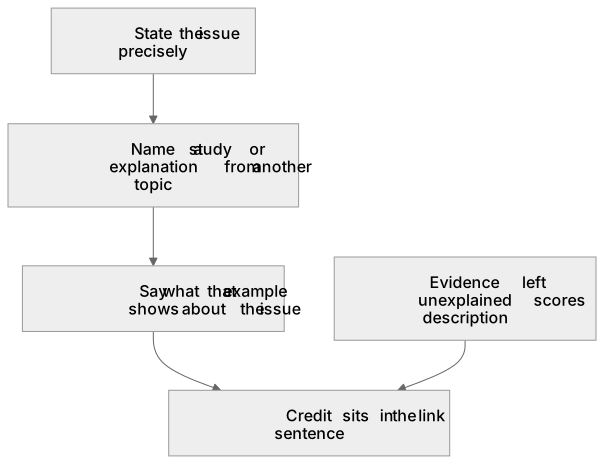
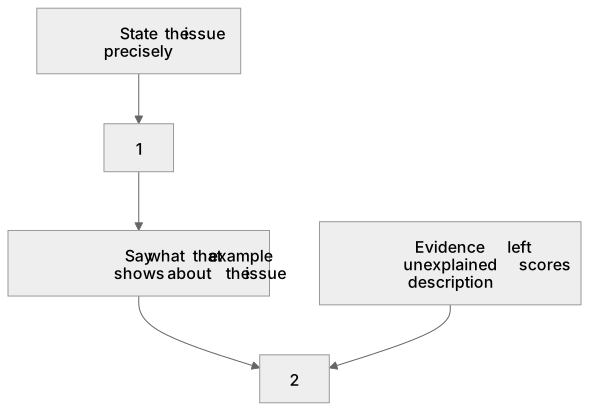
Issues and Debates requires students to learn specific conceptual terminology, such as alpha and beta bias or hard and soft determinism, and apply it to topics studied elsewhere in the specification. Marks come from how well research met in other topics is turned into evidence for a position. Work in three moves: state the issue precisely, name a study or explanation from another topic, then say what that example shows about the issue. Two sentences narrating Ainsworth's Strange Situation earn nothing until a third states that it is an imposed etic, an American measure applied to Japanese infants as though its criteria were universal. Build a bank of dual-use examples before the exam, because Milgram, Bowlby, Kohlberg, Gottesman's twin data and the MAOA gene can each be steered into several different debates.
What earns the marks
- Idiographic and nomothetic: the case studies of the patient known as HM and of Little Hans against Milgram's search for general laws of obedience, with the point that a single case can overturn a general claim.
Common mistakes and how to put them right
Retelling the study at length and leaving the debate implicit.
Put it right: A full account of Skinner's box procedure inside a free will essay earns nothing until it is stated that the conditioning evidence supports environmental determinism.
Swapping alpha and beta bias, or treating androcentrism as a separate category rather than the result of using male behaviour as the norm.
Reaching for the same one example in every answer, so that attachment research is made to carry gender bias, culture bias and determinism without being re-angled for each.
Saying determinism means behaviour is predictable with certainty, and then treating soft determinism as a compromise between free will and determinism.
Put it right: Soft determinism holds that behaviour is caused but that conscious choice operates within those causes.
Treating reductionism as a criticism in itself, when the lower level of explanation is usually the more scientific one and is what makes drug treatment possible.
Exam tips
- Issues and Debates is examined on Paper three in sixteen-mark essays. Avoid assuming a blanket split of six marks for knowledge and ten for evaluation; applied questions with a stem will allocate marks to application (AO2), so ensure you explicitly link your borrowed examples to the scenario.
- Aim for examples from at least two different parts of the course in one essay, ideally one from Paper one and one from an option, because that spread is what makes an answer read as synoptic.
- Where the question carries a stem, quote the stem's own wording as you apply the debate, for example naming the detail in a scenario that makes a piece of research socially sensitive.
- When asked to discuss, state which side the evidence favours and why instead of closing with the claim that both sides have a point.
- Keep the point of an example on the issue: in a culture bias answer the interest in Ainsworth is the method and the sample, not the attachment types themselves.
Try the lesson
The start of the Issues and options in Psychology: In answering questions on Issues and Debates in Psychology students will be expected to illustrate their answers with knowledge and understanding of topics studied elsewhere in the specification as appropriate. lesson, made from checked teaching notes for this specification point.
Have a go first
Which of the following issues and debates is most clearly illustrated by the explanation that obsessive-compulsive disorder (OCD) is caused by low levels of serotonin and specific genetic mutations?
Listen
Issues and Debates requires students to learn specific conceptual terminology, such as alpha and beta bias or hard and soft determinism, and apply it to topics studied elsewhere in the specification. Marks come from how well research met in other topics is turned into evidence for a position. Work in three moves: state the issue precisely, name a study or explanation from another topic, then say what that example shows about the issue. Two sentences narrating Ainsworth's Strange Situation earn nothing until a third states that it is an imposed etic, an American measure applied to Japanese infants as though its criteria were universal. Build a bank of dual-use examples before the exam, because Milgram, Bowlby, Kohlberg, Gottesman's twin data and the MAOA gene can each be steered into several different debates. A strong answer earns marks for these points. Illustration is analysis, not narration: one sentence naming the topic, the researcher and the finding, then a sentence saying what it demonstrates about the debate. The link sentence is where the credit sits, so evidence drawn from another topic and left unexplained scores as description. Gender bias: alpha bias exaggerates differences, as in Bowlby's monotropy and Freud's account of the weaker female superego; beta bias minimises or ignores them, as in Asch's 123 male students and Milgram's 40 American men, whose findings were generalised to everyone; androcentrism is the consequence of taking male behaviour as the standard, and it is not a third kind of bias. Culture bias: an imposed etic applies a measure built in one culture elsewhere, shown by Takahashi finding Japanese infants extremely distressed in the Strange Situation because they are rarely left alone; cultural relativism is the answer to it, and the diagnostic point that hearing the voice of an ancestor is normative in some cultures but counts towards a diagnosis of schizophrenia in Western manuals is the standard example. Free will and determinism: biological determinism through MAOA and the dopamine hypothesis, environmental determinism through Skinner and attachment through learning theory, psychic determinism through Freud, and soft determinism through Bandura's reciprocal determinism, where the person chooses within the limits their environment sets. Finish on the legal implication, that a hard determinist position makes moral responsibility difficult to defend. Exam tip: Issues and Debates is examined on Paper three in sixteen-mark essays. Avoid assuming a blanket split of six marks for knowledge and ten for evaluation; applied questions with a stem will allocate marks to application (AO2), so ensure you explicitly link your borrowed examples to the scenario.
See it
Key words
Say what each word means before you turn the card.
Alpha bias
Try answering aloud or in your head before turning the card.
Beta bias
Try answering aloud or in your head before turning the card.
Androcentrism
Try answering aloud or in your head before turning the card.
Imposed etic
Try answering aloud or in your head before turning the card.
See every definition
- Alpha bias
- Exaggerates differences, as in Bowlby's monotropy and Freud's account of the weaker female superego.
- Beta bias
- Minimises or ignores differences, as in Asch's 123 male students and Milgram's 40 American men, whose findings were generalised to everyone.
- Androcentrism
- The consequence of taking male behaviour as the standard, and it is not a third kind of bias.
- Imposed etic
- Applies a measure built in one culture elsewhere, shown by Takahashi finding Japanese infants extremely distressed in the Strange Situation because they are rarely left alone.
Label the diagram
Some boxes have lost their names. Pick the right name for each number.
1Box 1
2Box 2
There is more to this lesson
The full lesson goes on to check your understanding and help you earn the marks. Create a free account to carry on, with your progress saved.
A week of Premium from your first lesson · Then the free plan continues · No card, no charge
Test your understanding of Issues and options in Psychology: In answering questions on Issues and Debates in Psychology students will be expected to illustrate their answers with knowledge and understanding of topics studied elsewhere in the specification as appropriate.
Active recall beats re-reading. Take an instant quiz now to test what you’ve learned and lock it into long-term memory.
A week of Premium from your first lesson · Then the free plan continues · No card, no charge