AQA · GCSE · Psychology
Brain and neuropsychology
Dive into the biological machinery of the mind with this comprehensive guide to Brain and Neuropsychology. Understand how neural pathways, brain structures, and chemical messengers shape our behaviour, emotions, and learning, and discover how cognitive neuroscience reveals the living brain in action.
- 4 min read
- 3 worked examples
- 5 practice questions
- 6 key terms
Study Notes
Overview
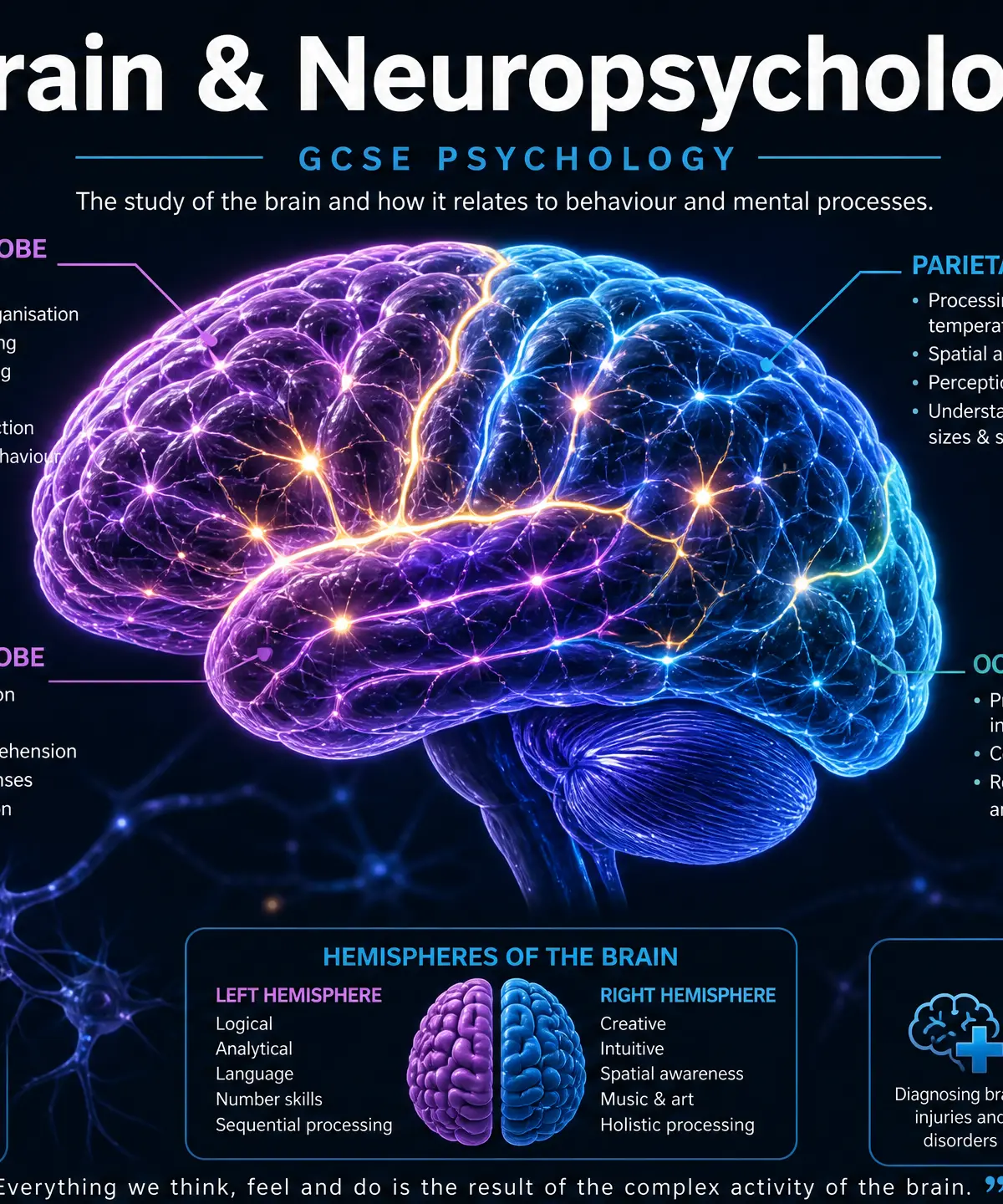
This study guide covers the biological basis of behaviour, a cornerstone of the GCSE Psychology specification. Examiners expect candidates to demonstrate a precise understanding of the nervous system's structure, the mechanics of synaptic transmission, and the specific functions of the brain's lobes. Historically, our understanding has shifted from observing brain damage post-mortem to viewing the living brain through advanced scanning techniques. You will need to accurately describe these processes and evaluate the methods used to study them, particularly focusing on cognitive neuroscience and the impact of neurological damage.

Divisions of the Nervous System
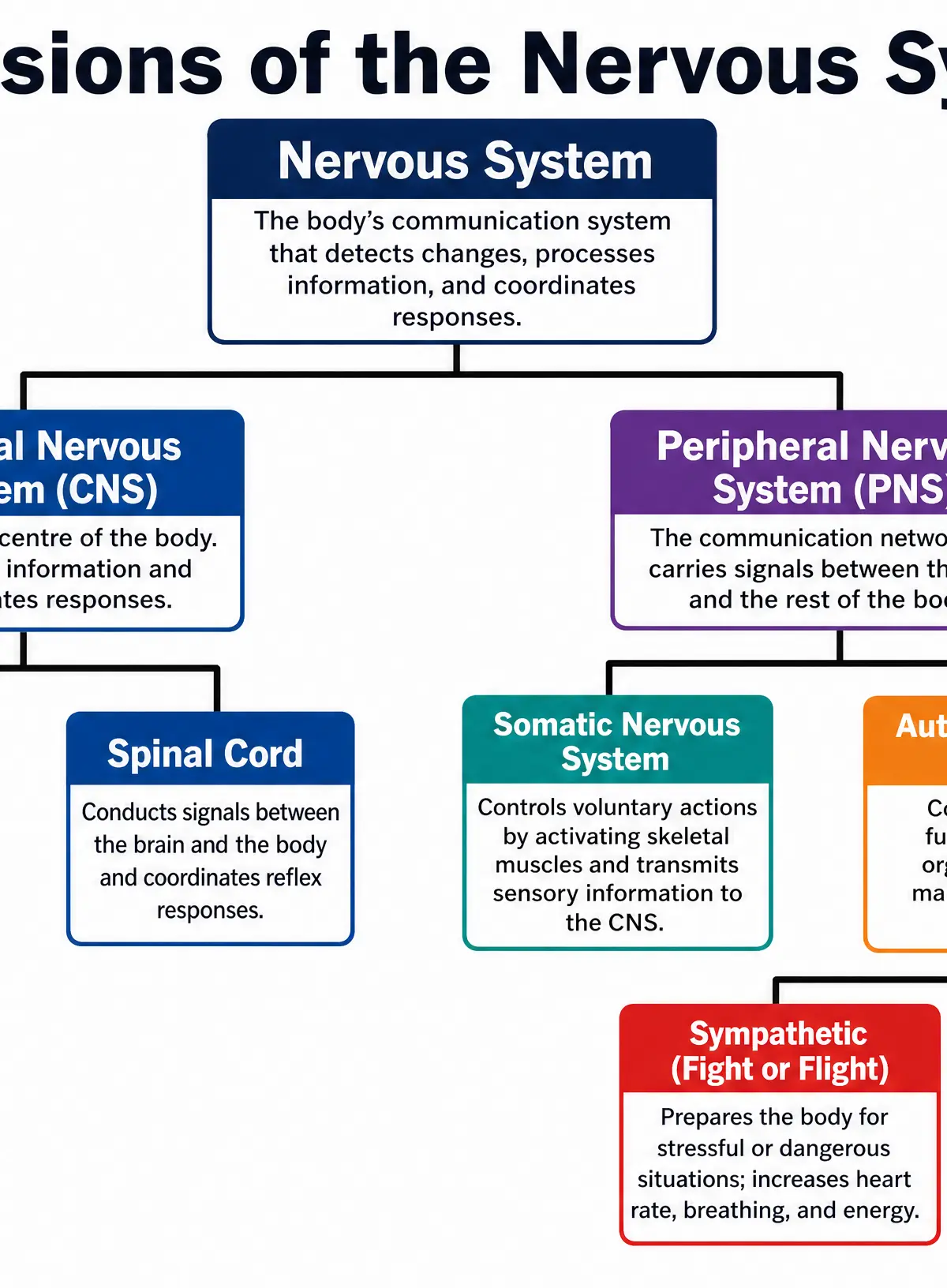
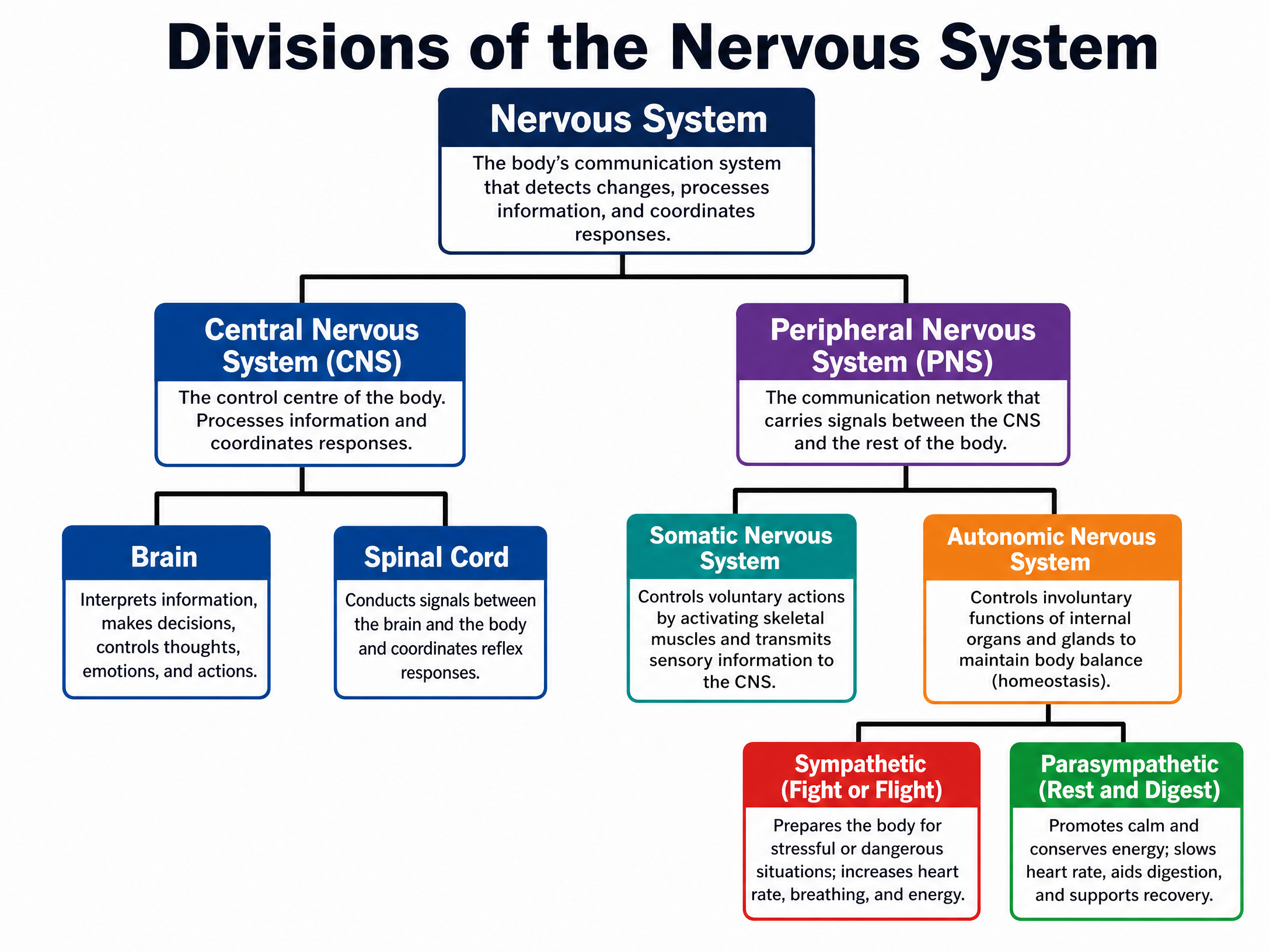
The nervous system is the body's primary communication network, divided into the Central Nervous System (CNS) and the Peripheral Nervous System (PNS).
Central Nervous System (CNS)
Comprising the brain and spinal cord, the CNS is the control centre. It processes sensory information and coordinates the body's responses.
Peripheral Nervous System (PNS)
The PNS connects the CNS to the rest of the body and is subdivided into:
- Somatic Nervous System: Controls voluntary actions (e.g., muscle movements) and transmits sensory information to the CNS.
- Autonomic Nervous System (ANS): Controls involuntary functions (e.g., heart rate, digestion). The ANS further divides into the Sympathetic (activates 'fight or flight') and Parasympathetic (promotes 'rest and digest') branches.
Neurons and Synaptic Transmission
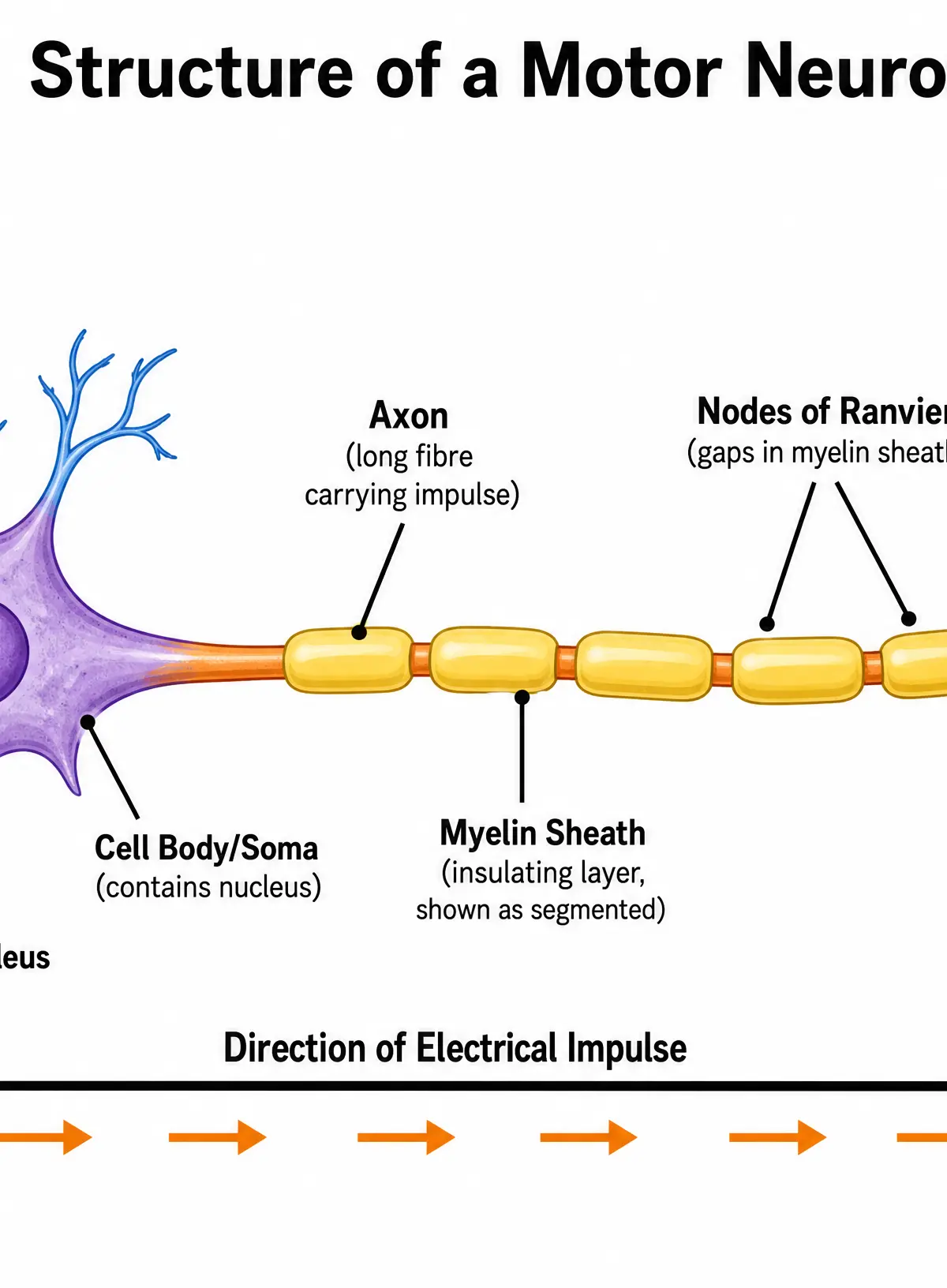
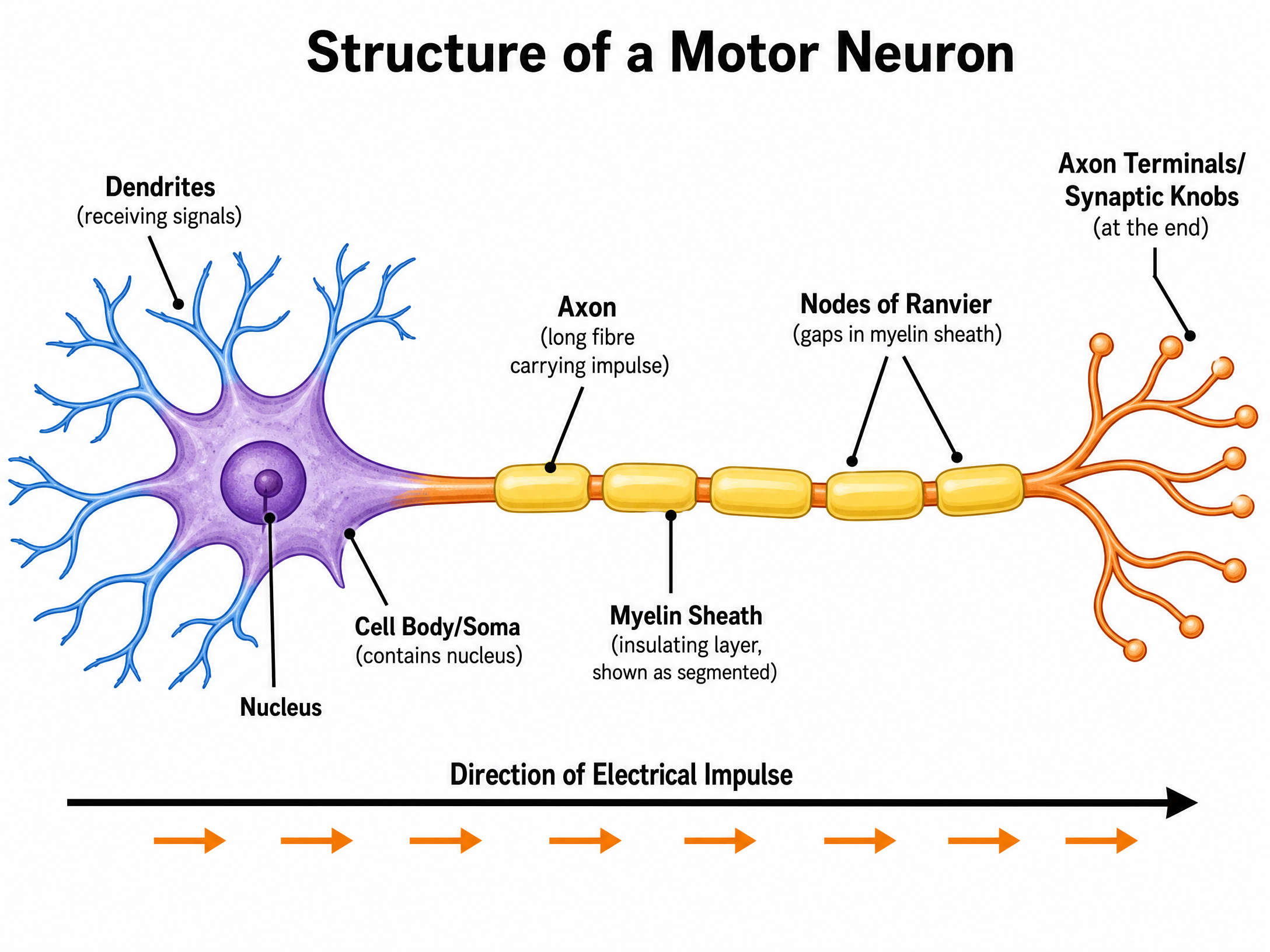
Neurons are the fundamental units of the nervous system. There are three main types:
- Sensory Neurons: Carry signals from receptors to the CNS.
- Relay Neurons: Connect sensory and motor neurons within the CNS.
- Motor Neurons: Carry signals from the CNS to effectors (muscles/glands).
Synaptic Transmission
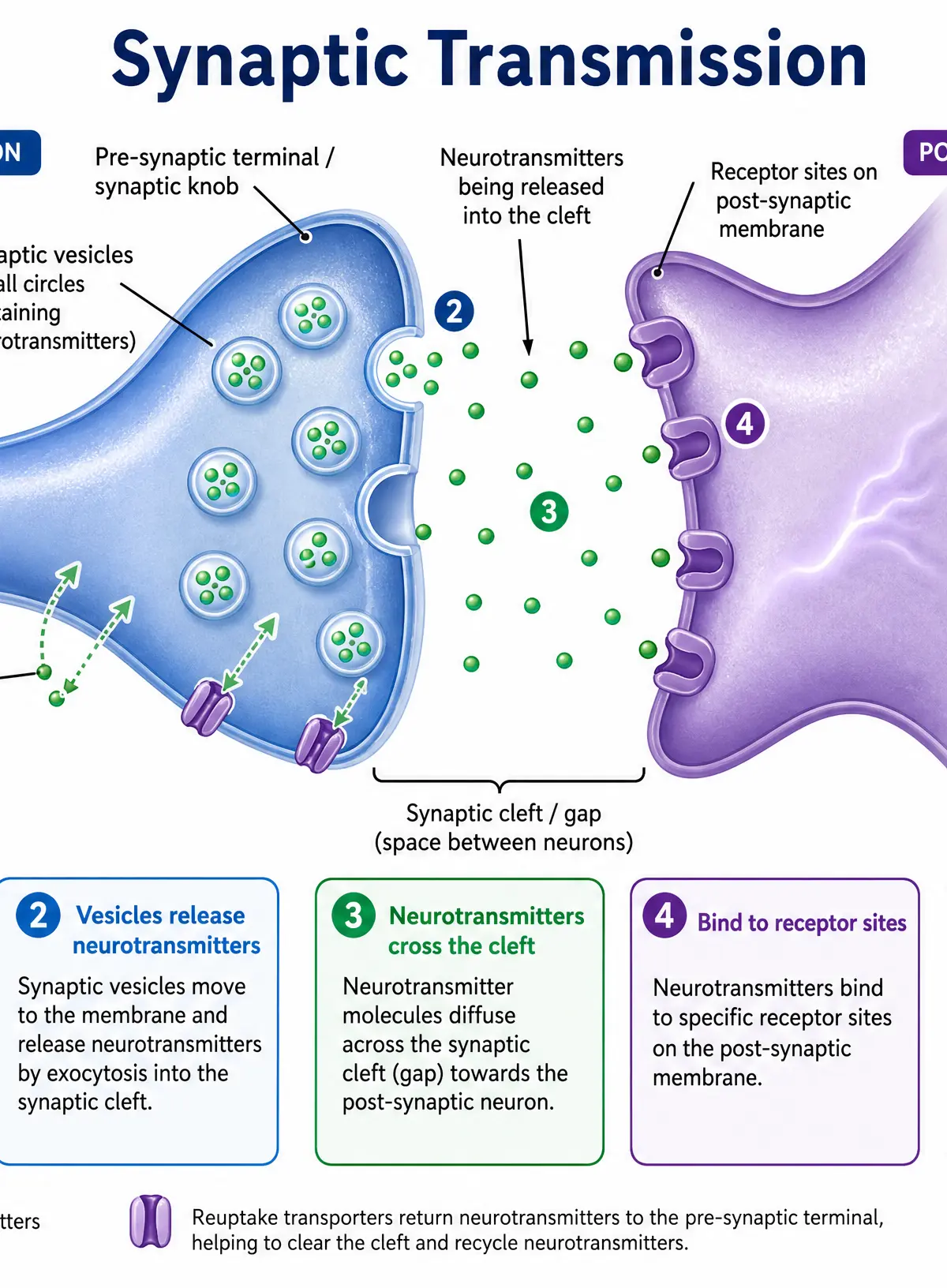
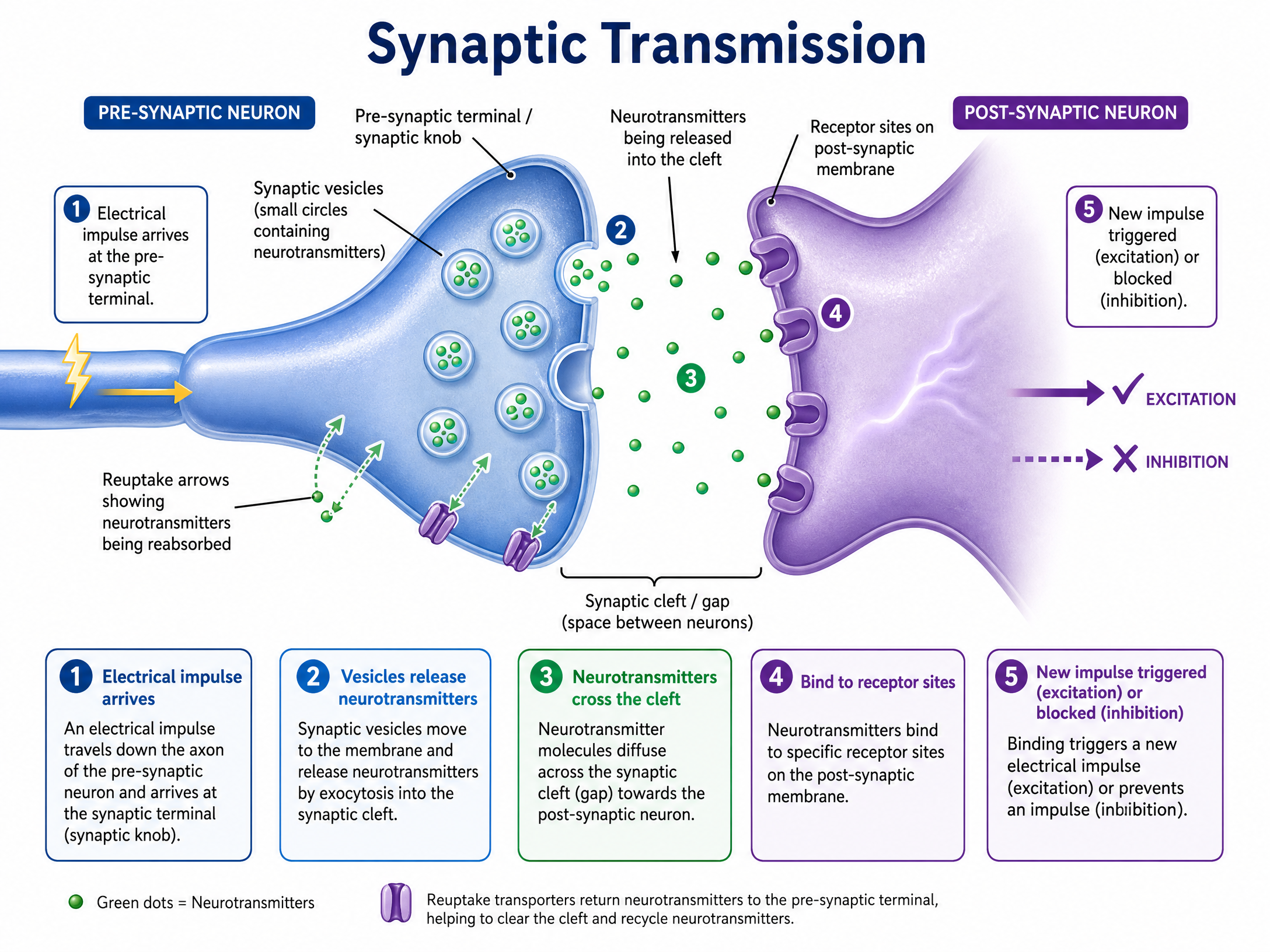
When an electrical impulse reaches the end of a neuron (the pre-synaptic terminal), it triggers the release of neurotransmitters from synaptic vesicles. These chemicals diffuse across the synaptic cleft and bind to receptor sites on the post-synaptic neuron. This binding can result in excitation (triggering a new impulse) or inhibition (preventing an impulse).
The Brain and Localisation of Function
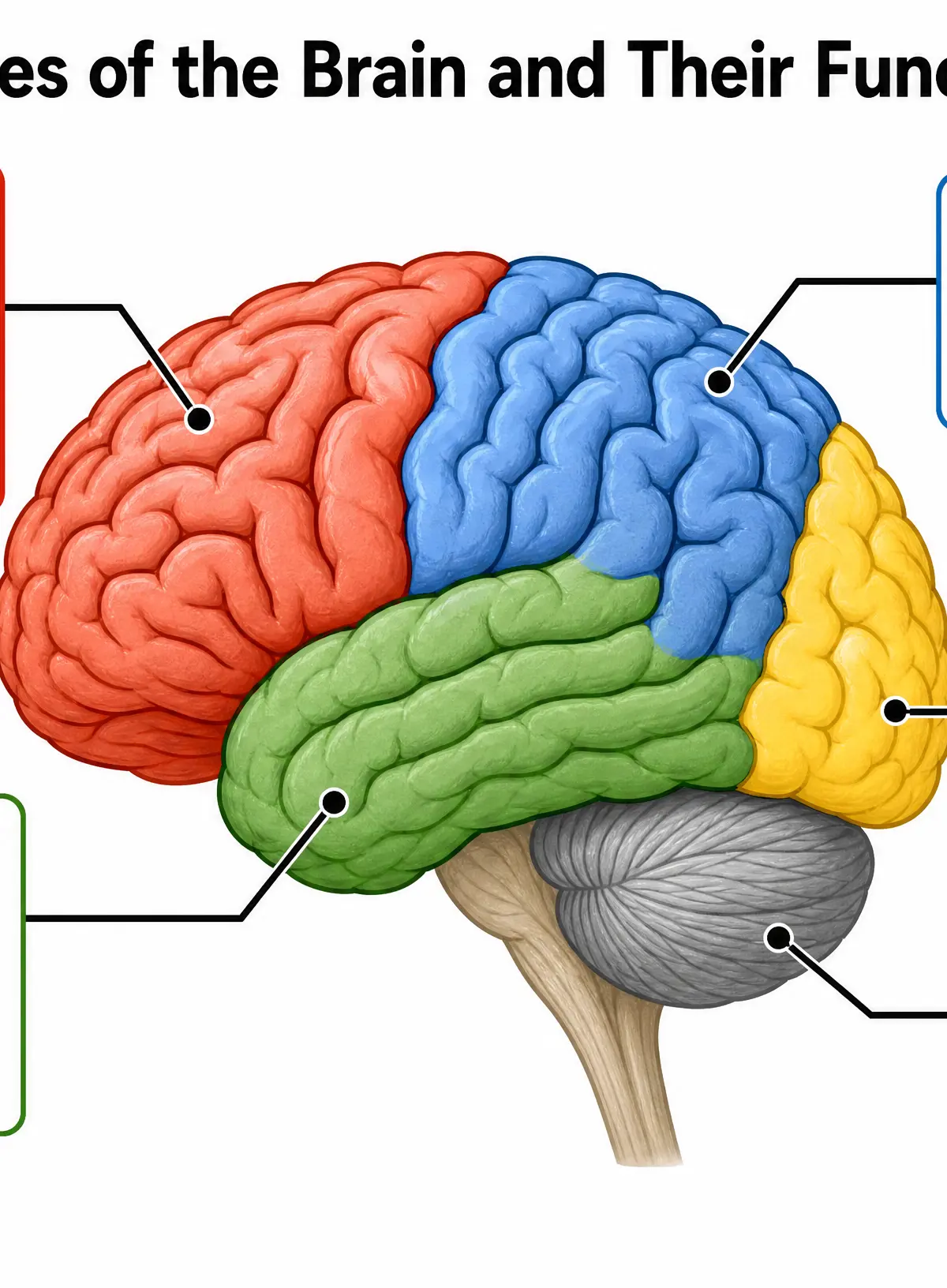
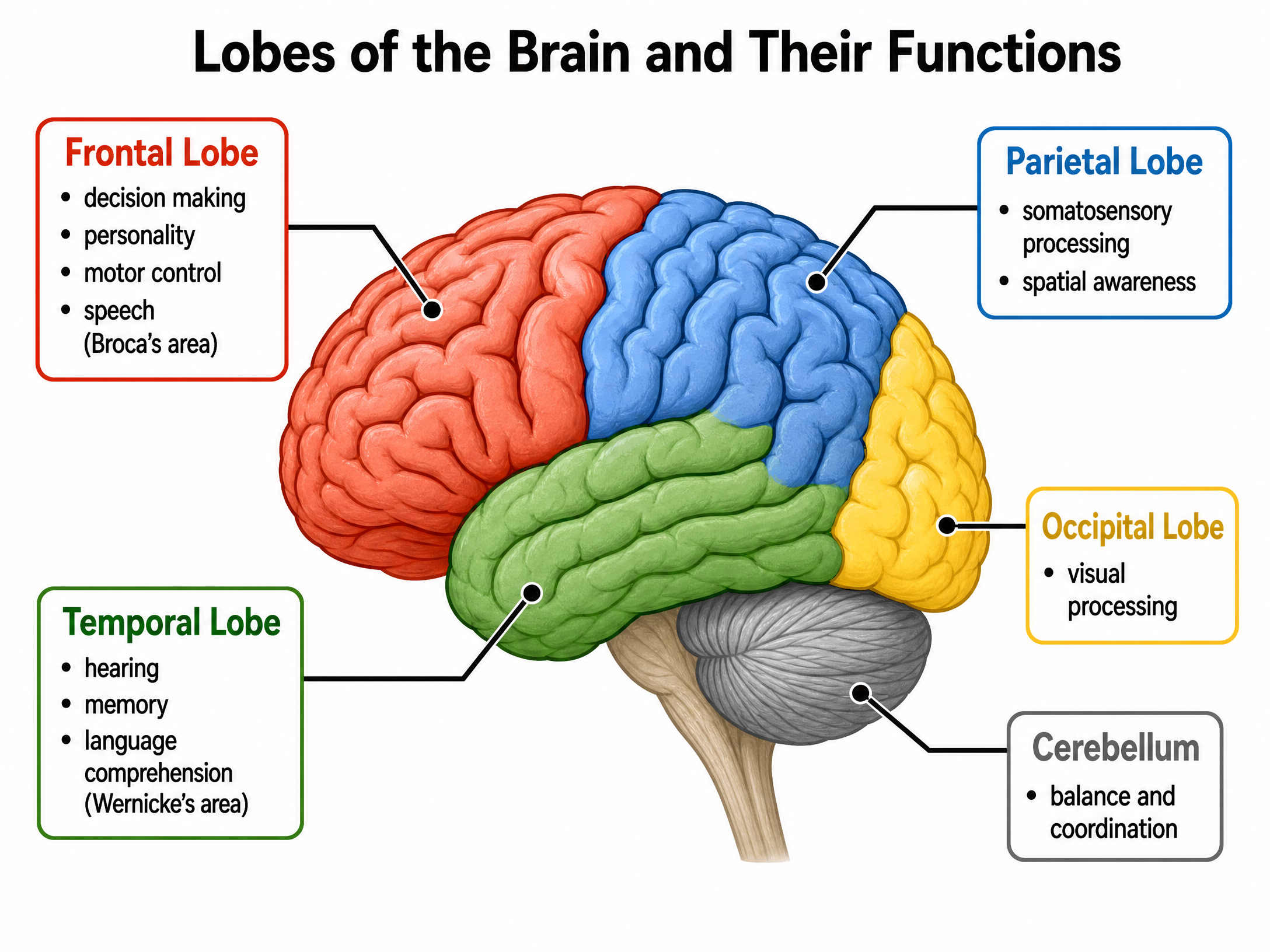
The brain is divided into two hemispheres and four primary lobes, each with localised functions:
- Frontal Lobe: Responsible for higher-order thinking, decision making, motor control, and speech production (Broca's area).
- Parietal Lobe: Processes somatosensory information (touch, temperature, pain) and spatial awareness.
- Temporal Lobe: Handles auditory processing, memory, and language comprehension (Wernicke's area).
- Occipital Lobe: Dedicated to visual processing.
- Cerebellum: Coordinates balance and fine motor skills.
Cognitive Neuroscience and Scanning Techniques
Cognitive neuroscience studies the biological processes underlying cognition. Key scanning techniques include:
- CT Scans: Use X-rays for detailed structural images. Good for detecting abnormalities but show no activity.
- PET Scans: Use a radioactive tracer to show brain activity by highlighting areas using glucose.
- fMRI: Measures changes in blood oxygenation to show active brain areas with high spatial resolution and no radiation.
Visual Resources
4 diagrams and illustrations
Interactive Diagrams
1 interactive diagram to visualise key concepts
Conceptual Flow Outline
The Reflex Arc / Direction of Impulse Transmission
Worked Examples
3 worked examples — open one to explore the question and available guidance.
Practice Questions
Test your understanding — click to reveal model answers
Describe the function of the autonomic nervous system. (3 marks)
Hint: Think about whether its actions are voluntary or involuntary, and name its two branches.
Explain how Hebb's theory explains learning. (4 marks)
Hint: Use the phrase 'neurons that fire together, wire together' and explain synaptic plasticity.
A patient has suffered damage to their frontal lobe following an accident. Identify two difficulties they might experience. (2 marks)
Hint: What higher-order functions does the frontal lobe control?
Evaluate the use of CT scans for investigating the brain. (4 marks)
Hint: Provide one strength (what is it good at finding?) and one weakness (what does it use, and what can't it show?).
Sarah is walking through a dark park when she hears a loud bang. Her heart starts racing and she feels terrified. Use the James-Lange theory to explain Sarah's experience. (4 marks)
Hint: Apply the theory directly to Sarah. What happens first, the physical arousal or the emotion?